


Search results for: 'cuales son las probabilidades de los brainrots en roba un brainrot'
-
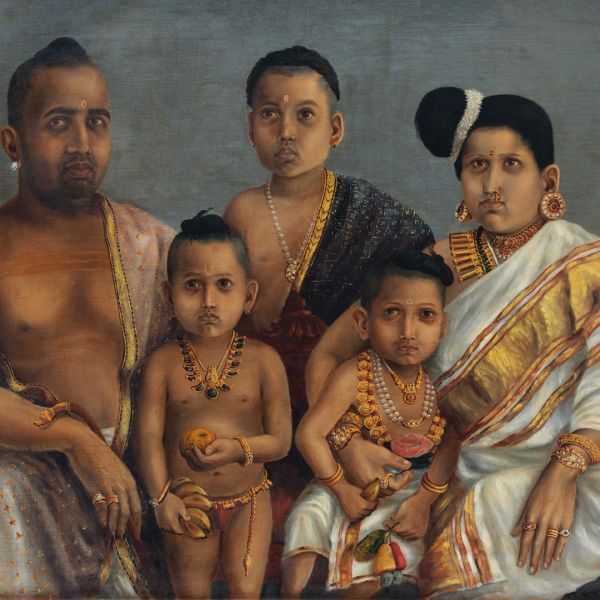 ExhibitionsIconicAs low as $1.00
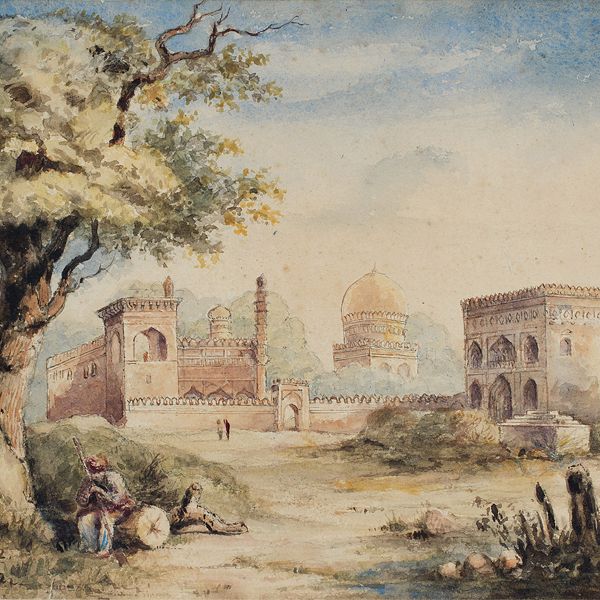
‘Iconic Masterpieces of Indian Modern Art, Edition 02’, the second iteration of DAG’s annual exhibition that redefines the concept of modernism in the Indian context, will be on view in New Delhi this month. Timed to coincide with the launch of its new gallery in the capital, ‘Iconic Masterpieces’ brings together the finest instances of art created in the country by Western and Asian travelling artists and Indian masters spread a little over two centuries. Selected for their rarity, historicity, and excellence, each work of art in this exhibition marks the zenith in terms of the quality of art created in different periods and styles in the subcontinent.
Learn More -
-
-
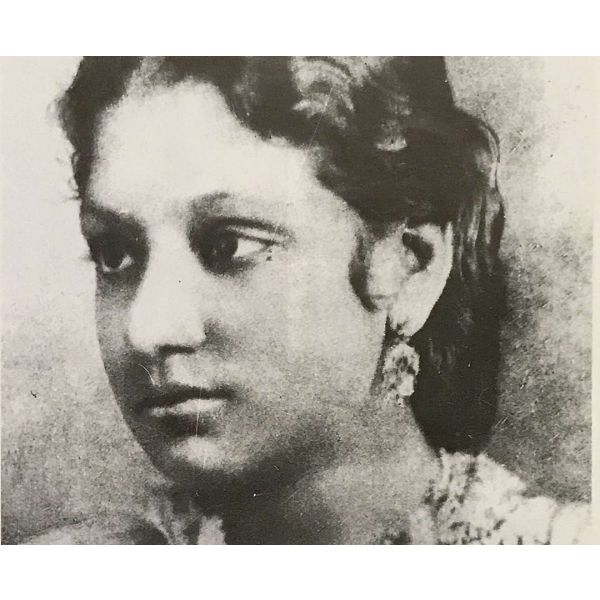 ArtistsSunayani Devi$0.00Sunayani Devi was born on 18 June 1875 in the Tagore family of talented writers and painters—Nobel-laureate Rabindranath Tagore was an uncle, and Gaganendranath and Abanindranath Tagore were her elder brothers. Essentially a self-taught artist, she witnessed the Bengal renaissance, but it was only in her thirties that she began to paint, encouraged by her husband, the grandson of reformist Raja Ram Mohun Roy. Learn More
 -
-
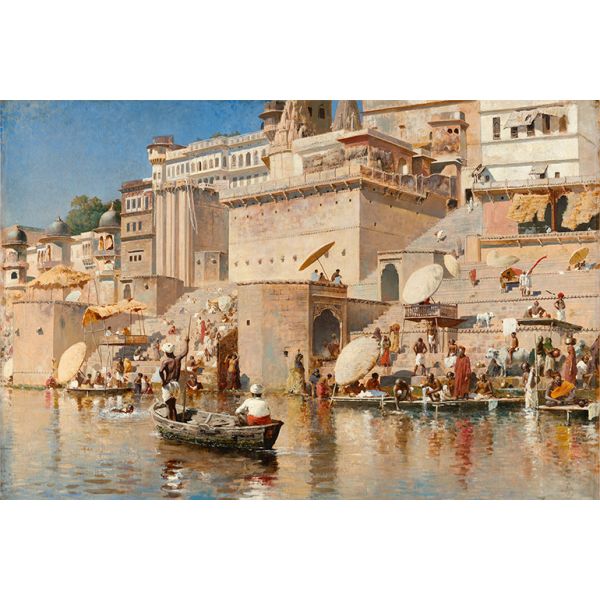 JournalOn the River Ganges, Benares by Edwin Lord Weeks$1.00
Let us take a moment to appreciate this magnificent riverside scene that can be instantly recognised as a view of Benares by the distinctive steep steps, or ghats, running down to the Ganga. American artist and Orientalist Edwin Lord Weeks had a remarkable ability to create an impression of a real-time scene unfolding before viewers, enhanced by the subtle plays of light and colour. A prolific artist who created a visual diary of his travels through his paintings—of which his India works are arguably his finest with an appeal that has transcended time.
Learn More -
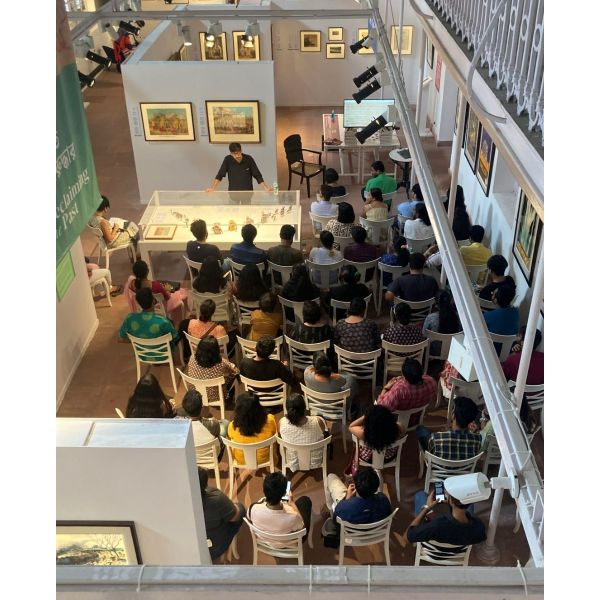 Events and ProgrammesGallery Teach-In$1.00
A unique academic engagement where professors from diverse disciplines bring their classrooms into the galleries, explore connections between their curriculum and the collection on view and experiment with new ways of teaching through art.
Learn More -
 JournalThe French Connection: S. H. Raza at Paris' Centre Pompidou$0.00
In February, Paris' Centre Pompidou--a premier centre for modern art since its construction in 1977--mounted an extensive solo show looking back at S. H. Raza’s career in painting. It represents a historic moment for Indian modern art’s international story as it unfolded over the twentieth century, and also marked Raza's own symbolic return to the place where he stayed for most of his working life. The fertile post-independent period saw cross-cultural connections being forged by Indian artists in Europe and America on their own terms and this show is a testament to Raza’s evolving encounters with land and mythology. The curators, Catherine David and Diane Toubert, spoke to DAG highlighting some of the takeaways from this major retrospective.
Learn More -
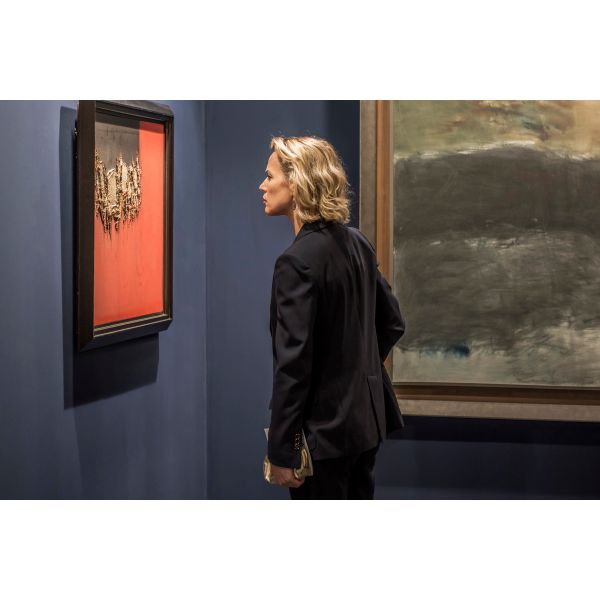 JournalThink Art. Think DAG.$0.00
Thirty years is not a long time in the life of an institution, especially when its scope of work is as overarching as DAG’s is. This short video encapsulates the gallery’s monumental journey, providing a snapshot of the prodigious work it has undertaken in such a short span of time.
Learn More -
 JournalOriental Scenery: Aquatints by Thomas & William Daniell$0.00
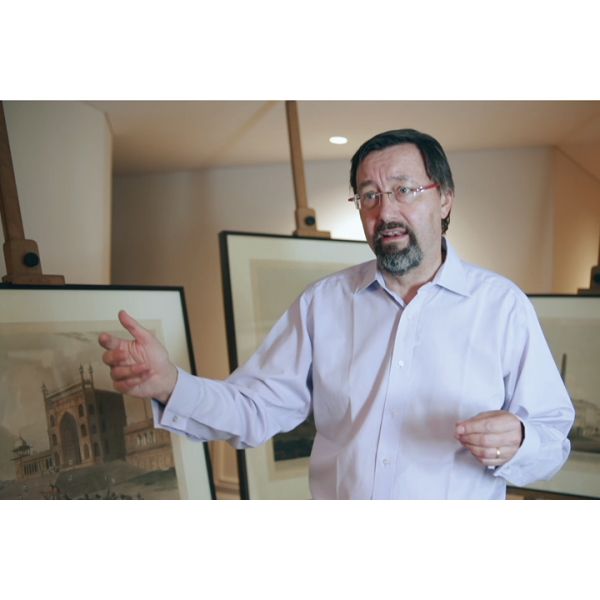
What wonder it must have been for the people in England to ‘see’ India for the first time, the exotica that they had only heard of until then! The artists who made this possible through their paintings and aquatints were the uncle-nephew duo of Thomas Daniell and William Daniell, whose magnum opus, Oriental Scenery, was the subject of this landmark exhibition at Drishyakala, a joint collaboration between DAG and the Archaeological Survey of India.
Learn More -
 Collection Stories150 years of Abanindranath Tagore$1.00
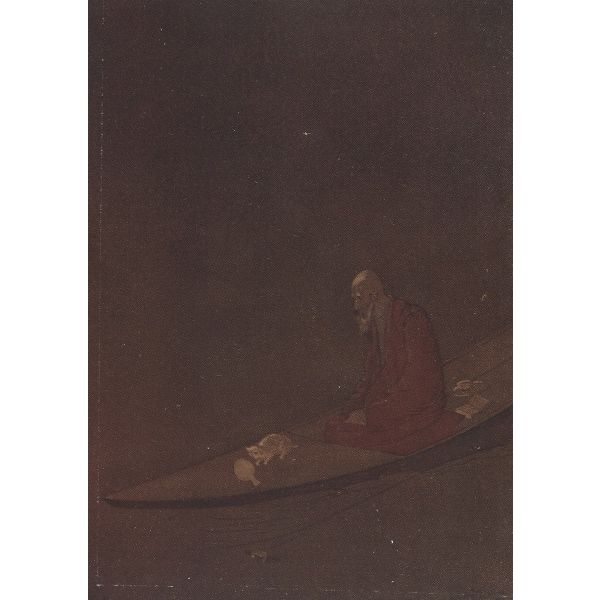
At the turn of the twentieth century, Abanindranath Tagore asked himself if the emerging artists of modern India should continue to paint in the manner of their European colonizers; or was there a new path waiting to be forged? His answers led him to envision a pan-Asian cultural identity, spanning traditions from Persia to Japan, and culminating in a ‘new “Indian” art.’ Regarded as the founder of the Bengal School, Abanindranath left an unparalleled legacy both in terms of his own diverse body of work, and through his pupils, like Nandalal Bose, who shaped the contours of art across the subcontinent in the twentieth century.
Learn More -
 ExhibitionsALTAF: Early DrawingsAs low as $0.00
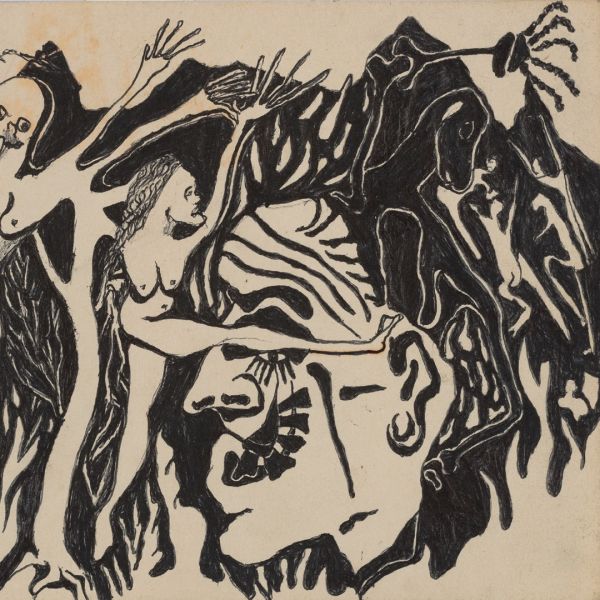
England shaped Altaf’s political consciousness as well as his persona. He engaged in the anti-apartheid demonstration at Trafalgar Square held against the imprisonment of Nelson Mandela; a peaceful protest at the American Embassy opposing the bombing in North Vietnam; the Aldermaston March against the nuclear bomb; the Campaign for Nuclear Disarmament; he became a member of the Youth Wing of the Communist Party of Great Britain (CPGB) and the Young Communist League (YCL). Any examination of the theoretical aspect of Altaf’s work must start with the knowledge that the work in question exemplified an element of ‘existentialist’ thought.
Learn More