


Search results for: 'she doesn't even had a beard yarn'
-
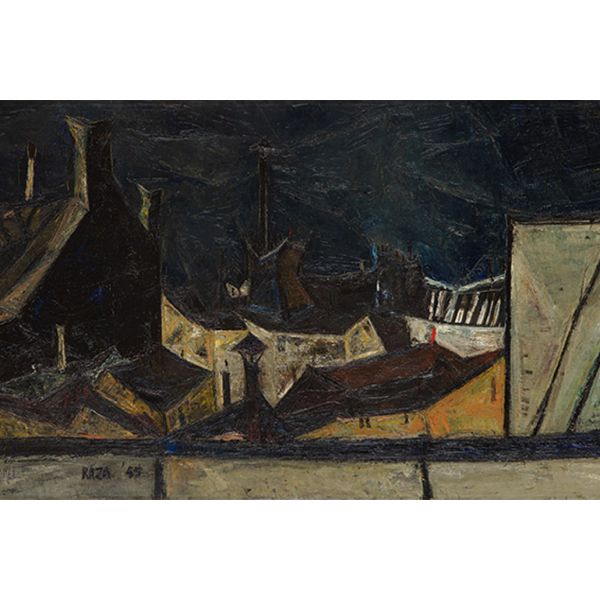 JournalToits (Rooftops) by S. H. Raza$1.00
S. H. Raza had begun to paint using oils, moving away from his impressionistic watercolours, on his way to winning the prestigious critics’ award in 1956. Just a year before, he completed a stunning painting of Parisian rooftops, revealing not a daylight scene but one of the night, only yellow lamplight from the streets dimly silhouetting the chimneys and sloping roofs. This period of Raza’s career is somewhat lesser known than his later, tantra-inspired works, as Ashok Vajpeyi and Aman Nath explain to us.
Learn More -
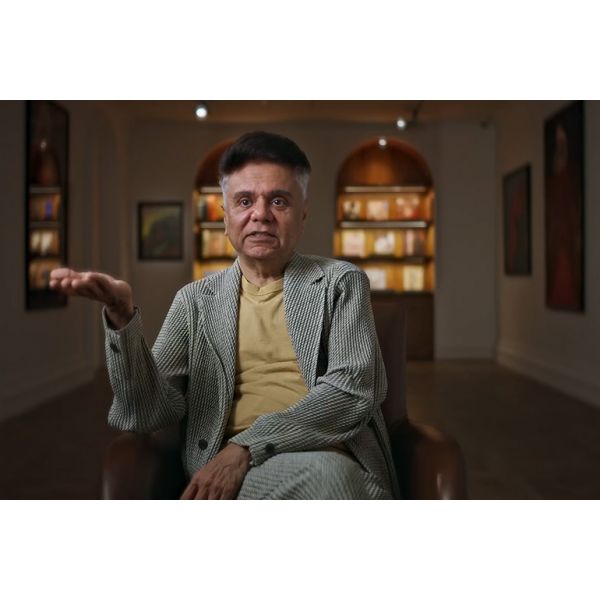 JournalIn the Snows of Kashmir by G. R. Santosh$1.00
G. R. Santosh created a hugely accomplished career without formal training in art. His abstract paintings made in the early 1960s had Kashmir as his muse, and often used encaustic and beeswax—a process he learned from Shanti Dave. Architect and designer Pinakin Patel shares his views about In the Snows of Kashmir, Santosh’s masterful painting with textural relief in a monochrome palette.
Learn More -
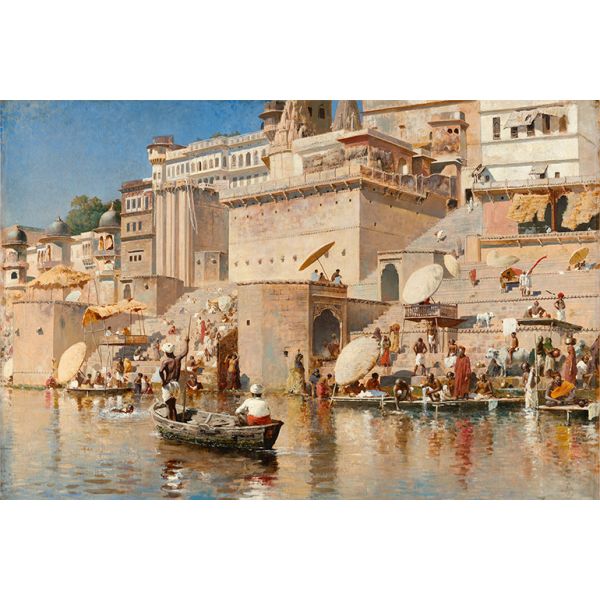 JournalOn the River Ganges, Benares by Edwin Lord Weeks$1.00
Let us take a moment to appreciate this magnificent riverside scene that can be instantly recognised as a view of Benares by the distinctive steep steps, or ghats, running down to the Ganga. American artist and Orientalist Edwin Lord Weeks had a remarkable ability to create an impression of a real-time scene unfolding before viewers, enhanced by the subtle plays of light and colour. A prolific artist who created a visual diary of his travels through his paintings—of which his India works are arguably his finest with an appeal that has transcended time.
Learn More -
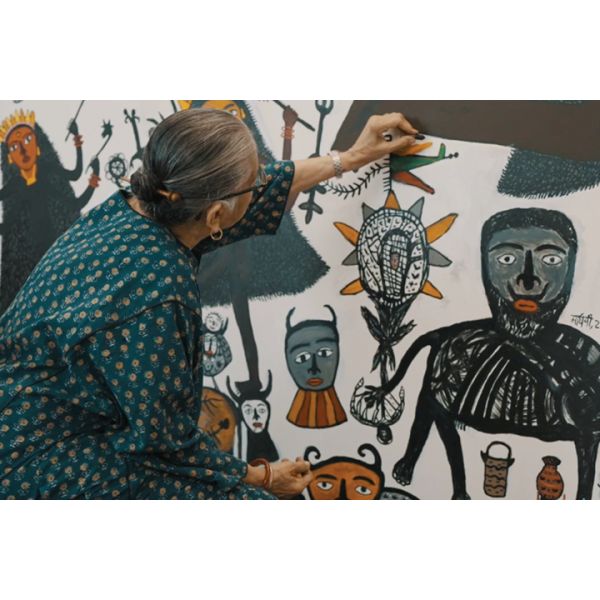 JournalThe art of Madhvi Parekh$0.00
Get a glimpse of Madhvi Parekh as she talks about her practice and the relevance of festivals and celebrations in her art.
Learn More -
 JournalPopular Prints and the Freedom Struggle$0.00The role of popular prints in providing a visual lexicon to India’s freedom struggle—carrying images of its vital players and events to the farthest corners of the country—received a tremendous boost with this Paula Sengupta-curated exhibition at Drishyakala, Red Fort, Delhi, in 2019, a joint collaboration between DAG and the Archaeological Survey of India. Learn More
 -
 JournalThe Last Effort and Fall of Tippoo Sultaun by Henry Singleton$1.00
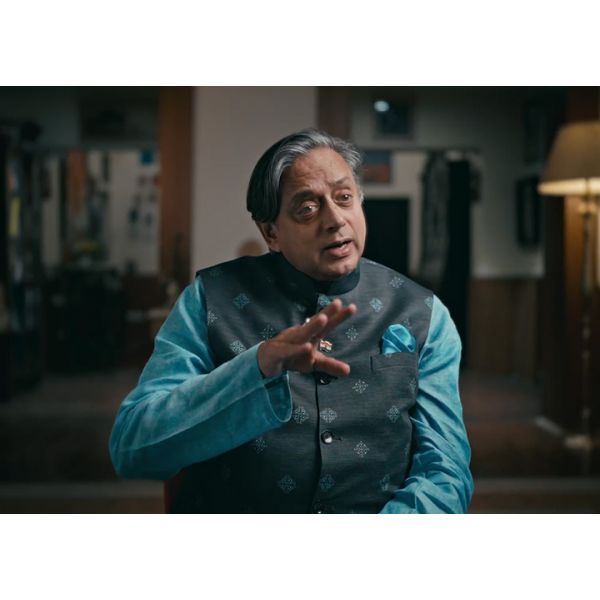
Henry Singleton’s The Last Effort and Fall of Tippoo Sultaun belongs to a genre known as history painting: the depiction of important historical events, usually on a large scale, as if they were playing out in front of one’s eyes. Author and parliamentarian Shashi Tharoor and art historian Giles Tillotson explain the lively imagination deployed in Singleton’s painting that depicts the British assault on Seringapatam and the killing of its ruler, Tipu Sultan—himself the source of so many stories that it was difficult to unravel the truth from the many falsities spun by the biased colonial administration and historians of the time.
Learn More -
 JournalFour Famous Collectors who shaped Indian art history$0.00
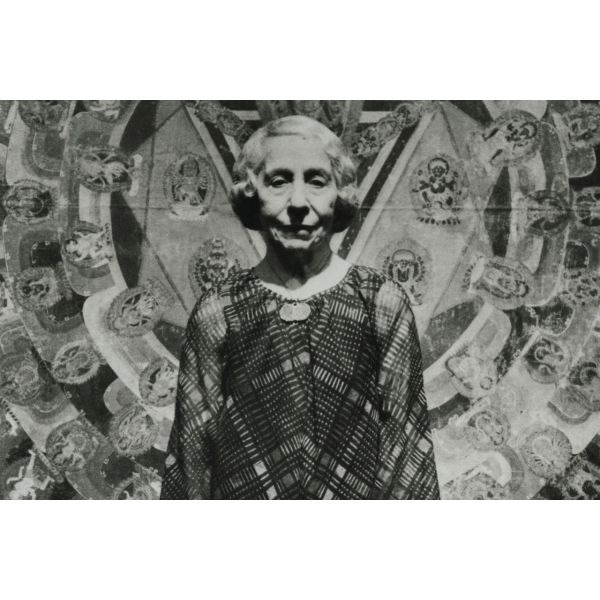
How did the idea of Indian art come to be constructed over the last century and more? The painstaking work of collectors and curators went a long way towards establishing the history of art in India. In this article we highlight some of the most significant collectors of art from South Asia over the course of the twentieth century. Usually starting as personal collections, most of them would eventually donate their works to museums in India or abroad, allowing these rare works to be seen regularly by new generations of art enthusiasts across the world. Their collections, curated exhibitions and publications fashioned the canons of Indian modern and pre-modern art
Learn More -
 ExhibitionsTipu SultanAs low as $1.00
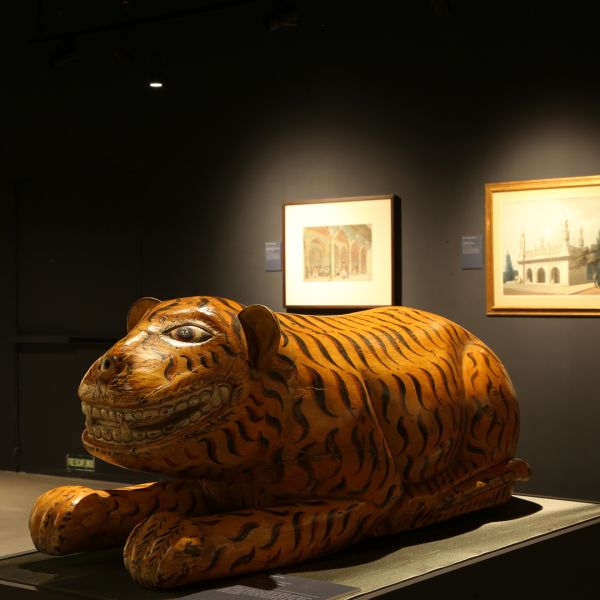
An extraordinary exhibition of paintings, prints, maps and other objects, curated by Giles Tillotson, that recounts a visual history of the Mysore Wars between the East India Company and Tipu Sultan, this DAG exhibition explores how the narrative might have changed 222 years after the siege of Seringapatnam. The images, based on the British view of the time, reflect changing perceptions and Indian views on this epic battle and its political and social fallouts. A highlight of the exhibition is a painting by Henry Singleton depicting The Last Effort and Fall of Tippoo Sultaun, among other stellar works, that will be seen in India for the first time. Alexander Allan Cpt. R. Frazer David Wilkie Edward Orme Henry Singleton J. B. Mauzaisse James Hunter Johann Peter Krafft John Smart Mather Brown Obadiah Sherratt Robert Hyde Colebrooke Robert Home Robert Ker Porter Thomas Stothard
Learn More -
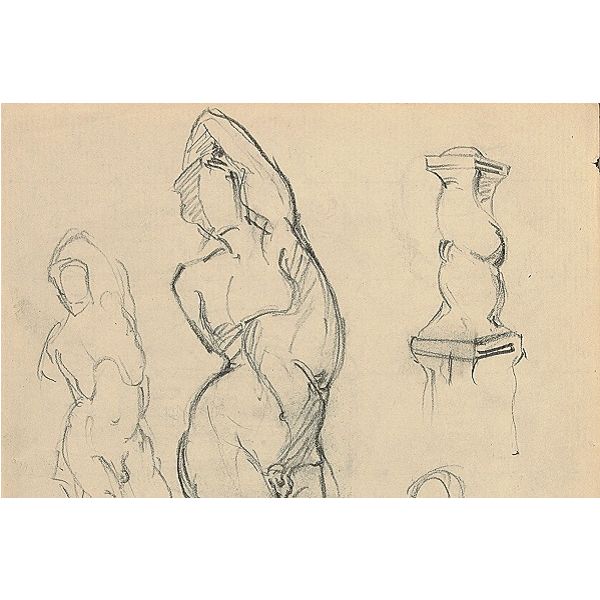 JournalTerm of the Month: Figure Drawing$0.00
The advent of abstraction is a defining moment in art history as we devise divisions between representational, figurative, and abstract art, with the need arising from this pivotal formal shift in the modern world. The term ‘figurative’ has come to represent an antithesis of sorts to the term abstract. One is representational of reality, the latter a derived (abstracted) representation or even non-representational (colour-field paintings for example).
Learn More -
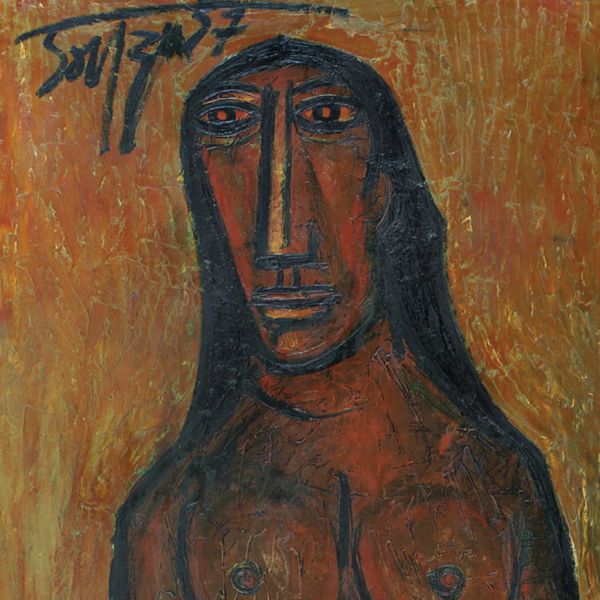 ExhibitionsThe Naked and the NudeAs low as $1.00
The nude. Just the term sends a frisson of excitement down the spine in most people. For the few of us who are part of the art fraternity, however, more than just the anticipation of being able to view the human body as an artistic work in its many forms and avatars, its beauty and its degradation both, is the true mark of an artist’s genius. And yet, the history of the nude in Indian art has remained curiously unmapped. A. A. Almelkar A. A. Raiba A. P. Bagchi A. Ramachandran Abalall Rahiman Akbar Padamsee Anita Roychowdhury Anupam Sud Avinash Chandra B. Prabha B.Vithal Bengal School (Anonymous) Bikash Bhattacharjee Chintamoni Kar Chittaprosad F. N. Souza G. R. Santosh George Keyt Gogi Saroj Pal Gopal Ghose Hemendranath Majumdar J. Sultan Ali Jamini Roy Jaya Ganguly Jehangir Sabavala Jeram Patel Jogen Chowdhury Jyoti Bhatt K. H. Ara K. K. Hebbar K. Laxma Goud K. S. Kulkarni L. Munuswamy Laxman Pai M. F. Husain M. R. Acharaker Madhav Bhattacharjee Maniklal Banerjee Nalini Malani Navjot Nikhil Biswas P. Khemraj P. T. Reddy Prodosh Das Gupta Prokash Karmakar R.Vijaivargiya Rabin Mondal Radha Charan Bagchi Rameshwar Broota Ramkinkar Baij Ranbir Kaleka Ravi Varma Press Rekha Rodwittiya S. Dhanapal Sakti Burman Satish Sinha Sudhir Khastgir Suhas Roy Sunil Das Sunil Madhav Sen Surendran Nair V. Nageshkar Ved Nayar
Learn More -
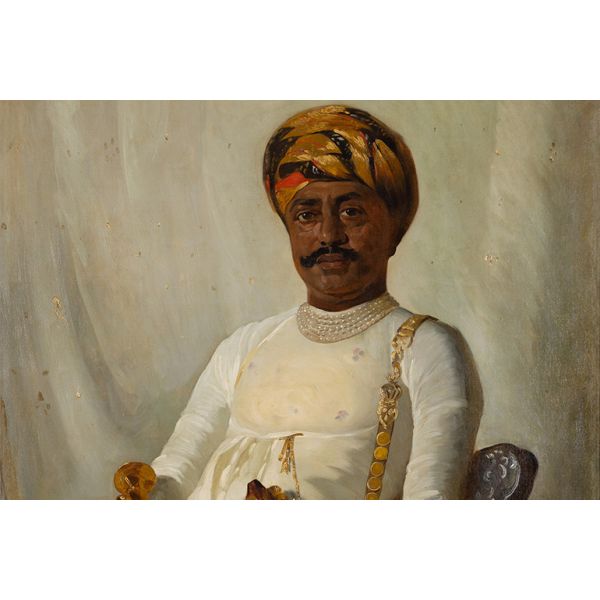 JournalThakor Becharsinhji of Chuda by Frank Brooks$1.00
Did you know that the portrait painter Frank Brooks whose two trips to India won him commissions from the rulers of principalities in the Bombay Presidency, trained Raja Ravi Varma’s brother in the art of figure painting? For his second India voyage (1892-93), he was invited specially to paint the heads of the twenty-eight rulers of the Kathiawar Agency. The subject of this stunning portrait is Thakur Becharsinhji of Chuda, a state so small it did not even merit a gun salute for its ruler. Explore in detail with Kishore Singh, SVP, DAG.
Learn More -
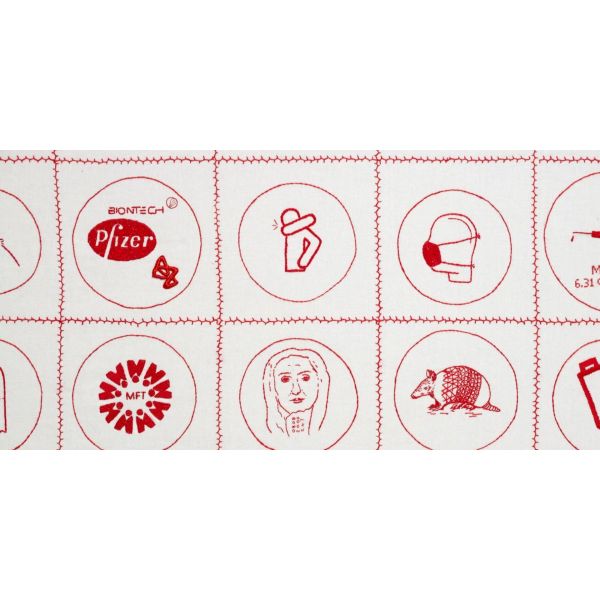 JournalOn Collecting Textiles with Uthra Rajgopal$0.00
Are the histories of art and fashion distinct from each other? Even a cursory glimpse at the contemporary art landscape—on view during occasions such as the India Art Fair, 2023—tells us otherwise. Fabrics, textiles and weaving practices are being increasingly incorporated into the body of works produced by artists today. They bring with them a host of connotations, historical narratives and sensorial memories that working with other media does not. Uthra Rajgopal, a curator and collection adviser for museums, spoke with DAG briefly on the practice of collecting textiles for museums, their historical significance as artworks as well as trading commodities from South Asia, and how contemporary artists are responding to this complex colonial legacy through their own interventions.
Learn More