


Search results for: 'minister and son shown in Dhurandhar painting'
-
 JournalThe Last Effort and Fall of Tippoo Sultaun by Henry Singleton$1.00
Henry Singleton’s The Last Effort and Fall of Tippoo Sultaun belongs to a genre known as history painting: the depiction of important historical events, usually on a large scale, as if they were playing out in front of one’s eyes. Author and parliamentarian Shashi Tharoor and art historian Giles Tillotson explain the lively imagination deployed in Singleton’s painting that depicts the British assault on Seringapatam and the killing of its ruler, Tipu Sultan—himself the source of so many stories that it was difficult to unravel the truth from the many falsities spun by the biased colonial administration and historians of the time.
Learn More -
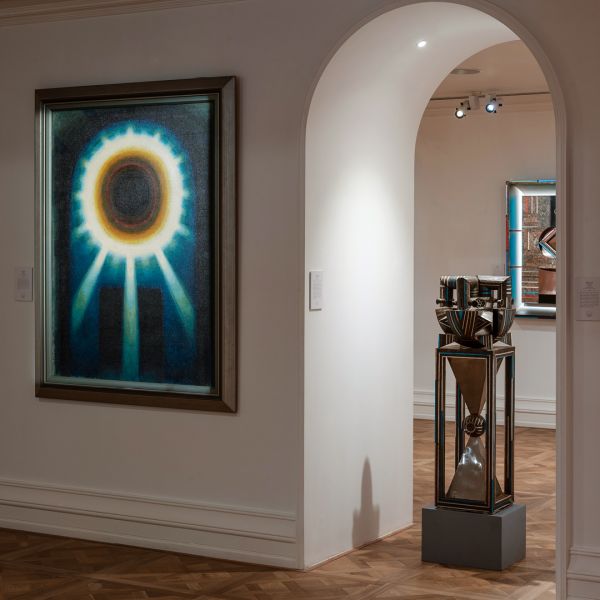 ExhibitionsTantra on the EdgeAs low as $1.00
The exhibition Tantra on the Edge: Inspirations and Experiments in Twentieth Century Indian Art is a pioneering attempt to gather together works of sixteen prominent Indian artists under the single thematic rubric of the transient but least definable phases of contemporary art in the last century. The exhibition features the artworks, inspirations, and experiments, of artists that had a sustained relationship with tantra philosophy, its vivid, abstract, sacred symbols, or their personal spiritual illuminations. Biren De G. R. Santosh Gogi Saroj Pal J. Swaminathan Jyoti Bhatt K. C. S. Paniker Manu Parekh P. T. Reddy Prabhakar Barwe R. B. Bhaskaran S. H. Raza Satish Gujral Shobha Broota Sohan Qadri Sunil Das V. Viswanadhan
Learn More -
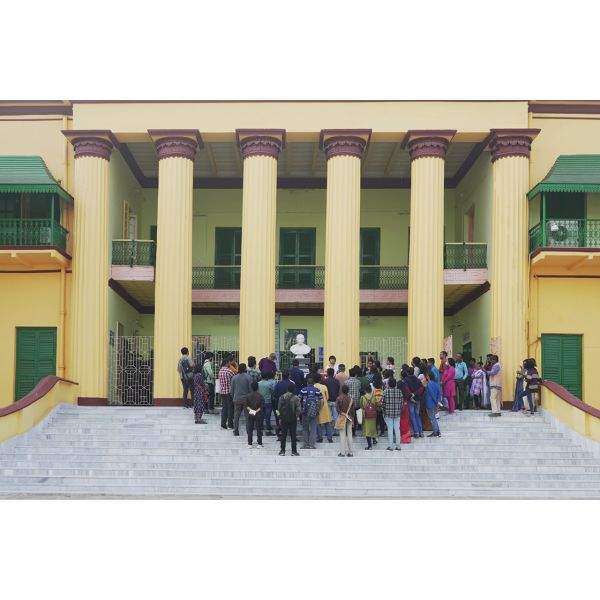 JournalART IN PRINT: VIEWING PERIODICALS AT THE UTTARPARA LIBRARY$0.00
Have you wondered how people looked at paintings and photographs in the nineteenth century? For DAG’s annual Heritage Festival ‘The City as a Museum’, we explored various aspects of the city’s visual culture. As we are about to launch the DAG Journal let us revisit the walk co-led by Sarbajit Mitra and Amreeta Das at the Uttarpara Jaykrishna public library to delve into the periodical archive and trace the evolution of printed pictures in India. Flipping through the pages of these periodicals offered glimpses into the everyday habits of consuming art—from simple wood-cut and lithograph illustrations, to full plate colour reproductions of paintings and photographs, artist albums, and exquisitely ornate typography.
Learn More -
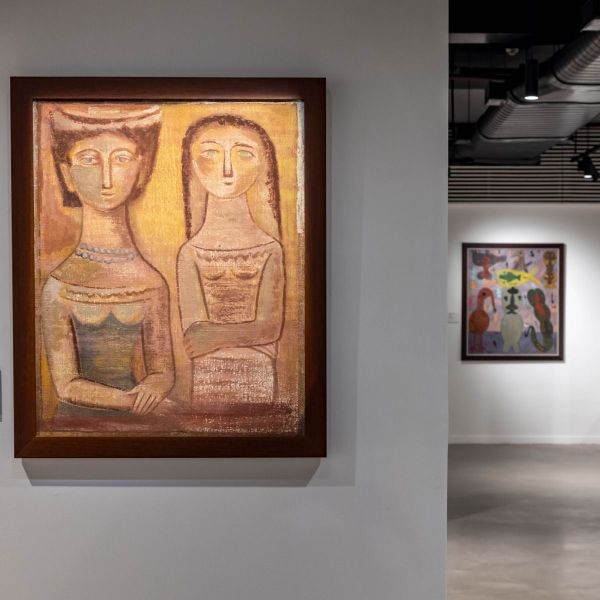 ExhibitionsPrimitivism & Modern Indian ArtAs low as $1.00
This exhibition looks at the diverse range, moods and styles that primitivism has taken in India, some artists practicing entirely in that style, while others experimenting with it in part, or sporadically. One can count simplicity and a move away from sophistication as key components, as also an inclination or at least a nod towards the folk. The exhibition does not attempt to be a comprehensive survey of India’s primitivists—there are others who would bear inclusion—but is an attempt to understand a body of work and how, given its Western countenance, it can be understood in the Indian context. More than anything else, it offers a clearer view than in the past of what primitivism might mean in the context of modern Indian art. Amrita Sher-Gil F. N. Souza George Keyt Himmat Shah J. Sultan Ali Jamini Roy Jogen Chowdhury K. G. Subramanyan K. S. Kulkarni M. F. Husain Madhvi Parekh Mohan Samant Rabin Mondal Rabindranath Tagore Ramkinkar Baij Sunayani Devi
Learn More -
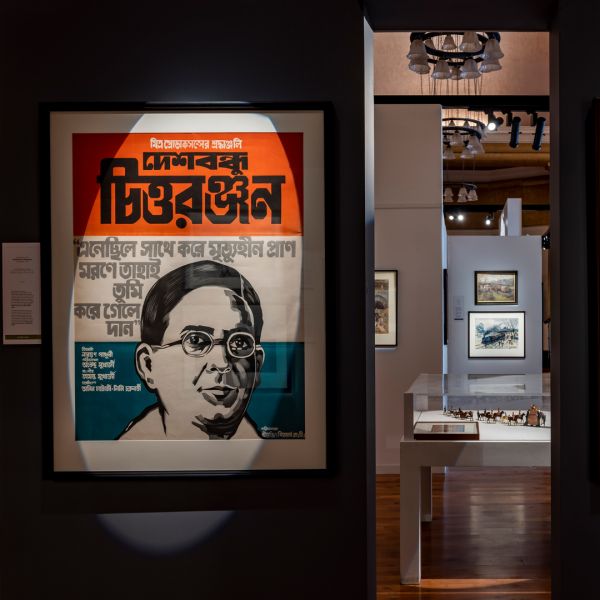 ExhibitionsMarch to FreedomAs low as $1.00March to Freedom re-interprets the well-known story of the Indian freedom struggle and anticolonial movement through works of art and some historic artefacts. Drawn from the collections of DAG, they range from eighteenth and nineteenth century European paintings and prints, to lesser known works by Indian artists that merit greater recognition, alongside some iconic pieces. Rather than following the usual chronological path, the story is structured around eight themes. Each represents one arena, or stage, on which the anti-colonial struggle took place, to expand the story beyond politics, politicians, and battles (which also feature). Conceived to commemorate and celebrate the 75th anniversary of India’s independence, this visual journey seeks to do more. A. A. Raiba Asit Kumar Haldar Alfred Crowdy Lovett Atul Bose Baburao Sadwelkar Bijan Chowdhury Biren De C. Stanfield Charles D’Oyly Charles Shepherd Charles Walter D’Oyly Chintamoni Kar Chittaprosad Dattatraya Apte David Gould Green Devayani Krishna D. Newsome Edward Orme Gobardhan Ash Gopal Ghose G. Tait Haren Das Hemanta Misra Henri Cartier-Bresson Henry Martens Henry Salt Henry Singleton Jacob Epstein James Hunter James Fraser John Gantz John Jabez Edwin Mayall K. K. Hebbar Kanwal Krishna K. C. S. Paniker K. G. Subramanyan K. Sreenivasulu K. S. Kulkarni Laxman Pai M. Eyre Proudman M. K. Parandekar M. S. Morgan Nemai Ghosh N. R. Sardesai Prahlad Anant Dhond Paritosh Sen Prokash Karmakar P. T. Reddy Radha Charan Bagchi Robert Dodd R. Vijay Satish Gujral Satish Sinha S. Dhanapal Stella Brown Sudhir Khastgir Sushil Chandra Sen Sunil Das Sunil Madhav Sen Thomas Anbury Thomas Daniell Thomas Jones Barker V. A. Mali V. B. Pathare V. Veevers William Daniell William Hodges Anonymous Artists Learn More
 -
 ExhibitionsIndia’s French ConnectionAs low as $1.00
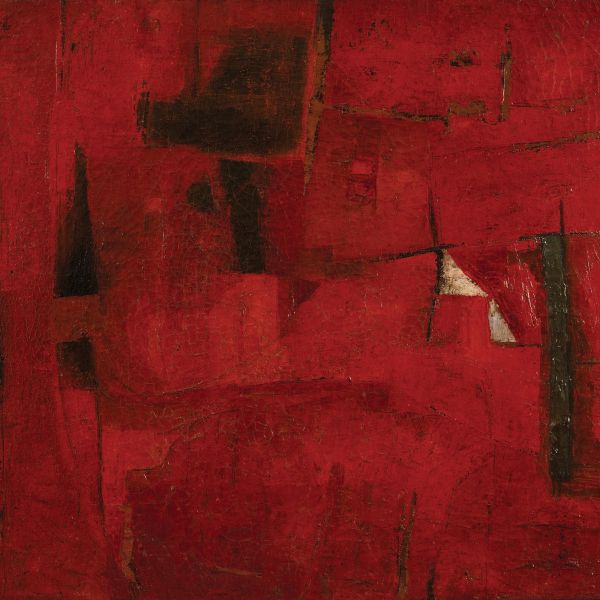
This historic exhibition based on the association twenty-seven Indian artists had with art institutions, museums and art movements in Paris throws light on France as a cradle of modernism and what Indian artists gained from this relationship. Akbar Padamsee Amrita Sher-Gil Anjolie Ela Menon Arun Bose Chintamoni Kar Himmat Shah Jehangir Sabavala Jogen Chowdhury K. K. Hebbar Kanwal Krishna Krishna Reddy Laxman Pai Laxman Shrestha Nalini Malani Nasreen Mohamedi Nirode Mazumdar P. Khemraj Paritosh Sen Prodosh Das Gupta Prokash Karmakar Rajendra Dhawan Ram Kumar Sailoz Mukherjea Sakti Burman Sunil Das Syed Haider Raza V. Nageshkar V. Viswanadhan Zarina Hashmi
Learn More -
 ExhibitionsAltafAs low as $1.00
In the articulation of twentieth century art, where does one place Altaf Mohamedi? That question has probably troubled more curators than we realise. Altaf, who studied art in London before returning to Bombay (now Mumbai) was following in the footsteps of his elder sister and artist Nasreen Mohamedi, but that is where all similarities ended. Where Nasreen was an abstract, sparse artist who created a distinctive language using, for most part, rigid, inflexible lines that nevertheless sang on the paper over which they were made, Altaf’s work was intensely political and social.
Learn More -
 ExhibitionsSoliloquies of SolitudeAs low as $1.00
The mid-twentieth century saw a churn in the practice of art in India with a number of artists beginning to explore a genre that had swept the West with its absence of figuration in favour of abstraction. The non-representational began to gain traction as artists found within it a way to express themselves purely through colour as a potent tool to communicate emotions. Abstraction emphasised the relationship between originality and expression in ways that were complex, leading one to debate about the eventual goal of art. Ambadas, Krishna Reddy, Sohan Qadri, Zarina Hashmi, Rajendra Dhawan
Learn More -
-
 JournalBefore the Chaos of Destruction: Jeram Patel's Iconic Works$0.00
Artists often proceed through a trial and error method—an incessant experimentation—leaving behind a singular trail of oeuvre composed of an irreconcilable, yet inseparable, set of works. Born in the small town of Sojitra in the Kheda district of Gujarat, Jeram Patel studied drawing and painting at Sir J. J. School of Art, Bombay. In 1959, excellence in his work led him to pursue commercial design at Central School of Arts and Crafts, London, on a scholarship, and also travel to France and Japan. Thereafter, he successfully held solo exhibition at various places in India and abroad, and participated in international events such as the Tokyo Biennale and Sao Paulo Art Biennale (both in 1963).
Learn More -
 ExhibitionsAnupam SudAs low as $1.00
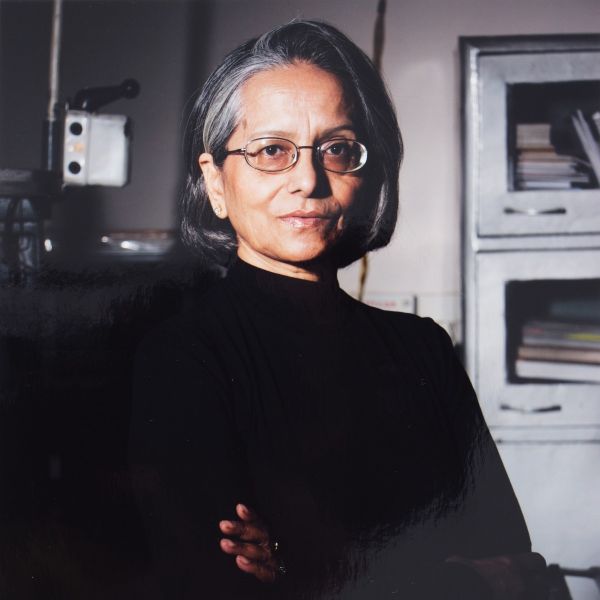
That Anupam Sud is one of the most prominent printmakers in the country is a given, even though it would be unfair to limit so versatile an artist to only being a printmaker. Indeed, her body of work includes paintings, drawings, sculpture, bookmaking—and as you will see through the pages of the book accompanying the exhibition, a record-keeper observing the passage of time with self-portraits that she has undertaken to make periodically. A role-model for generations of artists and printmakers through her work and for her influence as a teacher at the prestigious College of Art, New Delhi, Anupam Sud’s name evokes recognition around the world where she has admirers, collectors of her work, and students who have trained under her.
Learn More -
 JournalTapati Guha Thakurta on Bengal Oil Paintings$1.00
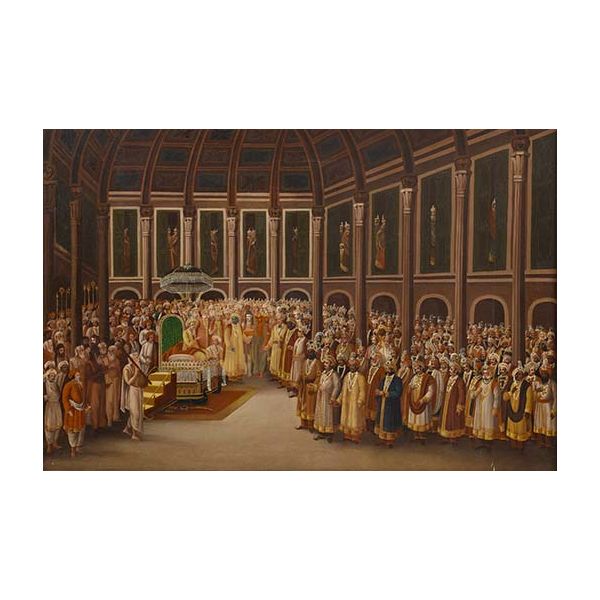
Artists may be anonymous but their times are not. Art historian and curator Dr. Tapati Guha-Thakurta takes us through the Early Bengal oil paintings from the 19th and early 20th century on display at DAG, New Delhi.
Learn More