


Search results for: 'clip art of elephant black and white'
-
 ExhibitionsHome is a PlaceAs low as $1.00
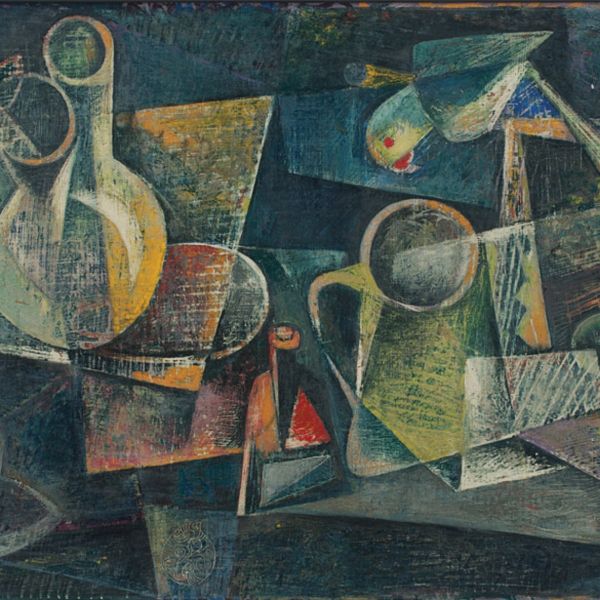
'Home is a Place’ explores the visual world of the home as a physical space having both an exterior and an interior—with all its magic, hope and memories—in villages and towns. Our homes are central to our existence and society, being the reason for shaping towns and countries, civilisations and histories. The exhibition covers the complexity of lives within the jurisdiction of the home—women at their toilettes, women painted alone gazing out of the window or gossiping in a group; figures working in their library, engaged in household work, or as parents bathing children; a family posing together or feuding over a game of cards, food or egos; and those fighting tyranny or painted as embracing lovers. Altaf Ambika Dhurandhar Amit Ambalal Anonymous Anonymous (Kalighat Pat) Anonymous (Waring & Gillow) Avinash Chandra Badri Narayan Bijan Choudhary Chakravorty Chittaprosad Dattatraya Apte Dhanraj Bhagat G. R. Santosh Ganesh Pyne Gogi Saroj Pal Gopal Ghose Haren Das Hemen Mazumdar Hiranmoy Indra Dugar Indu Rakshit Jagadish Dey Jagmohan Chopra Jamini Roy Jyoti Bhatt K. C. S. Paniker K. S. Kulkarni Kisory Roy M. A. R. Chughtai M. Bulkley M. F. Husain M. V. Dhurandhar Madhvi Parekh Maniklal Banerjee N. R. Sardesai Nandalal Bose Navjot Nemai Ghosh P. T. Reddy Partha Pratim Deb Piraji Sagara Prabhakar Barwe R. B. Bhaskaran Rabin Mondal Radha Charan Bagchi Ramendranath Rekha Rodwittiya Roychaudhuri S S. K. Bakre Sadequain Sakti Burman Sanat Kar Shanti Dave Shyamal Dutta Ray Somnath Hore Subba Ghosh V. A. Mali V. Nageshkar Ved Nayar Abani Sen Paritosh Sen Sunil Madhav Sen Sushil Chandra Sen Nataraj Sharma Shuvaprasanna Muni Singh Paramjeet Singh Paramjit Singh S. G. Thakar Singh Sobha Singh Satish Sinha F. N. Souza K. G. Subramanyan Anupam Sud L. N. Taskar Vasudha Thozhur
Learn More -
 ExhibitionsNew Found LandsAs low as $1.00
We might think of landscape as the most obvious and natural subject for painting. What could be simpler than an artistic response to the world of nature? And yet, civilisations have not always produced landscape paintings. Landscape as an independent genre—with the primary focus not on action but on scenery—was first championed by the Chinese in the ninth century. It was introduced into English art only in the eighteenth century. Elements of nature have appeared in Indian art since the murals of Ajanta, but in supporting roles, in images that are primarily sacred or courtly. Pure landscape painting arose in India only in the nineteenth century, in response to colonial practice. A A ALMELKAR AVINASH CHANDRA BABURAO SADWELKAR BHUNATH MUKERJEE BIJAN CHOUDHARY BIRESWAR SEN CHITTAPROSAD DEVRAJ DAKOJI DEVYANI KRISHNA DHARAMANARAYAN DASGUPTA GANESH HALOI GOBARDHAN ASH HAREN DAS K. K. HEBBAR KANWAL KRISHNA KISORY ROY M. K. PARANDEKAR M. V. DHURANDHAR MANISHI DEY MUKUL DEY New Found Lands NIKHIL BISWAS PESTONJI E BOMANJI PRAN KISHAN PAUL RABIN MONDAL RAMENDRANATH CHAKRAVORTY RAMKINKAR BAIJ SAKTI BURMAN SUNIL DAS THOMAS DANIELL WILLIAM HODGES WILLIAM PARKER
Learn More -
 ExhibitionsThe HindusAs low as $1.00
Among all attempts by foreign artists to present a complete view of India, none is so focused on people as the work of François Baltazard Solvyns, who lived in Calcutta for a decade starting in 1791. While picking up odd jobs, he embarked on an ambitious project to produce a comprehensive survey of ‘the manners, customs, and dresses, of the Hindus’. The first edition contained 250 hand-coloured etchings and was published by Solvyns between 1796 and 1799.
Learn More -
 Collection OnlineTHE WASH TECHNIQUE$1.00
The wash technique has come to be associated in India with the art of the Bengal School, but the story of its origins in India takes us back to an era of rich cultural exchanges. In the early twentieth century artists like Abanindranath Tagore were trying to imagine a pan-Asian cultural identity, and they turned for inspiration to traditions from across Persia to Japan. Rabindranath Tagore's friendship with Okakura Kakuzō occasioned the arrival of several Japanese artists in Kolkata, such as Yokoyama Taikan, Hishida Shunsō and Katsuta Shōkin. While the latter found inspiration in the Hindu epics, artists in Bengal adapted techniques that were used by the Japanese, such as the wash technique or the subtle use of ink and brush. Since then, the wash technique has been interpreted widely by individual artists, offering an ethereal quality of light to their works, or, in some cases, like for Gaganendranath Tagore and Prosanto Roy, new possibilities of painting in various shades of darkness.
Learn More -
 Collection OnlineCHITTAPROSAD$1.00
Chittaprosad (1915 – 1978) was an artist of the people. A firm believer in the power of political art to bring tangible change in society, he is remembered for political cartoons and caricatures lampooning the ruling elite while championing the cause of the working class.
He was also a dedicated journalist working for the Communist Party of India (CPI) and was sent by the party to document the effects of the Great Bengal Famine of 1943 in Bengal’s villages and towns. He would come back with harrowing stories and sketches of hunger and death and publish them in the CPI’s journal People’s War, something that would prove to be extremely important in the face of British censorship on news about the famine.
Post-Independence, Chittaprosad distanced himself from the CPI due to ideological differences and moved to the outskirts of Bombay. He continued registering protest through his art but focussed increasingly on art for children. He setup a puppet studio, Khela-ghar and created beautiful retellings of epics and folk tales in print.
Learn More -
 ExhibitionsTipu SultanAs low as $1.00
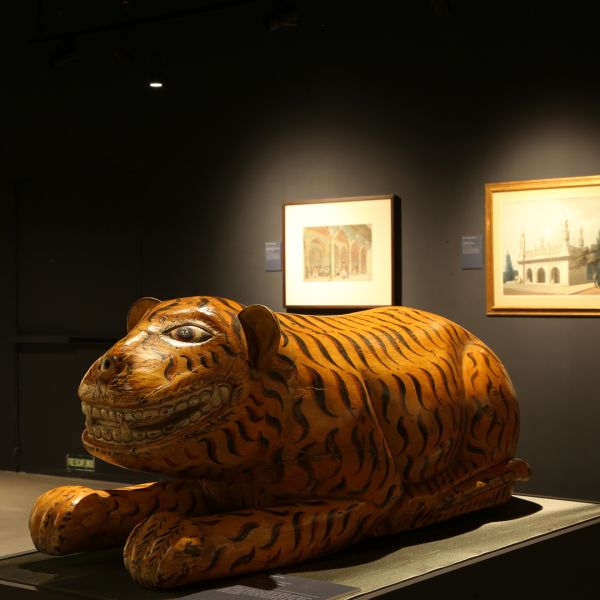
An extraordinary exhibition of paintings, prints, maps and other objects, curated by Giles Tillotson, that recounts a visual history of the Mysore Wars between the East India Company and Tipu Sultan, this DAG exhibition explores how the narrative might have changed 222 years after the siege of Seringapatnam. The images, based on the British view of the time, reflect changing perceptions and Indian views on this epic battle and its political and social fallouts. A highlight of the exhibition is a painting by Henry Singleton depicting The Last Effort and Fall of Tippoo Sultaun, among other stellar works, that will be seen in India for the first time. Alexander Allan Cpt. R. Frazer David Wilkie Edward Orme Henry Singleton J. B. Mauzaisse James Hunter Johann Peter Krafft John Smart Mather Brown Obadiah Sherratt Robert Hyde Colebrooke Robert Home Robert Ker Porter Thomas Stothard
Learn More -
 ExhibitionsA Place In The Sun: Women Artists From 20th Century IndiaAs low as $1.00
Sunayani Devi picked up a paintbrush in 1905 when she was thirty years old while supervising her kitchen duties, self-taught, but with enough talent to attract the critical attention of Stella Kramrisch who organised an exhibition of her paintings in Germany in 1927. It was in her worthy footsteps that India’s women artists followed. Devayani Krishna was born five years after Sunayani Devi began painting; Amrita Sher-Gil already had a career in Paris by the time India’s first art school-trained woman artist, Ambika Dhurandhar, earned her diploma in Bombay. B. Prabha followed next, her work reflecting the realities of the marginalised in a piquant language. By the time Nasreen Mohamedi and Zarina Hashmi, both born a decade before Independence, established their careers, women were joining art schools in greater numbers, validating their practice not on the basis of their gender but on its context. Anupam Sud Devayani Krishna Gogi Saroj Pal Latika Katt Madhvi Parekh Mrinalini Mukherjee Navjot Rekha Rodwittiya Shobha Broota Zarina Hashmi
Learn More -
 Art FairsART15$0.00
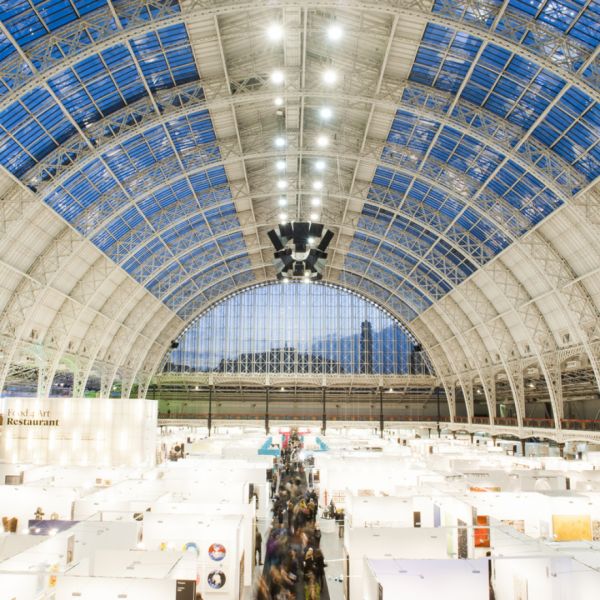
For its debut in London, DAG created a booth-in-booth display space at the historical exhibition venue, Olympia London, that offered glimpses of the artworks from all around, thereby improving its visibility and attracting visitors. Its choice of art too reflected the best from its collection of the twentieth century modern masters of Indian art, who, in turn, had been influenced by movements and artists in the West. Several of these had worked, briefly or for the duration of their careers, in London and Europe. These included Avinash Chandra, F. N. Souza, Ram Kumar, S. H. Raza, Laxman Pai, Manjit Bawa,
Learn More
S. K. Bakre, Sakti Burman and Sohan Qadri among others. The room within the booth was reserved solely for the paintings by F. N. Souza. Akbar Padamsee Ambadas Anjolie Ela Menon Avinash Chandra B. Prabha Bikash Bhattacharjee Dharamnarayan Dasgupta F. N. Souza G.R. Santosh George Keyt Himmat Shah J. Sultan Ali Jogen Chowdhury K. H. Ara K. K. Hebbar K. Laxma Goud Krishen Khanna Laxman Pai M. F. Husain Manjit Bawa N. S. Bendre P. T. Reddy Prodosh Das Gupta Rabin Mondal Ram Kumar S. H. Raza S. K. Bakre Sakti Burman Sohan Qadri Sunil Das -
 JournalEighty-Five Safety Pins by Prabhakar Barwe$1.00
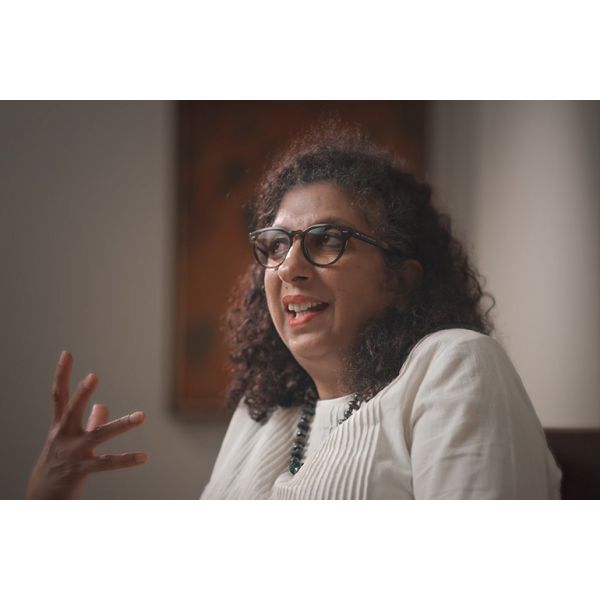
Prabhakar Barwe’s Eighty-Five Safety Pins is a pioneering work that merges technology and traditional art. Created in 1991 using graphic design software on an Apple Macintosh, Barwe explored the concept of pixels, a hallmark of the digital era, while incorporating his signature enamel paint. This innovative approach reflects his curiosity about embracing the unknown future and reinterpreting it artistically. By abstracting the safety pin from its conventional form, Barwe invites viewers to reconsider its essence, offering an open-ended visual experience that challenges preconceived notions and encourages alternative perspectives. Art connoisseur Shireen Gandhy, a friend of the late artist, takes us behind the making of this extraordinary painting.
Learn More -
 ExhibitionsAmitava: The Complete WorksAs low as $1.00
In a career spanning four decades, Amitava’s location as an artist has determined the authority that he brings to his practice. As an artist studying and working in the 1960s, Amitava Das experienced a decade of fragmented locii. The ’60s, the period of his education at the College of Art, was the decade of wars, fiscal difficulty and an uncertain polity in the wake of the death of Jawaharlal Nehru. Further, as a second generation pravasi (non-residing Indian) Bengali, the roiling political violence of West Bengal’s Naxal movement came to him through the filter of poetry, film and art—much as he would have received the existential writing of Camus, Genet and Rilke. Through the 1960s and ’70s, small groups of artists and filmmakers in different pockets in India had a heightened response: the state of the nation found an uncanny echo in the language of modernism, of the artist’s isolation and purity even within a state of uncertainty.
Learn More -
-
 Institutional CollaborationsDRISHYAKALA$1.00
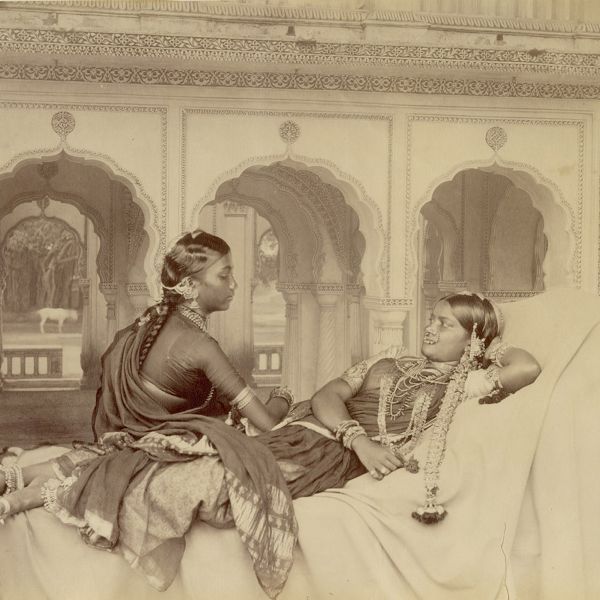
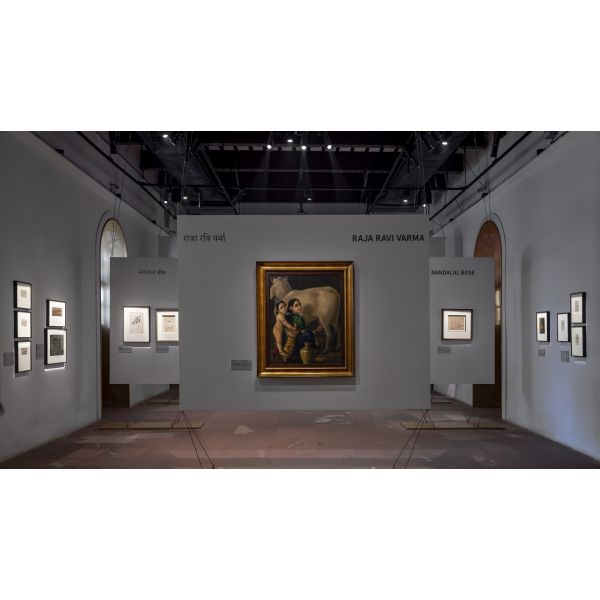
How did the multiple trajectories of visual arts develop in the subcontinent? Where did they originate and how did their paths converge? Drishyakala offers a sweeping journey into the heterogenous histories of visual arts in India, from the first European travelling artists who drew landscapes to popular prints of the earliest woodcuts and lithographs evolving into the thriving advertising visuals of the 20th century. The exhibition is broadly divided into four categories, each exploring an unique area of development—the art of portraiture through photography and painting, oriental sceneries drawn by European travelling artists, popular prints from the late eighteenth century to post-independence and artworks of the nine National Treasure Artists. Together, these sections give brief glimpses into the dizzying variety of forms, styles and languages of South Asian art.
Learn More