Search results for: 'armada portrait of elizabeth i of england symbol meaning'
-
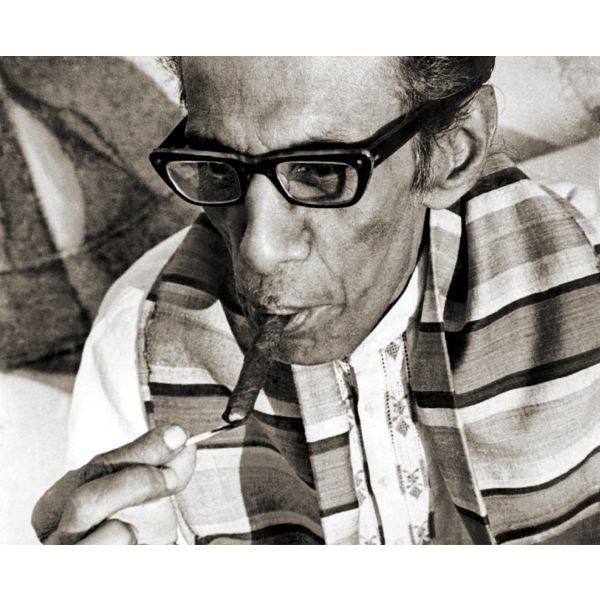 ArtistsSunil Madhav Sen$0.00Born in Purulia in West Bengal, Sunil Madhav Sen was a self-taught artist. Though he learned drawing as a child from a local teacher, he studied law and the liberal arts at Calcutta University and worked for the government. He pursued his passion for art privately alongside his legal practise, visiting the studios of Abanindranath Tagore, Atul Bose, J. P. Gangooly, and Satish Sinha. He also apprenticed for two years under Hemendranath Mazumdar, honing his skills in portrait painting. Learn More
 -
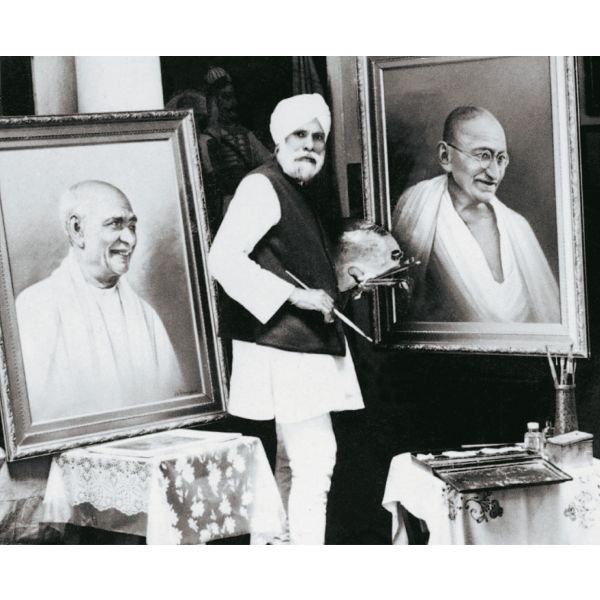 ArtistsS. G. Thakar Singh$0.00Born in 1899 in the village of Verka near Amritsar, S. G. Thakar Singh showed early aptitude for the arts by drawing on the walls of his home with coal. With no formal training, he went on to excel in the academic style of painting, rendering stunning landscapes, portraits and still-lifes. He apprenticed under local artist Mohd. Alam and moved with him to Bombay when the latter found a job as a stage artist with a theatre company. Learn More
 -
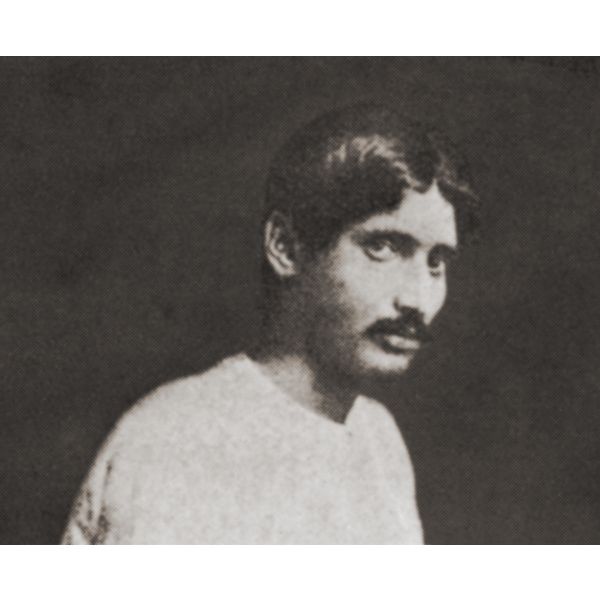 ArtistsHemen Mazumdar$0.00A notable artist of the rebel Jubilee Art School that trained students in the British academic style, breaking away from Abanindranath Tagore’s Orientalist emphasis, Hemendranath Mazumdar enjoyed great artistic success for his academic paintings of sensuous women and portraits of maharajas done in European realist style. Learn More
 -
 ExhibitionsPrimitivism & Modern Indian ArtAs low as $1.00
This exhibition looks at the diverse range, moods and styles that primitivism has taken in India, some artists practicing entirely in that style, while others experimenting with it in part, or sporadically. One can count simplicity and a move away from sophistication as key components, as also an inclination or at least a nod towards the folk. The exhibition does not attempt to be a comprehensive survey of India’s primitivists—there are others who would bear inclusion—but is an attempt to understand a body of work and how, given its Western countenance, it can be understood in the Indian context. More than anything else, it offers a clearer view than in the past of what primitivism might mean in the context of modern Indian art. Amrita Sher-Gil F. N. Souza George Keyt Himmat Shah J. Sultan Ali Jamini Roy Jogen Chowdhury K. G. Subramanyan K. S. Kulkarni M. F. Husain Madhvi Parekh Mohan Samant Rabin Mondal Rabindranath Tagore Ramkinkar Baij Sunayani Devi
Learn More -
 ExhibitionsPrabhakar Barwe: Between Object and SpaceAs low as $1.00
Prabhakar Barwe (1936-95) could well have ended up a theoretician whose book 'Kora Canvas' (Blank Canvas) was a manifesto that established the multi-dimensional relationship between an artist, the object on which he paints, and his subjects. That he was not just an intellectual scholar but an artist whose work speaks for him, is evident through a range of works in which Barwe dissects our understanding of the world and how we view it. Taking commonplace objects and our perception of their existence in the space they occupy, he shifts the dialogue to a point of discomfiture that makes us question our understanding of them. Using scale, discordant juxtapositions, and displacements, he reimagines the everyday in a manner that is thought-provoking, even provocative, as alternate realities—whether perceived or imagined.
Learn More -
-
 ExhibitionsThe World Will Go OnAs low as $1.00
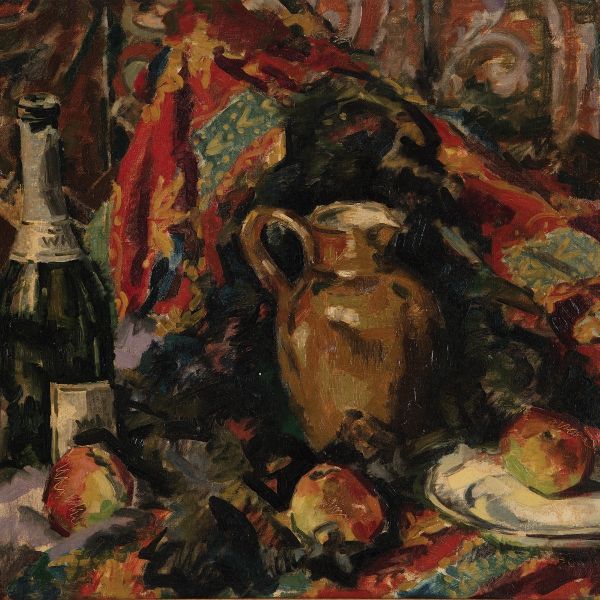
2020 marks a special year in mankind’s history and India’s destiny. Often used in reference to development goals, 2020 has taught us to never take things for granted. While humanity has made major leaps, even conquering outer space, nature has shown us how little we know about it, and how little we appreciate what we have. 2020 has taught us to review our values. We have suffered but also been comforted, and we have learned to acknowledge that irrespective of our joys and sorrows, our triumphs and our failures, the world will not stop, it will go on. Husain Rabin Mondal Santosh Jehangir Sabavala Mohan Samant Swaminathan Paramjit Paramjeet Ramgopal Vijaivargiya Seal Singh Dasgupta Haren Das Shanti Dave Jagadish Dhanapal Dhurandhar Bipin Behari Goswami Laxma Goud George Keyt Ara Nandalal Bose Jyoti Bhatt Natvar Bhavsar Eric Bowen Shobha Broota Avinash Chandra Sanat Chatterjee Shiavax Chavda Hebbar Khemraj Krishen Khanna Walter Langhammer Jeram Patel Aroomogam Pillay Raza Reddy Jamini Roy Vasudev Viswanadhan Manu Madhvi Parekh Laxman Pai Dhirendra Narayan Dharamanarayan.
Learn More -
 ExhibitionsG. R. Santosh: AwakeningAs low as $1.00
An unassuming trailblazer, Gulam Rasool Santosh is the most important artist from the movement known as neo-tantra in Indian art, synonymous with masters such as Biren De and Sohan Qadri. Self-taught, Santosh began his career painting landscapes in his native Kashmir before being spotted by S. H. Raza, which enabled him to study at the Maharaja Sayajirao University at Baroda under the famous artist N. S. Bendre. After a few years of painting figurative and abstract works in the mould of the other Indian Progressives, Santosh’s art changed dramatically towards tantra when he had a mystical experience in the Amarnath cave in 1964. From then on, until his death in 1997, G. R. Santosh dedicated his life to the study and practice of tantra, a yogi as much as an artist.
Learn More -
 ExhibitionsThe Centum Series Edition 2As low as $1.00
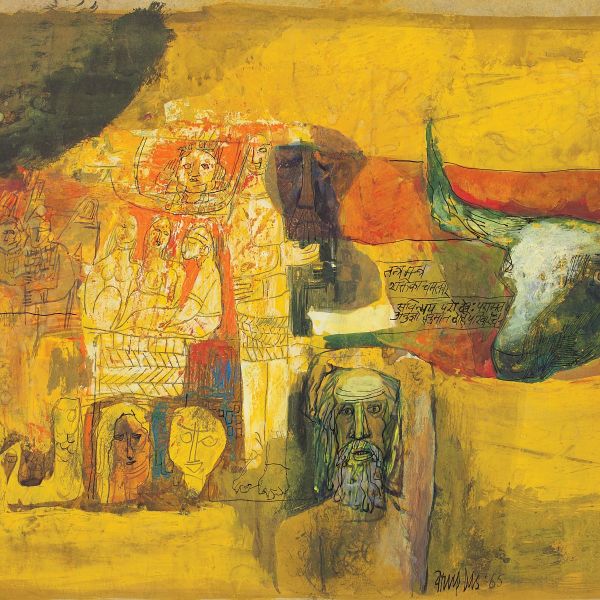
Indian art defies any easily tailored silos to carve for itself a confident assertion of its own identity within a global context, while being a part of its larger assimilative journey. it is this rich legacy of Indian modernism that we hope to explore with The Centum Series which opens a window to the tantalising glimpse of the extraoridnary depth and breadth of its scope and variety. Round numbers are attractive, so we picked one hundred as our choice for this medley of artists and artworks that offers you a unique opportunity to acquire Indian modern art at attractive prices specially tailored for this sale. J. Sultan Ali Altaf Ambadas Amit Ambalal Amitava Anonymous (Early Bengal) Anonymous (Kalighat Pat) Dattatraya Apte B. N. Arya Radha Charan Bagchi Ramkinkar Baij S. K. Bakre Maniklal Banerjee Ananda Moy Banerji Prabhakar Barwe R. B. Bhaskaran Jyoti Bhatt Bikash Bhattacharjee Nikhil Biswas Nandalal Bose Eric Bowen Shobha Broota Vasundhara Tewari Broota Sakti Burman Ramendranath Chakravorty Kanchan Chander Avinash Chandra Sankho Chaudhuri Chittaprosad Jagmohan Chopra Jogen Chowdhury M. A. R. Chughtai Thomas Daniell Arup Das Prodosh Das Gupta Haren Das Sunil Das Bimal Dasgupta Shanti Dave Partha Pratim Deb Jagadish Dey Mukul Dey Rajendra Dhawan Indra Dugar Gopal Ghose Nemai Ghosh Subba Ghosh Bipin Behari Goswami K. Laxma Goud Satish Gujral Ajit Gupta S. L. Haldankar Somnath Hore M. F. Husain Prokash Karmakar Sudhir Khastgir P. Khemraj Bose Krishnamachari K. S. Kulkarni Ram Kumar Walter Langhammer Pradip Maitra Hemanta Misra Dhruva Mistry Rabin Mondal A. H. Müller L. Munuswamy V. Nageshkar Reddeppa Naidu S. Nandagopal Ved Nayar Akbar Padamsee Laxman Pai Gogi Saroj Pal Rm. Palaniappan M. K. Parandekar Madhvi Parekh Manu Parekh R. N. Pasricha Ganesh Pyne Sohan Qadri K. S. Radhakrishnan A. A. Raiba Krishna Reddy P. T. Reddy Rekha Rodwittiya Jamini Roy Prosanto Roy G. R. Santosh Paritosh Sen Nataraj Sharma Lalu Prasad Shaw Shuvaprasanna Paramjeet Singh F. N. Souza Anupam Sud Thota Vaikuntam S. G. Vasudev Jai Zharotia Moti Zharotia
Learn More -

-