Search results for: 'whatever people say i am that's what i'm not release daste'
-
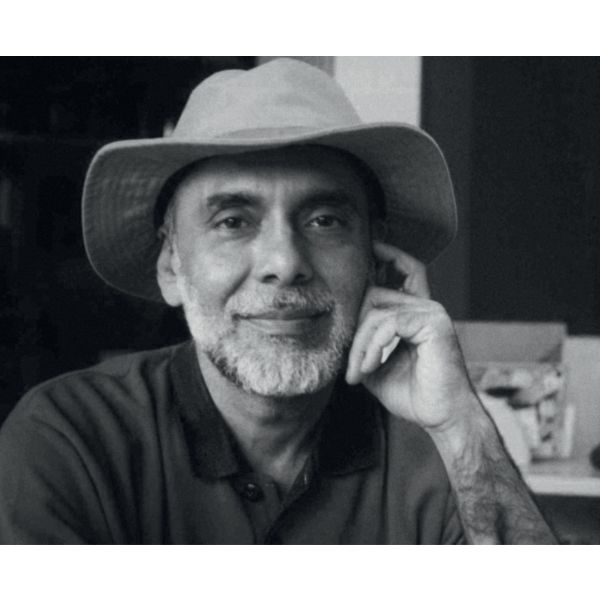 ArtistsRanbir Singh Kaleka$0.00Born in Patiala, Punjab, in 1953, Ranbir Kaleka earned a diploma in painting from Punjab University’s College of Art in Chandigarh. He spent the next few years teaching at Punjab University and College of Art, New Delhi, before leaving for London on a Charles Wallace scholarship to study at Royal College of Art from 1985-87. He stayed on in London for several years and returned to India in the late 1990s. Learn More
 -
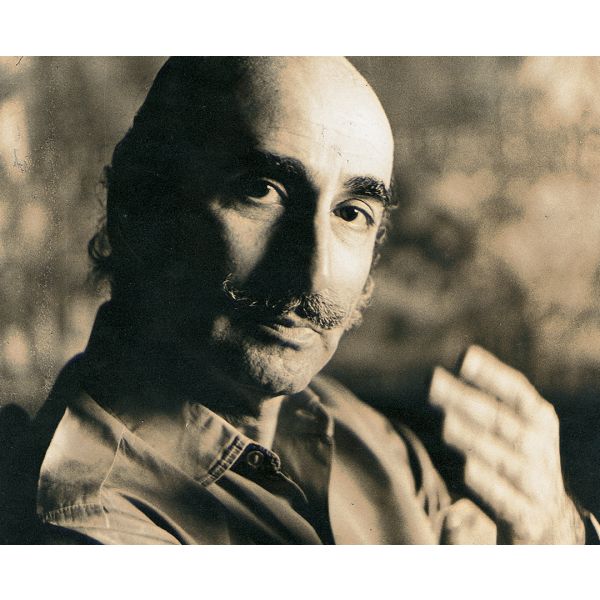 ArtistsJehangir Sabavala$0.00A painter with a strikingly elegant bearing, Jehangir Sabavala was born on 23 August 1922 in an affluent Parsi family in Bombay and grew up in an intellectually charged environment. He studied at Elphinstone College, Bombay, before graduating from Sir J. J. School of Art in 1944. Thereafter, he studied at some of the leading art schools of Europe—The Heatherly School of Art, London (1945-47), Académie André Lhote, Paris (1948-51), Académie Julian, Paris (1953-54), and Académie de la Grande Chaumière, Paris (1957). Learn More
 -
-
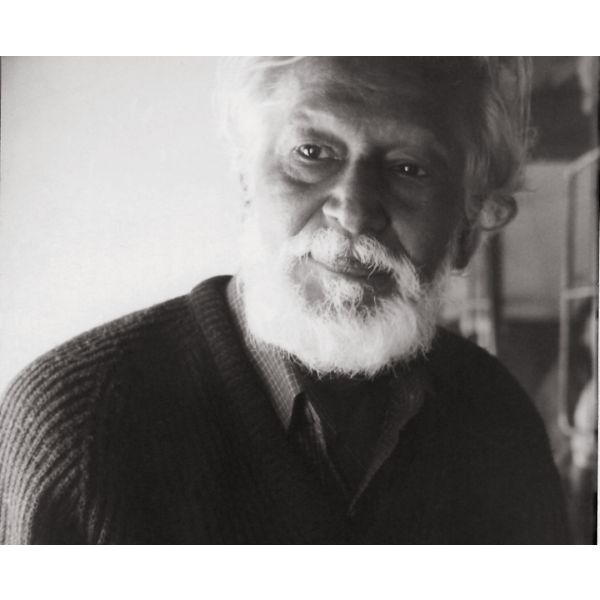 ArtistsL. Munuswamy$0.00A dynamic artist, intellectual, and educator, L. Munuswamy was a prominent practitioner within the Madras Art Movement who made abstraction a personal language in his artistic vocabulary. What made his works appealing was the international character, his individualistic vision and single-minded pursuit in his artistic endeavours. Learn More
 -
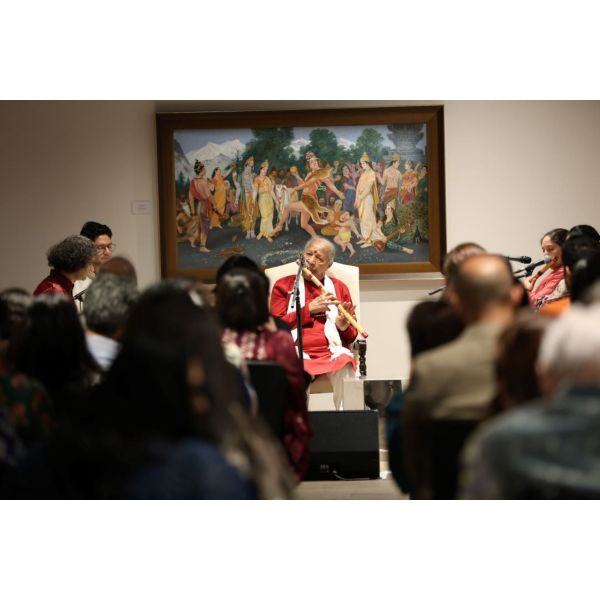 JournalAn Evening with Pandit Hariprasad Chaurasia$1.00
Guests joined DAG for an enchanting flute recital by internationally acclaimed Pandit Hariprasad Chaurasia and a curatorial walk-through of Delhi Durbar: Empire, Display and the Possession of History by historians and curators Rana Safvi and Swapna Liddle.
Learn More -
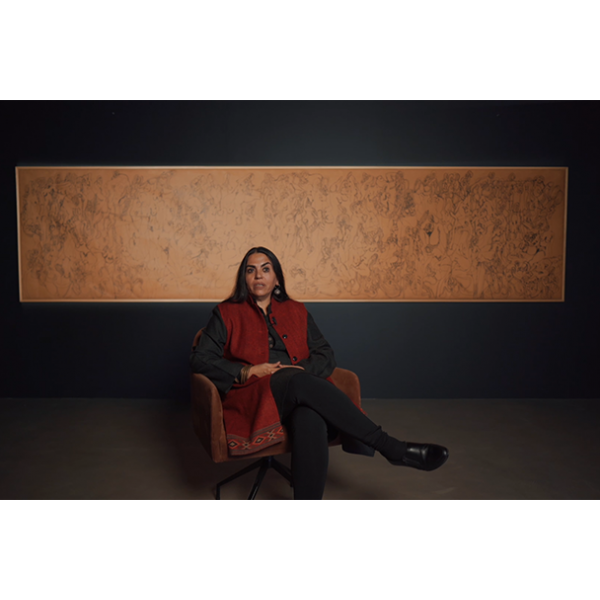 JournalAlita Chandra on Avinash Chandra$0.00
Alita Chandra, daughter of the artist Avinash Chandra reflects on the transcultural influences on his painting and his preoccupation with female subjects.
Learn More -
 Collection OnlineTHE WASH TECHNIQUE$1.00
The wash technique has come to be associated in India with the art of the Bengal School, but the story of its origins in India takes us back to an era of rich cultural exchanges. In the early twentieth century artists like Abanindranath Tagore were trying to imagine a pan-Asian cultural identity, and they turned for inspiration to traditions from across Persia to Japan. Rabindranath Tagore's friendship with Okakura Kakuzō occasioned the arrival of several Japanese artists in Kolkata, such as Yokoyama Taikan, Hishida Shunsō and Katsuta Shōkin. While the latter found inspiration in the Hindu epics, artists in Bengal adapted techniques that were used by the Japanese, such as the wash technique or the subtle use of ink and brush. Since then, the wash technique has been interpreted widely by individual artists, offering an ethereal quality of light to their works, or, in some cases, like for Gaganendranath Tagore and Prosanto Roy, new possibilities of painting in various shades of darkness.
Learn More -
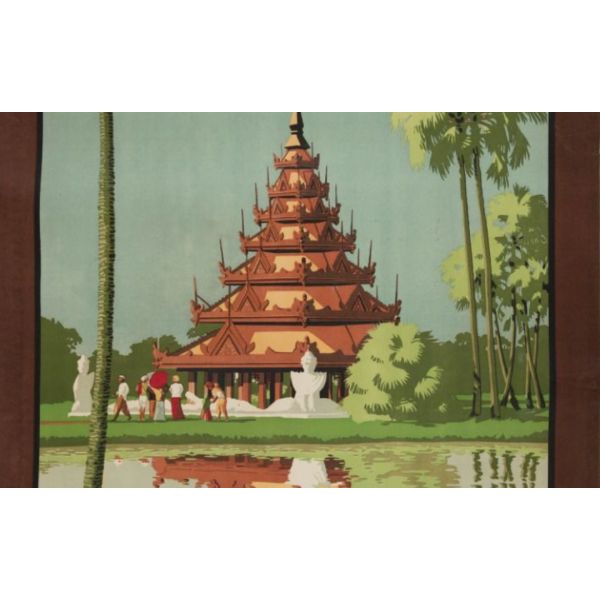 Events and ProgrammesMappa theke Manchitra$1.00
A guided walk of the first free circulating public library of India—Uttarpara Public Library—with researcher Sarbajit Mitra, traversing the history of regional literary cultures, and sifting through their vast archive to delve into the vibrant world of illustrated periodicals in colonial Bengal, followed by a poetry reading by Sujoy Prasad Chatterjee.
Learn More -
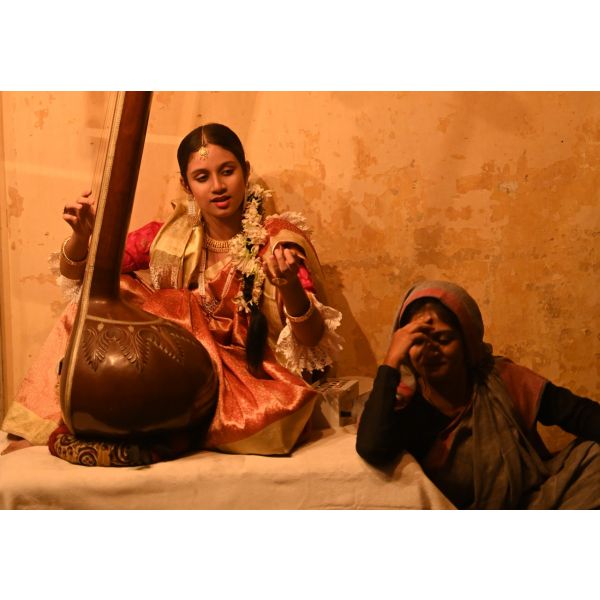 Events and ProgrammesKeyabat Meye$1.00
Feminist collective Samuho navigates the interplay between the interior and exterior lives of women at the cusp of nineteenth century reform movements through a performance-installation inspired by Shreepantha’s Keyabat Meye and the tradition of Prahasan.
Learn More