


Search results for: 'briefing table and chair of school'
-
 Institutional CollaborationsMARCH TO FREEDOM: REFLECTIONS ON INDIA'S INDEPENDENCE$1.00
March to Freedom re-interprets the well-known story of the Indian freedom struggle and anticolonial movement through works of art and some historic artefacts. Drawn from the collections of DAG, they range from eighteenth and nineteenth century European paintings and prints, to lesser known works by Indian artists that merit greater recognition, alongside some iconic pieces. Rather than following the usual chronological path, the story is structured around eight themes. Each represents one arena, or stage, on which the anti-colonial struggle took place, to expand the story beyond politics, politicians, and battles (which also feature). Conceived to commemorate and celebrate the 75th anniversary of India’s independence, this visual journey seeks to do more. For even as we remember the struggles, the sacrifices, and the stories, such anniversaries are also occasions for reflection, including upon the scholarship that has developed on South Asian history. Some of the latter may be familiar to academics, or those with special interests. For most of the rest of us, our knowledge of this past is derived in large part from hazy memories of school lessons, which change from one generation to the next, and are influenced by concurrent national politics. We also learn from narratives on offer through public channels or in the media, to mark moments of national remembrance or controversy.
Learn More -
 ExhibitionsManifestations VIII: 75 ArtistsAs low as $1.00
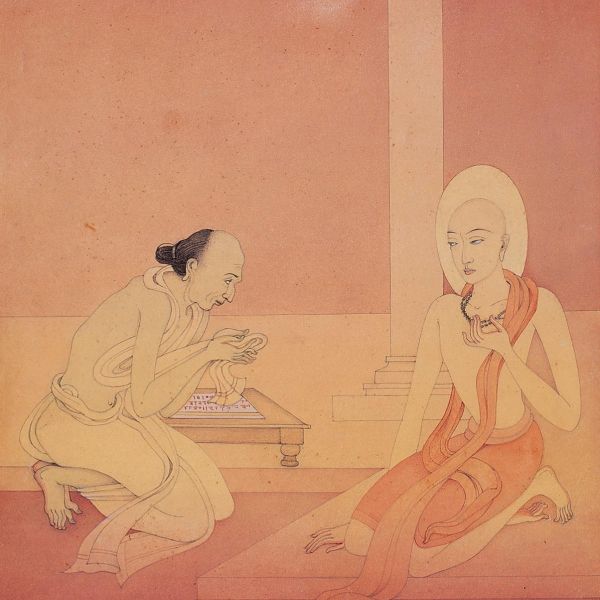
The exhibition brings together important and unusual works of art that span a wide range of genres, forms, periods and styles. They are grouped by genre, of abstract art, figurative art, landscape art, portraiture and still-life. Each thematic arrangement features a select collection of artworks from the artist’s mature period, several of which are of substantial art historical significance. Ambadas S. K. Bakre Avinash Chandra V. S. Gaitonde Ganesh Haloi Hemanta Misra Jeram Patel Sohan Qadri S. H. Raza Krishna Reddy G. R. Santosh Laxman Shreshtha Figurative J. Sultan Ali A. A. Almelkar Amitava Radha Charan Bagchi Bikash Bhattacharjee Nikhil Biswas Sakti Burman Chittaprosad Bijan Choudhary Prodosh Das Gupta Dharamnarayan Dasgupta Biren De S. Dhanpal M. V. Dhurandhar Shyamal Dutta Ray Early Bengal (Anonymous) K. Laxma Goud Satish Gujral M. F. Husain Kalighat Pat (Anonymous) Prokash Karmakar George Keyt Krishen Khanna P. Khemraj K. S. Kulkarni Ram Kumar Kshitindranath Majumdar Tyeb Mehta Anjolie Ela Menon Rabin Mondal M. Reddappa Naidu Badri Narayan Navjot Laxman Pai Gogi Saroj Pal Gieve Patel Ganesh Pyne Ravi Varma School (Anonymous) P. T. Reddy Jamini Roy Paritosh Sen Sunil Madhav Sen B. Vithal Landscape Akbar Padamsee Kisory Roy F. N. Souza J. Swaminathan Portraits Anonymous Jyoti Bhatt Sankho Chaudhuri Jogen Chowdhury Sunil Das Olinto Ghilardi Surendran Nair M. F. Pithawalla A. A. Raiba Himmat Shah Rabindranath Tagore Still-life K. H. Ara K. K. Hebbar B. Prabha Jehangir Sabavala S. G. Thakur singh
Learn More -
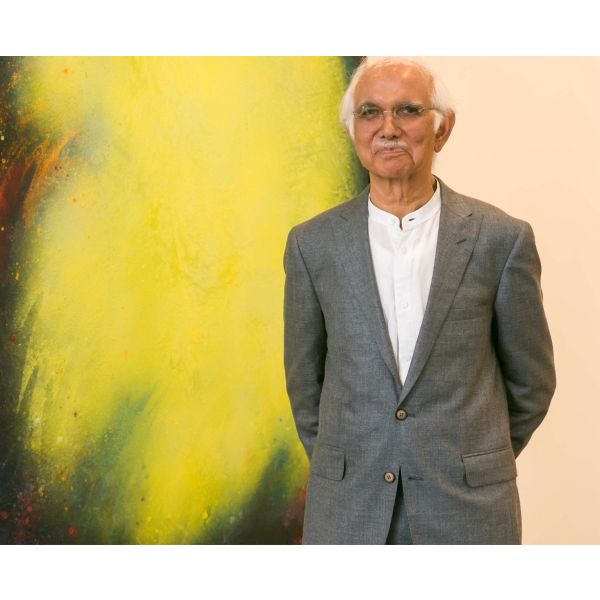 ArtistsNatvar Bhavsar$0.00Born in an educator’s family on 7 April 1934 in a small town in Gujarat, Natvar Bhavsar studied to be a drawing teacher and began his career in Chanasma. He then joined the C. N. School in Ahmedabad for its five-year diploma course in art offered by Sir J. J. School of Art; simultaneously, he continued to study for his master’s in teaching art. Learn More
 -
 ExhibitionsWilliam Hodges & the Prospect of IndiaAs low as $1.00
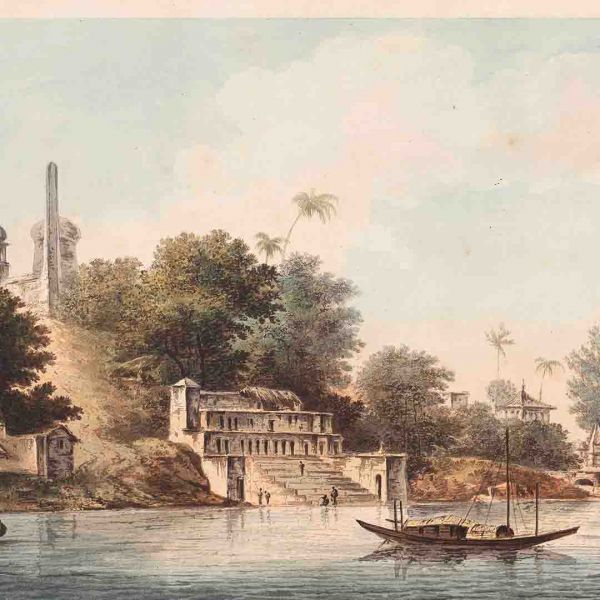
William Hodges (1744-97) was a pioneer in more ways than one. He was the first British landscape painter to visit India, and to portray scenery across the whole breadth of the Gangetic plain. As a writer, he gave the first detailed descriptions of numerous historic Indian buildings, and he theorised about the origins and evolution of Indian architectural design. His art illustrates his exploration into terrain which—in its breadth and scope—was at the time almost as unfamiliar to Indian as to Western eyes.
Learn More -
 ExhibitionsManifestations IX: 75 ArtistsAs low as $1.00
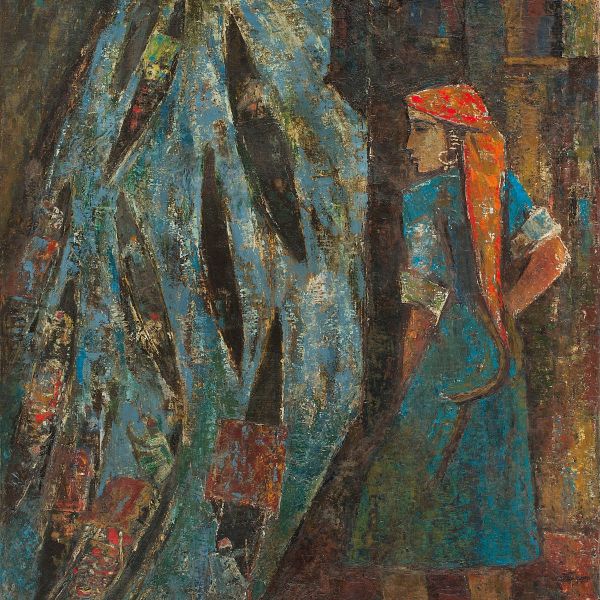
The exhibition brings together important works of art spanning a wide range of genres, forms, periods and styles. They are grouped by genre and each thematic arrangement features a select collection of artworks that are milestones in Indian modernism, as well as in the development of the artistic language of several of the participating artists. A. A. Raiba Abalall Rahiman Akbar Padamsee Ambadas Amitava Avinash Chandra B. C. Sanyal B. N. Arya Baburao Painter Benode Behari Mukherjee Bikash Bhattacharjee Bipin Behari Goswami Biren De Chittaprosad Devyani Krishna Dharamnarayan Dasgupta Early Bengal (Anonymous) F. N. Souza G. R. Santosh Ganesh Haloi Ganesh Pyne George Keyt Gieve Patel Gogi Saroj Pal Gopal Ghose H. A. Gade Hemanta Misra Himmat Shah Indra Dugar Indu Rakshit J. P. Gangooly J. Sultan Ali Jamini Roy Jeram Patel K. H. Ara K. K. Hebbar K. Laxma Goud Kshitindranath Majumdar Laxman Pai M. F. Husain M. F. Pithawalla M. V. Dhurandhar Manu Parekh Mohan Samant N. R. Sardesai Nandalal Bose Nikhil Biswas P. Khemraj P. S. Chander Sheker P. T. Reddy P. V. Janakiram Paritosh Sen Pestonji E. Bomanji Prabhakar Barwe Prodosh Das Gupta Prokash Karmakar Rabin Mondal Rabindranath Tagore Radha Charan Bagchi Ram Kumar Ravi Varma School (Anonymous) S. Dhanapal S. G. Thakur Singh S. H. Raza S. K. Bakre Satish Gujral Shanti Dave Shiavax Chavda Shyamal Dutta Ray Sohan Qadri Sunil Das Surendran Nair Tyeb Mehta V. Nageshkar Vivan Sundaram
Learn More -
 ExhibitionsDAG at Serendipity Goa 2016As low as $1.00
By the end of the century, however, the scene was changing, and infrastructure—following the economic reforms in 1991—began to improve, creating an interest in collecting art. Twentieth century Indian modern art has since been at the forefront of collecting and investing in Indian art, and DAG, which has the largest private collection of Indian art has a marked focus on this period of Indian art. Ambadas F. N. Souza G. R. Santosh George Keyt Jamini Roy K. K. Hebbar Kanwal Krishna Laxman Pai M. F. Husain M. F. Pithawalla M. V. Dhurandhar Madhvi Parekh Nandalal Bose Nemai Ghosh Prokash Karmakar Rabin Mondal
Learn More -
-
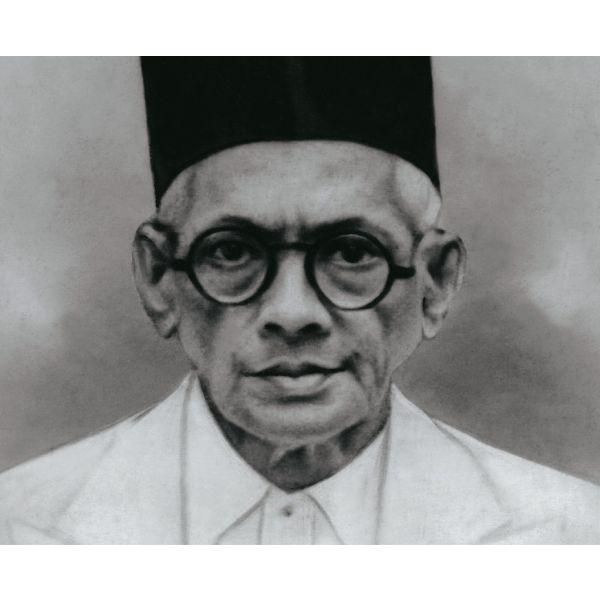 ArtistsN. R. Sardesai$0.00N. R. Sardesai was born in 1885 in Ratnagiri, Maharashtra, and completed his early education at the Ratnagiri School of Industry. Here, he studied carpentry and drawing in 1906, before joining Sir J. J. School of Art, Bombay, for formal training in art. Thereafter, he began work as a drawing teacher in a school in Fort, Bombay. In 1915, he had a short stint as a drawing teacher at his alma mater too. Learn More
 -
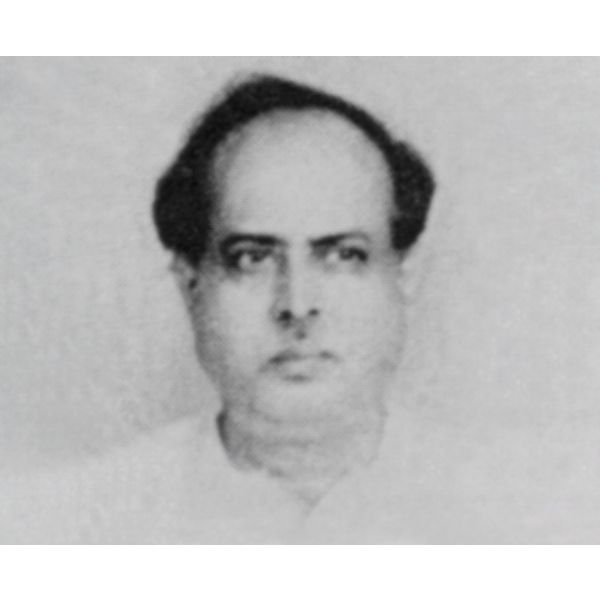 ArtistsSushil Chandra Sen$0.00Enamoured by watercolour as a medium, Sushil Chandra Sen studied at Government School of Art, Calcutta; in 1936, he joined the school as a lecturer. He also taught briefly at Delhi Polytechnic before returning to Calcutta to officiate as vice-principal of his alma mater. Learn More
 -
 ExhibitionsContinuumAs low as $1.00
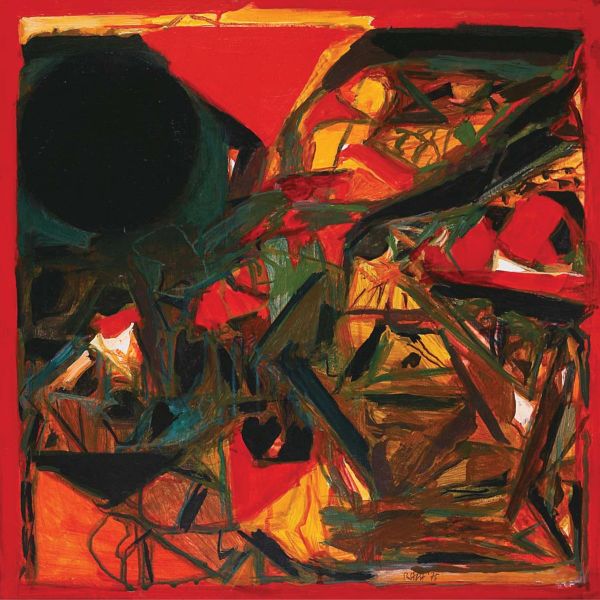
Most shows at DAG take time to develop because of the quality of research and scholarship they require to mount, but even by our own exacting standards, Continuum has taken longer than most. This, a retrospective in a sense of the six artists who formed the Progressive Artists’ Group, is seminal because it is for the first time since 1950 that the six artists forming the core group have been brought together in an exhibition of their works. The Progressives have become the rallying point for the modern movement in Indian art, and are considered among the most important artists of the last and current century. Of these, M. F. Husain, F. N. Souza and S. H. Raza dominate the market. Alongside, works by their contemporaries K. H. Ara, H. A. Gade and S. K. Bakre, who have largely been seen to have underperformed in comparison, will help re-draw such distinctions and place them on the same platform as their better-known peers. It will re-define their historical importance and gain them the recognition that is their due. Maqbool Fida Husain M.F.Husain Hari Ambadas Gade Syed Haider Raza Krishnaji Howlaji Ara Sadanandji k. Bakre Francis Newton Souza
Learn More -
 ExhibitionsTantra on the EdgeAs low as $1.00
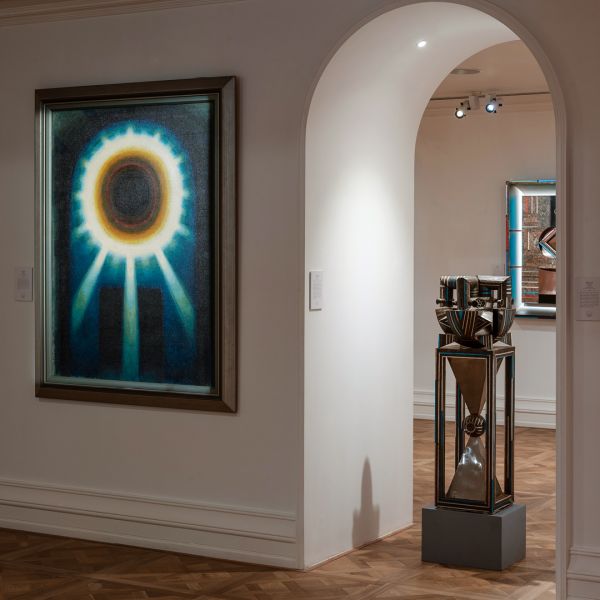
The exhibition Tantra on the Edge: Inspirations and Experiments in Twentieth Century Indian Art is a pioneering attempt to gather together works of sixteen prominent Indian artists under the single thematic rubric of the transient but least definable phases of contemporary art in the last century. The exhibition features the artworks, inspirations, and experiments, of artists that had a sustained relationship with tantra philosophy, its vivid, abstract, sacred symbols, or their personal spiritual illuminations. Biren De G. R. Santosh Gogi Saroj Pal J. Swaminathan Jyoti Bhatt K. C. S. Paniker Manu Parekh P. T. Reddy Prabhakar Barwe R. B. Bhaskaran S. H. Raza Satish Gujral Shobha Broota Sohan Qadri Sunil Das V. Viswanadhan
Learn More -
 ExhibitionsPrabhakar Barwe: Between Object and SpaceAs low as $1.00
Prabhakar Barwe (1936-95) could well have ended up a theoretician whose book 'Kora Canvas' (Blank Canvas) was a manifesto that established the multi-dimensional relationship between an artist, the object on which he paints, and his subjects. That he was not just an intellectual scholar but an artist whose work speaks for him, is evident through a range of works in which Barwe dissects our understanding of the world and how we view it. Taking commonplace objects and our perception of their existence in the space they occupy, he shifts the dialogue to a point of discomfiture that makes us question our understanding of them. Using scale, discordant juxtapositions, and displacements, he reimagines the everyday in a manner that is thought-provoking, even provocative, as alternate realities—whether perceived or imagined.
Learn More