


Search results for: 'Nikon AF-S 70-200mm f/4G ED VR'
-
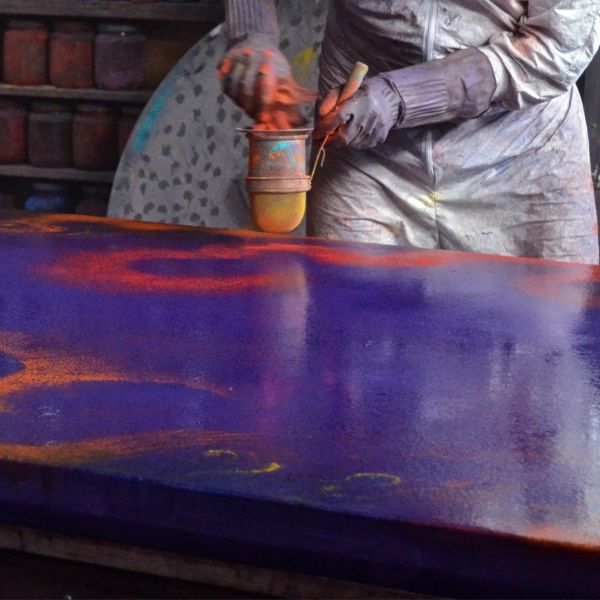 ExhibitionsNatvar Bhavsar: HomecomingAs low as $1.00
It is strange that Natvar Bhavsar, one of Indian art’s leading names, should never have been shown in India before. Having lived and worked in USA from 1962 onwards, it remains a mystery why his work has been seen in America but almost not at all in India. In spite of a few eminent collectors who have his work, Bhavsar has remained inexplicably ignored—an anomaly DAG is happy to correct with this seminal exhibition.
Learn More -
 ExhibitionsContinuumAs low as $1.00
Most shows at DAG take time to develop because of the quality of research and scholarship they require to mount, but even by our own exacting standards, Continuum has taken longer than most. This, a retrospective in a sense of the six artists who formed the Progressive Artists’ Group, is seminal because it is for the first time since 1950 that the six artists forming the core group have been brought together in an exhibition of their works. The Progressives have become the rallying point for the modern movement in Indian art, and are considered among the most important artists of the last and current century. Of these, M. F. Husain, F. N. Souza and S. H. Raza dominate the market. Alongside, works by their contemporaries K. H. Ara, H. A. Gade and S. K. Bakre, who have largely been seen to have underperformed in comparison, will help re-draw such distinctions and place them on the same platform as their better-known peers. It will re-define their historical importance and gain them the recognition that is their due. Maqbool Fida Husain M.F.Husain Hari Ambadas Gade Syed Haider Raza Krishnaji Howlaji Ara Sadanandji k. Bakre Francis Newton Souza
Learn More -
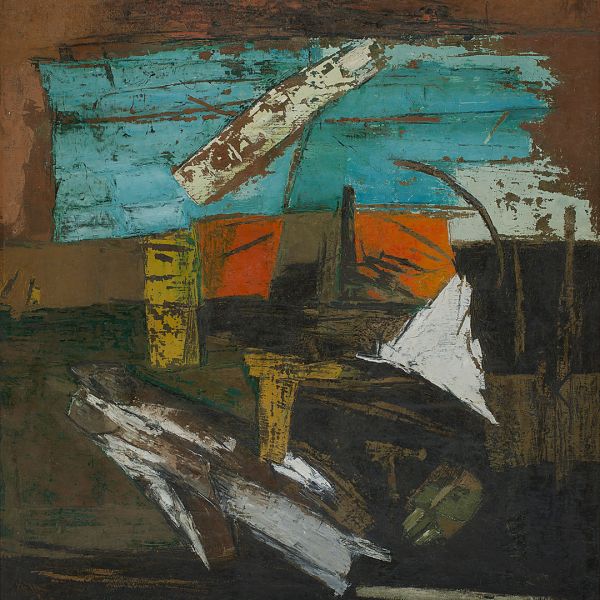 ExhibitionsIndian AbstractsAs low as $1.00
The term ‘abstract’ has been loosely used, more so in the Indian context, where we have only a vague notion of what it implies. Even the slightest distortion in art is popularly referred to as abstraction. And while distortion ultimately results in abstraction, the two are at opposing ends of the visual pole as far as understanding the genre goes. Over several years, viewers have been guided almost by a gut instinct of what constitutes abstract art. And though one concedes that rigid compartments to demarcate genres are neither practical, nor desirable, some understanding of what constitutes abstract art is essential. A. M. Davierwalla Akbar Padamsee Ambadas Amitava Amrut Patel Asit Kumar Haldar Avinash Chandra Baburao Sadwelkar Benode Behari Mukherjee Bikash Bhattacharjee Bimal Dasgupta Biren De Bishamber Khanna Biswanath Mukerji Devayani Krishna Devraj Dakoji Dhanraj Bhagat Dharamnarayan Dasgupta F. N. Souza G. R. Santosh Ganesh Haloi H. A. Gade Hemanta Misra Himmat Shah J. Swaminathan Jeram Patel Jyoti Bhatt K. C. S. Paniker K. G. Subramanyan K. S. Kulkarni Krishna Reddy L. Munuswamy Laxman Pai Laxman Shrestha M. F. Husain Nasreen Mohamedi P.Khemraj P.T.Reddy Partha Pratim Deb Piloo Pochkhanawala Prabhakar Barwe Prabhakar Kolte Prokash Karmakar R. M. Palaniappan R. N. Pasricha Rabin Mondal Raghav Kaneria Ram Kumar S. G. Vasudev S. H. Raza S. K. Bakre S. R. Bhushan Sanat Kar Sankho Choudhuri Satish Gujral Shanti Dave Shobha Broota Sohan Qadri Somnath Hore Sunil Das Sunil Madhav Sen Tapan Ghosh V. S. Gaitonde V. Viswanadhan Vivan Sundaram Zarina Hashmi
Learn More -
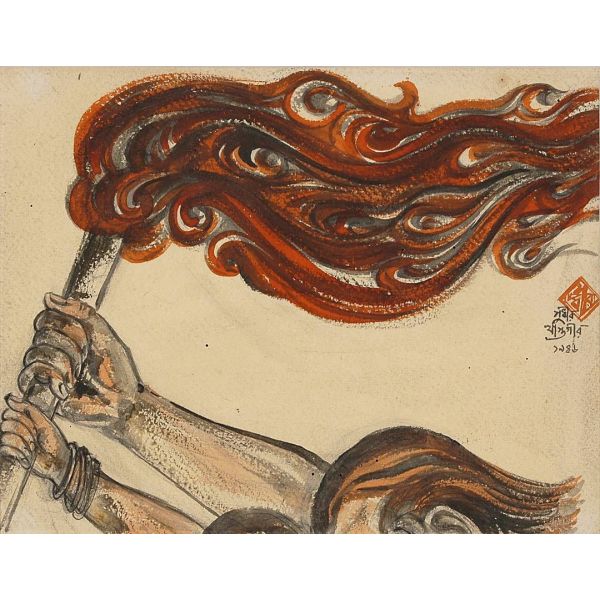 Events and ProgrammesMarch to Freedom: Curator's Take$1.00
A guided walk of the exhibition with historian Prof Aparna Vaidik, Ashoka University, and Dr Giles Tillotson, SVP Exhibitions and Publications, DAG, exploring the lesser-known narratives of the Independence movement through art.
Learn More -
 ArtistsBaburao Sadwelkar$1.00The grandnephew of the well-known sculptor V. P. Karmakar, and the son of an artist who worked in Bombay film studios, Prabhakar Barwe was born on 16 March 1936 in Nagaon, Maharashtra. He joined Sir J. J. School of Art, Bombay, in 1954. Learn More
 -
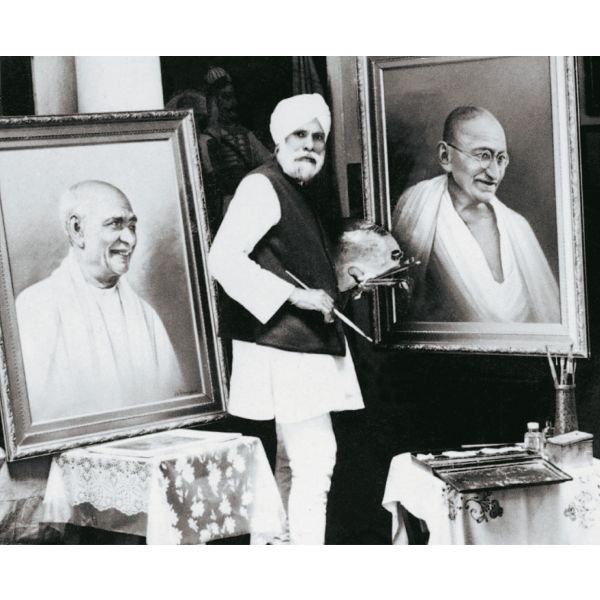 ArtistsS. G. Thakar Singh$0.00Born in 1899 in the village of Verka near Amritsar, S. G. Thakar Singh showed early aptitude for the arts by drawing on the walls of his home with coal. With no formal training, he went on to excel in the academic style of painting, rendering stunning landscapes, portraits and still-lifes. He apprenticed under local artist Mohd. Alam and moved with him to Bombay when the latter found a job as a stage artist with a theatre company. Learn More
 -
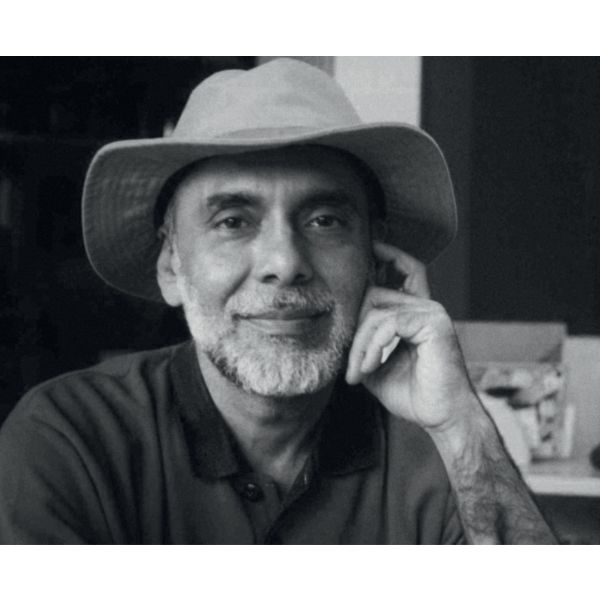 ArtistsRanbir Singh Kaleka$0.00Born in Patiala, Punjab, in 1953, Ranbir Kaleka earned a diploma in painting from Punjab University’s College of Art in Chandigarh. He spent the next few years teaching at Punjab University and College of Art, New Delhi, before leaving for London on a Charles Wallace scholarship to study at Royal College of Art from 1985-87. He stayed on in London for several years and returned to India in the late 1990s. Learn More
 -
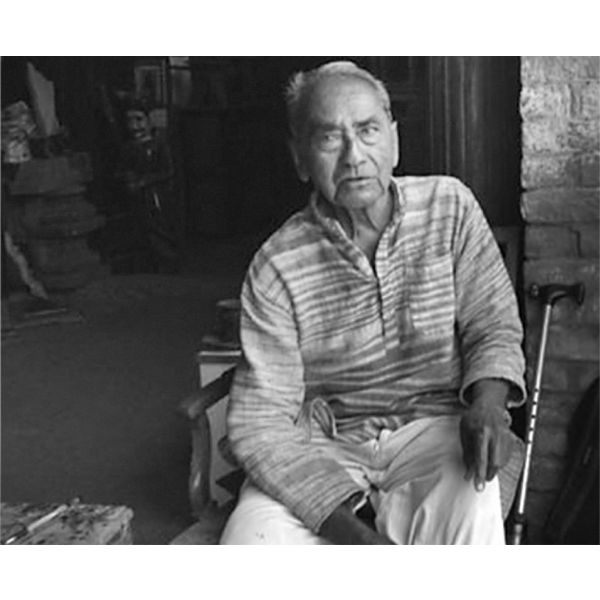 ArtistsPiraji Sagara$0.00An early Indian abstractionist who forged his own vocabulary, distinct from the dominant forces that gripped India’s art community in the early years of Independence, Piraji Sagara came to be known for his collages made of wood relief amalgamated with abstract paintings. Learn More
 -
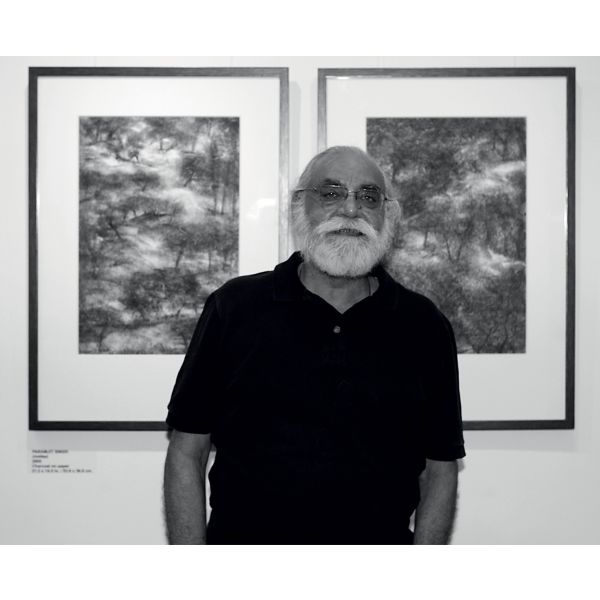 ArtistsParamjit Singh$0.00Born in Amritsar on 23 February 1935, Paramjit Singh studied art at Delhi Polytechnic from where he completed a diploma in 1958. About a decade later, he went to Norway to study printmaking at Atelier Nord. Learn More
 -
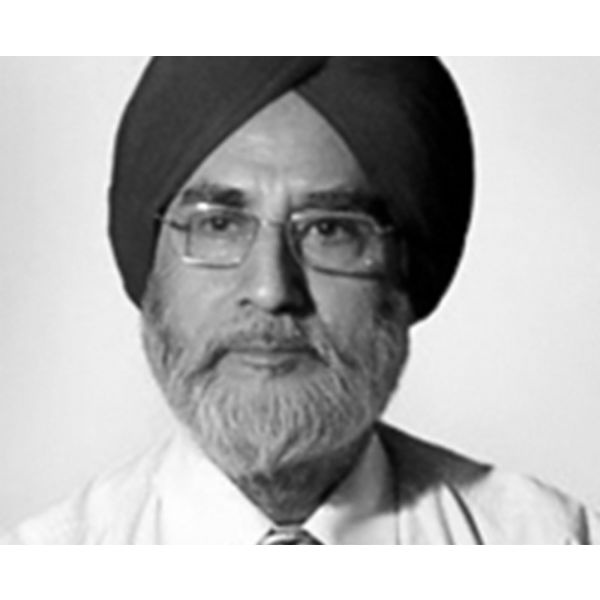 ArtistsParamjeet Singh$0.00Well-known for his silkscreen prints, Paramjeet Singh was born and brought up in Jamshedpur in present-day Jharkhand where career prospects appeared limited to engineering or medicine. His parents hoped he would study architecture, but destiny had other plans as a friend took Singh to a local art class, which spurred his interest in drawing and painting. Learn More
 -
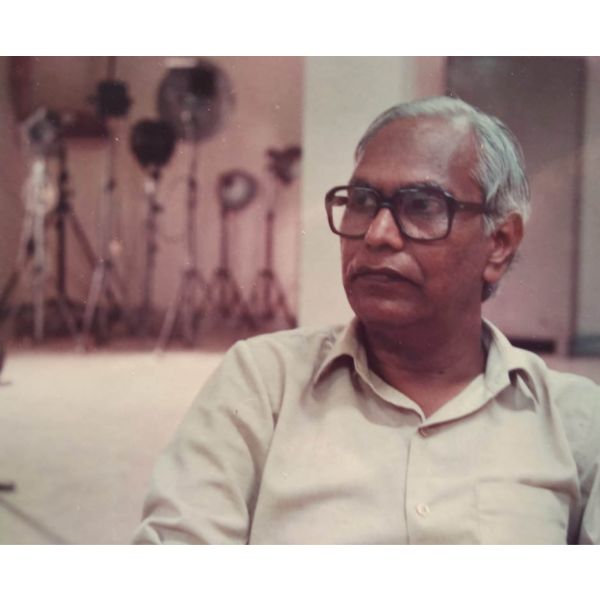 ArtistsMuni Singh$0.00Born in Shivpur Diyar in Ballia district of Uttar Pradesh, Muni Singh studied at College of Art, Lucknow. In 1963, he received formal training in fresco-making from Banasthali Vidyapith, Rajasthan. A contemporary of Badri Nath Arya, R. S. Bisht, and Sanat Chatterjee, Singh’s preferred medium was watercolour. He mastered the miniature style of painting—Mughal, Rajput, and Pahari—and translated it into his own idiom and technique. Learn More
 -
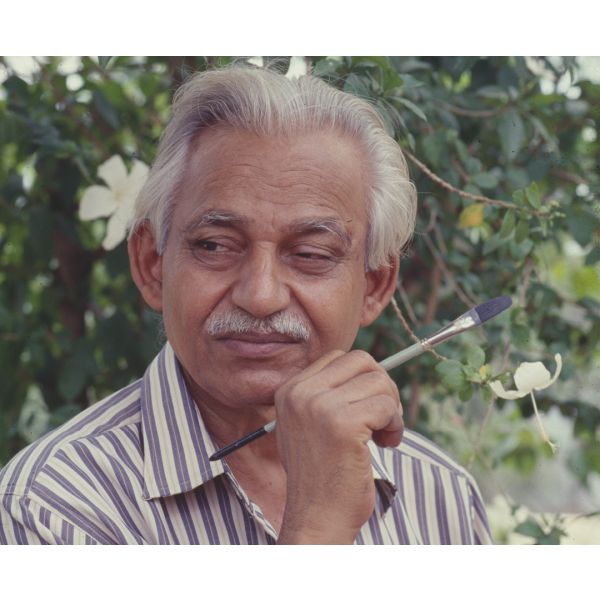 ArtistsLalu Prasad Shaw$0.00Born in Suri, Bengal, in 1937, Lalu Prasad Shaw obtained a diploma in painting from the Government College of Art and Craft, Calcutta, in 1959. Despite training in Company School art, traditional Kalighat pats and Ajanta cave frescos, Shaw evolved his distinctive style to work in watercolours and oil. His teachers were some of the leading artists of the time, such as Gopal Ghose, Rathin Maitra, and Maniklal Banerjee. Learn More