Search results for: 'Women of Mumbai by M F Pithawala'
-
ArtistsMohan Samant$0.00Born in Bombay, Mohan Samant showed early proficiency for both music and art. A lifelong player of sarangi—an Indian bowed, string instrument—Samant chose painting as a career and obtained a diploma from Sir J. J. School of Art, Bombay, in 1952. In the early 1950s, he was influenced by his teacher Shankar Palsikar, a painter of the traditional school, but moved soon towards an expressionistic mode in an attempt to discover his own style, fusing the expressive, the primitive and the abstract in his art. Learn More -
ArtistsManiklal Banerjee$0.00A watercolourist par excellence known for his paintings on silk, Maniklal Banerjee was born in Borisal in present-day Bangladesh. He studied at Government College of Art in Calcutta and while still a student, became the first Indian artist to receive the Government of India’s scholarship for the arts. Learn More -
ArtistsMadhvi Parekh$0.00Madhvi Parekh was born and raised in Sanjaya, a village in Gujarat. Though she is self-taught and took up painting only in 1964, inspired by her artist-husband Manu Parekh, art remained a part of her consciousness through childhood memories, her family’s rituals such as the traditional floor designs of rangoli, popular folk stories, and simple village life. While expecting their first child, Parekh’s husband gifted her a book on drawing exercises by Paul Klee, and soon she was taking the first steps towards creating her own art vocabulary. Learn More -
ArtistsA. M. Mali$0.00A. M. Mali was born in Kolhapur, Maharashtra, to a professional artist-father who painted mythological illustrations on the walls of local temples. Mali’s initial training in painting was under the well-known landscape artist Abalall Rahiman. Learn More -
Institutional CollaborationsM. V. DHURANDHAR: A RETROSPECTIVE$1.00Few artists claim as rich and intriguing a legacy as M. V. Dhurandhar in the landscape of late 19th and early 20th century Indian art. His practice leaves us with challenging questions about encounters and exchanges with India's colonial past and the influence of Europeans in shaping the evolution of painting. This exhibition revisits Dhurandhar's vast oeuvre through DAG's extensive collection of his paintings, archival material and ephemera, in an attempt to understand the socio-cultural context of his emergence, and to re-examine his influence on institutional and commercial art in the country.
Learn More -
Events and ProgrammesGab-Sur-Kinaar: Of Making and Playing the Tabla$1.00An exploration of the instrument by tabla artists, Asif Khan and Rohen Bose, followed by a concert where they are joined by Alla Rakha Kalawant on the sarangi at the Jorasanko Thakur Dalan.
Learn More -
ArtistsAnjolie Ela Menon$0.00Taking up art early, Anjolie Ela Menon had sold her first painting by the age of fifteen. Of mixed Bengali and American parentage, Menon was born in Burnpur in West Bengal in 1940. Learn More -
JournalAn Evening with Pandit Hariprasad Chaurasia$1.00Guests joined DAG for an enchanting flute recital by internationally acclaimed Pandit Hariprasad Chaurasia and a curatorial walk-through of Delhi Durbar: Empire, Display and the Possession of History by historians and curators Rana Safvi and Swapna Liddle.
Learn More -
JournalDebating secularism in South Asian Art with Tapati Guha-Thakurta$0.00This collection of essays, co-edited by eminent scholars of art history, Tapati Guha-Thakurta and Vazira Zamindar, navigate the fraught religio-political contexts of South Asia to bring into relief the fragility and amorphous nature of a contested term like the ‘secular’.
Learn More -
JournalAlita Chandra on Avinash Chandra$0.00Alita Chandra, daughter of the artist Avinash Chandra reflects on the transcultural influences on his painting and his preoccupation with female subjects.
Learn More -
JournalPortraits$0.00With ‘Indian Portraits: The Face of a People’, DAG uncovers the layers that have gone into the practice of portraiture in the country—a survey exhibition spanning two centuries of the genre in India. From British and Indian royalty to streetside portraiture, this is a quick overview of an India past and present. Learn More -
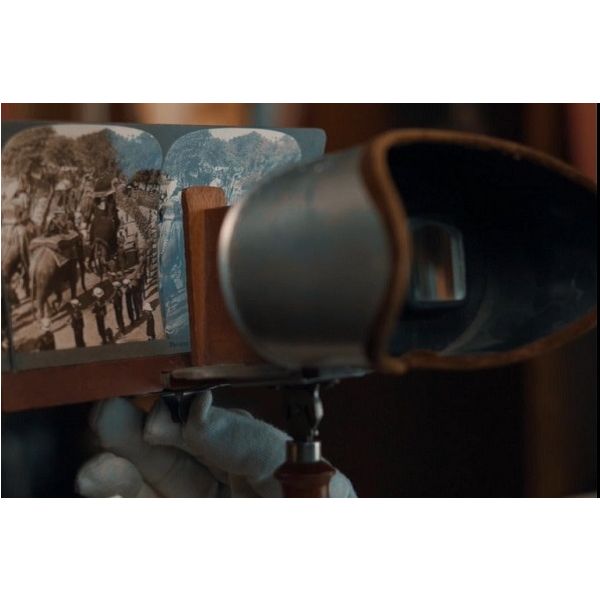
Collection StoriesAn Imperial Spectacle: The Delhi Durbars and its Ceremonies$1.00The Delhi Durbars were a series of coronation events held by the British in India which formally declared the British monarch as the Emperor or Empress of India. They took place thrice—first, in 1887, acknowledging Queen Victoria as the Empress of India, followed by one in 1903, for King Edward VII, and finally in 1911 for King George V, which saw the monarch’s attendance in person.
Learn More