


Search results for: 'fort of the naughty world'
-
 JournalA Portrait of our People$0.00
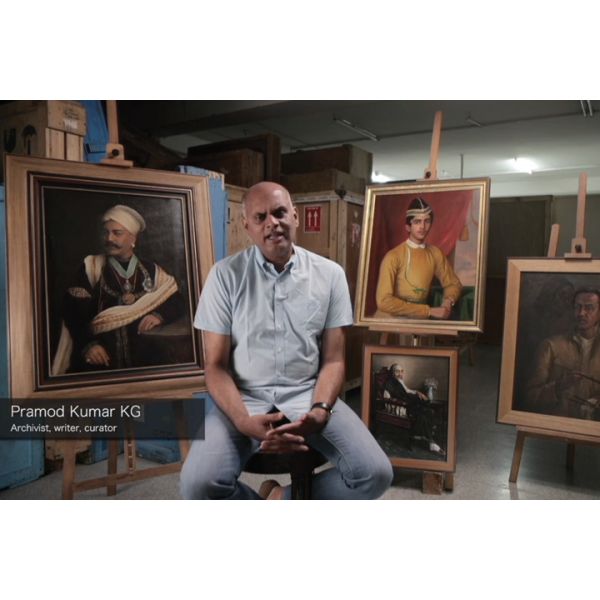
This exhbition explored the evolution of the genre of portrait painting in India. Curated by Pramod Kumar KG, it was specially created for Drishyakala, a joint collaboration between DAG and the Archaeological Survey of India, at Red Fort, Delhi. Visitors came face to face with dazzling canvases, expressive watercolours and early prints of people known and unknown in this extraordinary exhibition.
Learn More -
 JournalPopular Prints and the Freedom Struggle$0.00The role of popular prints in providing a visual lexicon to India’s freedom struggle—carrying images of its vital players and events to the farthest corners of the country—received a tremendous boost with this Paula Sengupta-curated exhibition at Drishyakala, Red Fort, Delhi, in 2019, a joint collaboration between DAG and the Archaeological Survey of India. Learn More
 -
 ExhibitionsHome is a PlaceAs low as $1.00
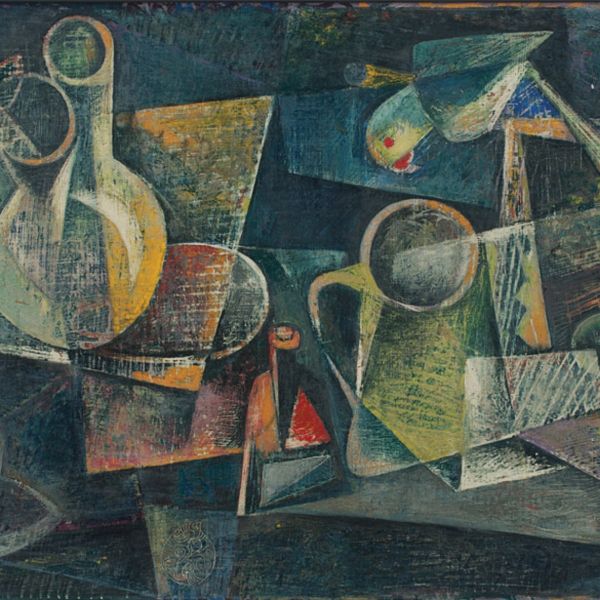
'Home is a Place’ explores the visual world of the home as a physical space having both an exterior and an interior—with all its magic, hope and memories—in villages and towns. Our homes are central to our existence and society, being the reason for shaping towns and countries, civilisations and histories. The exhibition covers the complexity of lives within the jurisdiction of the home—women at their toilettes, women painted alone gazing out of the window or gossiping in a group; figures working in their library, engaged in household work, or as parents bathing children; a family posing together or feuding over a game of cards, food or egos; and those fighting tyranny or painted as embracing lovers. Altaf Ambika Dhurandhar Amit Ambalal Anonymous Anonymous (Kalighat Pat) Anonymous (Waring & Gillow) Avinash Chandra Badri Narayan Bijan Choudhary Chakravorty Chittaprosad Dattatraya Apte Dhanraj Bhagat G. R. Santosh Ganesh Pyne Gogi Saroj Pal Gopal Ghose Haren Das Hemen Mazumdar Hiranmoy Indra Dugar Indu Rakshit Jagadish Dey Jagmohan Chopra Jamini Roy Jyoti Bhatt K. C. S. Paniker K. S. Kulkarni Kisory Roy M. A. R. Chughtai M. Bulkley M. F. Husain M. V. Dhurandhar Madhvi Parekh Maniklal Banerjee N. R. Sardesai Nandalal Bose Navjot Nemai Ghosh P. T. Reddy Partha Pratim Deb Piraji Sagara Prabhakar Barwe R. B. Bhaskaran Rabin Mondal Radha Charan Bagchi Ramendranath Rekha Rodwittiya Roychaudhuri S S. K. Bakre Sadequain Sakti Burman Sanat Kar Shanti Dave Shyamal Dutta Ray Somnath Hore Subba Ghosh V. A. Mali V. Nageshkar Ved Nayar Abani Sen Paritosh Sen Sunil Madhav Sen Sushil Chandra Sen Nataraj Sharma Shuvaprasanna Muni Singh Paramjeet Singh Paramjit Singh S. G. Thakar Singh Sobha Singh Satish Sinha F. N. Souza K. G. Subramanyan Anupam Sud L. N. Taskar Vasudha Thozhur
Learn More -
 ExhibitionsThe Printed PictureAs low as $1.00
A print is an original work of art created and printed by hand by an artist or a professional printing assistant from a ‘matrix’—a plate, block of stone, wood or stencil. The image is created on the matrix and the artist takes a limited number of impressions or prints off it. These impressions are numbered and signed by the artist and belong to a limited edition, and this makes the print an original work of art and not a reproduction. Printmaking consists of a wide range of processes: relief printmaking which consists of techniques like engraving, woodcut and linocut; planographic processes such as lithography and oleography, intaglio processes such as drypoint, etching, aquatint, mezzotint, photo processes and collography; and serigraphy, where the image is printed through a silk screen on to the paper. A P Bagchi A Ramachandran Abanindranath Tagore Ajit Dubey Akhilesh verma Akkitham Naryanan Amitabh Banerjee Amitava Anonymous Print Anupam Sud Arun Bose B P Banerjee Basudev Roy Bengal Lithograph Bengal Oleographs Bengal Woodcut Benod Behari Mukherjee Bhupen Khakhar Bijan Choudhury Chittaprosad Daniell William Devraj Dakoji Devyani Krishna Francis N Souza F. B Solvyns Ganesh Haloi Gulam Sheikh Haren Das Himmat Shah Indu Rakshit Indumati Roop Krishna Jagdish Dey Jagmohan Chopra Jai Zahrotia Jamini Roy Jyoti Bhatt K Laxma Goud K V Haridasan Krishna Ahuja Krishna Reddy Lalu Prasad Shaw M F Husain M. V Dhurandhar Madhvi Parekh Maniklal Banerjee Manu Parekh Moti Zahrotia Mrinalini Mukherjee Mukul Dey Nagji Patel Nalini Malani Nandalal Bose Navjot Paneer Selvam Partha Pratim Deb Portrait Punjab Litho Qamrool Hassan R B Bhaskaran Rabin Mondal Radha Charan Bagchi Ram Kumar Ramendranath Chakravorthy Ramkinkar Baij Rani Dey Ravi Varma Press Ravi Varma Print Rini Dhumal Sakti Burman Sanat Kar Satish Gujral Shobha Broota Shyamal Dutta Ray Somnath Hore Sudhir Khastgir Sunil Das Sunil Madhav Sen Suren Gangooly Sushanta Guha Sushil Sen Suvaprasanna Tapan Bhowmik Tarak Basu Thoman Daniell V Vishwanadhan Various Litho and Olio Vijay Bagodi Vinayak Masoji Vivan Sundaram Walter D’Souza Yogesh Rawal Zainul Abedin
Learn More -
 ExhibitionsPrimitivism & Modern Indian ArtAs low as $1.00
This exhibition looks at the diverse range, moods and styles that primitivism has taken in India, some artists practicing entirely in that style, while others experimenting with it in part, or sporadically. One can count simplicity and a move away from sophistication as key components, as also an inclination or at least a nod towards the folk. The exhibition does not attempt to be a comprehensive survey of India’s primitivists—there are others who would bear inclusion—but is an attempt to understand a body of work and how, given its Western countenance, it can be understood in the Indian context. More than anything else, it offers a clearer view than in the past of what primitivism might mean in the context of modern Indian art. Amrita Sher-Gil F. N. Souza George Keyt Himmat Shah J. Sultan Ali Jamini Roy Jogen Chowdhury K. G. Subramanyan K. S. Kulkarni M. F. Husain Madhvi Parekh Mohan Samant Rabin Mondal Rabindranath Tagore Ramkinkar Baij Sunayani Devi
Learn More -
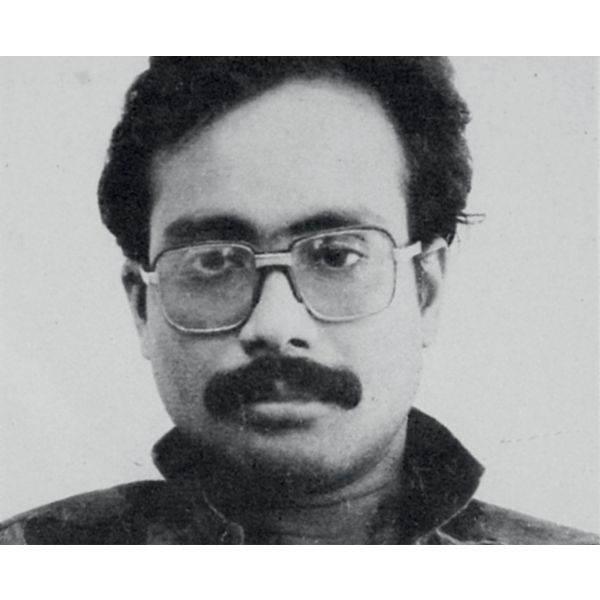 ArtistsRm. Palaniappan$0.00Born in Devakottai in Tamil Nadu, Rm. Palaniappan often incorporates the syntax of the sciences such as diagrammatic notations, and symbols, in his work. The memory of the first sight of the earth from above, while on a flight, also appears frequently in the form of maps, grids, and aerial terrain. Another important trope in his works has been imagery associated with the flying machine, inspired by his fascination with Second World War cinema. Learn More
 -
 Art FairsThe Armory Show$0.00
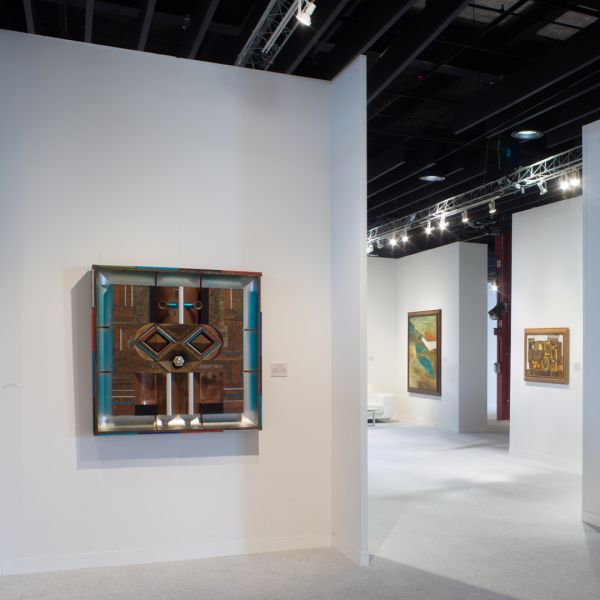
New York’s popular Armory Show required DAG to put forth its most emphatically modernist artists. These included several who had been fellows of the John D. Rockefeller III Fund and would thus have a resonance among art connoisseurs in America for their language and context. Instead of concentrating on the Progressives, therefore, DAG decided to curate a selection that included works by Avinash Chandra and Natvar Bhavsar with extensive careers in New York, and an important body of works by artists such as S. H. Raza, Ram Kumar, Krishen Khanna, Paritosh Sen, and Satish Gujral, among others. Avinash Chandra Jyoti Bhatt K G Subrmanyan Krishen Khanna Natvar Bhavsar Paritosh Sen Ram Kumar Tyeb Mehta Rekha Rodwittiya S. H. Raza Satish Gujral
Learn More -
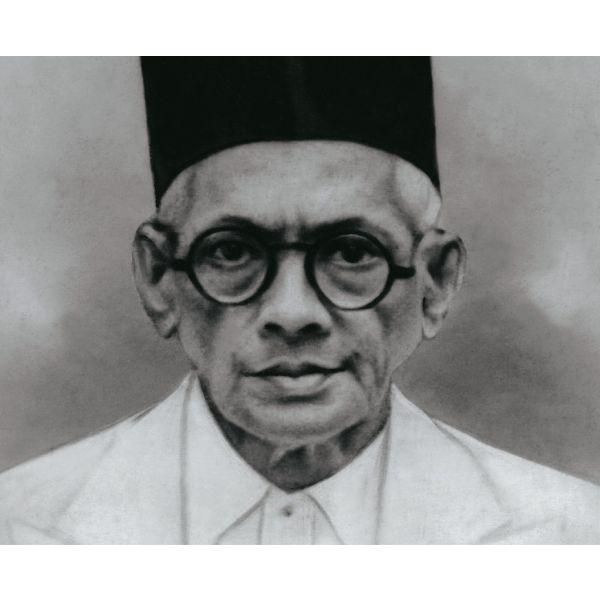 ArtistsN. R. Sardesai$0.00N. R. Sardesai was born in 1885 in Ratnagiri, Maharashtra, and completed his early education at the Ratnagiri School of Industry. Here, he studied carpentry and drawing in 1906, before joining Sir J. J. School of Art, Bombay, for formal training in art. Thereafter, he began work as a drawing teacher in a school in Fort, Bombay. In 1915, he had a short stint as a drawing teacher at his alma mater too. Learn More
 -
 ExhibitionsThe Sixties ShowAs low as $1.00
The 1960s was a period of immense change around the world, and it had deep ramifications on India’s socio-political scenario. The country had left behind the jubilation of Independence and was feeling the pinch of a nation grappling with the issues of development that impacted society and environment. A war with China in 1962 and Pakistan in 1965 had far-reaching implications on the national psyche— the first of shame, the latter of pride. Crippling shortages and unemployment were impacting life, even as the country’s success with the Green Revolution was directed at self-sufficiency. Migration from the villages to urban centres was increasing. Disparities—economic, gender or class—provided fertile ground for the alienation of the other. The more anglicised among the youth found themselves being drawn into the vortex of a global hippie movement. A. A. RAIBA AMBADAS ANUPAM SUD AVINASH CHANDRA BIKASH BHATTACHARJEE BIMAL DASGUPTA DHANRAJ BHAGAT F. N. SOUZA G. R. SANTOSH HIMMAT SHAH J. SULTAN ALI J. SWAMINATHAN JAMINI ROY JERAM PATEL JOGEN CHOWDHURY JYOTI BHATT K. G. SUBRAMANYAN K. LAXMA GOUD KRISHEN KHANNA LAXMAN PAI M. F. HUSAIN MADHVI PAREKH P. T. REDDY PARITOSH SEN PRABHAKAR BARWE PRODOSH DASGUPTA PROKASH KARMAKAR RABIN MONDAL RAM KUMAR RAMESHWAR BROOTA S. H. RAZA S. K. BAKRE SAKTI BURMAN SATISH GUJRAL SHANTI DAVE SOHAN QADRI SOMNATH HORE SUNIL DAS ZARINA HASHMI
Learn More -
 Institutional CollaborationsGhare Baire: The World, the Home and Beyond 18th – 20th Century Art in Bengal$1.00
Ghare Baire was a museum-exhibition showcasing over 200 years of art in Bengal. Presented by DAG in collaboration with the National Gallery of Modern Art and the Archaeological Survey of India, the exhibition was housed at the historic Currency Building, across twelve galleries featuring over 700 artworks. The exhibition was the largest showcase of Bengal Art, presenting a panoramic view of the evolution of art in a region that has been critical to the development of Indian modern art. The exhibition starts with the arrival of the travelling European artists at a time of exchange between Bengal and the world. This confluence of cultures stimulated new visual languages as we see in the Kalighat pat, the Bengal School, and the subsequent emergence of artists who fearlessly and freely experimented with form and subject, reshaping the trajectory of art in India.
Learn More -
 ExhibitionsG. R. Santosh: AwakeningAs low as $1.00
An unassuming trailblazer, Gulam Rasool Santosh is the most important artist from the movement known as neo-tantra in Indian art, synonymous with masters such as Biren De and Sohan Qadri. Self-taught, Santosh began his career painting landscapes in his native Kashmir before being spotted by S. H. Raza, which enabled him to study at the Maharaja Sayajirao University at Baroda under the famous artist N. S. Bendre. After a few years of painting figurative and abstract works in the mould of the other Indian Progressives, Santosh’s art changed dramatically towards tantra when he had a mystical experience in the Amarnath cave in 1964. From then on, until his death in 1997, G. R. Santosh dedicated his life to the study and practice of tantra, a yogi as much as an artist.
Learn More -
 ExhibitionsThe Babu and the BazaarAs low as $1.00
Calcutta, flourishing with commerce and maritime trade during the nineteenth century, was regarded as the ‘second city’ of the British Empire. People thronged there in large numbers to make a livelihood, or in holy pilgrimage, seeking blessings at the Kali temple at Kalighat that had been re-built in 1809. Annada Prasad Bagchi Bamapada Banerjee B. C. Law C. W. Lawrie Kshetradas Chitrakar Panchanan Karmakar Madhav Chandra Das Ramadhan Swarnakar Ganganarayan Ghosh Nritya Lal Datta Press Kristohurry Das Chorebagan Art Studio Kansaripara Art Studio Calcutta Jubilee Art Studio Bat-tala
Learn More