


Search results for: 'Sir J J School of Art'
-
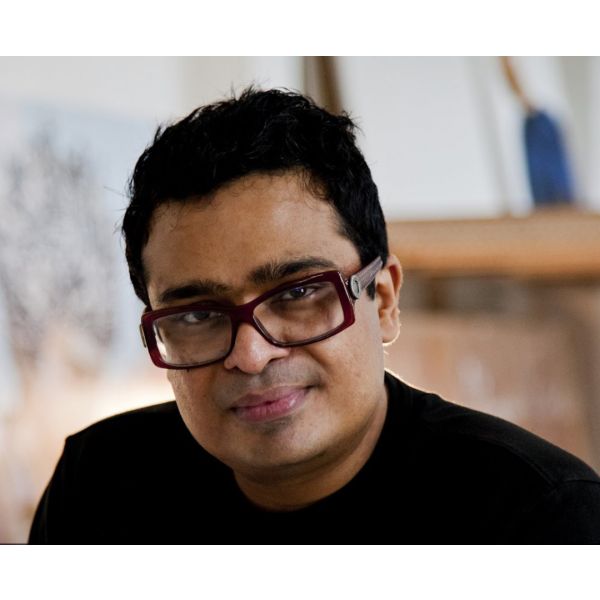 ArtistsJitish Kallat$0.00Born in Bombay, Jitish Kallat’s earliest memory of art was of helping his elder sister as a five-year-old for a drawing in her biology book. By the time he was in his mid-teens, he was, in his own words, ‘persistently and obsessively drawing’. Kallat secured a degree in fine arts in 1996 from Sir J. J. School of Art. An internationally acclaimed artist, his work includes painting, photography, collages, sculpture, installations, and multimedia. Learn More
 -
 ExhibitionsIndian DivineAs low as $1.00
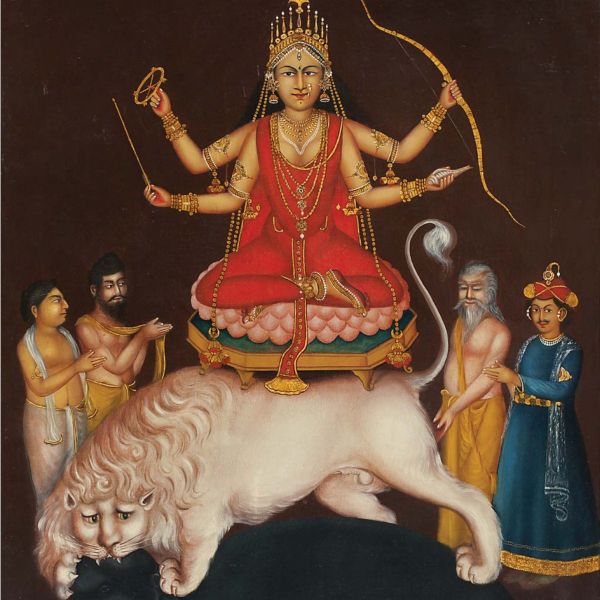
The exhibition, Indian Divine, begins with the late nineteenth century art on mythological and religious themes from regions as diverse as Bombay and Bengal—these include Western style oil paintings of deities by such well-known artists of the academic realist styles as Raja Ravi Varma and M. V. Dhurandhar, and mythological/ religious episodes and figures featured in the hybrid style, a mix of Western realistic painting and traditional Indian art and concerns—the Early Bengal style, a very popular form, of which the exhibition presents over fifty works. It goes on to document Kalighat paintings on religious and mythological themes from the late nineteenth and early twentieth centuries that were very popular, as well popular bazaar prints on these themes that flooded the markets with the advent of lithography and mechanical printing. 19th-20th century Popular Print Art School Print A. A. Almelkar A. A. Raiba A. P. Bagchi Asit Haldar B. C. Law B. N. Jija Baburao Painter Bat-tala Print (Anonymous) Bikash Bhattacharjee Bipin Behari Goswami Bishnupada Roychowdhury Chittaprosad D. B. Onkar D. D. Burman D. N. Sharma Debabrata Chakraborty Devyani Krishna Dhanraj Bhagat Dhirendra Narayan Dhruva Mistry Dipen Bose Early Bengal Early Bengal (Anonymous) F. N. Souza G. R. Santosh Ganesh Pyne Gogi Saroj Pal Haren Das Heramba Kumar Ganguly Indu Rakshit J. Sultan Ali Jamini Roy K. C. Pyne K. K. Hebbar K. Laxma Goud K. S. Kulkarni Kalighat pat (Anonymous) Kalipada Ghoshal Kamal Chattopadhyay Kanwal Krishna Krishen Khanna Kshitindranath Majumdar Laxman Pai M. F. Husain M. V. Dhurandhar Madhvi Parekh Mukul Dey Nandalal Bose Nihar Ranjan Sengupta P. T. Reddy P. V. Janakiram R. Vijaivargiya Rabin Mondal Radha Charan Bagchi Raja Ravi Varma Ramananda Bandhopadhyay Ramendranath Chakravorty Ranada Charan Ukil Ravi Varma School (Anonymous) Reddappa Naidu Roopkrishna S. Dhanapal S. G. Vasudev Sanat Chatterjee Sanjay Bhattacharya Sarada Charan Ukil Shyamal Dutta Ray Sohan Qadri Sudhanshu Ghosh Sudhir Ranjan Khastagir Sunil Das Sunil Madhav Sen Surendranath Ganguly V. Nageshkar
Learn More -
 ExhibitionsPrimitivism & Modern Indian ArtAs low as $1.00
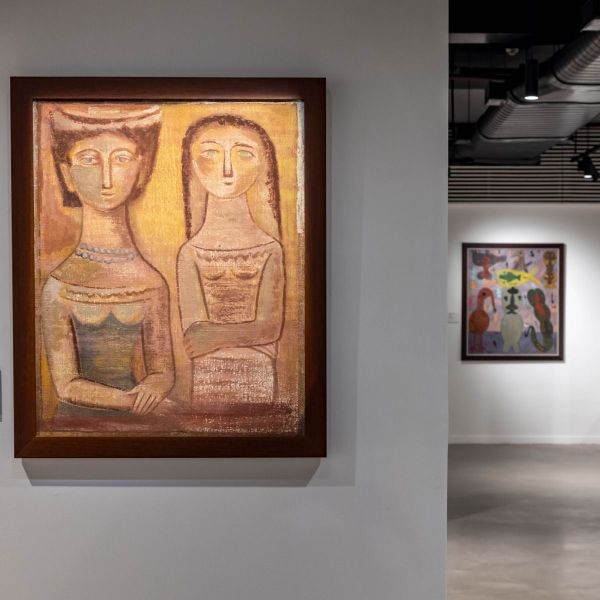
This exhibition looks at the diverse range, moods and styles that primitivism has taken in India, some artists practicing entirely in that style, while others experimenting with it in part, or sporadically. One can count simplicity and a move away from sophistication as key components, as also an inclination or at least a nod towards the folk. The exhibition does not attempt to be a comprehensive survey of India’s primitivists—there are others who would bear inclusion—but is an attempt to understand a body of work and how, given its Western countenance, it can be understood in the Indian context. More than anything else, it offers a clearer view than in the past of what primitivism might mean in the context of modern Indian art. Amrita Sher-Gil F. N. Souza George Keyt Himmat Shah J. Sultan Ali Jamini Roy Jogen Chowdhury K. G. Subramanyan K. S. Kulkarni M. F. Husain Madhvi Parekh Mohan Samant Rabin Mondal Rabindranath Tagore Ramkinkar Baij Sunayani Devi
Learn More -
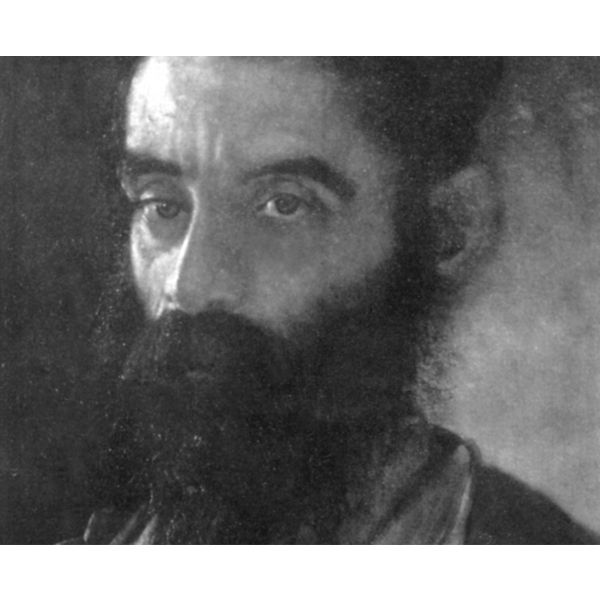 ArtistsPestonji E. Bomanji$0.00Born in Bombay, Pestonji E. Bomanji joined Sir J. J. School of Art at the age of thirteen. While there, the principal, John Griffiths, identified his talent and appointed him a draughtsman on an expedition to the Ajanta caves in 1872, which he came to head in 1880. Though Bomanji initially wanted to be a sculptor, his interest in portraiture was triggered after 1877, when Griffiths recommended him as an apprentice to Valentine Prinsep, a visiting artist; he went on to train under John Lockwood Kipling. Learn More
 -
 Collection OnlineTHE WASH TECHNIQUE$1.00
The wash technique has come to be associated in India with the art of the Bengal School, but the story of its origins in India takes us back to an era of rich cultural exchanges. In the early twentieth century artists like Abanindranath Tagore were trying to imagine a pan-Asian cultural identity, and they turned for inspiration to traditions from across Persia to Japan. Rabindranath Tagore's friendship with Okakura Kakuzō occasioned the arrival of several Japanese artists in Kolkata, such as Yokoyama Taikan, Hishida Shunsō and Katsuta Shōkin. While the latter found inspiration in the Hindu epics, artists in Bengal adapted techniques that were used by the Japanese, such as the wash technique or the subtle use of ink and brush. Since then, the wash technique has been interpreted widely by individual artists, offering an ethereal quality of light to their works, or, in some cases, like for Gaganendranath Tagore and Prosanto Roy, new possibilities of painting in various shades of darkness.
Learn More -
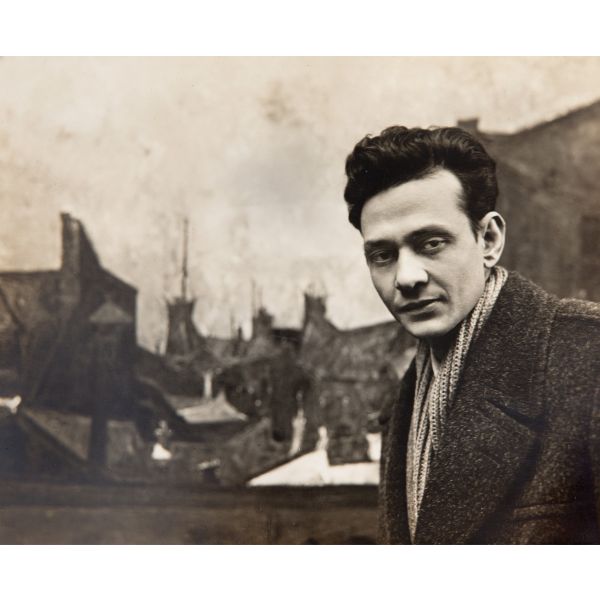 ArtistsS. H. Raza$0.00
One of India’s most seminal modernists, Syed Haider Raza was born on 22 February 1922 in Mandla, Madhya Pradesh, and forged a new language of art by integrating Indian symbolism with Western expression. A student of Sir J. J. School of Art, Bombay (1943-47), and one of the first members of the Progressive Artists’ Group, the turning point of his career was his journey to Paris in 1950 on a French government scholarship to study at École Nationale des Beaux-Arts. In 1956, he became the first non-French artist to win the critic’s award, the Prix de la critique.
Learn More -
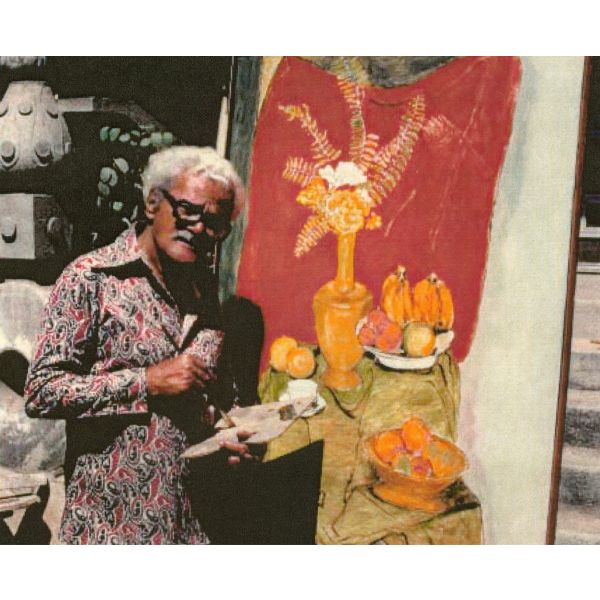 ArtistsP. T. Reddy$0.00Pakala Thirumal Reddy was born to a farmer’s family in Andhra Pradesh’s Karimnagar district. Defying his family’s opposition to art as a professional practice and fascinated with colour and form in his childhood, Reddy joined Sir J. J. School of Art, Bombay, on a scholarship, to study painting. Learn More
 -
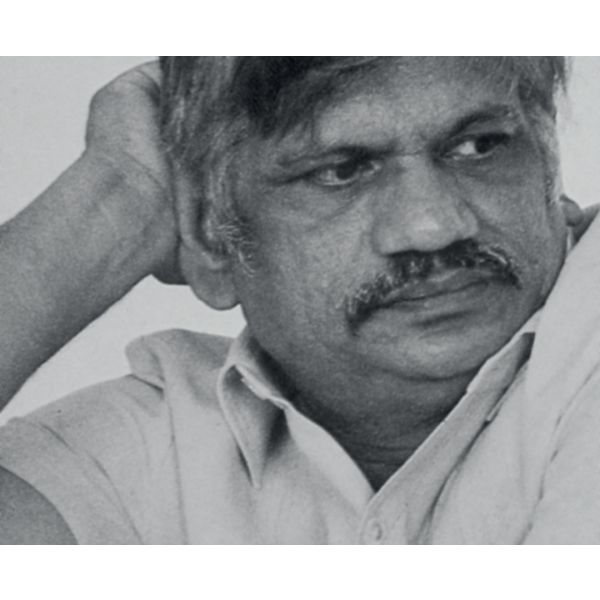 ArtistsB. Vithal$0.00Born in Maharashtra, B. Vithal took a diploma in sculptural art from Sir J. J. School of Art, Bombay. Taking to art with natural ease, he began drawing as early as five years of age, making Ganesha and other popular Hindu deities on his slate using chalk. The inspiration sustained through his entire life, and his work was mainly inspired by Hindu mythology, philosophy, and ancient Indian art. Learn More
 -
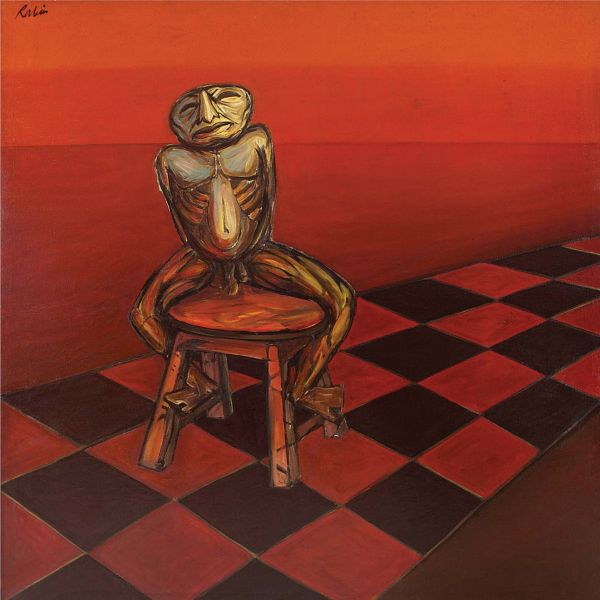 ExhibitionsRabin Mondal: Kingdom of ExileAs low as $1.00
Rabin Mondal is like a striding colossus of our times, scorching up the firmament with images that reflect societal malaise and his own inner turmoil. His determination to paint in a market-unfriendly manner is characteristic of his resolve. His canvases provide no safety net for the unwary viewer. Here is a confident artist aware of his self and his role with no fig leaf to offer those seeking beauty in art—not that his work is unbeautiful.
Learn More -
 ArtistsBaburao Sadwelkar$1.00The grandnephew of the well-known sculptor V. P. Karmakar, and the son of an artist who worked in Bombay film studios, Prabhakar Barwe was born on 16 March 1936 in Nagaon, Maharashtra. He joined Sir J. J. School of Art, Bombay, in 1954. Learn More
 -
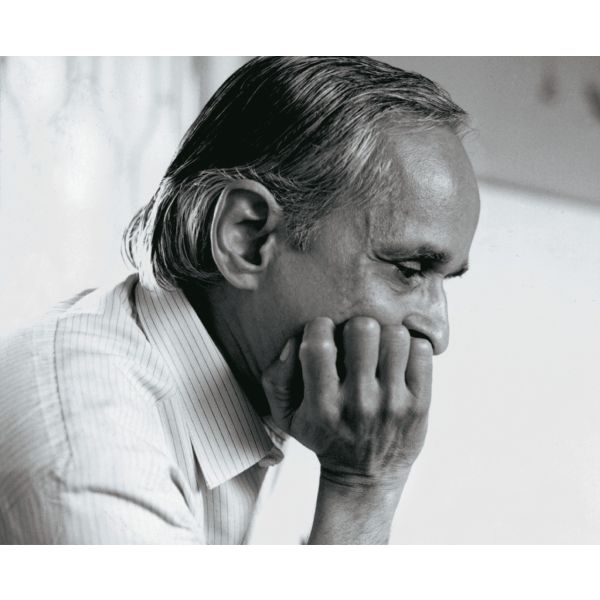 ArtistsPrabhakar Barwe$0.00The grandnephew of the well-known sculptor V. P. Karmakar, and the son of an artist who worked in Bombay film studios, Prabhakar Barwe was born on 16 March 1936 in Nagaon, Maharashtra. He joined Sir J. J. School of Art, Bombay, in 1954. Learn More
 -
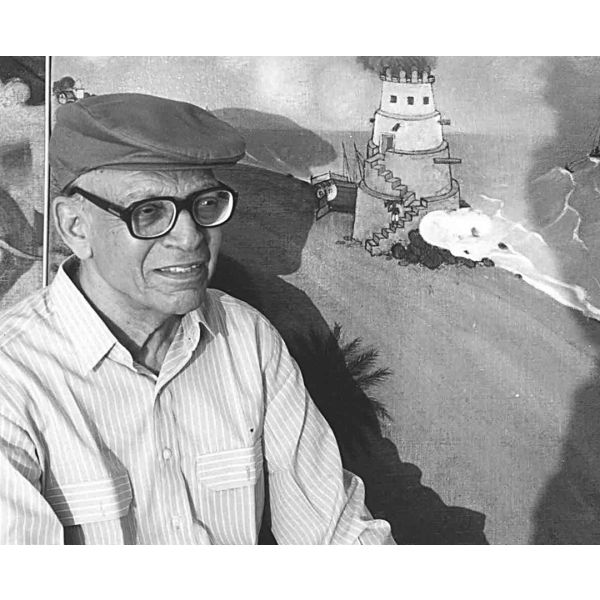 ArtistsA. A. Raiba$0.00Abdul Aziz Raiba was born in Bombay on 20 July 1922 and studied miniature painting at Sir J. J. School of Art upon receiving a scholarship in 1942. He was an early associate of the Progressive Artists’ Group but later struck out on his own due to difference of opinion with other members. Learn More