Search results for: 'donde puedo solicitar el retiro de un juego infantil en quito'
-
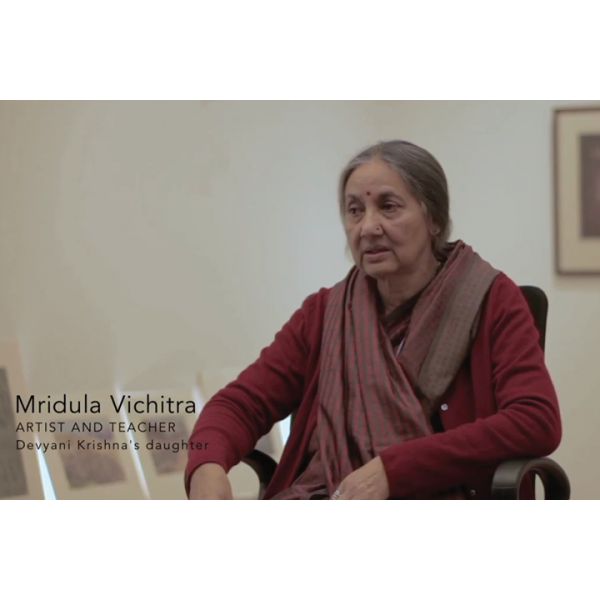 JournalDevayani Krishna$0.00What do you make of a work of art? What was the artist attempting to communicate? These video shorts offer brief overviews on artists and their work in the way of expert opinions by scholars, curators art writers—and by the artists themselves. Learn More
 -
 Events and ProgrammesModern Art in Pakistan$1.00
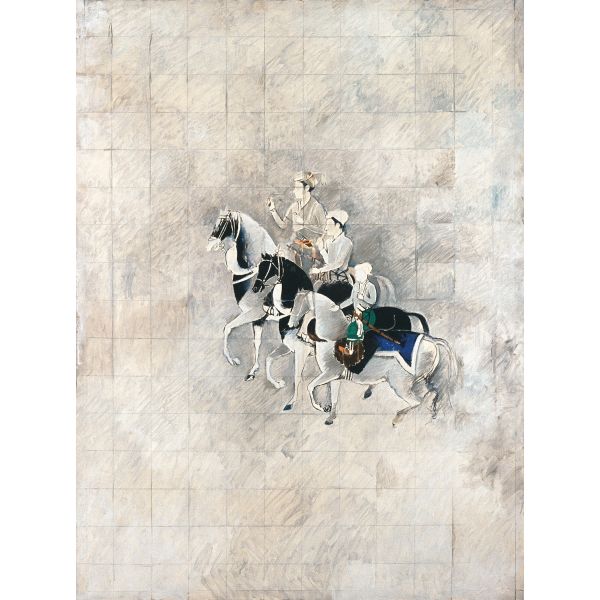
A journey through the decades post the 1950s in Pakistan with art historian Simone Wille, from the University of Innsbruck, exploring the works of pioneering artists who looked to history and tradition to develop new visual languages, while also creating dialogues globally through travel.
Learn More -
 Events and ProgrammesCurious Curatorium$1.00
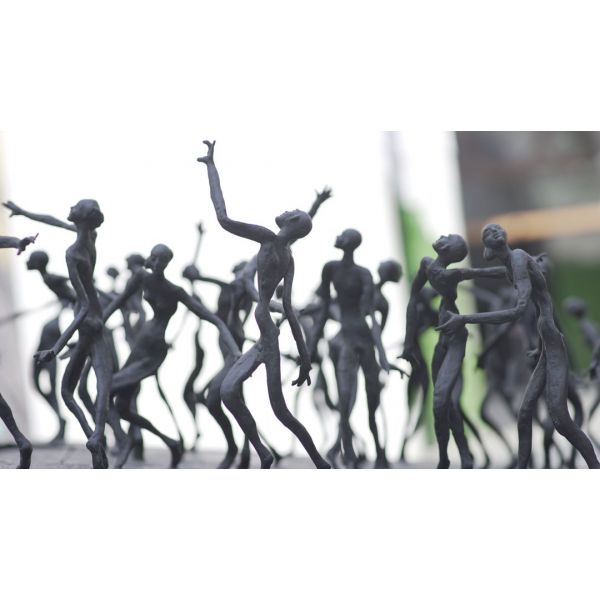
An online opportunity for young researchers and early career professionals, from History, Art History, Cultural Studies and related fields, to develop research projects under the guidance of eminent academicians and scholars.
Learn More -
 Events and ProgrammesMapping the Colony$1.00
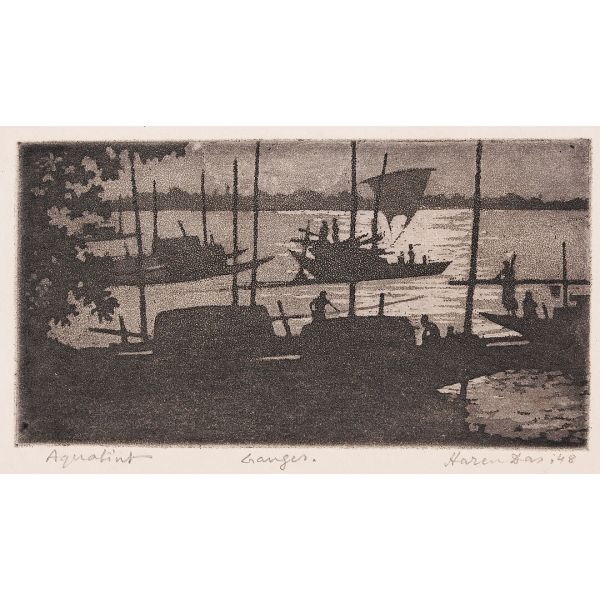
A workshop by Priyank Patel, from the Department of Geography, Presidency University, for ages 16 and above, on mapmaking in the colonial and postcolonial era and how maps of Calcutta (and later, Kolkata) were shaped through these different ways of knowing the world.
Learn More -
 JournalThe Journal Goes Live$0.00
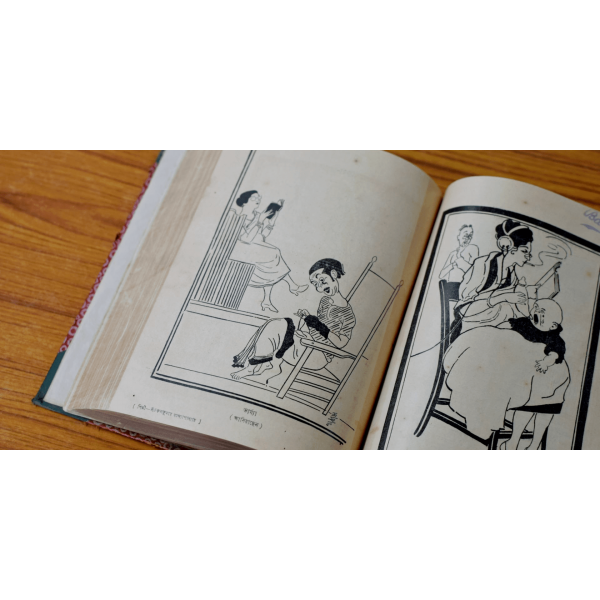
On the thirtieth year of DAG’s presence in the Indian art landscape, we are especially delighted to share with our readers the first issue of our Journal. DAG has upheld a high quality of research through exhibitions and publications that have shaped how people understand Indian modern art. Through this journal, we want to keep those discussions going and point towards newer ways to approach the period of modernism—joining the dots that lead those significant artistic breakthroughs into the contemporary. We also want to create a space where readers can gain privileged access into the people and organizations who works around the clock to keep the art world ticking.
Learn More -
 Institutional CollaborationsDRISHYAKALA$1.00
How did the multiple trajectories of visual arts develop in the subcontinent? Where did they originate and how did their paths converge? Drishyakala offers a sweeping journey into the heterogenous histories of visual arts in India, from the first European travelling artists who drew landscapes to popular prints of the earliest woodcuts and lithographs evolving into the thriving advertising visuals of the 20th century. The exhibition is broadly divided into four categories, each exploring an unique area of development—the art of portraiture through photography and painting, oriental sceneries drawn by European travelling artists, popular prints from the late eighteenth century to post-independence and artworks of the nine National Treasure Artists. Together, these sections give brief glimpses into the dizzying variety of forms, styles and languages of South Asian art.
Learn More -
 Art FairsArt Dubai$0.00
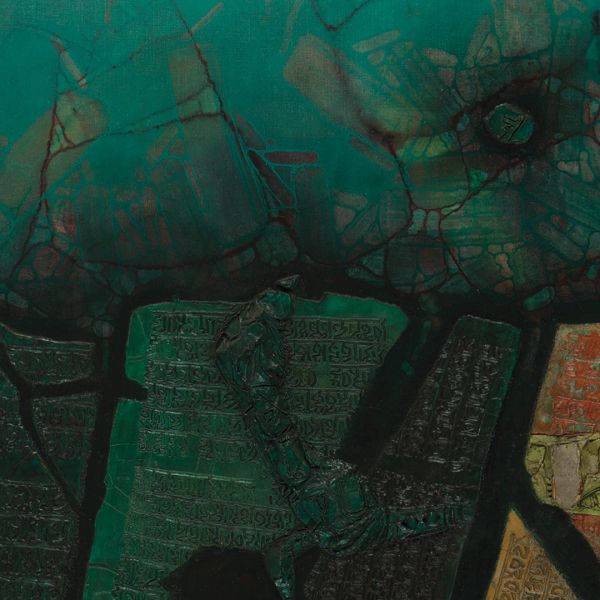
Shanti Dave’s abstracts resemble—at first—the familiar and the unknown. There are writings, figures, deities, forms and shapes that resonate with what we seem to know. If the language is indecipherable, perhaps it belongs to some ancient texts lost to history. Is this his ode to a civilisation that existed in the past, or a prophesy of one to come? Is it a world hidden underwater? Or perhaps one alien to us because it comes from some other planet? Are these tombstones, or markers, of some mythological or historical realm?
Learn More -
 Institutional CollaborationsIndia Modern: Narratives from 20th Century Indian Art$1.00
This exhibition takes us on a journey into the lives and works of artists from a diverse range of traditions and practices. Despite differences in technique, philosophy and politics, they are united by an attempt to forge a new language of Indian art which rebels against existing visual vocabularies while seamlessly combining influences from European modernism and the rich history of visual arts from South Asia. This assimilation is achieved in different ways. From M. F. Husain’s figurative renditions of Indian deities to the many languages of abstraction developed by artists like Ram Kumar, Ganesh Haloi and others—we see artists responding variously to the socio-cultural problems of a post-colonial nation.
Learn More -
 Art FairsIndia Art Fair$0.00
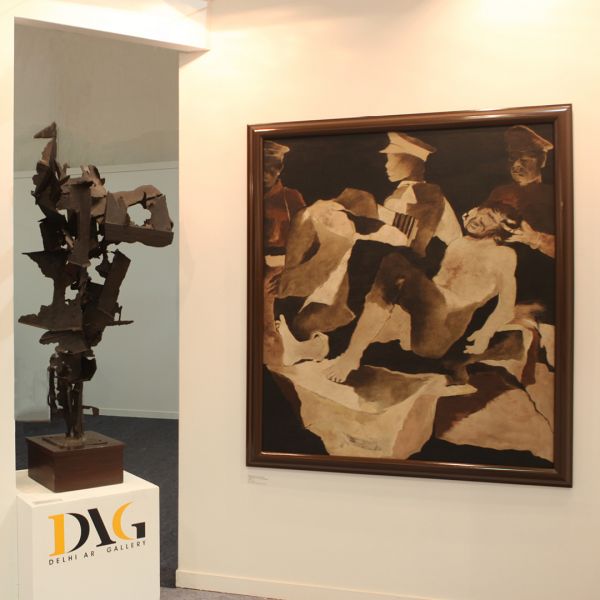
Stepping up its efforts to familiarise viewers with the extensive range of Indian modern art, DAG occupied an extensive booth at the India Art Fair 2014, where over 300 paintings and sculptures were displayed, featuring about 125 artists. The specially designed booth was the centre of attraction at the fair and the most prominent destination for art lovers wanting to understand the development of Indian art from the point of its history, chronology, movements, periods, regions, or genres. It was an art history lesson brought to life and was thronged by visitors. Special talks were organised at the booth. A 332-page catalogue was specially published for the fair and remains a compendium of India’s greatest artists ever. A. A. Almelkar A. A. Raiba A. D. Tavaria A. M. Davierwalla Abalall Rahiman Abanindranath Tagore Akbar Padamsee Altaf Amalnath Chakladhar Ambadas Amitava Aroomoogam Pillay Arpana Caur Avinash Chandra B. C. Law B. Prabha Badri Nath Arya Bal Chhabda Benjamin Hudson Benode Behari Mukherjee Bhupen Khakkar Bijan Choudhary Bikash Bhattacharjee Bimal Dasgupta Bipin Behari Goswami Biren De Bireswar Sen Chintamoni Kar Chittaprosad D. P. Roy Chowdhury Dhanraj Bhagat Dharamanarayan Dasgupta Early Bengal Oil (Anonymous) F. N. Souza G. R. Santosh Gaganendranath Tagore Ganesh Haloi Ganesh Pyne George Keyt Gieve Patel Gogi Saroj Pal Gopal Ghose H. A. Gade Haren Das Hemanta Misra Hemendranath Majumdar Henry Singleton Himmat Shah Indra Dugar J. Sultan Ali J. Swaminthan Jacob Epstein Jamini Roy Jeram Patel Jogen Chowdhury Jyoti Bhatt K. C. S. Panicker K. G. Subramanyan K. H. Ara K. K. Hebbar K. Laxma Goud K. S. Kulkarni Kalighat Pat Kanwal Krishna Khagen Roy Kisory Roy Krishen Khanna Kshitindranath Majumdar L. Munuswamy L. N. Taskar L. P. Shaw Laxman Pai M. A. R. Chughtai M. F. Husain M. F. Pithawalla M. V. Dhurandhar Manjit Bawa Manu Parekh Meera Mukherjee Mohan Samant N. R. Sardesai N. S. Bendre Nandalal Bose Nemai Ghosh Nikhil Biswas P. Chander Sheker P. Khemraj P. T. Reddy P. V. Janakiram Paritosh Sen Pestonji E. Bomanji Portrait (Anonymous) Prabhakar Barwe Prodosh Das Gupta Prokash Karmakar Prosanto Roy R. Vijaivargiya Rabin Mondal Rabindranath Tagore Radha Charan Bagchi Raghav Kaneria Raja Ravi Varma Ram Kumar Ramendranath Chakravorty Rameshwar Broota Ramkinkar Baij Ravi Varma School (Anonymous) S. Dhanapal S. G. Thakur Singh S. H. Raza S. L. Haldankar S.K. Bakre Sailoz Mukherjea Sankho Choudhuri Satish Gujral Shiavax Chavda Shyamal Dutta Ray Sohan Qadri Somnath Hore Suhas Roy Sunil Das Sunil Madhav Sen Thomas Daniell Tyeb Mehta V. Nageshkar V. S. Gaitonde Ved Nayar
Learn More -
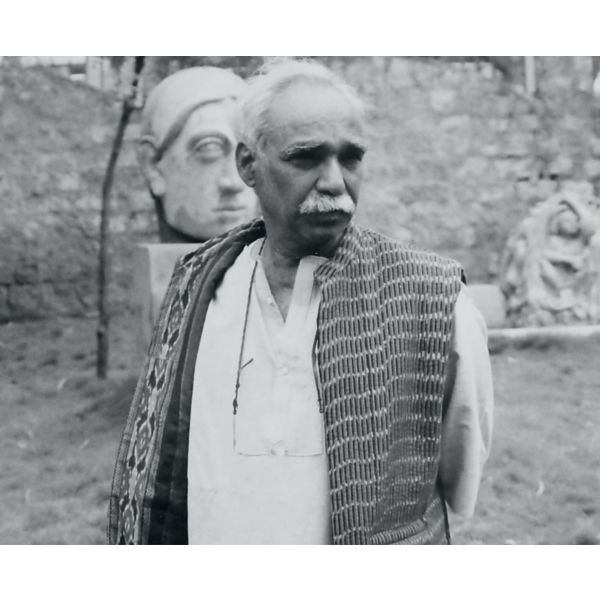 ArtistsThota Vaikuntam$0.00Born in Karimnagar district in undivided Andhra Pradesh, Thota Vaikuntam is known for powerfully-delineated and brightly-coloured portraits of robust men and women of the Telangana region where he grew up. He studied at College of Fine Arts, Hyderabad, from 1965-70, before training under K. G. Subramanyan at M. S. University, Baroda, in 1971-72, on a Lalit Kala Akademi fellowship. Learn More