Search results for: 'its time to see me now'
-
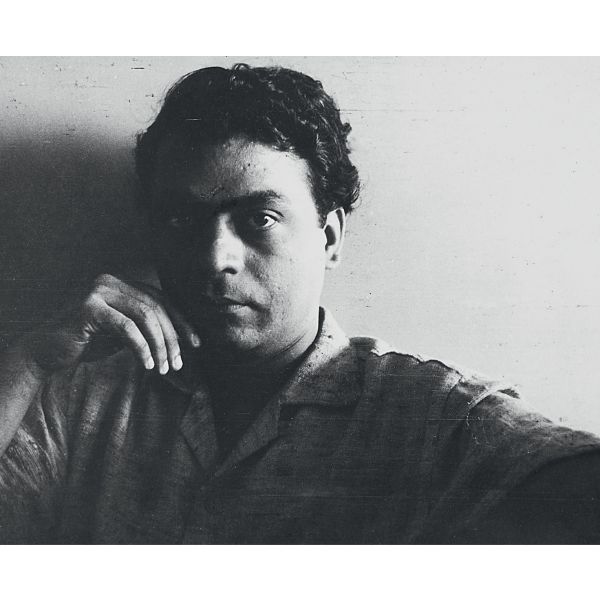 ArtistsV. S. Gaitonde$0.00One of India’s most revered ‘non-objective’ painters—he preferred that term over ‘abstraction’—Vasudeo Santu Gaitonde was born in Nagpur in 1924. He received his diploma in painting from Sir J. J. School of Art, Bombay, in 1948. Impressed by his work, the members of the Progressive Artists’ Group—formed in 1947—pulled him into their meetings. The strength of his talent was soon recognised elsewhere—he won the first prize of the Young Asian Artists Association in Tokyo in 1957, and a John D. Rockefeller III Fund fellowship in 1964. Learn More
 -
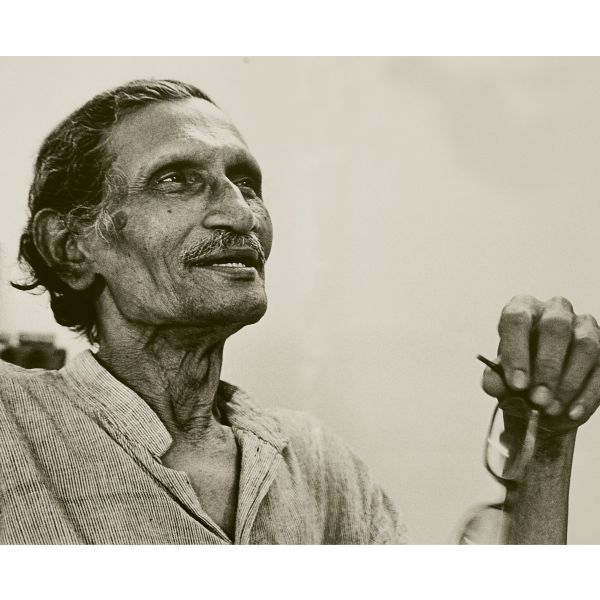 ArtistsRabin Mondal$0.00The son of a mechanical draughtsman, Mondal took to drawing and painting at the age of twelve when he injured his knee and was confined to bed. The Bengal famine of 1943 and the Calcutta communal riots of 1946 deeply impacted his psyche; he joined the Communist Party and became an activist. Mondal’s final refuge was art as the ultimate weapon of protest. Learn More
 -
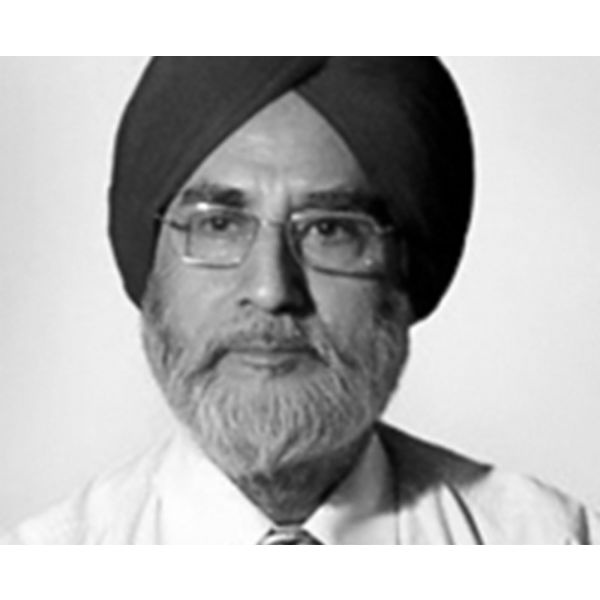 ArtistsParamjeet Singh$0.00Well-known for his silkscreen prints, Paramjeet Singh was born and brought up in Jamshedpur in present-day Jharkhand where career prospects appeared limited to engineering or medicine. His parents hoped he would study architecture, but destiny had other plans as a friend took Singh to a local art class, which spurred his interest in drawing and painting. Learn More
 -
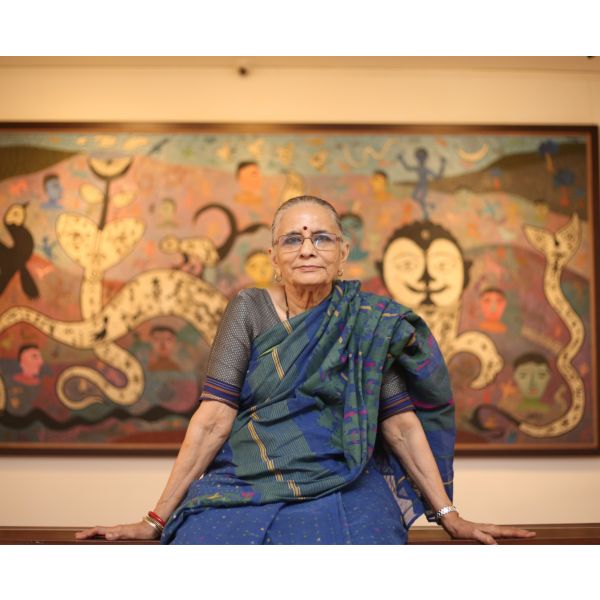 ArtistsMadhvi Parekh$0.00Madhvi Parekh was born and raised in Sanjaya, a village in Gujarat. Though she is self-taught and took up painting only in 1964, inspired by her artist-husband Manu Parekh, art remained a part of her consciousness through childhood memories, her family’s rituals such as the traditional floor designs of rangoli, popular folk stories, and simple village life. While expecting their first child, Parekh’s husband gifted her a book on drawing exercises by Paul Klee, and soon she was taking the first steps towards creating her own art vocabulary. Learn More
 -
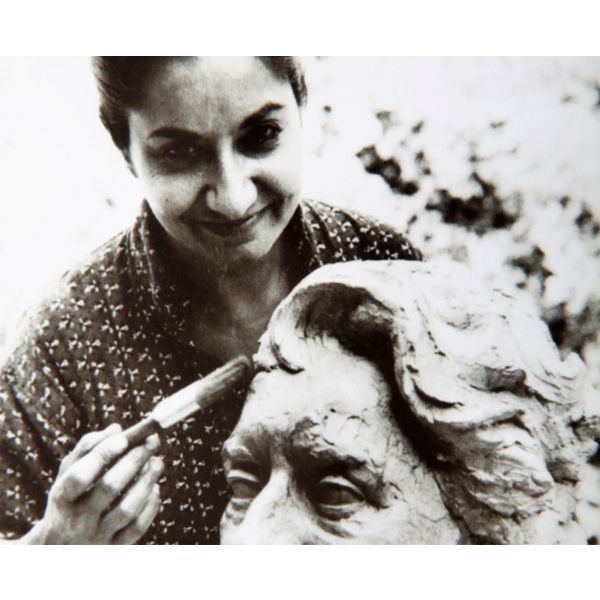 ArtistsLatika Katt$0.00Growing up in Dehradun, Latika Katt learnt to observe everything closely through the numerous trekking expeditions she took with her botanist father. She completed her bachelor’s in fine arts from Banaras Hindu University and later completed her master’s from the Faculty of Fine Arts, M. S. University, Baroda, in 1971. Interestingly, hers was the first art degree batch of the prestigious institution and she was the first female student to receive a gold medal in sculpture from the university. Later, in 1981, she received a research scholarship from the Slade School of Art, London. Learn More
 -
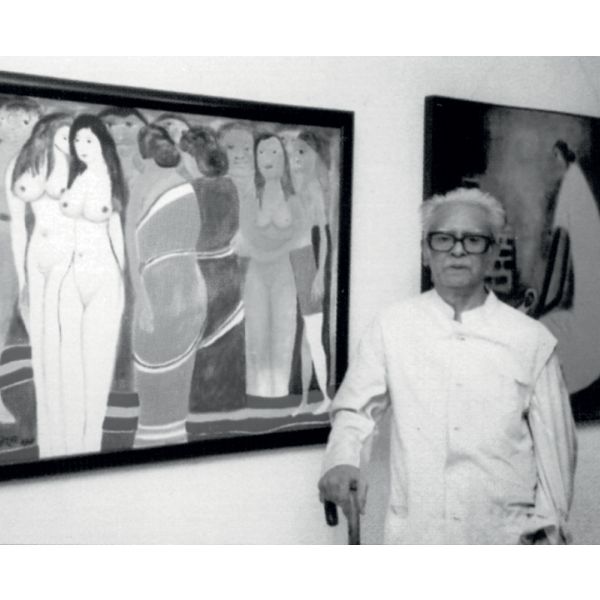 ArtistsKartick Chandra Pyne$0.00Born into an aristocratic family of gold merchants, Kartick Chandra Pyne took an interest in art at an early age. The older cousin of Ganesh Pyne, another remarkable Indian modernist, K. C. Pyne graduated in fine arts from the Government College of Arts and Crafts, Calcutta, in 1955. Later, he taught at Calcutta’s Indian College of Arts and Draughtsmanship in the 1970s, and the Academy of Fine Arts in the ’80s. Learn More
 -
 JournalUntitled (Tigers) by Amrita Sher Gil$1.00
The birth of Amrita Sher-Gil to an Indian father and Hungarian mother bequeathed to the nation one of its most incandescent artists. Known for her luminous paintings, her work changed the face of modern Indian art and paved the course it was to take in the country. In a rare sculpture of tigers made, poignantly enough, in the last year of her life, Amrita Sher-Gil is revealed as someone exploring new directions before her tragic demise in 1941.
Learn More -
 JournalDrishyakala by DAG in collaboration with ASI$0.00
DAG in collaboration with ASI (Archaeological Survey of India) presents Drishyakala. An incredible array of over 400 artworks spread over 25,000 square ft. by India’s leading artists from the DAG collection—made all the more unique for its presentation within a UNESCO World Heritage Site—the Red Fort.
Learn More -
 JournalPopular Prints and the Freedom Struggle$0.00The role of popular prints in providing a visual lexicon to India’s freedom struggle—carrying images of its vital players and events to the farthest corners of the country—received a tremendous boost with this Paula Sengupta-curated exhibition at Drishyakala, Red Fort, Delhi, in 2019, a joint collaboration between DAG and the Archaeological Survey of India. Learn More
 -
 Collection OnlineTHE WASH TECHNIQUE$1.00
The wash technique has come to be associated in India with the art of the Bengal School, but the story of its origins in India takes us back to an era of rich cultural exchanges. In the early twentieth century artists like Abanindranath Tagore were trying to imagine a pan-Asian cultural identity, and they turned for inspiration to traditions from across Persia to Japan. Rabindranath Tagore's friendship with Okakura Kakuzō occasioned the arrival of several Japanese artists in Kolkata, such as Yokoyama Taikan, Hishida Shunsō and Katsuta Shōkin. While the latter found inspiration in the Hindu epics, artists in Bengal adapted techniques that were used by the Japanese, such as the wash technique or the subtle use of ink and brush. Since then, the wash technique has been interpreted widely by individual artists, offering an ethereal quality of light to their works, or, in some cases, like for Gaganendranath Tagore and Prosanto Roy, new possibilities of painting in various shades of darkness.
Learn More -
-