Search results for: 'rendesia e bleteve per bimet'
-
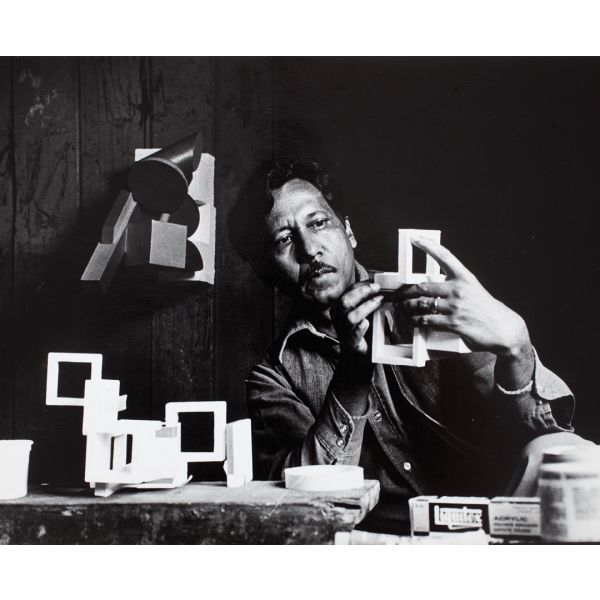 ArtistsEric Bowen$0.00Eric Bowen was born in Allahabad on 3 May 1929 and received a diploma from the College of Art, New Delhi, in 1959. Though he joined the short-lived Group 1890, his journey to be a part of the significant art movements in the 1960s took root when he and Paramjit Singh started the Group Unknown, a Delhi-based collective of young artists and sculptors. Learn More
 -
 JournalThe Story of Bengal Art - Part 2$0.00
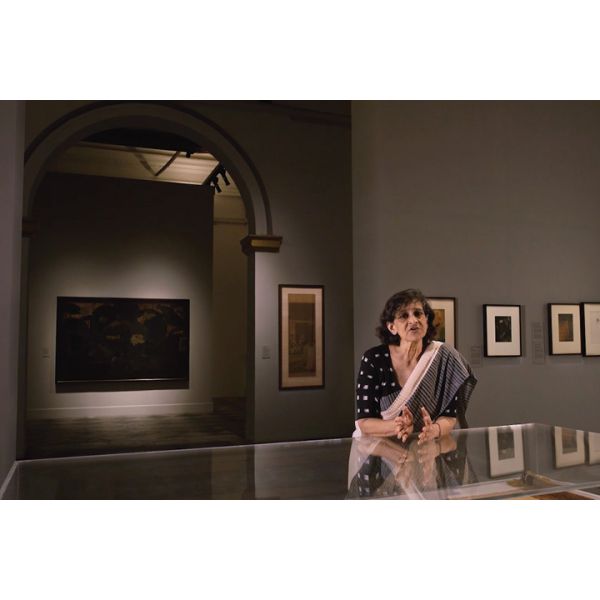
The Story of Bengal Art presents a panoramic view of the evolution of visual arts in the region. The second episode, presented by Prof. Tapati Guha-Thakurta, picks up at the turn of the 20th century, when Bengal became an important nerve-centre of India's nationalist movement. The series was shot in the majestic galleries of DAG's Ghare Baire museum-exhibition at Kolkata's Currecy Building.
Learn More -
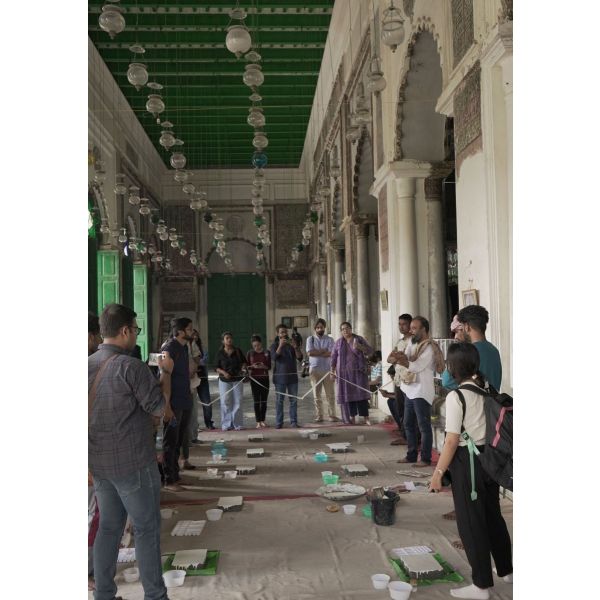 Collection StoriesThe City as a Museum, Kolkata—A Visual Journey$1.00
DAG Museum’s annual festival ‘The City as a Museum’ attempts to explore the various archives, communities and artistic traditions that cohere around the life of a city. Put together, they tell different stories about the city across time and space, from the point of view of neighbourhoods, collections and institutions, but not just limited to those either.
In order to learn more about this unique programme that seeks to explore heritage outside the walls of a traditional gallery or museum, read on!
Learn More -
 Collection OnlineCHITTAPROSAD$1.00
Chittaprosad (1915 – 1978) was an artist of the people. A firm believer in the power of political art to bring tangible change in society, he is remembered for political cartoons and caricatures lampooning the ruling elite while championing the cause of the working class.
He was also a dedicated journalist working for the Communist Party of India (CPI) and was sent by the party to document the effects of the Great Bengal Famine of 1943 in Bengal’s villages and towns. He would come back with harrowing stories and sketches of hunger and death and publish them in the CPI’s journal People’s War, something that would prove to be extremely important in the face of British censorship on news about the famine.
Post-Independence, Chittaprosad distanced himself from the CPI due to ideological differences and moved to the outskirts of Bombay. He continued registering protest through his art but focussed increasingly on art for children. He setup a puppet studio, Khela-ghar and created beautiful retellings of epics and folk tales in print.
Learn More -
 ExhibitionsA Place In The Sun: Women Artists From 20th Century IndiaAs low as $1.00
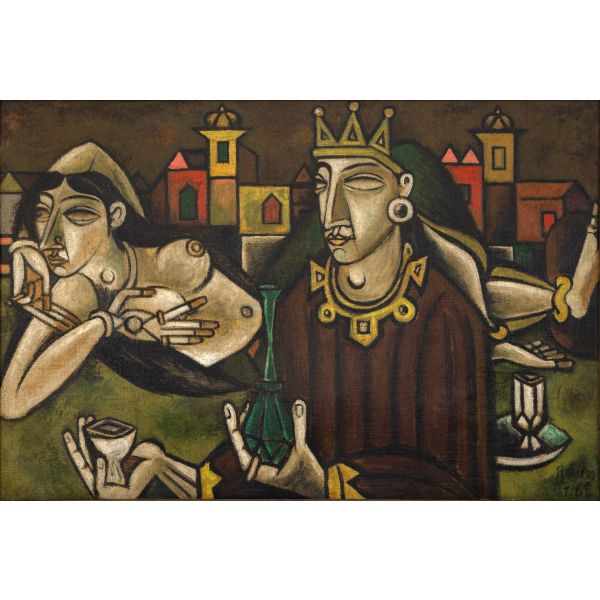
Sunayani Devi picked up a paintbrush in 1905 when she was thirty years old while supervising her kitchen duties, self-taught, but with enough talent to attract the critical attention of Stella Kramrisch who organised an exhibition of her paintings in Germany in 1927. It was in her worthy footsteps that India’s women artists followed. Devayani Krishna was born five years after Sunayani Devi began painting; Amrita Sher-Gil already had a career in Paris by the time India’s first art school-trained woman artist, Ambika Dhurandhar, earned her diploma in Bombay. B. Prabha followed next, her work reflecting the realities of the marginalised in a piquant language. By the time Nasreen Mohamedi and Zarina Hashmi, both born a decade before Independence, established their careers, women were joining art schools in greater numbers, validating their practice not on the basis of their gender but on its context. Anupam Sud Devayani Krishna Gogi Saroj Pal Latika Katt Madhvi Parekh Mrinalini Mukherjee Navjot Rekha Rodwittiya Shobha Broota Zarina Hashmi
Learn More -
 ExhibitionsAvinash Chandra: HumanscapesAs low as $1.00
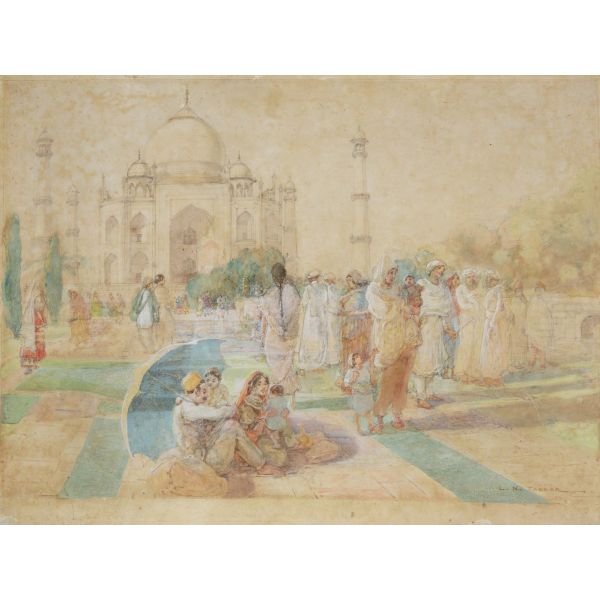
This is the first-ever retrospective of the Indian modern artist Avinash Chandra who lived most of his life in the West, in London and New York. The artist, who had trained in New Delhi, left soon after for London, and most of his practice was limited to London and New York, the two cities he called his home till his unfortunately early death in 1991. In the roughly three-and-a-half decades of his career, Avinash’s work changed amazingly, reflecting his environment and milieu as he grew and adapted to cities vastly different from their Indian counterparts, with their own sub-cultures. That this happily coincided with a discovery of India, however superfluously, as a land of spirituality and sexuality, seemed to serve him well as his muse.
Learn More -
-
-
-
-