Search results for: 'most useful things to buy'
-
-
 ExhibitionsThe Babu and the BazaarAs low as $1.00
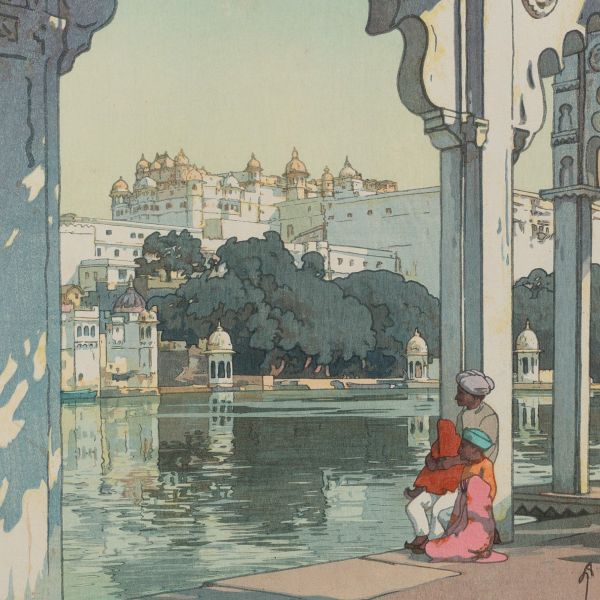
Calcutta, flourishing with commerce and maritime trade during the nineteenth century, was regarded as the ‘second city’ of the British Empire. People thronged there in large numbers to make a livelihood, or in holy pilgrimage, seeking blessings at the Kali temple at Kalighat that had been re-built in 1809. Annada Prasad Bagchi Bamapada Banerjee B. C. Law C. W. Lawrie Kshetradas Chitrakar Panchanan Karmakar Madhav Chandra Das Ramadhan Swarnakar Ganganarayan Ghosh Nritya Lal Datta Press Kristohurry Das Chorebagan Art Studio Kansaripara Art Studio Calcutta Jubilee Art Studio Bat-tala
Learn More -
 ExhibitionsThe Printed PictureAs low as $1.00
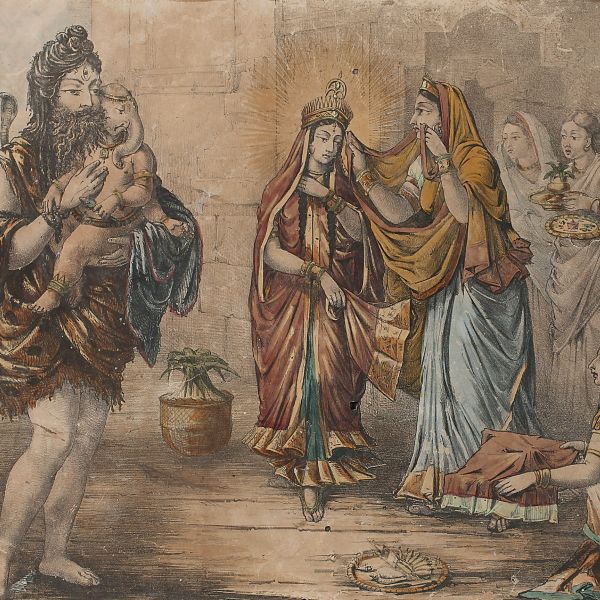
A print is an original work of art created and printed by hand by an artist or a professional printing assistant from a ‘matrix’—a plate, block of stone, wood or stencil. The image is created on the matrix and the artist takes a limited number of impressions or prints off it. These impressions are numbered and signed by the artist and belong to a limited edition, and this makes the print an original work of art and not a reproduction. Printmaking consists of a wide range of processes: relief printmaking which consists of techniques like engraving, woodcut and linocut; planographic processes such as lithography and oleography, intaglio processes such as drypoint, etching, aquatint, mezzotint, photo processes and collography; and serigraphy, where the image is printed through a silk screen on to the paper. A P Bagchi A Ramachandran Abanindranath Tagore Ajit Dubey Akhilesh verma Akkitham Naryanan Amitabh Banerjee Amitava Anonymous Print Anupam Sud Arun Bose B P Banerjee Basudev Roy Bengal Lithograph Bengal Oleographs Bengal Woodcut Benod Behari Mukherjee Bhupen Khakhar Bijan Choudhury Chittaprosad Daniell William Devraj Dakoji Devyani Krishna Francis N Souza F. B Solvyns Ganesh Haloi Gulam Sheikh Haren Das Himmat Shah Indu Rakshit Indumati Roop Krishna Jagdish Dey Jagmohan Chopra Jai Zahrotia Jamini Roy Jyoti Bhatt K Laxma Goud K V Haridasan Krishna Ahuja Krishna Reddy Lalu Prasad Shaw M F Husain M. V Dhurandhar Madhvi Parekh Maniklal Banerjee Manu Parekh Moti Zahrotia Mrinalini Mukherjee Mukul Dey Nagji Patel Nalini Malani Nandalal Bose Navjot Paneer Selvam Partha Pratim Deb Portrait Punjab Litho Qamrool Hassan R B Bhaskaran Rabin Mondal Radha Charan Bagchi Ram Kumar Ramendranath Chakravorthy Ramkinkar Baij Rani Dey Ravi Varma Press Ravi Varma Print Rini Dhumal Sakti Burman Sanat Kar Satish Gujral Shobha Broota Shyamal Dutta Ray Somnath Hore Sudhir Khastgir Sunil Das Sunil Madhav Sen Suren Gangooly Sushanta Guha Sushil Sen Suvaprasanna Tapan Bhowmik Tarak Basu Thoman Daniell V Vishwanadhan Various Litho and Olio Vijay Bagodi Vinayak Masoji Vivan Sundaram Walter D’Souza Yogesh Rawal Zainul Abedin
Learn More -
 ExhibitionsALTAF: Early DrawingsAs low as $0.00
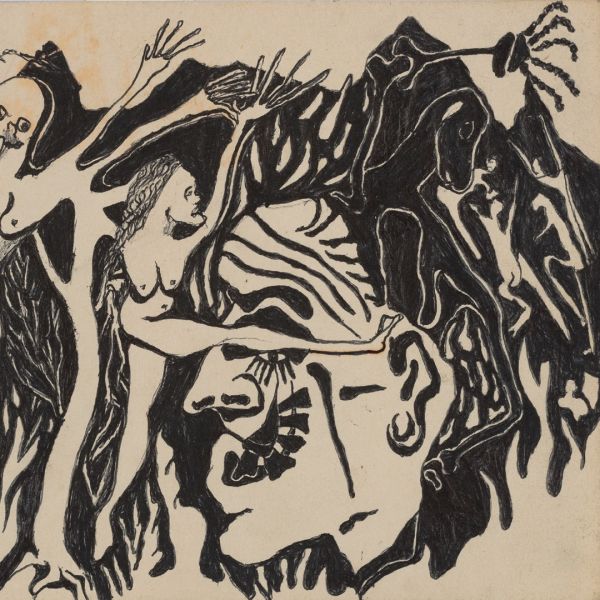
England shaped Altaf’s political consciousness as well as his persona. He engaged in the anti-apartheid demonstration at Trafalgar Square held against the imprisonment of Nelson Mandela; a peaceful protest at the American Embassy opposing the bombing in North Vietnam; the Aldermaston March against the nuclear bomb; the Campaign for Nuclear Disarmament; he became a member of the Youth Wing of the Communist Party of Great Britain (CPGB) and the Young Communist League (YCL). Any examination of the theoretical aspect of Altaf’s work must start with the knowledge that the work in question exemplified an element of ‘existentialist’ thought.
Learn More -
 ExhibitionsTipu SultanAs low as $1.00
An extraordinary exhibition of paintings, prints, maps and other objects, curated by Giles Tillotson, that recounts a visual history of the Mysore Wars between the East India Company and Tipu Sultan, this DAG exhibition explores how the narrative might have changed 222 years after the siege of Seringapatnam. The images, based on the British view of the time, reflect changing perceptions and Indian views on this epic battle and its political and social fallouts. A highlight of the exhibition is a painting by Henry Singleton depicting The Last Effort and Fall of Tippoo Sultaun, among other stellar works, that will be seen in India for the first time. Alexander Allan Cpt. R. Frazer David Wilkie Edward Orme Henry Singleton J. B. Mauzaisse James Hunter Johann Peter Krafft John Smart Mather Brown Obadiah Sherratt Robert Hyde Colebrooke Robert Home Robert Ker Porter Thomas Stothard
Learn More -
-
-
-
 ExhibitionsWilliam Hodges & the Prospect of IndiaAs low as $1.00
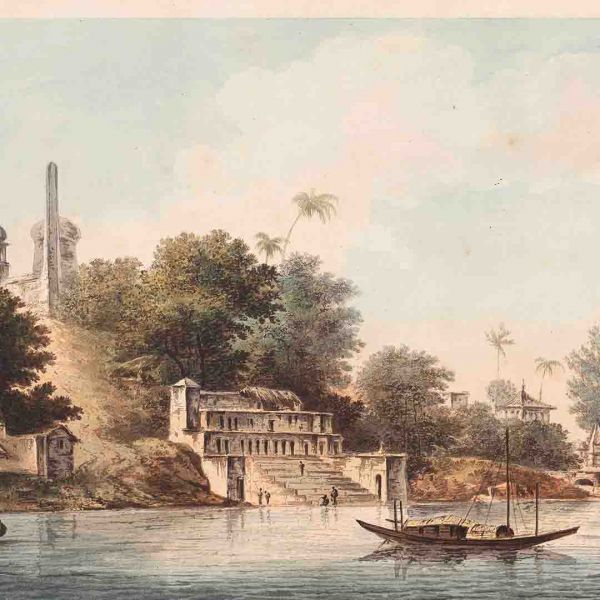
William Hodges (1744-97) was a pioneer in more ways than one. He was the first British landscape painter to visit India, and to portray scenery across the whole breadth of the Gangetic plain. As a writer, he gave the first detailed descriptions of numerous historic Indian buildings, and he theorised about the origins and evolution of Indian architectural design. His art illustrates his exploration into terrain which—in its breadth and scope—was at the time almost as unfamiliar to Indian as to Western eyes.
Learn More -
 ExhibitionsLiving Traditions & The Art of Jamini RoyAs low as $1.00
Jamini Roy’s was an art of quiet resistance that assimilated so seamlessly into the folk and craft traditions of Bengal that it did not cause any discernible ripples among the prevalent artistic mood. All around him, art was being nurtured, questioned, uprooted—it was, after all, a period when nationalist feelings ran high and a search for an indigenous lexicon was paramount—but Jaminida’s ability to look to tradition for a modern approach, though revolutionary, was instinctively natural and organic. It was art that everyone understood and wanted to take home. No wonder Jamini babu became a household name in his native Calcutta and went on to be honoured as one of the pre-eminent National Treasure artists of the country whose art has the greatest acceptance of any known Indian modernist.
Learn More -
 ExhibitionsA Place In The Sun: Women Artists From 20th Century IndiaAs low as $1.00
Sunayani Devi picked up a paintbrush in 1905 when she was thirty years old while supervising her kitchen duties, self-taught, but with enough talent to attract the critical attention of Stella Kramrisch who organised an exhibition of her paintings in Germany in 1927. It was in her worthy footsteps that India’s women artists followed. Devayani Krishna was born five years after Sunayani Devi began painting; Amrita Sher-Gil already had a career in Paris by the time India’s first art school-trained woman artist, Ambika Dhurandhar, earned her diploma in Bombay. B. Prabha followed next, her work reflecting the realities of the marginalised in a piquant language. By the time Nasreen Mohamedi and Zarina Hashmi, both born a decade before Independence, established their careers, women were joining art schools in greater numbers, validating their practice not on the basis of their gender but on its context. Anupam Sud Devayani Krishna Gogi Saroj Pal Latika Katt Madhvi Parekh Mrinalini Mukherjee Navjot Rekha Rodwittiya Shobha Broota Zarina Hashmi
Learn More