Search results for: 'louvre pyramid "ahead of its"'
-
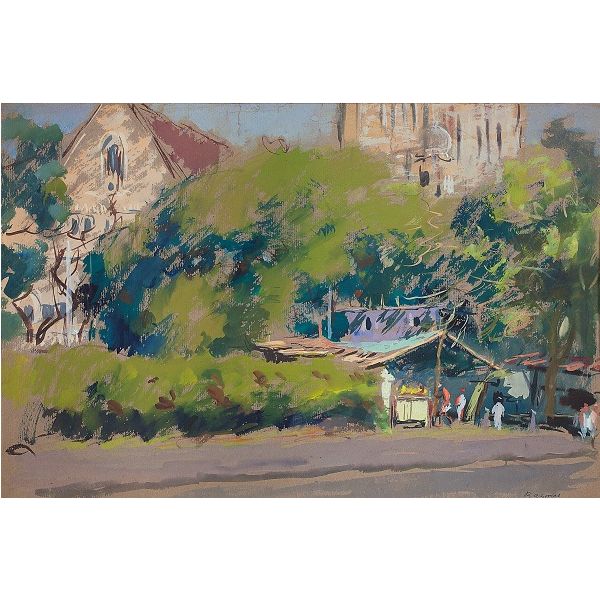
 JournalPopular Prints and the Freedom Struggle$0.00The role of popular prints in providing a visual lexicon to India’s freedom struggle—carrying images of its vital players and events to the farthest corners of the country—received a tremendous boost with this Paula Sengupta-curated exhibition at Drishyakala, Red Fort, Delhi, in 2019, a joint collaboration between DAG and the Archaeological Survey of India. Learn More
 -
 JournalThe Making of the Dhaka Art Summit: Behind the scenes with the Curator$0.00
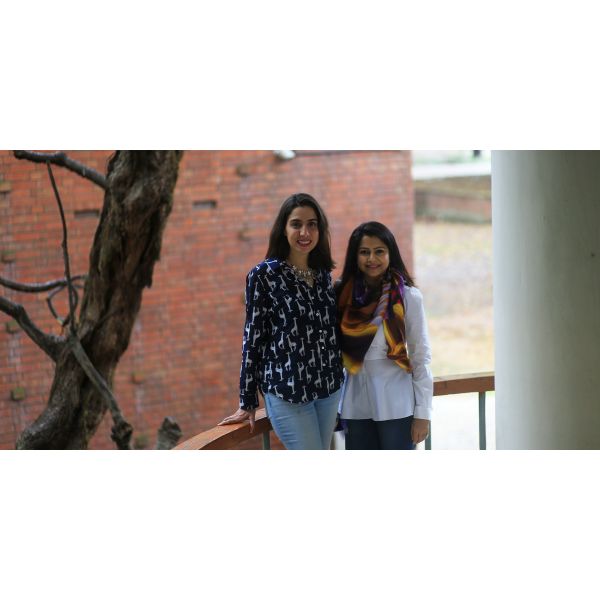
Diana Campbell is the Artistic Director of the Samdani Art Foundation, now in its 10th year, and chief curator of the prestigious Dhaka Art Summit, whose sixth edition starts on February 3, 2023. She spoke with the DAG Journal’s editorial team to discuss her own curatorial process and how she makes room for experimentation, and unpacks the intriguing thematic of this new edition: ‘flood’, or bonna.
Learn More -
 Collection StoriesA Tryst with Destiny: A Visual Journey$1.00
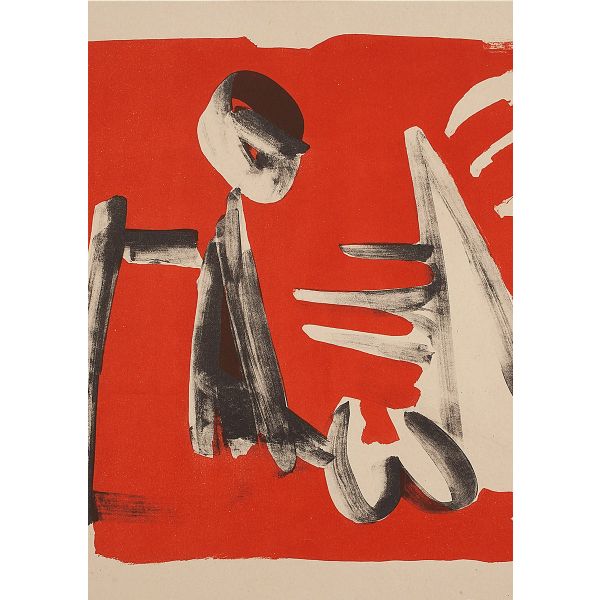
Colonization is perhaps best understood as a process that unfolded over time than as a single historical event. In India and South Asia it began with the East India Company acquiring rights over land in different parts of the country, with the occasional political victories won on the battlefields. Since the Battle of Plassey (1757), their power over legislative and judicial matters grew steadily, backed by a strong military presence. Following the First War of Independence in 1857, the British Crown brought most parts of the Indian subcontinent under its direct rule, continuing to hold power until 1947.
Learn More -
-
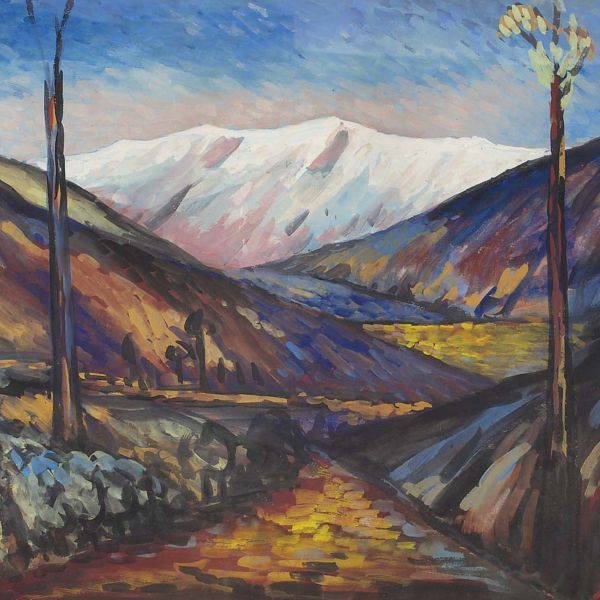 ExhibitionsManifestations VII: 75 ArtistsAs low as $1.00
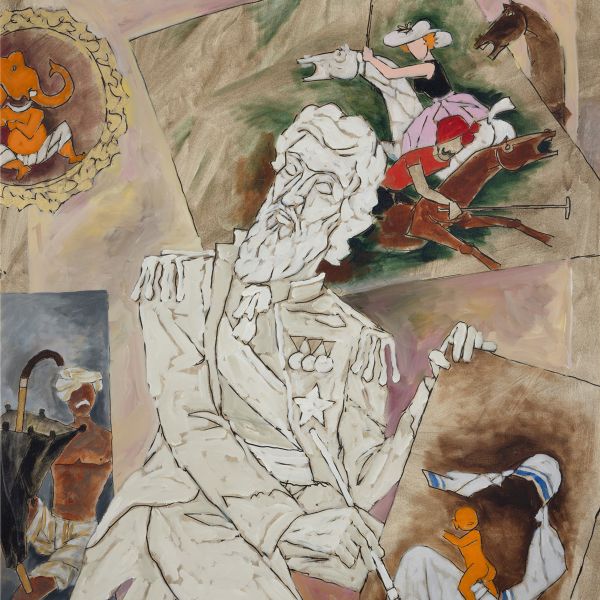
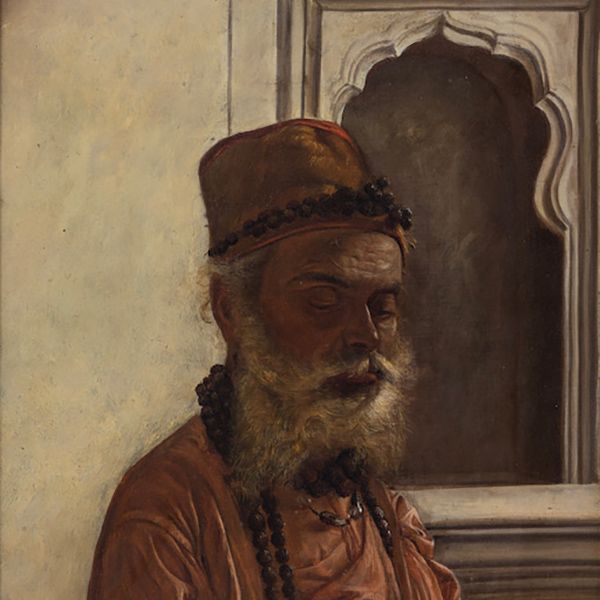
The exhibition features several works of academic realist portraiture from early 20th century—vivid oil portraits by masters of the form such as Pestonji Bomanji, M. F. Pithawalla, Baburao Painter and L. N. Taskar as well as charcoal sketches by M. V. Dhurandhar, an academic artist of renown of the same period. The selection features Western academic oil-influenced works on mythological themes by the school referred to as Early Bengal and two works painted in a Raja Ravi Varma-derived style—an anonymous work by the Ravi Varma ‘School’ and Aroomoogam Pillay. A. A. Almelkar Abalall Rahiman Abani Sen Akbar Padamsee Ambadas Anonymous (EarlyBengal) Anonymous (Portraiture ) Anupam Sud Aroomoogam Pillay Avinash Chandra Baburao Painter Badri Narayan Bijan Choudhary Bikash Bhattacharjee Biren De Chintamoni Kar Chittaprosad D. P. Roy Chowdhury Devyani Krishna Dharamnarayan Dasgupta F. N. Souza G. R. Santosh G. Ravinder Reddy Ganesh Haloi Gogi Saroj Pal Gopal Ghose H. A. Gade Himmat Shah J. Sultan Ali J. Swaminathan Jamini Roy Jeram Patel Jogen Chowdhury Jyoti Bhatt K. H. Ara K. K. Hebbar K. Laxma Goud K. S. Kulkarni K. V. Haridasan Kshitindranath Majumdar L. Munuswamy L. N. Taskar Laxman Pai M. F. Husain M. F. Pithawalla M. V. Dhurandhar Madhvi Parekh Mukul Dey N. S. Bendre Nandalal Bose Nasreen Mohammedi Nicholas Roerich Nikhil Biswas P. Khemraj P. T. Reddy Paritosh Sen Pestonji E. Bomanji Prosanto Roy Rabin Mondal Ram Kumar Ramkinkar Baij Ravi Varma ‘School’ S. H. Raza S. K. Bakre Sadequain Sailoz Mukherjea Shanti Dave Shyamal Dutta Ray Sohan Qadri Sudhir Patwardhan Sunil Das Sunil Madhav Sen Tarak Garai Ved Nayar Walter Langhammer
Learn More -
-
-
-
-
 Art FairsArt Mumbai$1.00
At the three-day show, DAG will present Celebrating the Modern, an ode to the vibrancy of Indian art with a hand-picked selection that guides us through the development of Indian modernism through diverse movements and genres—a tribute to its appeal that has extended beyond time to be part of a distinctive global language.
Learn More -
 Art FairsArt Mumbai$0.00
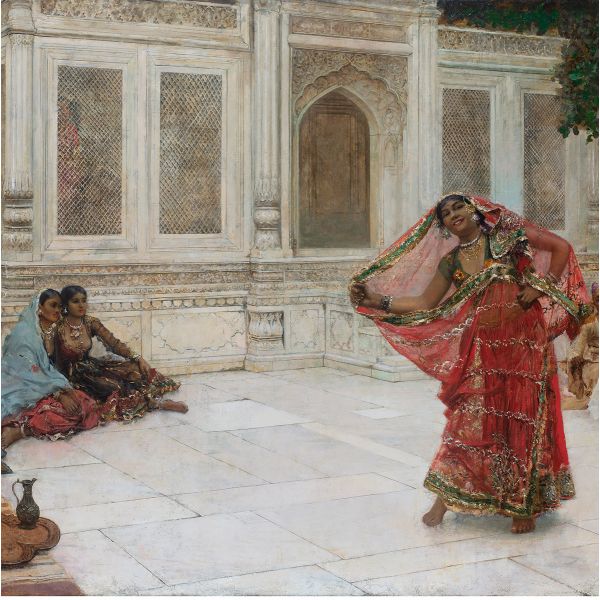
As in previous editions, ‘Iconic Masterpieces’ allows viewers to experience the pinnacles of Indian art through its lens of quality, historicity, and rarity—to which the element of surprise adds an unexpected piquancy. An ‘Iconic’ exhibition from DAG is like a museum tour where the best Indian art can be enjoyed through a lively and perceptive curatorial eye that acknowledges and helps extend our knowledge of it.
Learn More