


Search results for: 'chansons du jour de l'an'
-
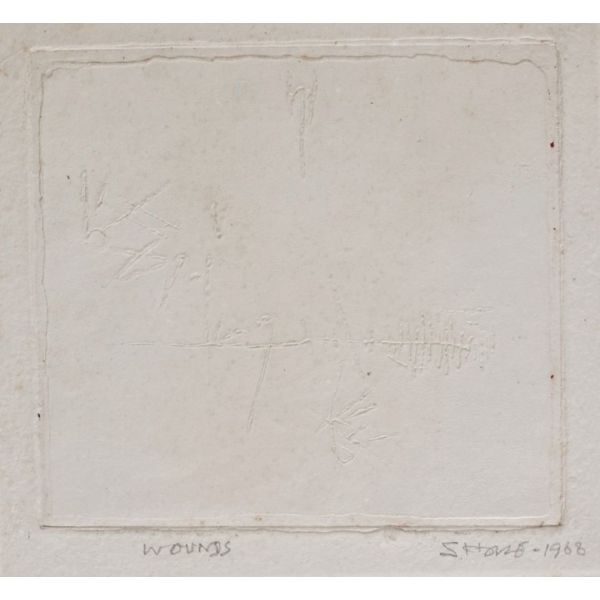 Events and ProgrammesPulp: Histories$1.00
A talk by art historian Anshuman Dasgupta, investigating Somnath Hore’s exploration of pulp as an extension of his printmaking practice, focusing on his iconic ‘Wound’ series.
Learn More -
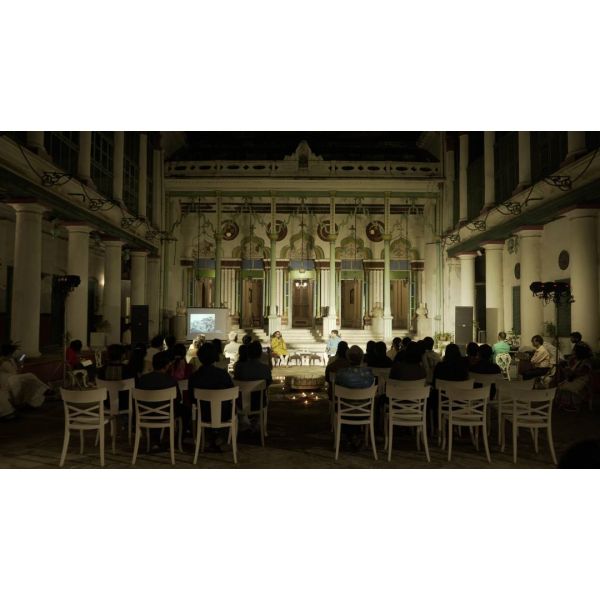 Events and ProgrammesRevisiting the Tagores$1.00
A musical evening at Prasad Tagore Palace, the heritage residence of Pramantha Tagore, preceded by a conversation with Sujaan Mukherjee about the Tagore family’s ties to music, theatre, and art patronage.
Learn More -
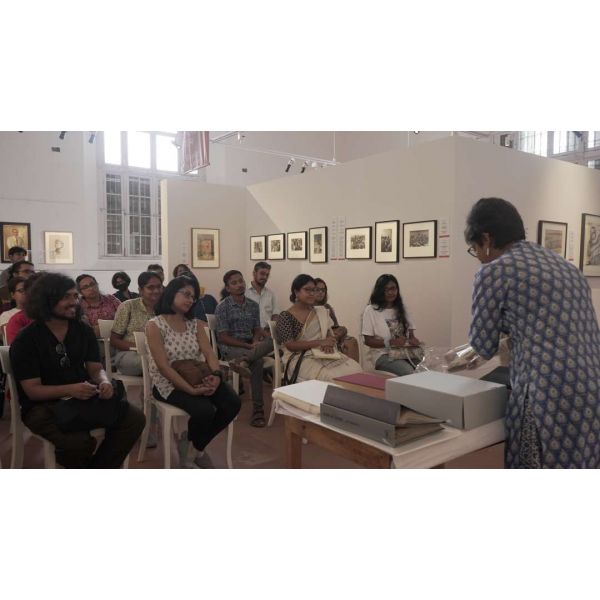 Events and ProgrammesPreserving the Past$1.00
A workshop by archivist Kamalika Mukherjee on the importance of family archives, and DIY methods that can help preserve our own paper-based for the next generation.
Learn More -
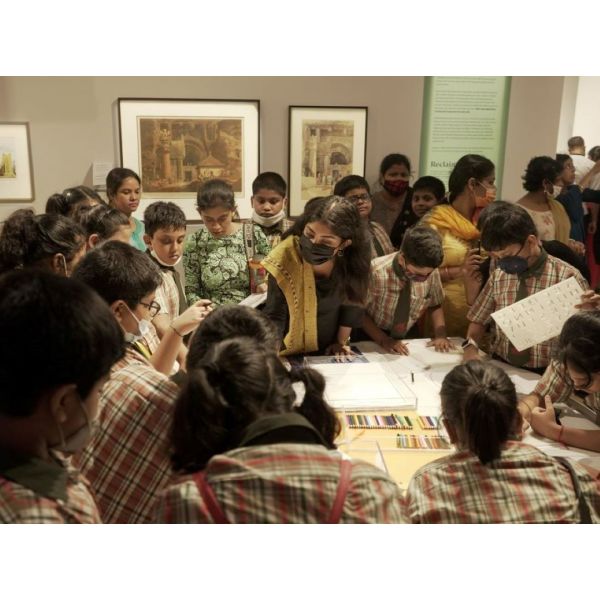 Events and ProgrammesApprenticeship Programme$1.00
A paid opportunity for young students from diverse disciplines to participate in the exciting world of museums and arts organizations by introducing them to the whole gamut of activities that go into building audience engagement around an exhibition or programme.
Learn More -
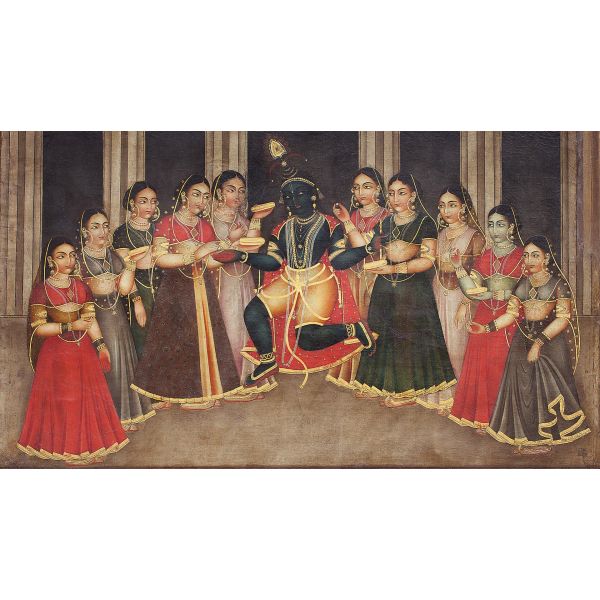 Institutional CollaborationsThe Babu and the Bazaar: Art from 19th and Early 20th Century Bengal$0.00
 -
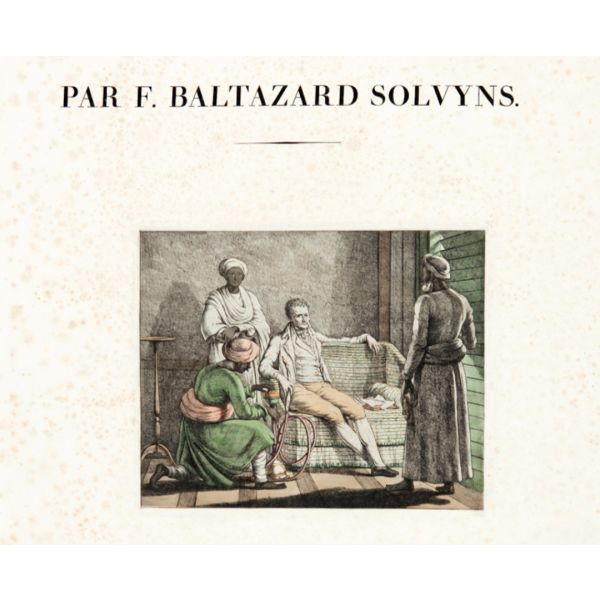 ArtistsF. B. Solvyns$1.00
Flemish marine painter and one of the early pioneers of printmaking in India, François Balthazar Solvyns was born in Antwerp, Belgium, on 6 July 1760, in a prominent merchant family.
Learn More -
 ArtistsBaburao Sadwelkar$1.00The grandnephew of the well-known sculptor V. P. Karmakar, and the son of an artist who worked in Bombay film studios, Prabhakar Barwe was born on 16 March 1936 in Nagaon, Maharashtra. He joined Sir J. J. School of Art, Bombay, in 1954. Learn More
 -
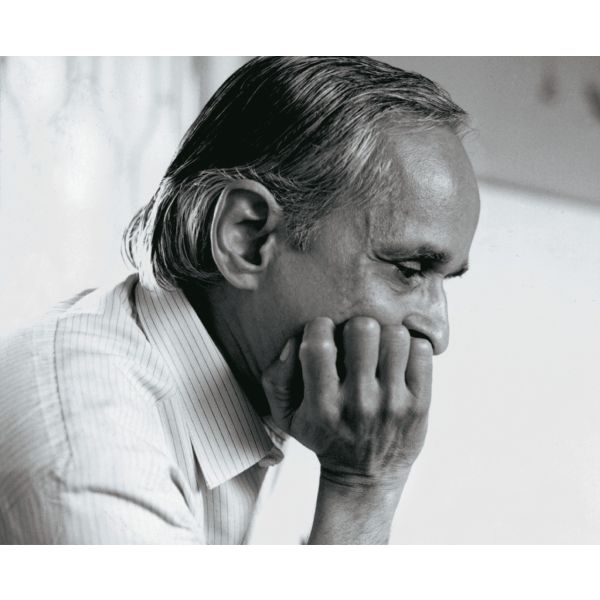 ArtistsPrabhakar Barwe$0.00The grandnephew of the well-known sculptor V. P. Karmakar, and the son of an artist who worked in Bombay film studios, Prabhakar Barwe was born on 16 March 1936 in Nagaon, Maharashtra. He joined Sir J. J. School of Art, Bombay, in 1954. Learn More
 -
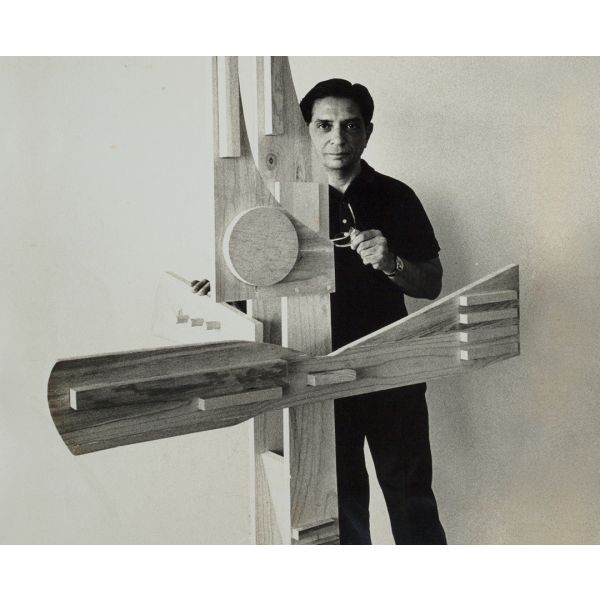 ArtistsAdi Davierwalla$0.00Born in 1922, pioneering modernist sculptor Ardeshir M. Davierwalla—fondly called Adi—was a pharmaceutical chemist by training; he went to school in Coonoor, Tamil Nadu, and studied pharmaceutical engineering at the Victoria Jubilee Technical Institute (now known as the Veermata Jijabai Technological Institute) in Bombay. Learn More
 -
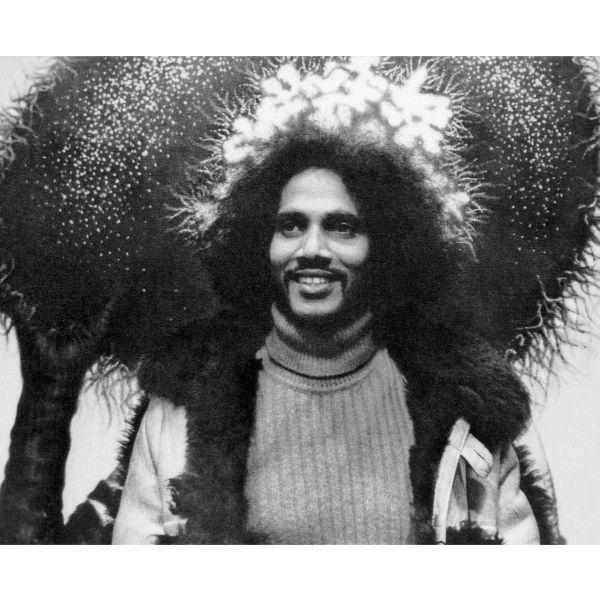 ArtistsV. Viswanadhan$0.00Among artists, Velu Viswanadhan is often referred to as ‘Paris’ Viswanadhan because he made the French capital his home. Born in 1940 in Kollam, Kerala, Viswanadhan joined Government College of Fine Arts, Madras, in 1960, where he studied under K. C. S. Paniker, and along with him became a founder-member of the Cholamandal Artists’ Village. Learn More
 -
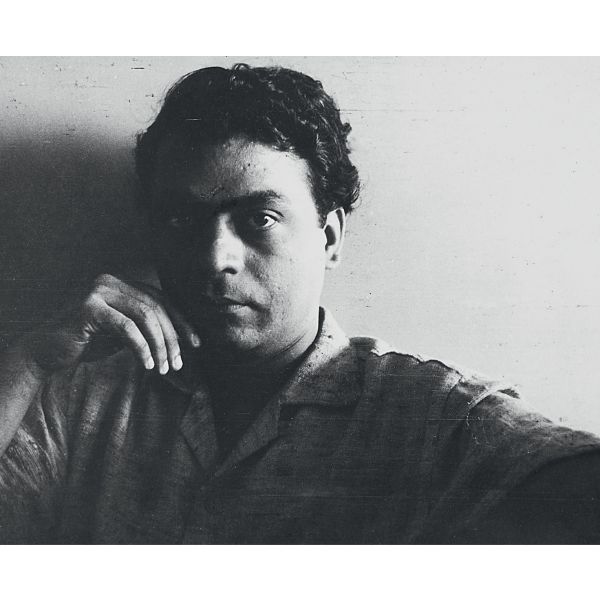 ArtistsV. S. Gaitonde$0.00One of India’s most revered ‘non-objective’ painters—he preferred that term over ‘abstraction’—Vasudeo Santu Gaitonde was born in Nagpur in 1924. He received his diploma in painting from Sir J. J. School of Art, Bombay, in 1948. Impressed by his work, the members of the Progressive Artists’ Group—formed in 1947—pulled him into their meetings. The strength of his talent was soon recognised elsewhere—he won the first prize of the Young Asian Artists Association in Tokyo in 1957, and a John D. Rockefeller III Fund fellowship in 1964. Learn More
 -
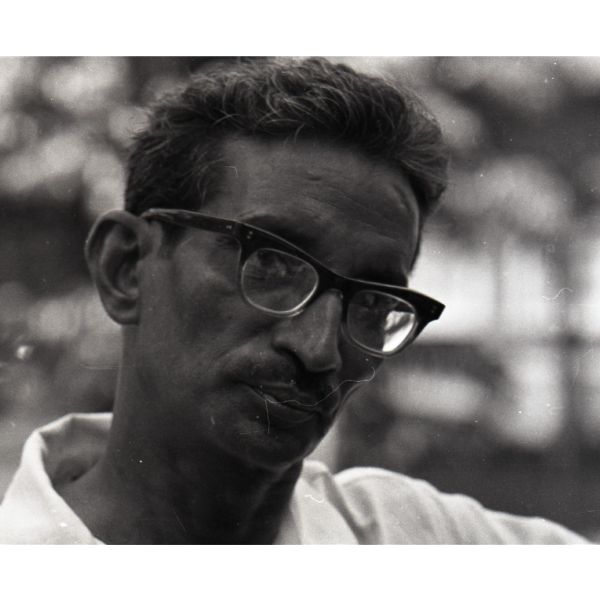 ArtistsSankho Chaudhuri$0.00One of India’s foremost sculptors, Sankho Chaudhuri’s work is an important key in the evolution of modern, abstract sculpture in the country, breaking away from traditional figuration and mid-Victorian academic naturalism. Learn More