


Search results for: 'treat and care for people who are sick, disabled or injured 訳'
-
 Art FairsFrieze Seoul 2024$1.00
Steeped in sacred iconography particular to the Indian artist, Sohan Qadri (1932-2011), whose practice in Copenhagen brought him international renown, the ink and dye works represent the artist’s modernist vocabulary – minimalist, rendered in vibrant colours, with a tactile dimensionality that established him as a twentieth century painter whose legacy has impacted viewers around the world. Perhaps no other Indian artist has been as widely collected as Sohan Qadri.
Learn More -
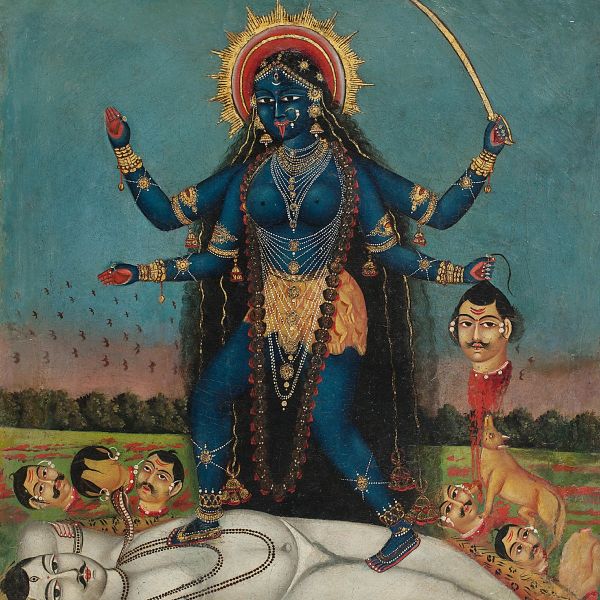 ExhibitionsThe Art of BengalAs low as $1.00
The contribution of the first renaissance capital of the country—Bengal—to Indian art and its development is longstanding, enormous and continued. As one of the largest repositories of Bengal art of the past two centuries, DAG is extremely pleased to announce its major exhibition. 19th Century Popular Paintings 19th Century Popular Prints Abani Sen Abanindranath Tagore Ajit Gupta Amalnath Chakladhar Amitabha Banerji Annada Prasad Bagchi Arun Bose Asit Haldar Atul Bose B C Law B. C. Sanyal Bampada Bandhopadhay Benjamin Hudson Benode Behari Mukherjee Bijan Choudhary Bikash Bhattacharjee Bipin Behari Goswami Biren De Bireswar Sen Biswanath Mukerji Chintamoni Kar Chittaprosad D. P. Roy Chowdhury Das Sunil Bimal Dasgupta Dharamnarayan Dasgupta Dhiraj Chowdhury Dhirendra Deb Burman Dipen Bose Early Bengal Oil Artists Gaganendranath Tagore Ganesh Haloi Ganesh Pyne Gobardhan Ash Gopal Ghoshe Gopal Sanyal Haren Das Hemanta Misra Hemendranath Majumdar Heramba Kumar Ganguly Hirachand Dugar Hiranmoy Roychaudhuri Indra Dugar Isha Mahammad J. P. Gangooly Jamini Roy Jogen Chowdhury Jogesh Chander Seal K. G. Subramanyan Kalighat Patuas Kalikinkar Ghosh Dastidar Kalipada Ghoshal Kartick Chandra Pyne Khagen Roy Kishory Roy Kshitindranath Majumdar Lalit Mohan Sen Lalu Prasad Shaw M. A. R. Chughtai Maniklal Banerjee Manishi Dey Meera Mukherjee Mukul Dey Nabin Chandra Ghosh Nandalal Bose Nikhil Biswas Nirode Majumdar Olinto Ghilardi Paritosh Sen Partha Pratim Deb Prahlad Karmakar Prankrishna Pal Prodosh Das Gupta Prokash Karmakar Prosanto Roy Rabin Mondal Rabindranath Tagore Radhacharan Bagchi Ramananda Bandhopadhyay Ramendranath Chakravorty Ramgopal Vijaivargiya Ramkinkar Baij Ranada Charan Ukil – Ranada Prasad Gupta Rathin Maitra Sailendranath Dey Sailoz Mukherjea Sakti Burman Samarendranath Gupta Sanat Kar Sankho Chaudhuri Sarada Chandra Ukil Sarbari Roy Chowdhury Satish Chandra Sinha Shuvaprasanna Shyamal Dutta Ray Somnath Hore Sudhir Ranjan Khastgir Suhas Roy Sunayani Devi Sunil Madhav Sen Surendranath Ganguly Surendranath Kar Sushil Chandra Sen Zainul Abedin
Learn More -
 ExhibitionsAmitava: The Complete WorksAs low as $1.00
In a career spanning four decades, Amitava’s location as an artist has determined the authority that he brings to his practice. As an artist studying and working in the 1960s, Amitava Das experienced a decade of fragmented locii. The ’60s, the period of his education at the College of Art, was the decade of wars, fiscal difficulty and an uncertain polity in the wake of the death of Jawaharlal Nehru. Further, as a second generation pravasi (non-residing Indian) Bengali, the roiling political violence of West Bengal’s Naxal movement came to him through the filter of poetry, film and art—much as he would have received the existential writing of Camus, Genet and Rilke. Through the 1960s and ’70s, small groups of artists and filmmakers in different pockets in India had a heightened response: the state of the nation found an uncanny echo in the language of modernism, of the artist’s isolation and purity even within a state of uncertainty.
Learn More -
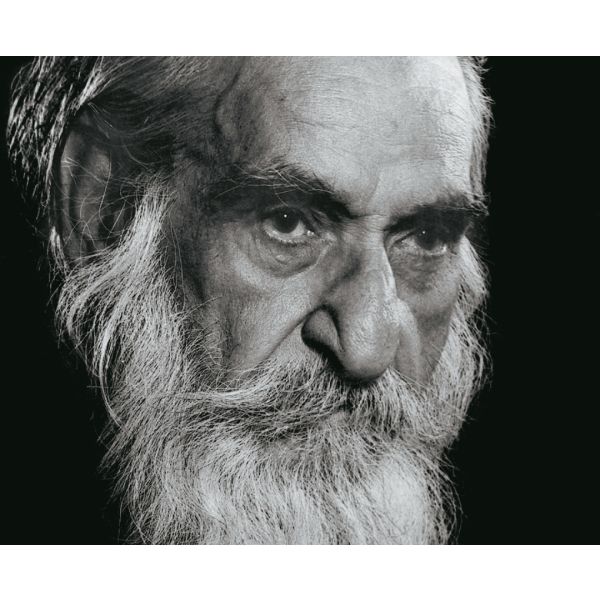 ArtistsKanwal Krishna$0.00Born in Kamalia in pre-Partition Punjab, Kanwal Krishna lived the life, he said, ‘of a wandering gypsy’. In the 1950s, several artists began to explore landscape painting as a separate genre in order to establish a modernist language among whom Krishna’s work stood out. Krishna was inspired by the forces of nature as he travelled to forbidden Tibet, Kashmir, Europe, and other places. Learn More
 -
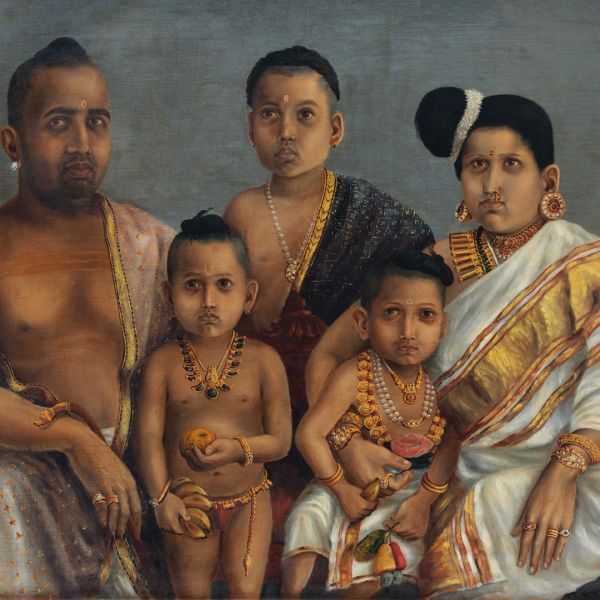 ExhibitionsIconicAs low as $1.00
‘Iconic Masterpieces of Indian Modern Art, Edition 02’, the second iteration of DAG’s annual exhibition that redefines the concept of modernism in the Indian context, will be on view in New Delhi this month. Timed to coincide with the launch of its new gallery in the capital, ‘Iconic Masterpieces’ brings together the finest instances of art created in the country by Western and Asian travelling artists and Indian masters spread a little over two centuries. Selected for their rarity, historicity, and excellence, each work of art in this exhibition marks the zenith in terms of the quality of art created in different periods and styles in the subcontinent.
Learn More -
-
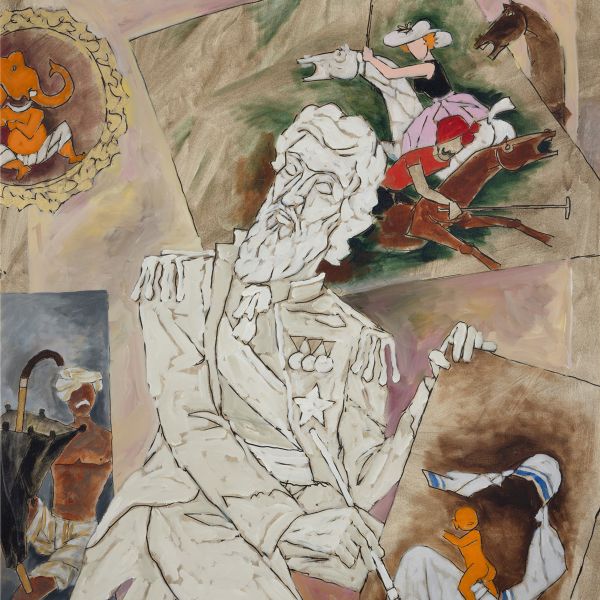
 ExhibitionsManifestations VI: 75 ArtistsAs low as $1.00
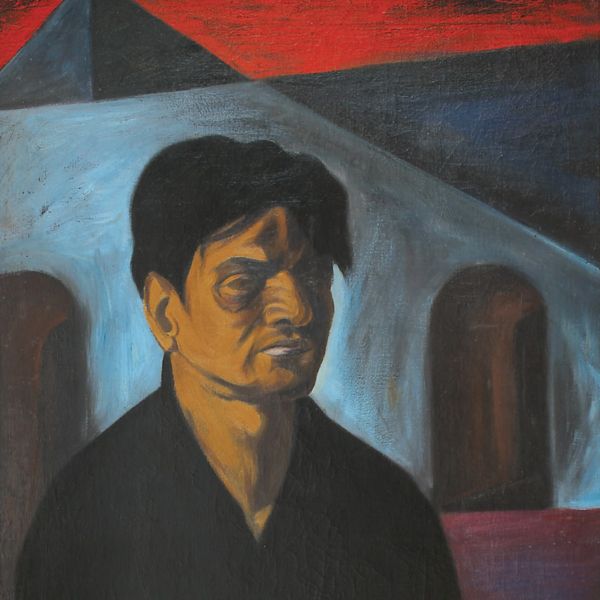
Manifestations VI features an assortment of seventy-five significant artists curated from its collection. Not organised around theme or style, Manifestations features a single work or a related series of works by each chosen artist, which reflect an important facet of their unique artistic journeys. Usually dominated by 20th century modern Indian art, Manifestations VI features works spanning three centuries, from a ‘Company Painting’ set in Tirunelveli district, Tamil Nadu, done by Thomas Daniell for the East India Company in the 1790s, to an Early Bengal work of a ferocious Kali astride a supine Shiva, to several 20th century modern works. A A. Raiba Ambadas Amitava Anonymous (Early Bengal) Asit Kumar Haldar Avinash Chandra Amitava N. Arya Benode Bihari Mukherjee Bikash Bhattacharjee Bimal Dasgupta Biren De Bireswar Sen Charan Bagchi Chintamani Kar Chittaprosad P. Roy Chowdhury Dharamnarayan Dasgupta F. N. Souza G. R. Santosh Ganesh Haloi George Keyt Gopal Deuskar Gopal Ghose Gulammohammed Sheikh Himmat Shah Indra Dugar J. P. Gangooly J. Sultan Ali Jamini Roy Jeram Patel Jyoti Bhatt Jogen Chowdhury K. C. S. Panicker K. K. Hebbar K. Laxma Goud K. S. Kulkarni Khagen Roy Kshitindranath Majumdar Laxman Pai M. A. R. Chughtai M. F. Husain M. F. Pithawalla M. V. Dhurandhar N. S. Bendre Nandalal Bose Nikhil Biswas P. Khemraj P. V. Janakiram Paritosh Sen Pestonji E. Bomanji Prodosh Das Gupta Prokash Karmakar R. Vijaiwargiya Rabin Mondal Raja Ravi Varma Ram Kumar Rameshwar Broota Ramkinkar Baij Ranbir Singh Kaleka Rasik Durgashankar Raval Radha Charan Bagchi S. H. Raza Satish Gujral Shanti Dave Shobha Broota Shyamal Dutta Ray Sohan Qadri Somnath Hore Suhas Roy Sunil Das Thomas Daniell Tyeb Mehta V. Nageshkar V. S. Gaitonde V. Viswanadhan
Learn More -
 Art FairsArt Dubai$0.00
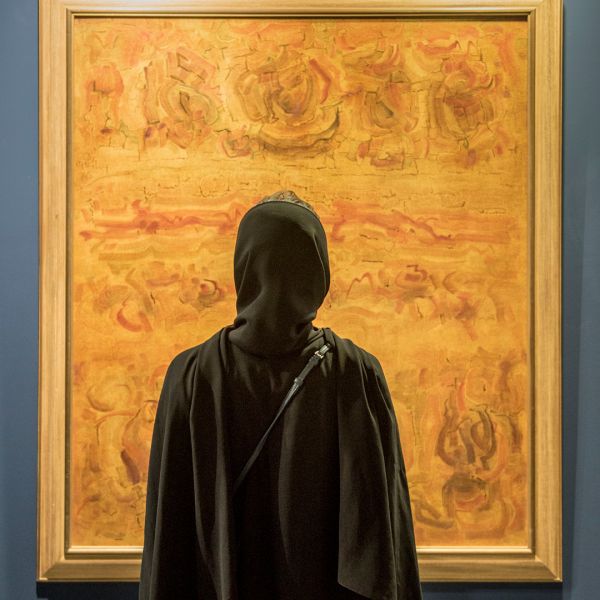
Continuing its theme of introducing Indian abstractionists at Art Dubai, DAG handpicked works by eight eminent abstract artists and juxtaposed them to bring into focus how brushwork and colour are imbued with emotion and can compel viewers to spend hours studying such works. The artists presented by DAG at Art Dubai 2018—Ambadas, Sohan Qadri, Natvar Bhavsar, Avinash Chandra, Rajendra Dhawan, Shanti Dave, Ram Kumar and S. H. Raza—worked in different styles but their use of vivid colours highlighted this somewhat neglected genre of art in India that has begun to enjoy a premium in recent years. These artists had their studios in different parts of the world—Copenhagen, Oslo, New York, Paris, London, New Delhi—but had one thing in common: they were all of Indian origin and had trained and begun their careers in India. AMBADAS SOHAN QADRI NATVAR BHAVSAR AVINASH CHANDRA SHANTI DAVE G. R. SANTOSH J. SWAMINATHAN RAM KUMAR JERAM PATEL RAJENDRA DHAWAN K. V. HARIDASAN
Learn More -
 Collection OnlineTHE TAGORES$1.00
One of the most distinguished families in Bengal, the Tagores exercised unparalleled influence over the cultural landscape of the region. The Nobel Laureate, Rabindranath Tagore (1861 - 1941), and two of his nephews, Gaganendranath Tagore (1867-1938) and Abanindranath Tagore (1871 - 1951) were recognised as India’s National Art Treasure artists. Sunayani Devi (1875 -1962), their sister, is regarded as one of modern India’s first women painters known by name. Her lyrical paintings and embroideries often looked inward to an imagined world of fables and myths. At the turn of the twentieth century, we see Abanindranath emerging as the founder of the Bengal School as he envisioned a new Indian art that was free of colonial influence, rooted in pan-Asianism. Gaganendranath, on the other hand, was a prolific satirist and cartoonist, who imagined new forms and perspectives inspired by Cubism. Together they formed the influential Indian Society of Oriental Art in 1907, while Rabindranath’s school and university at Santiniketan would continue to shape modern art in Bengal for generations to come.
Learn More -
 ExhibitionsArt Exhibitions$0.00
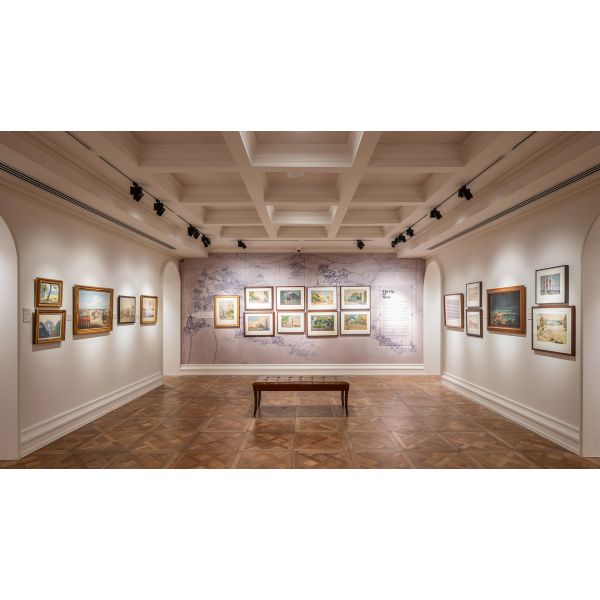
DAG has been a pioneer in curating exhibitions that have historical significance. These have ranged from themes around different genres and art movements to artist retrospectives as well as engagements with forgotten masters. Most exhibitions are sourced from its own inventory and in recent years DAG has begun to explore eighteenth and nineteenth century art and artists in addition to its presence as a stakeholder of twentieth century art. Exhibitions are routinely organised at its galleries in New Delhi, Mumbai, and New York, as well as in collaboration with museums and other institutions. All exhibitions are accompanied by well researched and designed books, adding considerably to the documentation of Indian art history.
Learn More -
 ExhibitionsMemory & IdentityAs low as $1.00
Much of Indian modernism is enriched by the work that some of its best known artists produced after they had left the country, choosing as home another land. F. N. Souza was among the first to leave, in 1949, to head for London, where a successful practice catapulted him to the top of Britain’s artists. He was followed, in 1950, by S. H. Raza, who settled in Paris, winning the coveted critics’ award (Prix de la critique) in 1956, while others such as Krishna Reddy (Paris and New York), S. K. Bakre (London), Sakti Burman (Paris), Avinash Chandra (London and New York), Mohan Samant (New York), Natvar Bhavsar (New York), V. Viswanadhan (Paris), Sohan Qadri (Copenhagen), Rajendra Dhawan (Paris), Eric Bowen (Oslo), Ambadas (Oslo), and Zarina Hashmi (New York), followed in the 1950s-70s. These fourteen artists, with their diverse styles and concerns in art making, are masters lauded for the sheer range of responses to their environment that their work has registered. However, the question this exhibition forefronts, as its curator Kishore Singh asks, is: ‘Does the artist’s ethnic identity mean art too has an ethnic identity?’ Ambadas Avinash Chandra Eric Bowen F. N. Souza Krishna Reddy Mohan Samant Natvar Bhavsar Rajendra Dhawan S. H. Raza S. K. Bakre Sakti Burman Sohan Qadri V. Viswanadhan Zarina Hashmi
Learn More -
 Art FairsArt Dubai$0.00
Shown at the Shanghai Biennale, exhibited in New York, widely admired for his consistency throughout his career, Rabin Mondal’s excoriating paintings are a savage indictment of social and political ills. A reticent, reserved artist, Mondal’s works offer a scathing commentary on the pursuit and abuse of power. A primal, primordial figuration describes his work in which people in positions of authority are rendered vulnerable because of the very power they aspire to. Their contorted features and clawed hands and feet represent their venality. Strong outlines, naked brushstrokes and potent use of green and red characterise most his work.
Learn More