


Search results for: 'tiktok views free 10k'
-
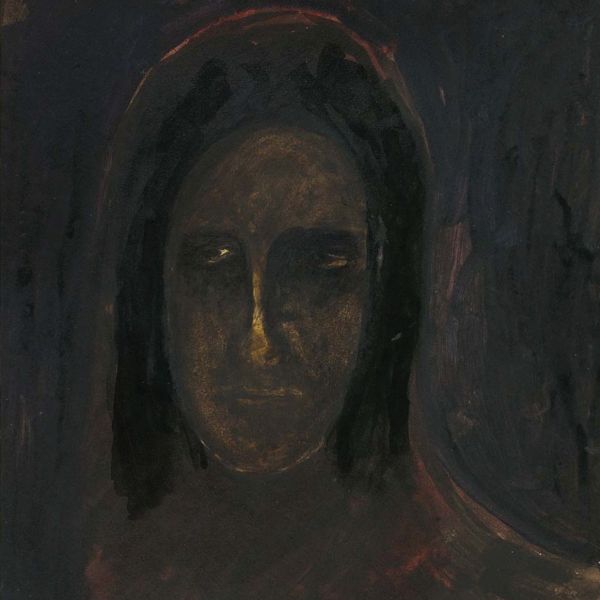 ExhibitionsThe Art Of SantiniketanAs low as $1.00
The Art of Santiniketan showcases the work of its four chief artists—Santiniketan’s founder, Rabindranath Tagore, its first principal and the architect of the Santiniketan pedagogy, Nandalal Bose, and his two illustrious students who went on to make a name for themselves as highly original and significant artists—Benode Behari Mukherjee and Ramkinkar Baij. Santiniketan was a path-breaking educational institution Rabindranath Tagore set up in rural Bengal in the early twentieth century, and the exhibition begins by examining its genesis in Tagore’s radical ideas of basing education in freedom and in the midst of nature. Benode Behari Mukherjee Nandalal Bose Rabindranath Tagore Ramkinkar Baij
Learn More -
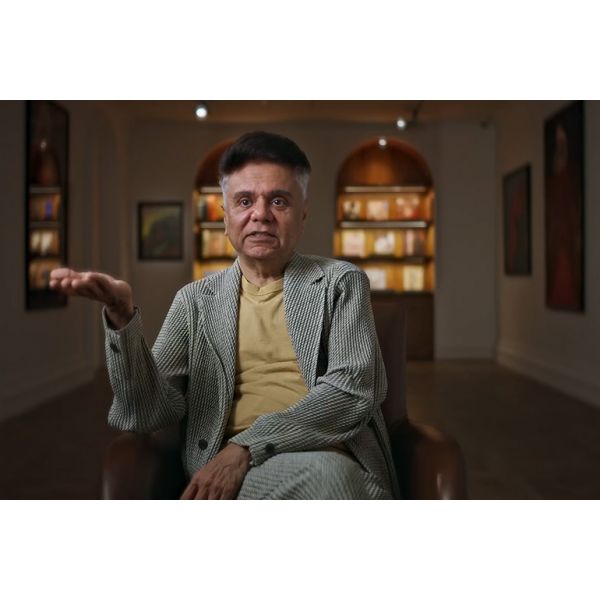 JournalIn the Snows of Kashmir by G. R. Santosh$1.00
G. R. Santosh created a hugely accomplished career without formal training in art. His abstract paintings made in the early 1960s had Kashmir as his muse, and often used encaustic and beeswax—a process he learned from Shanti Dave. Architect and designer Pinakin Patel shares his views about In the Snows of Kashmir, Santosh’s masterful painting with textural relief in a monochrome palette.
Learn More -
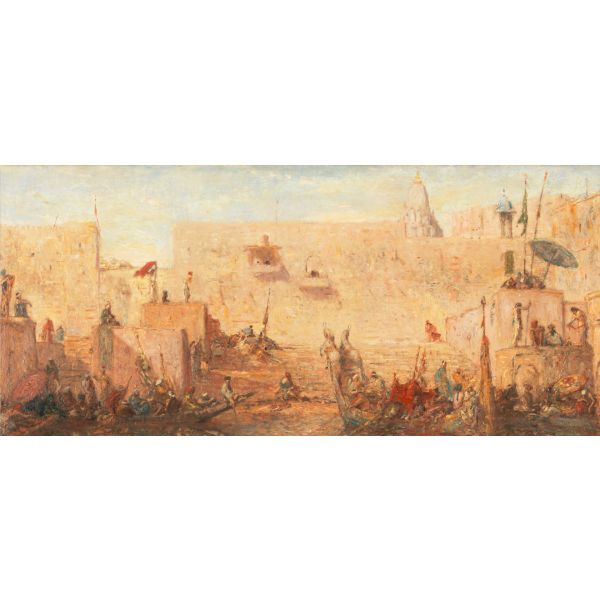 Events and ProgrammesMumbai Gallery Weekend$1.00
The exhibition presents views of the ancient city of Benares (now Varanasi) as depicted by foreign artists in the nineteenth and early twentieth centuries.
Learn More -
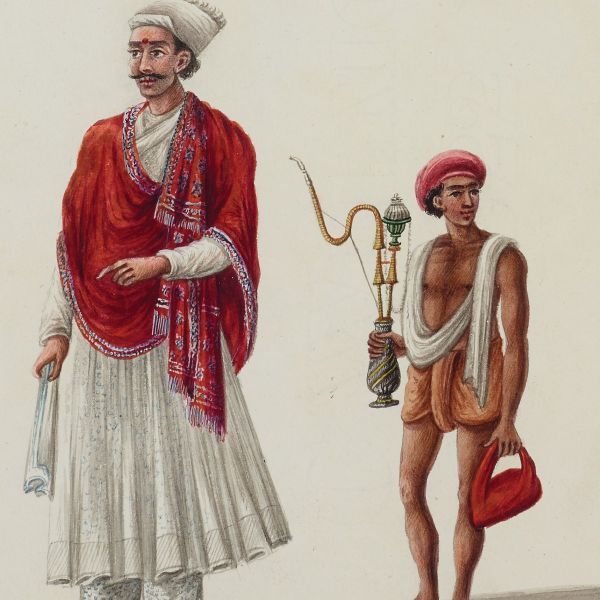 ExhibitionsThe Wonder of IndiaAs low as $1.00
An ancient civilisation, India was always prized for her fabled wealth—textiles, crafts, spices—her knowledge—literature, scholarship, universities—and her culture—music, dance, theatre, art. It is the only country with an unbroken tradition in each of these disciplines extending all the way back to the Indus Valley Civilisation. Ambadas Anonymous (Kalighat Pat) Arun Bose Asit Kumar Haldar Avinash Chandra B. Prabha Balraj Khanna Bikash Bhattacharjee Bimal Dasgupta Biren De Chittaprosad Company Painting D. P. Roy Chowdhury Early Views of India G. R. Santosh Ganesh Haloi Himmat Shah J. Sultan Ali Jamini Roy Jeram Patel K. S. Kulkarni Krishna Reddy L. Munuswamy M. F. Husain M. Suriyamoorthy Natvar Bhavsar Nikhil Biswas P. T. Reddy Paritosh Sen Prodosh Das Gupta Prokash Karmakar Prosanto Roy Rabin Mondal Rajendra Dhawan S. G. Vasudev Sakti Burman Sanat Kar Sankho Chaudhuri Satish Sinha Shanti Dave Shyamal Dutta Ray Sunayani Devi Sunil Das Sunil Madhav Sen V. Viswanadhan
Learn More -
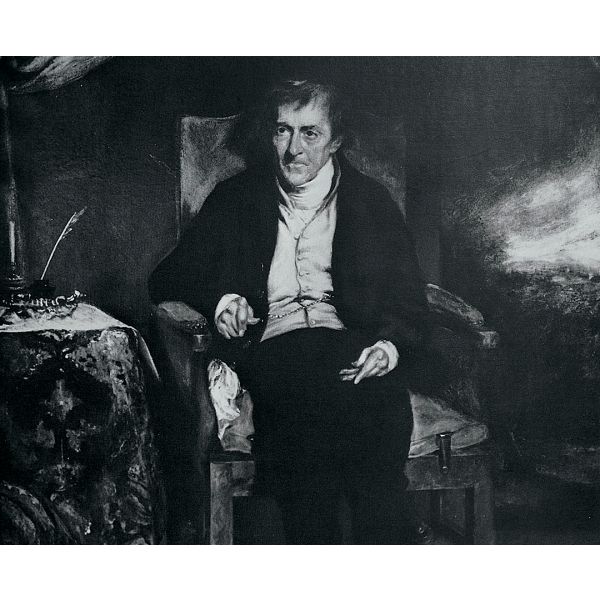 ArtistsThomas Daniell$0.00
One of the earliest British artists to arrive in India on a painting expedition, Thomas Daniell is one half of the famous painting duo, the Daniells, the other being his nephew William, with whom he created some of the earliest and most celebrated views of India.
Learn More -
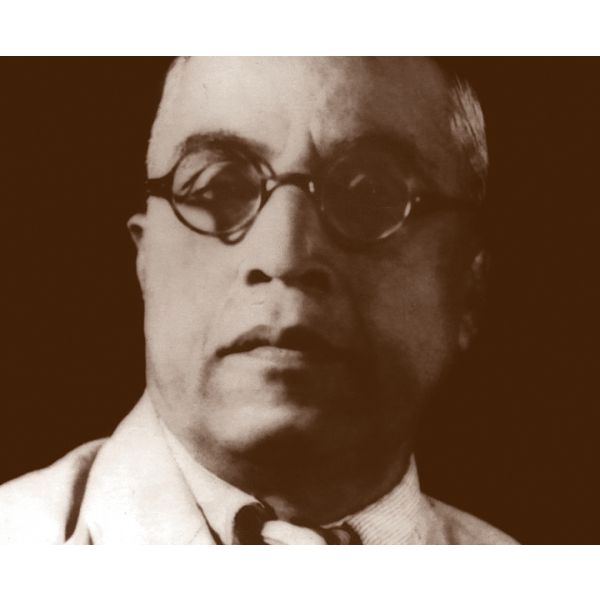 ArtistsM. K. Parandekar$0.00Born in Kolhapur, Maharashtra, M. K. Parandekar was a prolific painter—he made panoramic views of archaeological sites, landscapes and portraits. His initial training was under his father, a Sanskrit scholar and painter, and he followed that up with formal study at Sir J. J. School of Art, Bombay. Learn More
 -
 Institutional CollaborationsGhare Baire: The World, the Home and Beyond 18th – 20th Century Art in Bengal$1.00
Ghare Baire was a museum-exhibition showcasing over 200 years of art in Bengal. Presented by DAG in collaboration with the National Gallery of Modern Art and the Archaeological Survey of India, the exhibition was housed at the historic Currency Building, across twelve galleries featuring over 700 artworks. The exhibition was the largest showcase of Bengal Art, presenting a panoramic view of the evolution of art in a region that has been critical to the development of Indian modern art. The exhibition starts with the arrival of the travelling European artists at a time of exchange between Bengal and the world. This confluence of cultures stimulated new visual languages as we see in the Kalighat pat, the Bengal School, and the subsequent emergence of artists who fearlessly and freely experimented with form and subject, reshaping the trajectory of art in India.
Learn More -
 Collection OnlineTHE TAGORES$1.00
One of the most distinguished families in Bengal, the Tagores exercised unparalleled influence over the cultural landscape of the region. The Nobel Laureate, Rabindranath Tagore (1861 - 1941), and two of his nephews, Gaganendranath Tagore (1867-1938) and Abanindranath Tagore (1871 - 1951) were recognised as India’s National Art Treasure artists. Sunayani Devi (1875 -1962), their sister, is regarded as one of modern India’s first women painters known by name. Her lyrical paintings and embroideries often looked inward to an imagined world of fables and myths. At the turn of the twentieth century, we see Abanindranath emerging as the founder of the Bengal School as he envisioned a new Indian art that was free of colonial influence, rooted in pan-Asianism. Gaganendranath, on the other hand, was a prolific satirist and cartoonist, who imagined new forms and perspectives inspired by Cubism. Together they formed the influential Indian Society of Oriental Art in 1907, while Rabindranath’s school and university at Santiniketan would continue to shape modern art in Bengal for generations to come.
Learn More -
-
-

-
 ExhibitionsAltafAs low as $1.00
In the articulation of twentieth century art, where does one place Altaf Mohamedi? That question has probably troubled more curators than we realise. Altaf, who studied art in London before returning to Bombay (now Mumbai) was following in the footsteps of his elder sister and artist Nasreen Mohamedi, but that is where all similarities ended. Where Nasreen was an abstract, sparse artist who created a distinctive language using, for most part, rigid, inflexible lines that nevertheless sang on the paper over which they were made, Altaf’s work was intensely political and social.
Learn More