


Search results for: 'Twin sisters named the Loud House look like.'
-
 JournalModernists In Focus: Art Festivals, Early 2023$0.00
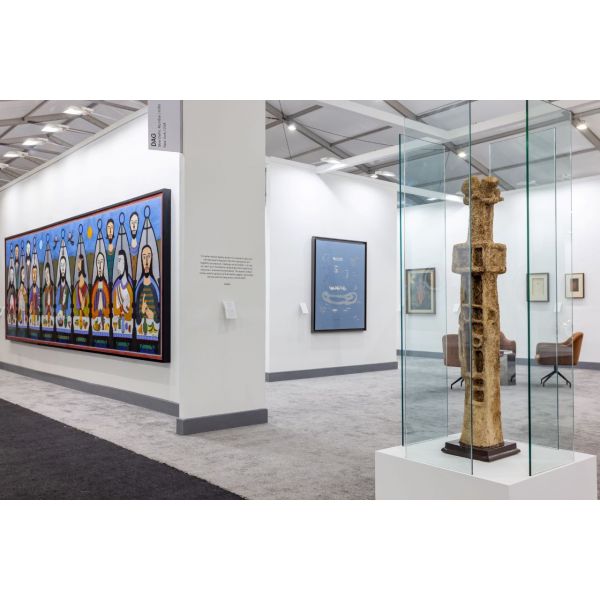
With the cultural calendar being packed till spring, join us as we travel through some of the most popular ongoing or upcoming art fairs and biennales. Take a close look at artists who bring modernist ideas to the contemporary art context. With some ubiquitous names from the twentieth century art world accompanied by a few of those that have been historically overlooked, discover how ideas around the Modern have evolved through these fairs and biennales, as we focus on notable artists from each art festival and delve into their practice.
Learn More -
 Collection OnlineTHE TAGORES$1.00
One of the most distinguished families in Bengal, the Tagores exercised unparalleled influence over the cultural landscape of the region. The Nobel Laureate, Rabindranath Tagore (1861 - 1941), and two of his nephews, Gaganendranath Tagore (1867-1938) and Abanindranath Tagore (1871 - 1951) were recognised as India’s National Art Treasure artists. Sunayani Devi (1875 -1962), their sister, is regarded as one of modern India’s first women painters known by name. Her lyrical paintings and embroideries often looked inward to an imagined world of fables and myths. At the turn of the twentieth century, we see Abanindranath emerging as the founder of the Bengal School as he envisioned a new Indian art that was free of colonial influence, rooted in pan-Asianism. Gaganendranath, on the other hand, was a prolific satirist and cartoonist, who imagined new forms and perspectives inspired by Cubism. Together they formed the influential Indian Society of Oriental Art in 1907, while Rabindranath’s school and university at Santiniketan would continue to shape modern art in Bengal for generations to come.
Learn More -
 ExhibitionsContinuumAs low as $1.00
Most shows at DAG take time to develop because of the quality of research and scholarship they require to mount, but even by our own exacting standards, Continuum has taken longer than most. This, a retrospective in a sense of the six artists who formed the Progressive Artists’ Group, is seminal because it is for the first time since 1950 that the six artists forming the core group have been brought together in an exhibition of their works. The Progressives have become the rallying point for the modern movement in Indian art, and are considered among the most important artists of the last and current century. Of these, M. F. Husain, F. N. Souza and S. H. Raza dominate the market. Alongside, works by their contemporaries K. H. Ara, H. A. Gade and S. K. Bakre, who have largely been seen to have underperformed in comparison, will help re-draw such distinctions and place them on the same platform as their better-known peers. It will re-define their historical importance and gain them the recognition that is their due. Maqbool Fida Husain M.F.Husain Hari Ambadas Gade Syed Haider Raza Krishnaji Howlaji Ara Sadanandji k. Bakre Francis Newton Souza
Learn More -
-
 Institutional CollaborationsGhare Baire: The World, the Home and Beyond 18th – 20th Century Art in Bengal$1.00
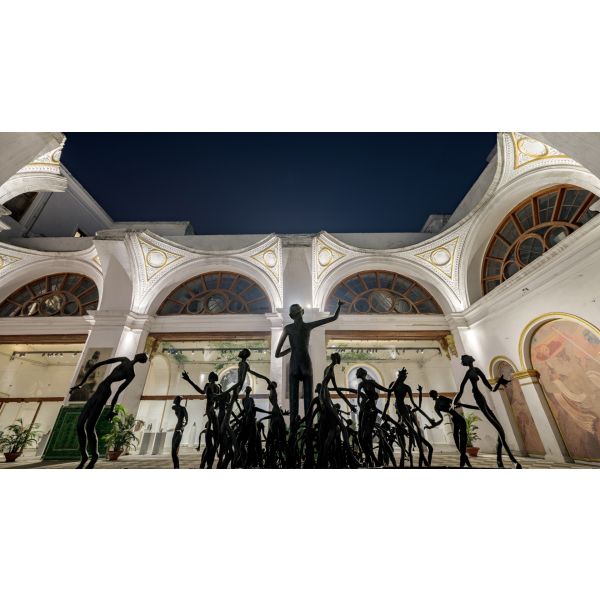
Ghare Baire was a museum-exhibition showcasing over 200 years of art in Bengal. Presented by DAG in collaboration with the National Gallery of Modern Art and the Archaeological Survey of India, the exhibition was housed at the historic Currency Building, across twelve galleries featuring over 700 artworks. The exhibition was the largest showcase of Bengal Art, presenting a panoramic view of the evolution of art in a region that has been critical to the development of Indian modern art. The exhibition starts with the arrival of the travelling European artists at a time of exchange between Bengal and the world. This confluence of cultures stimulated new visual languages as we see in the Kalighat pat, the Bengal School, and the subsequent emergence of artists who fearlessly and freely experimented with form and subject, reshaping the trajectory of art in India.
Learn More -
 ExhibitionsThe Seventies ShowAs low as $1.00
The 1970s was a decade like no other for a young India gaining in confidence nationally as well as on the global firmament. In 1971, Prime Minister Indira Gandhi led the country to a decisive victory against Pakistan, leading to the creation of Bangladesh. The Green Revolution had borne fruit, and Operation Flood now launched a milk revolution in the country, and the culmination of the privy purse turned it into a socialist republic with a strong handle on its economic button. Internationally, much was made of India’s resilience, and the country’s soft power began to win it recognition for its films, fashion, food and culture. India had arrived. ALTAF AMBADAS AMITAVA AVINASH CHANDRA BIKASH BHATTACHARJEE BIREN DE BIRESWAR SEN ERIC BOWEN F. N. SOUZA G. R. SANTOSH GANESH HALOI GOGI SAROJ PAL INDRA DUGAR J. SULTAN ALI J. SWAMINATHAN K C S PANIKER K. K. HEBBAR K. LAXMA GOUD KRISHNA REDDY LAXMAN PAI M. F. HUSAIN MADHVI PAREKH NAVJOT ALTAF P. T. REDDY PARITOSH SEN PRABHAKAR BARWE PRODOSH DASGUPTA PROKASH KARMAKAR RABIN MONDAL RAJENDRA DHAWAN RAM KUMAR S G VASUDEV SATISH GUJRAL SHANTI DAVE SHYAMAL DUTTA RAY SOHAN QADRI TYEB MEHTA V. VISWANADHAN ZARINA HASHMI
Learn More -
 JournalAn Elsewhere Homeland: Sayed Haider Raza’s Iconic Masterpiece$0.00
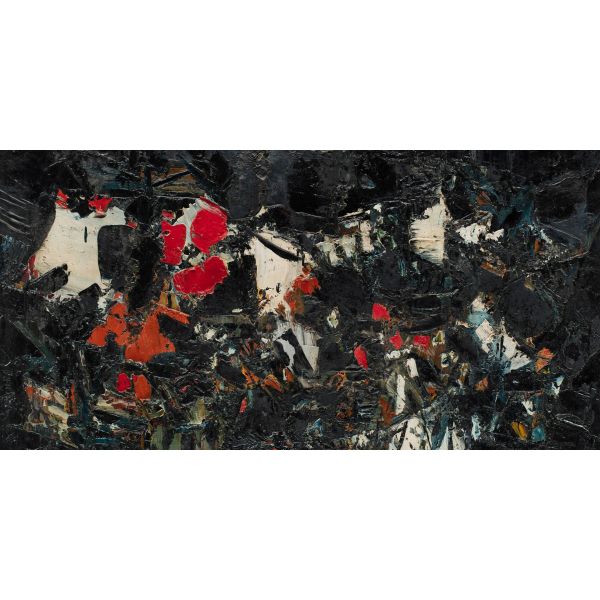
‘Raza was in some ways an earth painter—someone to whom earth mattered both as a constant presence and an irrepressible memory.’ Ashok Vajpeyi looks at the natural mechanics of Sayed Haider Raza’s abstractions, tracing his relationship with landscape and art.
Learn More -
 ExhibitionsIndian AbstractsAs low as $1.00
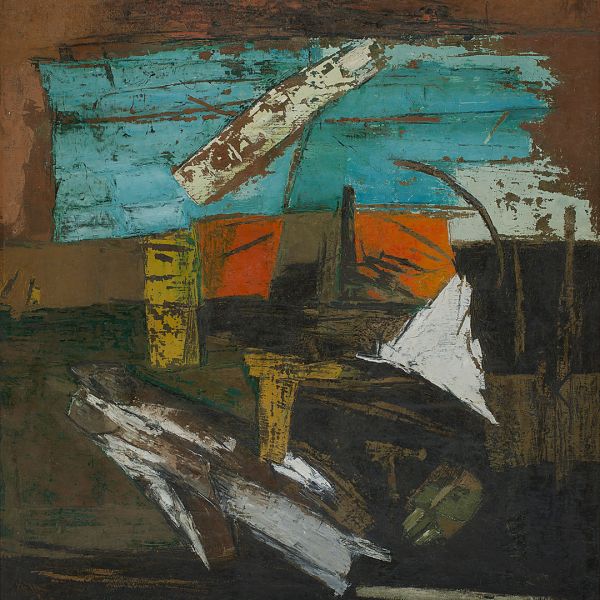
The term ‘abstract’ has been loosely used, more so in the Indian context, where we have only a vague notion of what it implies. Even the slightest distortion in art is popularly referred to as abstraction. And while distortion ultimately results in abstraction, the two are at opposing ends of the visual pole as far as understanding the genre goes. Over several years, viewers have been guided almost by a gut instinct of what constitutes abstract art. And though one concedes that rigid compartments to demarcate genres are neither practical, nor desirable, some understanding of what constitutes abstract art is essential. A. M. Davierwalla Akbar Padamsee Ambadas Amitava Amrut Patel Asit Kumar Haldar Avinash Chandra Baburao Sadwelkar Benode Behari Mukherjee Bikash Bhattacharjee Bimal Dasgupta Biren De Bishamber Khanna Biswanath Mukerji Devayani Krishna Devraj Dakoji Dhanraj Bhagat Dharamnarayan Dasgupta F. N. Souza G. R. Santosh Ganesh Haloi H. A. Gade Hemanta Misra Himmat Shah J. Swaminathan Jeram Patel Jyoti Bhatt K. C. S. Paniker K. G. Subramanyan K. S. Kulkarni Krishna Reddy L. Munuswamy Laxman Pai Laxman Shrestha M. F. Husain Nasreen Mohamedi P.Khemraj P.T.Reddy Partha Pratim Deb Piloo Pochkhanawala Prabhakar Barwe Prabhakar Kolte Prokash Karmakar R. M. Palaniappan R. N. Pasricha Rabin Mondal Raghav Kaneria Ram Kumar S. G. Vasudev S. H. Raza S. K. Bakre S. R. Bhushan Sanat Kar Sankho Choudhuri Satish Gujral Shanti Dave Shobha Broota Sohan Qadri Somnath Hore Sunil Das Sunil Madhav Sen Tapan Ghosh V. S. Gaitonde V. Viswanadhan Vivan Sundaram Zarina Hashmi
Learn More -
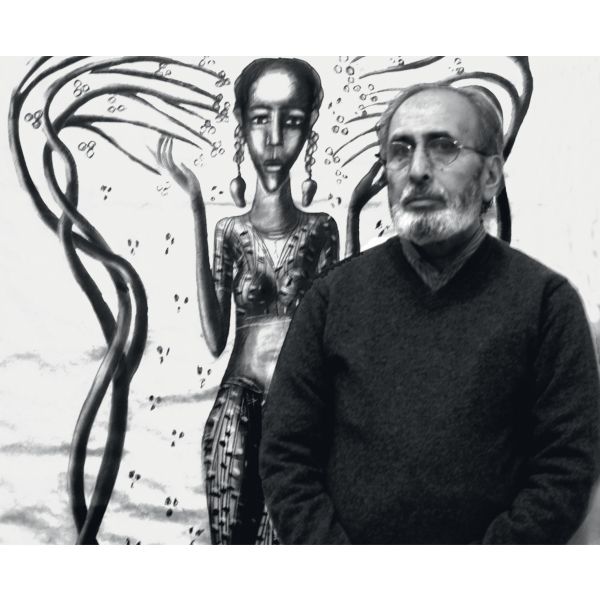 ArtistsVed Nayar$0.00Born in Lyallpur in 1933 in pre-Partition Punjab, Ved Nayar’s earliest creative urges were born out of his close engagement with the jungle around his house. He moved to Delhi as a teenager following Partition and obtained a B.A. degree from the city’s St. Stephen’s College in 1952. He then joined Delhi Polytechnic in 1957 and participated in Lalit Kala Akademi’s national exhibition the same year. Learn More
 -
 ExhibitionsIndia’s Rockefeller ArtistsAs low as $1.00
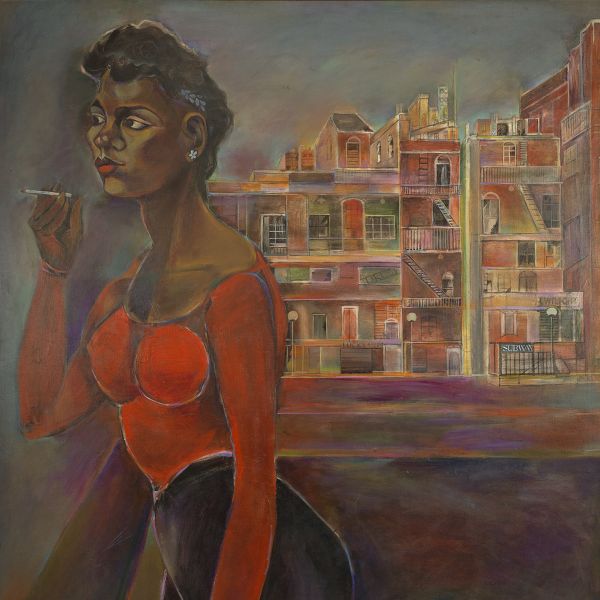
India’s Rockefeller Artists showcases iconic works of the Indian painters and sculptors who travelled to the US on philanthropic grants from the JDR 3rd Fund (1963–1979) and later through the Asian Cultural Council. These artists were exposed to American art and shared their own learnings and experiences through these enriching cultural exchanges. The show examines how and why these artists were selected; their relationships with each other and the American art milieu; the impact of the experience on their work; and the creation of a community of Rockefeller artists.
Learn More -
 Institutional CollaborationsNew Found Lands: The Indian Landscape from Empire to Freedom$1.00
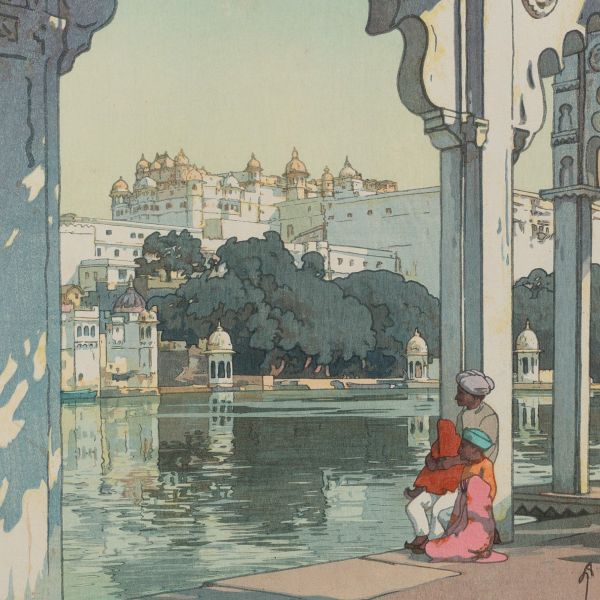
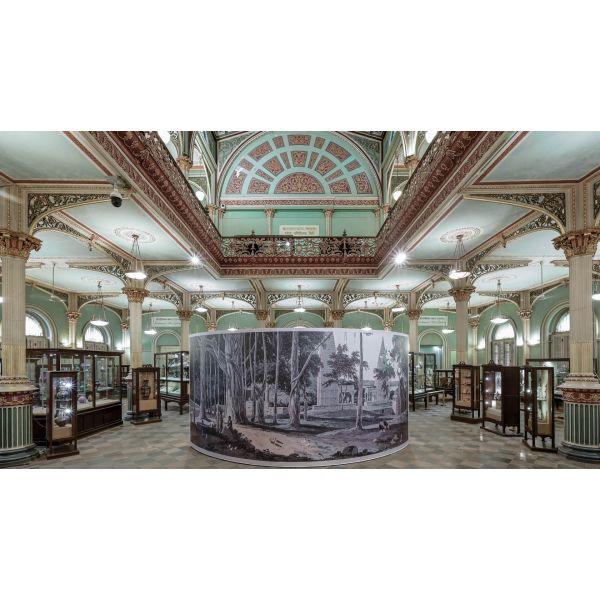
This exhibition looks at landscape painting in India over a period of two hundred years, from 1780 to 1980. We start with English artists who travelled in India from the late eighteenth century onwards, to rediscover what they were looking for, and how they saw what they found. The introduction of new materials, and the teaching of new methods in the art schools from the middle of the 19th century, encouraged some Indian artists to adopt similar academic style approaches. In the twentieth century, a reaction set in, as Indian artists sought new modes of expression. As if reclaiming their patrimony and the right to represent it, they invented a glorious array of new landscape styles.
Learn More -
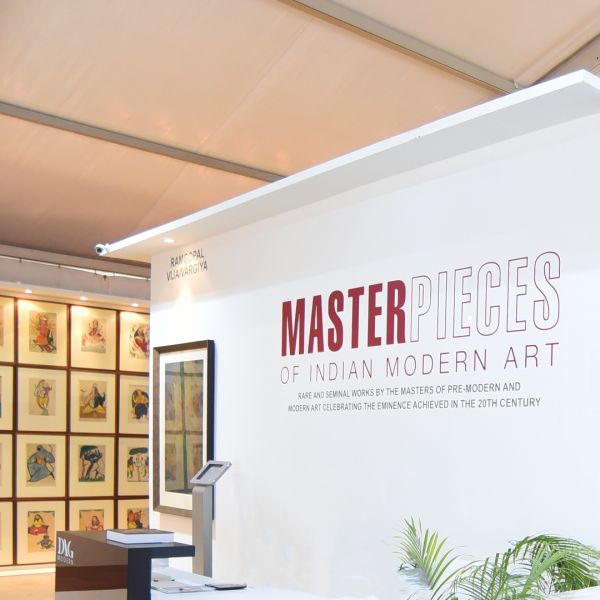 Art FairsIndia Art Fair$0.00
India Art Fair is South Asia’s largest platform for showcasing the best of modern and contemporary art from around the world, and DAG’s booth is the most looked forward to by connoisseurs of Indian art in India and overseas. They were not disappointed at this iteration of the fair where its lavish booth was set up to resemble public rooms in a large mansion with teak-panelled walls, pillars, portrait galleries, a private lounge, a media room for interviewing artists and important visitors that was streamed live, and special provisions for curated walks. It also published a daily art newspaper for the duration of the fair for distribution to all visitors. A large book accompanied the display at the booth. K. K. HEBBAR RABIN MONDAL HIMMAT SHAH SAILOZ MOOKHERJEA J. SULTAN ALI AMBADAS K. H. ARA RAMKINKAR BAIJ S. K. BAKRE PRABHAKAR BARWE DHANRAJ BHAGAT BIKASH BHATTACHARJEE NIKHIL BISWAS PESTONJI E BOMANJI NANDALAL BOSE AVINASH CHANDRA CHITTAPROSAD D. P. ROY CHOWDHURY SHANTI DAVE ADI DAVIERWALLA BIREN DE G. R. SANTOSH PARITOSH SEN HENRY SINGLETON M. F. HUSAIN FN SOUZA KALIGHAT J. SWAMINATHAN RABINDRANATH TAGORE L. N. TASKAR KRISHEN KHANNA RAMGOPAL VIJAIVARGIYA RAM KUMAR JEHANGIR SABAVALA HIMMAT SHAH EARLY BENGAL OIL H. A. GADE MOHAN SAMANT S H RAZA JAMINI ROY GEORGE KEYT B PRABHA PROKASH KARMAKAR K LAXMA GOUD RANBIR KALEKA P. KHEMRAJ DEVYANI KRISHNA VED NAYAR K C S PANIKER GIEVE PATEL PORTRAIT A. RAMACHANDRAN PROSANTO ROY V. VISWANADHAN RAM KUMAR RAVINDER REDDY
Learn More