Search results for: 'Record of Lustful Warriors: The Rod Master’s Unstoppable Conquest in Another World'
-
 Collection StoriesAn Imperial Spectacle: The Delhi Durbars and its Ceremonies$1.00
The Delhi Durbars were a series of coronation events held by the British in India which formally declared the British monarch as the Emperor or Empress of India. They took place thrice—first, in 1887, acknowledging Queen Victoria as the Empress of India, followed by one in 1903, for King Edward VII, and finally in 1911 for King George V, which saw the monarch’s attendance in person.
Learn More -
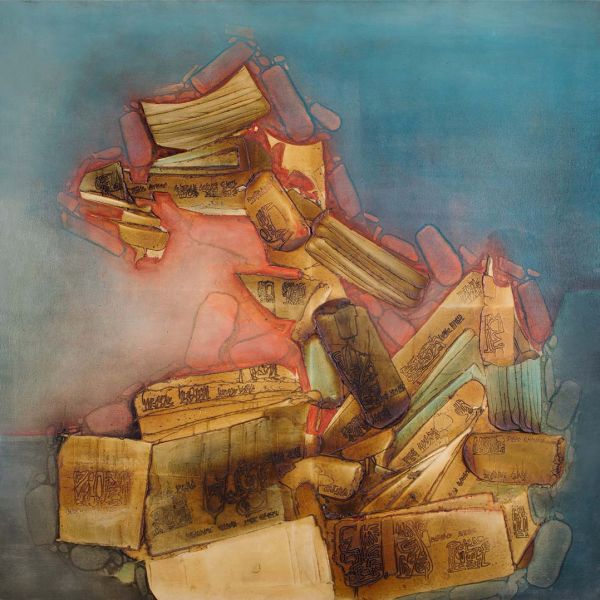 ExhibitionsShanti Dave: Neither Earth, Nor SkyAs low as $1.00
For Shanti Dave, creativity is a consistent and persistent exploration of the word or akshara—a term defined in the Natyashastra as a stroke in musical notes—which he perceives as the source of all creation. Dave’s abstract iconography, beginning in the early 1950s, adapted to modernism, aesthetic continuity and transcultural exchange. He altered, rejected and improvised the archaic image into a resonant form resembling an ancient script.
Learn More -
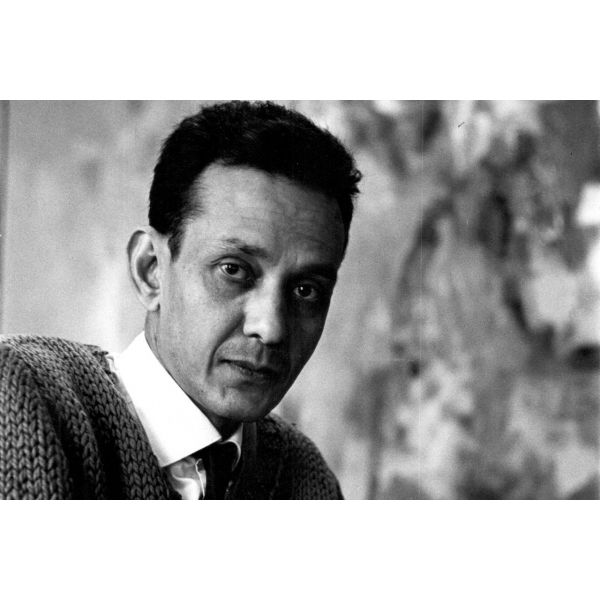 JournalThe French Connection: S. H. Raza at Paris' Centre Pompidou$0.00
In February, Paris' Centre Pompidou--a premier centre for modern art since its construction in 1977--mounted an extensive solo show looking back at S. H. Raza’s career in painting. It represents a historic moment for Indian modern art’s international story as it unfolded over the twentieth century, and also marked Raza's own symbolic return to the place where he stayed for most of his working life. The fertile post-independent period saw cross-cultural connections being forged by Indian artists in Europe and America on their own terms and this show is a testament to Raza’s evolving encounters with land and mythology. The curators, Catherine David and Diane Toubert, spoke to DAG highlighting some of the takeaways from this major retrospective.
Learn More -
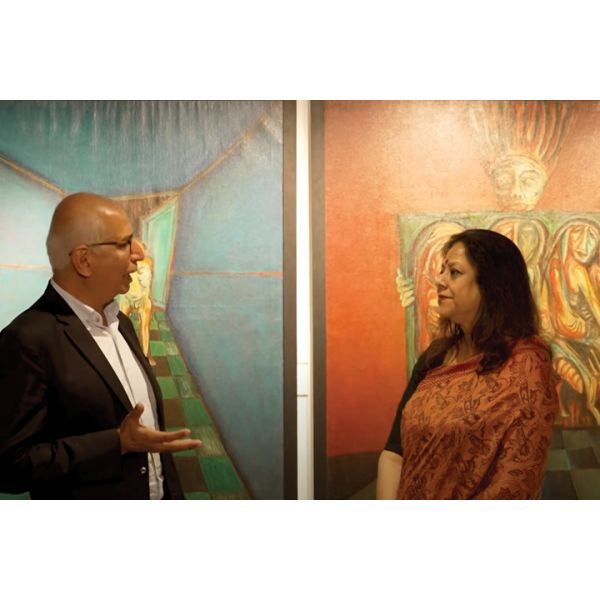 JournalThe Art of Rabin Mondal$0.00A great admirer of Indian modernist Rabin Mondal's works and curator of ‘Kingdom of Exile, a major retrospective on the artist, Kishore Singh of DAG is joined by Ina Puri, documentarian, collector and an old acquaintance of the artist as, together, they explore the circumstances of Mondal’s painterly life, particularly his vaunted King Series. A set of eight powerful paintings on the theme and hubris of power, now going on view at the upcoming Art Dubai 2022 Learn More
 -
 JournalThe Making of the Dhaka Art Summit: Behind the scenes with the Curator$0.00
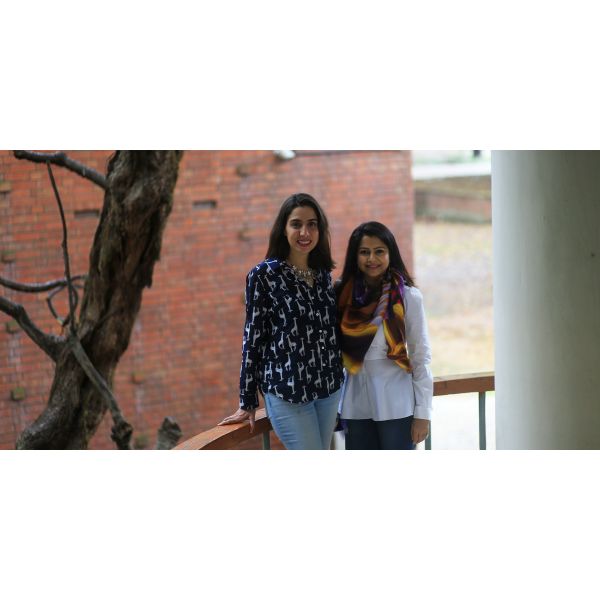
Diana Campbell is the Artistic Director of the Samdani Art Foundation, now in its 10th year, and chief curator of the prestigious Dhaka Art Summit, whose sixth edition starts on February 3, 2023. She spoke with the DAG Journal’s editorial team to discuss her own curatorial process and how she makes room for experimentation, and unpacks the intriguing thematic of this new edition: ‘flood’, or bonna.
Learn More -
 Collection StoriesThe City as a Museum, Kolkata—A Visual Journey$1.00
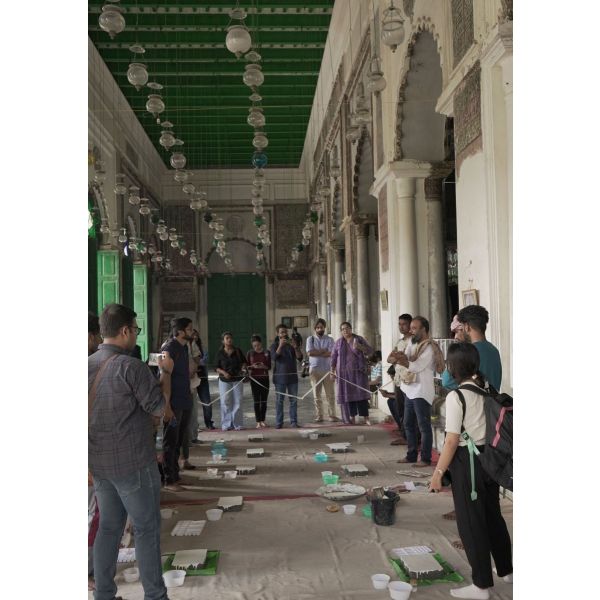
DAG Museum’s annual festival ‘The City as a Museum’ attempts to explore the various archives, communities and artistic traditions that cohere around the life of a city. Put together, they tell different stories about the city across time and space, from the point of view of neighbourhoods, collections and institutions, but not just limited to those either.
In order to learn more about this unique programme that seeks to explore heritage outside the walls of a traditional gallery or museum, read on!
Learn More -
 Collection OnlineDEVIS$1.00
The Devi or the female power in Hindu mythology appears in various avatars in our everyday lives—as idols during the puja, on covers of magazines, product labels, calendars and posters. The modern history of visualising the Devi goes back to naturalistic depictions in oil paintings by the Early Bengal artists, which were surpassed in popularity and fame by Raja Ravi Varma and his studio. His representation, however, was regarded as too human-like by artists of the Bengal School in the early twentieth century, who created idealised forms based on a synthesis of classical visual traditions. In the twentieth century, we find artists responding to distinctive traits of the goddess to portray specific aspects of her power, or to convey the artist's own relationship with divinity. Few artists who have turned to Hindu myths have been able to escape the temptation to interpret the female power in their own way, and the diversity in style, medium, and mood is a testament to that.
Learn More -
 Collection OnlineCHITTAPROSAD$1.00
Chittaprosad (1915 – 1978) was an artist of the people. A firm believer in the power of political art to bring tangible change in society, he is remembered for political cartoons and caricatures lampooning the ruling elite while championing the cause of the working class.
He was also a dedicated journalist working for the Communist Party of India (CPI) and was sent by the party to document the effects of the Great Bengal Famine of 1943 in Bengal’s villages and towns. He would come back with harrowing stories and sketches of hunger and death and publish them in the CPI’s journal People’s War, something that would prove to be extremely important in the face of British censorship on news about the famine.
Post-Independence, Chittaprosad distanced himself from the CPI due to ideological differences and moved to the outskirts of Bombay. He continued registering protest through his art but focussed increasingly on art for children. He setup a puppet studio, Khela-ghar and created beautiful retellings of epics and folk tales in print.
Learn More -
 Collection Stories150 years of Abanindranath Tagore$1.00
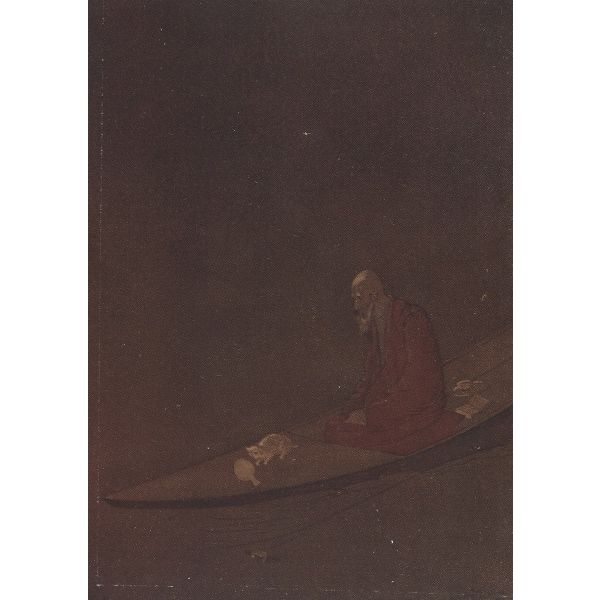
At the turn of the twentieth century, Abanindranath Tagore asked himself if the emerging artists of modern India should continue to paint in the manner of their European colonizers; or was there a new path waiting to be forged? His answers led him to envision a pan-Asian cultural identity, spanning traditions from Persia to Japan, and culminating in a ‘new “Indian” art.’ Regarded as the founder of the Bengal School, Abanindranath left an unparalleled legacy both in terms of his own diverse body of work, and through his pupils, like Nandalal Bose, who shaped the contours of art across the subcontinent in the twentieth century.
Learn More -
 Institutional CollaborationsNew Found Lands: The Indian Landscape from Empire to Freedom$1.00
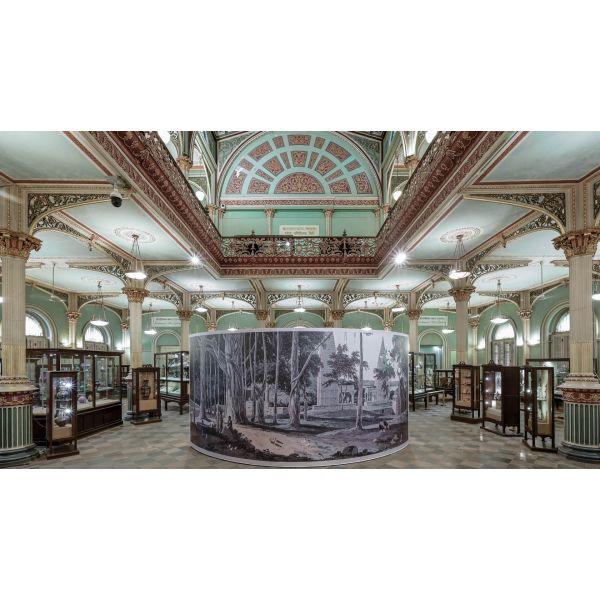
This exhibition looks at landscape painting in India over a period of two hundred years, from 1780 to 1980. We start with English artists who travelled in India from the late eighteenth century onwards, to rediscover what they were looking for, and how they saw what they found. The introduction of new materials, and the teaching of new methods in the art schools from the middle of the 19th century, encouraged some Indian artists to adopt similar academic style approaches. In the twentieth century, a reaction set in, as Indian artists sought new modes of expression. As if reclaiming their patrimony and the right to represent it, they invented a glorious array of new landscape styles.
Learn More -
 ExhibitionsIndian BlueAs low as $1.00
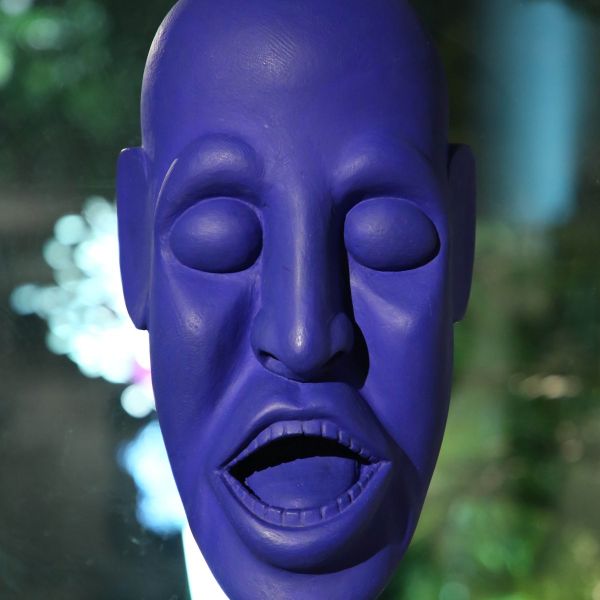
The colours we see around us are a complex network of visual signifiers. Like spoken dialects, each colour contains multiple—at times conflicting—meanings that are moulded by a universal base and many regional variances. A. A. Almelkar A. H. Müller A. P. Santhanaraj Abalall Rahiman Abanindranath Tagore Ahmed Amir Altaf Ambadas Amit Ambalal Amitava Anonymous Anupam Sud Avinash Chandra Benode Behari Mukherjee Bijan Choudhary Biren De Bireswar Sen Bishamber Khanna Bishnupada Roy Chowdhury Chittaprosad D. C. Joglekar D. P. Roy Chowdhury Dattatraya Apte Devayani Krishna Devraj Dakoji Dharamanarayan Dasgupta F. N. Souza G. R. Iranna G. R. Santosh G. S. Haldankar Ganesh Haloi Gobardhan Ash Gogi Saroj Pal Hemanta Misra Himmat Shah Indra Dugar Indu Rakshit J. P. Gonsalves J. Sultan Ali Jamini Roy Jeram Patel Jogen Chowdhury Jyoti Bhatt K. C. S. Paniker K. K. Hebbar K. Laxma Goud K. S. Kulkarni Kanwal Krishna Kavita Nayar Krishna Reddy Lalit Mohan Sen Laxman Pai M. F. Husain M. K. Parandekar M. R. Acharekar M. S. Joshi Madhvi Parekh Manu Parekh Nand Katyal Nandalal Bose Natvar Bhavsar Navjot Nicholas Roerich Nikhil Biswas Om Prakash P. Khemraj Paramjit Singh Paresh Maity Paritosh Sen Partha Pratim Deb Prabhakar Barwe Prokash Karmakar Rabin Mondal Radha Charan Bagchi Ramendranath Chakravorty Ramgopal Vijaivargiya Ramkinkar Baij Ranen Ayan Dutta S. H. Raza S. K. Bakre S. L. Haldankar Sanat Chatterjee Sanat Kar Sankho Chaudhuri Satish Gujral Shanti Dave Shobha Broota Somnath Hore Sudhir Khastgir Sunayani Devi Sunil Das V. B. Pathare Vasundhara Tewari Broota Vivan Sundaram Walter Langhammer
Learn More