


Search results for: 'drakan juego parecido a blade, con dragones y de personaje femenino'
-
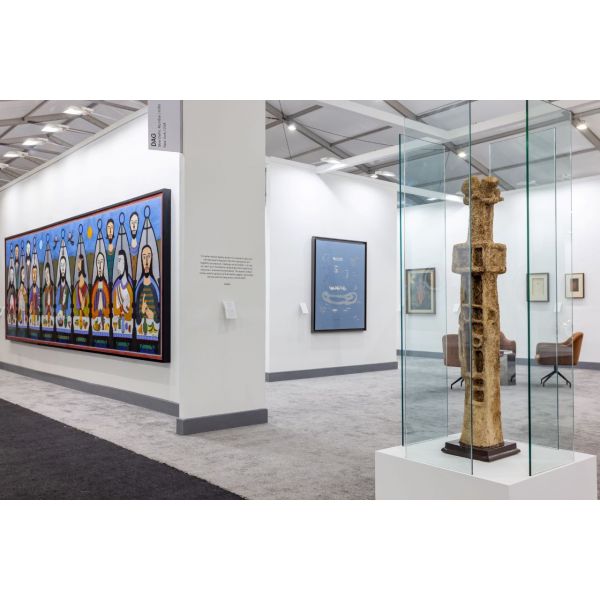 JournalModernists In Focus: Art Festivals, Early 2023$0.00
With the cultural calendar being packed till spring, join us as we travel through some of the most popular ongoing or upcoming art fairs and biennales. Take a close look at artists who bring modernist ideas to the contemporary art context. With some ubiquitous names from the twentieth century art world accompanied by a few of those that have been historically overlooked, discover how ideas around the Modern have evolved through these fairs and biennales, as we focus on notable artists from each art festival and delve into their practice.
Learn More -

-
-
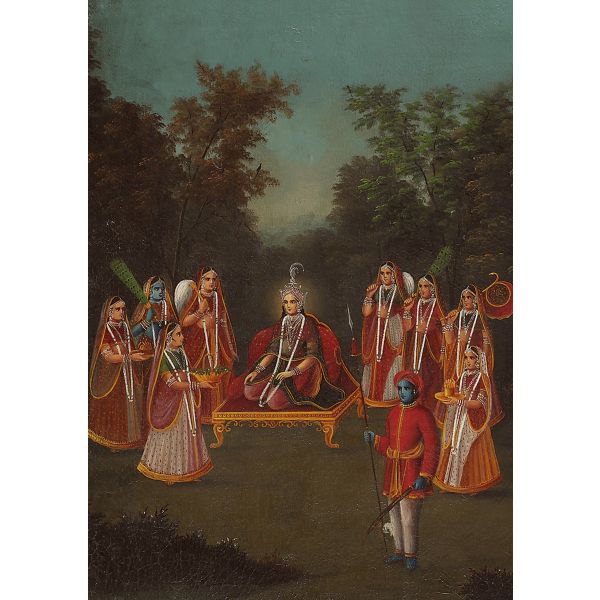 Collection StoriesUNTITLED (RADHA AS QUEEN)$1.00
Radha is painted as a queen in this Early Bengal oil painting, surrounded by her fellow Gopis (cowherds and companions) and Krishna—her divine consort and an incarnation of one of the Hindu trinity—dressed as a sentinel. She sits on her royal throne amid a forest landscape, perhaps recalling her identification as Vrindavaneshwari (goddess of Vrindavan). Going by the small but remarkable details of the jewellery, we can guess that it is the work of an artist trained in the miniature tradition. But does the painting hide other possible secrets?
Learn More -
 JournalThe Poet (Head of Rabindranath Tagore) by Ramkinkar Baij$1.00
Ramkinkar Baij is rightfully described as India’s first modernist sculptor for his pathbreaking use of cement and laterite as material, his choice of subjects and scale in public art projects, and his unconventional development of ideas.
The Poet is an abstract portrait of Rabindranath Tagore, imagined through negative spaces, concaves and convexes forming the eyes in a hollowed head, a masterclass in Baij’s cubist vocabulary. The portrait shared almost no physical attributes with the subject, instead focusing on distorting Tagore’s visage to give us insights into the state of his mind.
Learn More -
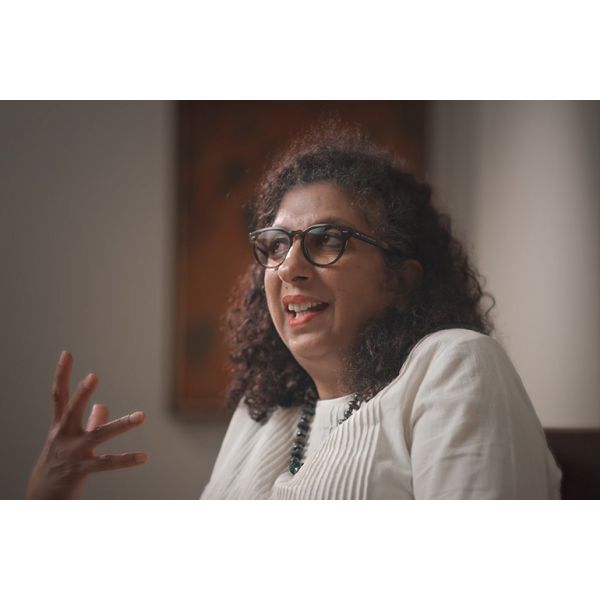 JournalEighty-Five Safety Pins by Prabhakar Barwe$1.00
Prabhakar Barwe’s Eighty-Five Safety Pins is a pioneering work that merges technology and traditional art. Created in 1991 using graphic design software on an Apple Macintosh, Barwe explored the concept of pixels, a hallmark of the digital era, while incorporating his signature enamel paint. This innovative approach reflects his curiosity about embracing the unknown future and reinterpreting it artistically. By abstracting the safety pin from its conventional form, Barwe invites viewers to reconsider its essence, offering an open-ended visual experience that challenges preconceived notions and encourages alternative perspectives. Art connoisseur Shireen Gandhy, a friend of the late artist, takes us behind the making of this extraordinary painting.
Learn More -
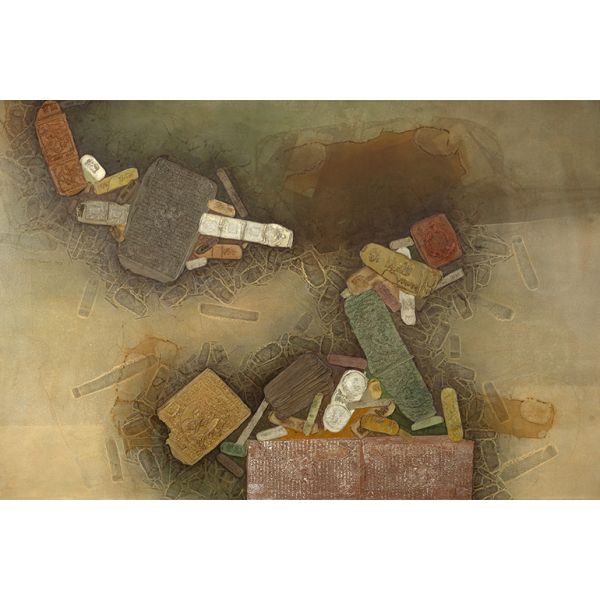 JournalUntitled by Shanti Dave$1.00
This Untitled painting, created in the early-to-mid-1970s, reflects Shanti Dave's fervent experimentation during a prolific period marked by international recognition in mural making and exhibitions. Drawing inspiration from childhood memories of Badapura and nearby archaeological ruins, the abstract composition blends colour pigments, beeswax, and oil solutions in a dynamic interplay. Employing a reverse image technique with molten wax, the painting challenges perceptions and invites contemplation on the nature of truth. Noted fashion designer and art-collector Tarun Tahiliani explains the nuances of Shanti Dave’s work in a film specially created on the painting.
Learn More -
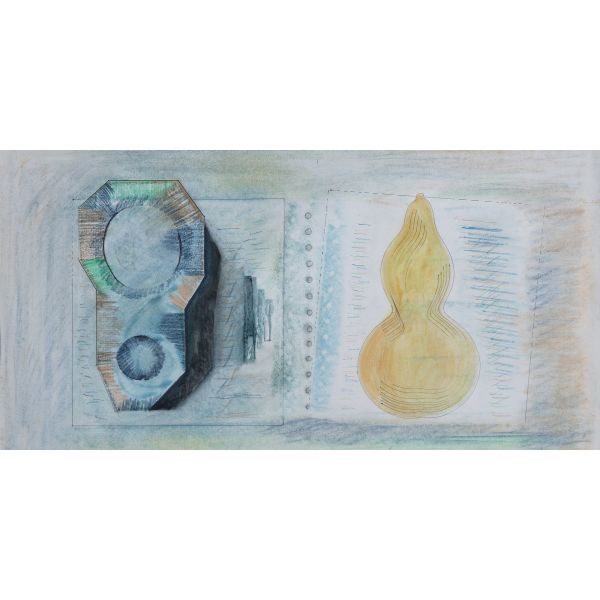 JournalSearching for the ‘Inner Form’ in Prabhakar Barwe’s Blank Canvas$0.00
Artists have often formulated their theories and observations to analyse and become aware of the cognitive modes of art making, and to associate with broader contemporaneous art movements. These manifestos become a window into an artist’s process. Prabhakar Barwe’s seminal treatise, <i>Kora Canvas</I> (The Blank Canvas, 1989), exemplifies his deep understanding of the fundamental elements of art and keen observations of nature and his surroundings.
Learn More -
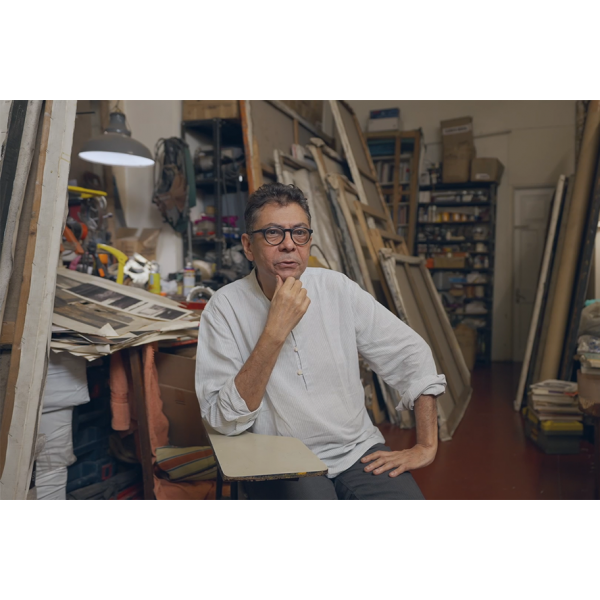 JournalChittrovanu Mazumdar on Nirode Mazumdar$0.00'Iconic Masterpieces of Indian Modern Art, Edition 2' opened on 11 February, featuring fifty artworks which shaped the trajectory of pre-modern and modern art in the country. As part of the exhibition, Chittrovanu Mazumdar explores the sense of rhythm in his father Nirode Mazumdar’s ‘Boitorini Series’, drawing attention to how its controlled colour palette depicts the flow of life in the metaphor of a river that one must cross during one’s lifetime. Learn More
 -
 Collection OnlineCHITTAPROSAD$1.00
Chittaprosad (1915 – 1978) was an artist of the people. A firm believer in the power of political art to bring tangible change in society, he is remembered for political cartoons and caricatures lampooning the ruling elite while championing the cause of the working class.
He was also a dedicated journalist working for the Communist Party of India (CPI) and was sent by the party to document the effects of the Great Bengal Famine of 1943 in Bengal’s villages and towns. He would come back with harrowing stories and sketches of hunger and death and publish them in the CPI’s journal People’s War, something that would prove to be extremely important in the face of British censorship on news about the famine.
Post-Independence, Chittaprosad distanced himself from the CPI due to ideological differences and moved to the outskirts of Bombay. He continued registering protest through his art but focussed increasingly on art for children. He setup a puppet studio, Khela-ghar and created beautiful retellings of epics and folk tales in print.
Learn More -
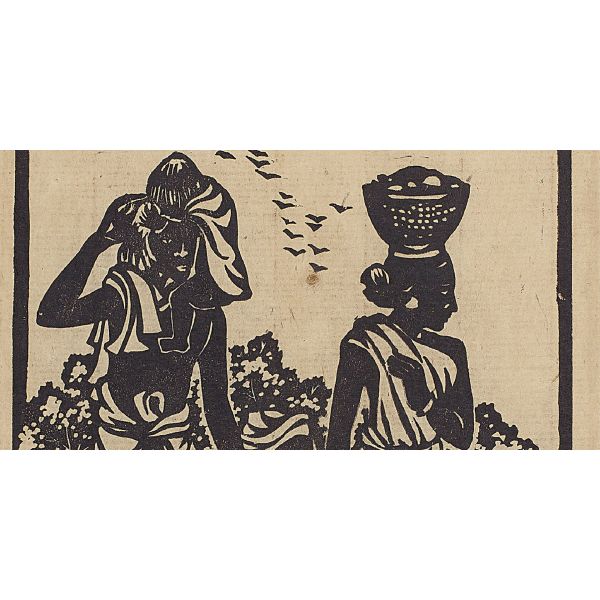 JournalRani Chanda on Nandalal Bose, Jamini Roy and Mukul Dey$0.00
A translation of Rani Chanda's (nee Dey) essay/ memoir of Nandalal Bose, her teacher, and his friendship with Mukul Dey (Chanda's elder brother) and Jamini Roy.
Learn More -
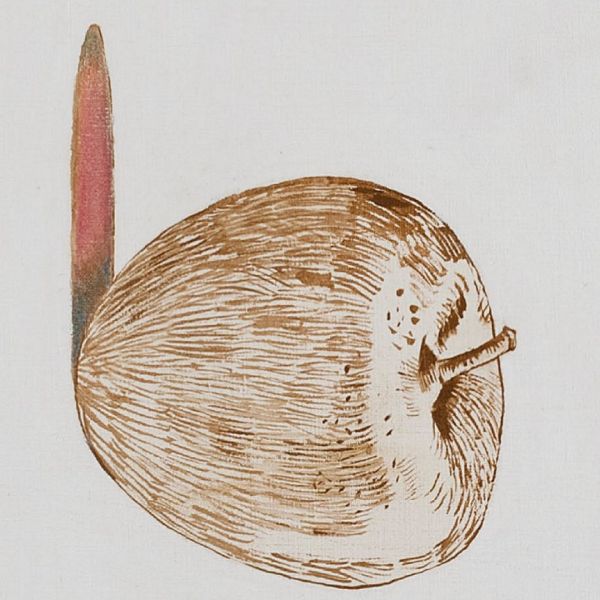 ExhibitionsPrabhakar Barwe: Between Object and SpaceAs low as $1.00
Prabhakar Barwe (1936-95) could well have ended up a theoretician whose book 'Kora Canvas' (Blank Canvas) was a manifesto that established the multi-dimensional relationship between an artist, the object on which he paints, and his subjects. That he was not just an intellectual scholar but an artist whose work speaks for him, is evident through a range of works in which Barwe dissects our understanding of the world and how we view it. Taking commonplace objects and our perception of their existence in the space they occupy, he shifts the dialogue to a point of discomfiture that makes us question our understanding of them. Using scale, discordant juxtapositions, and displacements, he reimagines the everyday in a manner that is thought-provoking, even provocative, as alternate realities—whether perceived or imagined.
Learn More