


Search results for: 'Mobile no 9990862094 kish k Name hai and hi'
-
 ExhibitionsALTAF: Early DrawingsAs low as $0.00
England shaped Altaf’s political consciousness as well as his persona. He engaged in the anti-apartheid demonstration at Trafalgar Square held against the imprisonment of Nelson Mandela; a peaceful protest at the American Embassy opposing the bombing in North Vietnam; the Aldermaston March against the nuclear bomb; the Campaign for Nuclear Disarmament; he became a member of the Youth Wing of the Communist Party of Great Britain (CPGB) and the Young Communist League (YCL). Any examination of the theoretical aspect of Altaf’s work must start with the knowledge that the work in question exemplified an element of ‘existentialist’ thought.
Learn More -

-
-
 ExhibitionsIconicAs low as $1.00
From 1797, when British artist Thomas Daniell painted his masterly landscape of Mahabalipuram, to 2003, the year Rameshwar Broota's painting pitching man against metal resulted in a powerful image, the Indian art world has seen a succession of artists and movements that have enriched its vocabulary in more ways than one. Thomas Daniell Sita Ram Early Bengal School Raja Ravi Varma Edwin Lord Weeks Marius Bauer Ustad Allah Bakhsh Studio of Bourne & Shepherd M. V. Dhurandhar Hemendranath Mazumdar M. A. R. Chughtai Nandalal Bose Jamini Roy Laxman Pai J. Swaminathan Francis Newton Souza J. Sultan Ali Rabin Mondal S. H. Raza K. K. Hebbar Akbar Padamsee Tyeb Mehta K. H. Ara S. K. Bakre Bireswar Sen Nirode Mazumdar Shanti Dave Gulam Rasool Santosh Madhvi Parekh Satish Gujral Bikash Bhattacharjee Maqbool Fida Husain Meera Mukherjee Rameshwar Broota
Learn More -
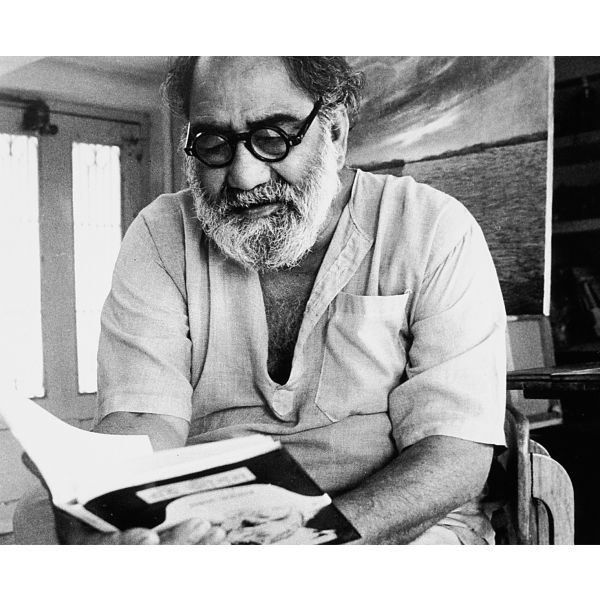 ArtistsProkash Karmakar$0.00Prokash Karmakar learnt painting at his father, artist-teacher Prahlad Karmakar’s atelier, till the socio-political turmoil of the 1940s and his father’s early death put an end to it. After his matriculation, Karmakar joined Government College of Arts and Crafts, Calcutta, but quit soon thereafter for reasons of poverty. In between, he designed book covers and worked as an illustrator for his livelihood; he even joined the army but absconded after two years, driven by his desire to paint. Learn More
 -
 JournalThe Last Effort and Fall of Tippoo Sultaun by Henry Singleton$1.00
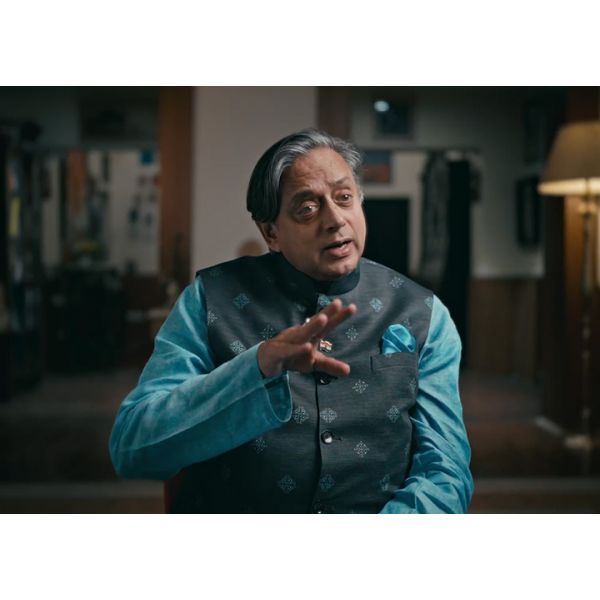
Henry Singleton’s The Last Effort and Fall of Tippoo Sultaun belongs to a genre known as history painting: the depiction of important historical events, usually on a large scale, as if they were playing out in front of one’s eyes. Author and parliamentarian Shashi Tharoor and art historian Giles Tillotson explain the lively imagination deployed in Singleton’s painting that depicts the British assault on Seringapatam and the killing of its ruler, Tipu Sultan—himself the source of so many stories that it was difficult to unravel the truth from the many falsities spun by the biased colonial administration and historians of the time.
Learn More -
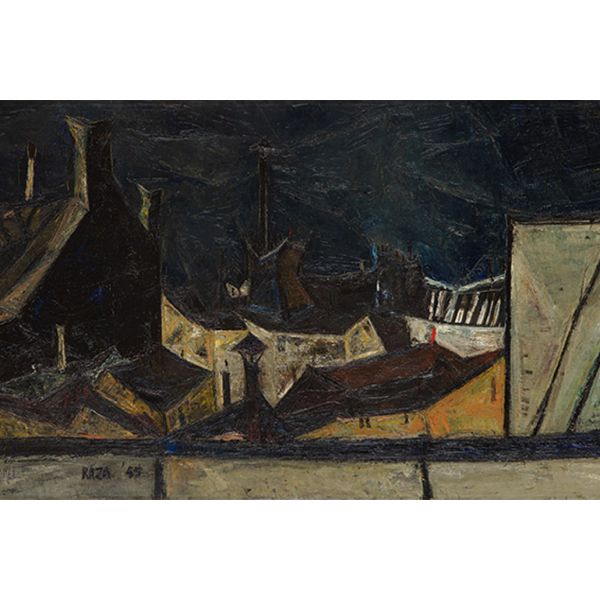 JournalToits (Rooftops) by S. H. Raza$1.00
S. H. Raza had begun to paint using oils, moving away from his impressionistic watercolours, on his way to winning the prestigious critics’ award in 1956. Just a year before, he completed a stunning painting of Parisian rooftops, revealing not a daylight scene but one of the night, only yellow lamplight from the streets dimly silhouetting the chimneys and sloping roofs. This period of Raza’s career is somewhat lesser known than his later, tantra-inspired works, as Ashok Vajpeyi and Aman Nath explain to us.
Learn More -
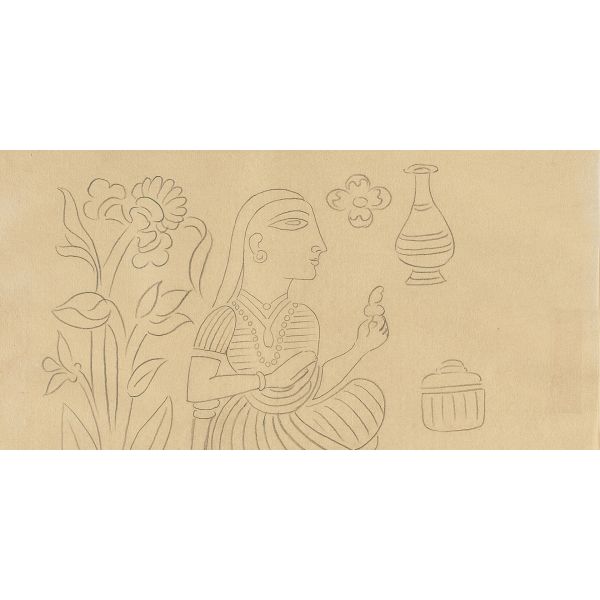 JournalSketching a Temple: Nandalal Bose’s Konark album$0.00
One of India’s nine national treasure artists, Nandalal Bose (1882—1966) forged a long and glittering career as the foremost artist-pedagogue bridging the late-colonial period and the first few decades after Indian independence. He maintained an active drawing practice throughout his life, with many small sketches done on postcards that he carried around with him as a sort of visual notebook.
Learn More -
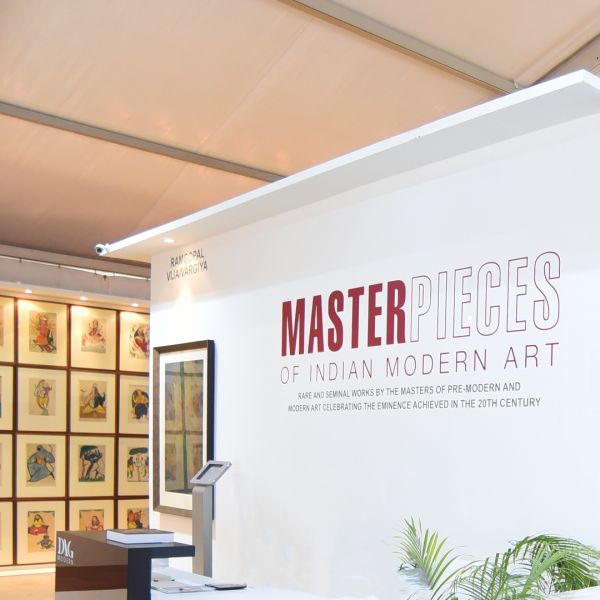 Art FairsIndia Art Fair$0.00
India Art Fair is South Asia’s largest platform for showcasing the best of modern and contemporary art from around the world, and DAG’s booth is the most looked forward to by connoisseurs of Indian art in India and overseas. They were not disappointed at this iteration of the fair where its lavish booth was set up to resemble public rooms in a large mansion with teak-panelled walls, pillars, portrait galleries, a private lounge, a media room for interviewing artists and important visitors that was streamed live, and special provisions for curated walks. It also published a daily art newspaper for the duration of the fair for distribution to all visitors. A large book accompanied the display at the booth. K. K. HEBBAR RABIN MONDAL HIMMAT SHAH SAILOZ MOOKHERJEA J. SULTAN ALI AMBADAS K. H. ARA RAMKINKAR BAIJ S. K. BAKRE PRABHAKAR BARWE DHANRAJ BHAGAT BIKASH BHATTACHARJEE NIKHIL BISWAS PESTONJI E BOMANJI NANDALAL BOSE AVINASH CHANDRA CHITTAPROSAD D. P. ROY CHOWDHURY SHANTI DAVE ADI DAVIERWALLA BIREN DE G. R. SANTOSH PARITOSH SEN HENRY SINGLETON M. F. HUSAIN FN SOUZA KALIGHAT J. SWAMINATHAN RABINDRANATH TAGORE L. N. TASKAR KRISHEN KHANNA RAMGOPAL VIJAIVARGIYA RAM KUMAR JEHANGIR SABAVALA HIMMAT SHAH EARLY BENGAL OIL H. A. GADE MOHAN SAMANT S H RAZA JAMINI ROY GEORGE KEYT B PRABHA PROKASH KARMAKAR K LAXMA GOUD RANBIR KALEKA P. KHEMRAJ DEVYANI KRISHNA VED NAYAR K C S PANIKER GIEVE PATEL PORTRAIT A. RAMACHANDRAN PROSANTO ROY V. VISWANADHAN RAM KUMAR RAVINDER REDDY
Learn More -
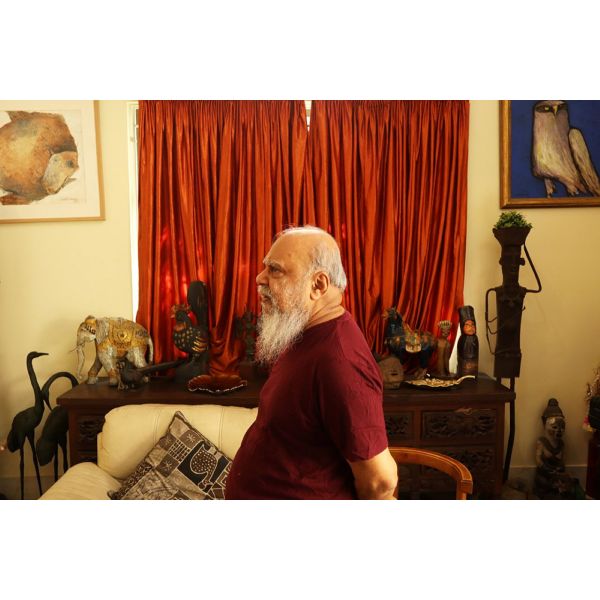 JournalThe Artist as Collector: At Home with Shuvaprasanna$0.00
Artist and institution-builder Shuvaprasanna’s residence is located in a leafy corner of Kolkata’s suburban township, Bidhannagar or ‘Salt lake City’, which was envisaged by the former Chief Minister of West Bengal, Dr. Bidhan Chandra Roy in the late 1950s. Having grown up elsewhere—in College Street, in fact—the artist only moved here in 2002-03 with his family, which included his wife and fellow-artist, Shipra Bhattacharya. In this photo-essay we will learn about Shuvaprasanna’s personal collection and the relationship between his collecting practices and his art-making.
Learn More -
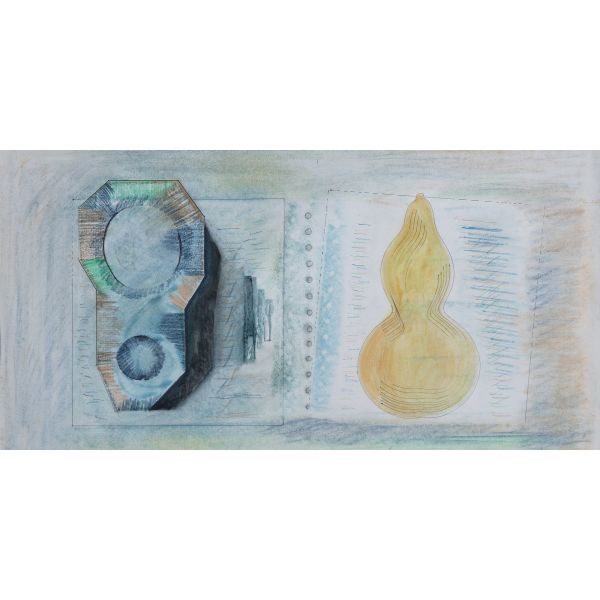 JournalSearching for the ‘Inner Form’ in Prabhakar Barwe’s Blank Canvas$0.00
Artists have often formulated their theories and observations to analyse and become aware of the cognitive modes of art making, and to associate with broader contemporaneous art movements. These manifestos become a window into an artist’s process. Prabhakar Barwe’s seminal treatise, <i>Kora Canvas</I> (The Blank Canvas, 1989), exemplifies his deep understanding of the fundamental elements of art and keen observations of nature and his surroundings.
Learn More -
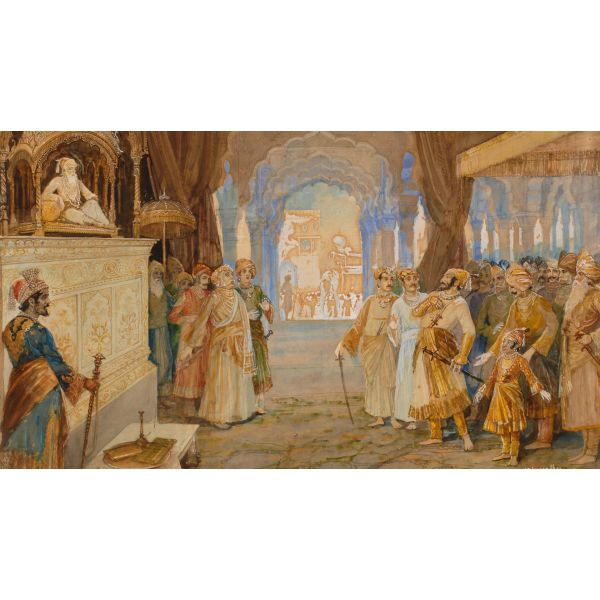 Institutional CollaborationsM. V. DHURANDHAR: A RETROSPECTIVE$1.00
Few artists claim as rich and intriguing a legacy as M. V. Dhurandhar in the landscape of late 19th and early 20th century Indian art. His practice leaves us with challenging questions about encounters and exchanges with India's colonial past and the influence of Europeans in shaping the evolution of painting. This exhibition revisits Dhurandhar's vast oeuvre through DAG's extensive collection of his paintings, archival material and ephemera, in an attempt to understand the socio-cultural context of his emergence, and to re-examine his influence on institutional and commercial art in the country.
Learn More