Search results for: 'companion of the indian emoire why gopal got this title'
-
 JournalA Child, the Youth, now Man by Rameshwar Broota$1.00
Painted in 2003 by Rameshwar Broota and titled A Child, the Youth, now Man, is bisected horizontally by a hyper-realistic finger, which partially covers a comparatively hazy vertical male torso. The evocative cruciform structure of this composition, possibly alluding to ideas of masculinity, corruption and persecution, also aides the artist in highlighting human vulnerability. There is no face visible here, only an unprotected body.
Learn More -
 Art FairsArt SG$1.00
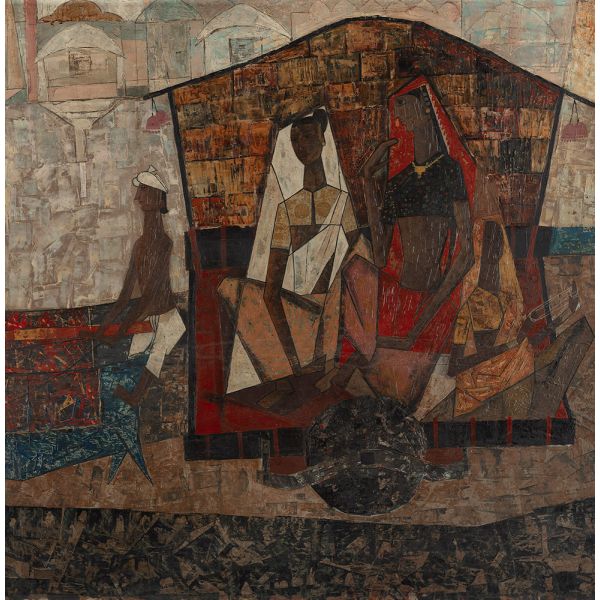
As with its history, trade, and culture, so with its art, India has always stood at the crossroads of assimilation, adaptation, change, and experimentation. Ancient and medieval art practices have informed her artists in the 20th century—a point when European and Asian movements found acceptance before being turned into a vibrant lexicon that has remained central to the pursuit of art in the subcontinent. Singapore
AVINASH CHANDRA BIRESWAR SEN F. N. SOUZA G. R. SANTOSH GOGI SAROJ PAL GOPAL GHOSE J. SULTAN ALI LAXMAN PAI M. F. HUSAIN MADHVI PAREKH NATVAR BHAVSAR S. H. RAZA SHANTI DAVE SHOBHA BROOTA SOHAN QADRI Learn More -
 Events and ProgrammesSora Brittanto$1.00
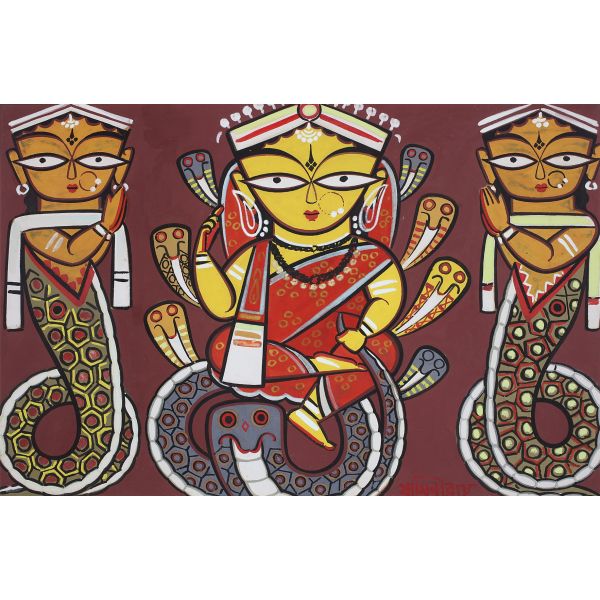
A visit to Taherpur, Nadia for a workshop on the practices and genealogies of Sora-making with artists Ratan Paul and Gopal Paul, and artist-writer Dipankar Parui.
Learn More -
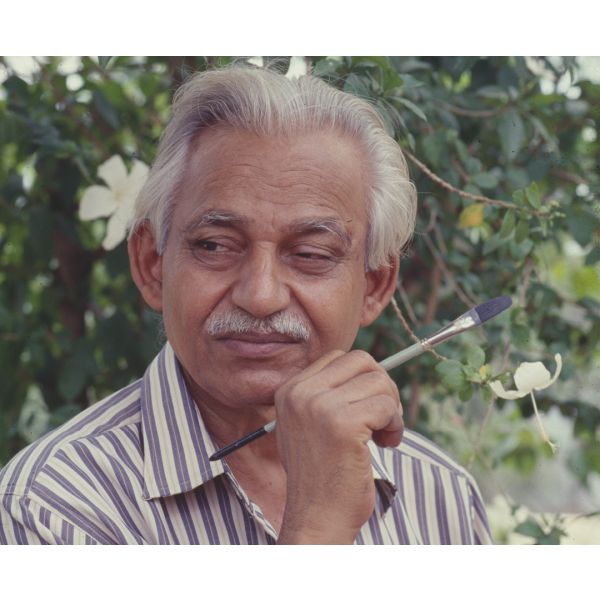 ArtistsLalu Prasad Shaw$0.00Born in Suri, Bengal, in 1937, Lalu Prasad Shaw obtained a diploma in painting from the Government College of Art and Craft, Calcutta, in 1959. Despite training in Company School art, traditional Kalighat pats and Ajanta cave frescos, Shaw evolved his distinctive style to work in watercolours and oil. His teachers were some of the leading artists of the time, such as Gopal Ghose, Rathin Maitra, and Maniklal Banerjee. Learn More
 -
-
 Art FairsExpo Chicago$0.00
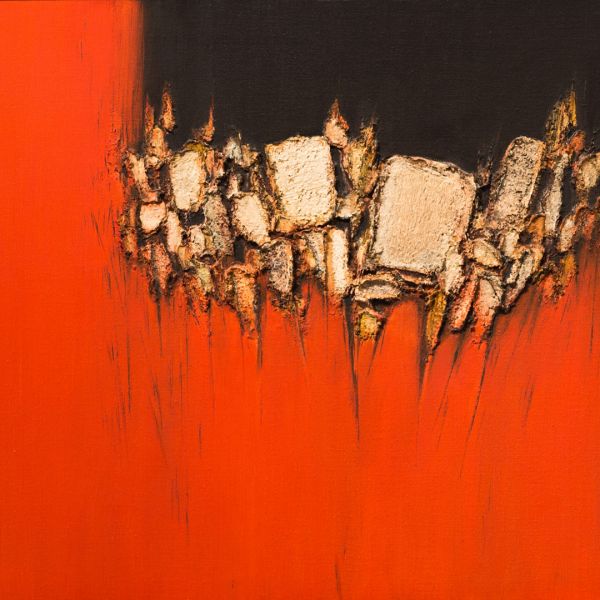
The midwestern city of Chicago hosts one of America’s most important art fairs—Expo Chicago—in which DAG participated in an attempt to introduce Indian moderns to the diaspora there as well as to art-lovers in general. To introduce art to this midwestern population, DAG picked on well-established names from the Indian art marquee. This included the National Treasure artist Jamini Roy whose works outside India are a rarity since they cannot be exported. Others included the Progressives F. N. Souza and M. F. Husain, New York-based printmakers Krishna Reddy and Zarina Hashmi (both now deceased) and artist Natvar Bhavsar, abstractionists Sohan Qadri and G. R. Santosh, a rare sculpture by Prodosh Das Gupta, and a body of other modernists representing the diverse range of works created by Indian artists in the twentieth century. A suite of small format watercolour landscapes by Bireswar Sen was a highlight of the booth. Avinash Chandra Bireswar Sen Chittaprosad F N Souza F N Souza G R Santosh Ganesh Pyne Jamini Roy K.S Kulkarni Krishna Reddy Laxman Pai M F Husain Madhvi Parekh Natvar Bhavsar Paritosh Sen Prodosh Das Gupta Rabin Mondal Sohan Qadri Zarina Hashmi
Learn More -
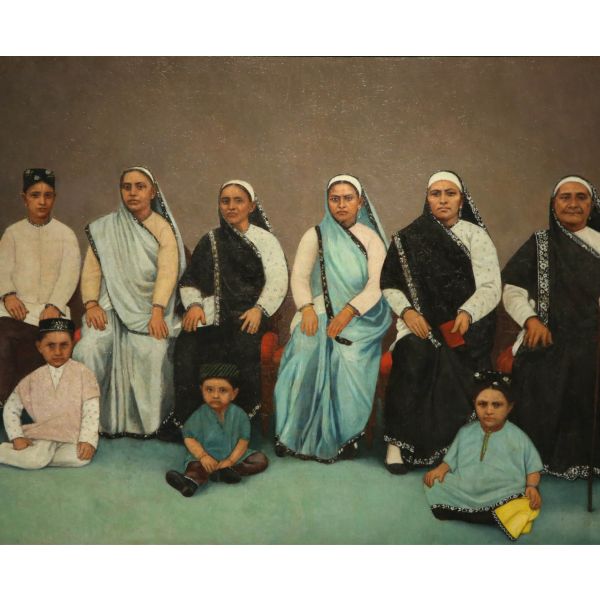 ArtistsAnonymous (Ravi Varma School)$0.00Raja Ravi Varma’s singular impact on Indian art is unparalleled by any artist. Largely self-taught, he is probably the first Indian artist to have articulated Indian subject matters through naturalism and the use of oil paints with brilliant mastery, considered until then a European idiom. Learn More
 -
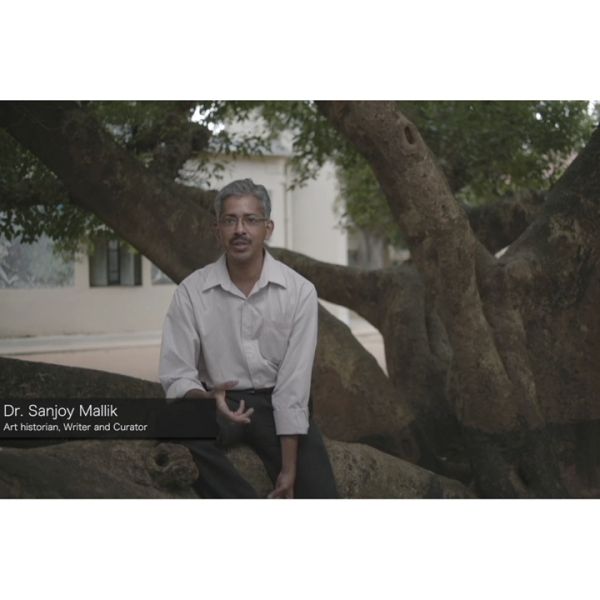 JournalNavratna: India’s National Treasure artists$0.00It was in the 1970s that the government of India declared nine artists as National Treasures, attesting to the significance of their contribution to the shaping of modern Indian art identity. ‘Navratna: Nine Gems of Indian Art’ was a unique opportunity to see seminal works by all the nine together, to understand the uniqueness of their collective contribution, at Drishyakala, a joint collaboration between DAG and the Archaeological Survey of India. Learn More
 -
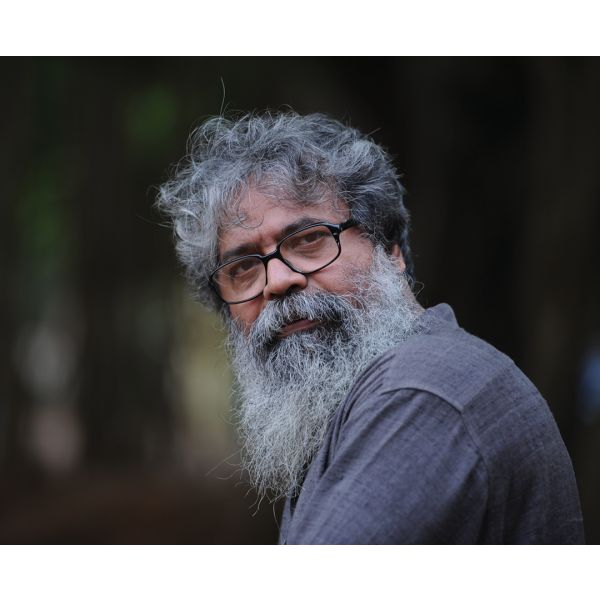 ArtistsK. S. Radhakrishnan$0.00Maiya and Musui—the thinly-fluted male and female bronze figures, often swaying or leaping in joy—are perhaps as well-known as their creator, K. S. Radhakrishnan. One of the most significant contemporary sculptors, Radhakrishnan often refers to the bronze characters as his alter egos. Learn More
 -
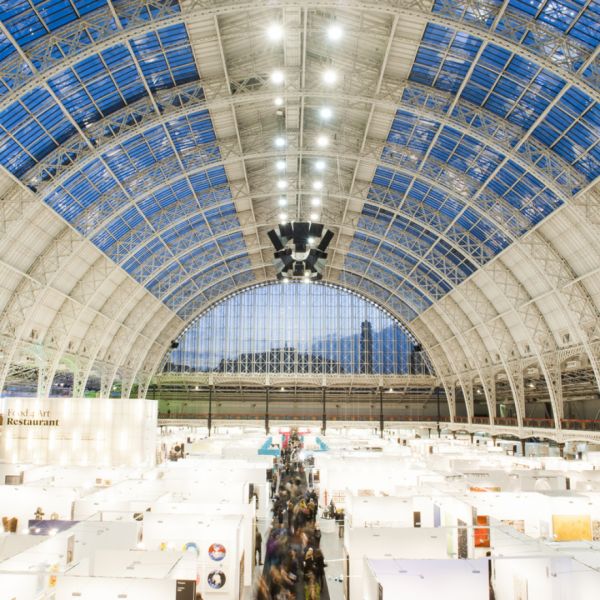 Art FairsART15$0.00
For its debut in London, DAG created a booth-in-booth display space at the historical exhibition venue, Olympia London, that offered glimpses of the artworks from all around, thereby improving its visibility and attracting visitors. Its choice of art too reflected the best from its collection of the twentieth century modern masters of Indian art, who, in turn, had been influenced by movements and artists in the West. Several of these had worked, briefly or for the duration of their careers, in London and Europe. These included Avinash Chandra, F. N. Souza, Ram Kumar, S. H. Raza, Laxman Pai, Manjit Bawa,
Learn More
S. K. Bakre, Sakti Burman and Sohan Qadri among others. The room within the booth was reserved solely for the paintings by F. N. Souza. Akbar Padamsee Ambadas Anjolie Ela Menon Avinash Chandra B. Prabha Bikash Bhattacharjee Dharamnarayan Dasgupta F. N. Souza G.R. Santosh George Keyt Himmat Shah J. Sultan Ali Jogen Chowdhury K. H. Ara K. K. Hebbar K. Laxma Goud Krishen Khanna Laxman Pai M. F. Husain Manjit Bawa N. S. Bendre P. T. Reddy Prodosh Das Gupta Rabin Mondal Ram Kumar S. H. Raza S. K. Bakre Sakti Burman Sohan Qadri Sunil Das -
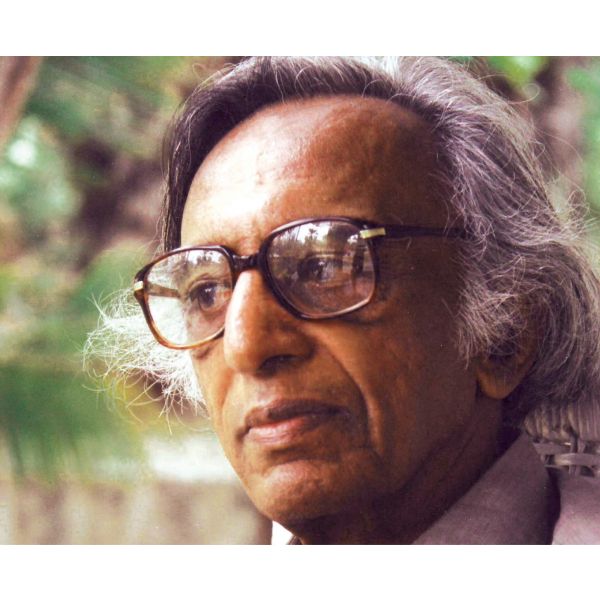 ArtistsTyeb Mehta$0.00It is ironical that works by Tyeb Mehta, who did not attach much merit to the financial value of art, were the first by a living Indian artist to sell for more than Rs 1 crore, and, soon, for more than a million dollars, indicating a beginning of interest in Indian art in the international market. His works Celebration, Kali and Mahishasura marked the beginning of the boom in the Indian art market at the start of this century. Learn More