


Search results for: 'sony the first take headphone'
-
 ExhibitionsSoliloquies of SolitudeAs low as $1.00
The mid-twentieth century saw a churn in the practice of art in India with a number of artists beginning to explore a genre that had swept the West with its absence of figuration in favour of abstraction. The non-representational began to gain traction as artists found within it a way to express themselves purely through colour as a potent tool to communicate emotions. Abstraction emphasised the relationship between originality and expression in ways that were complex, leading one to debate about the eventual goal of art. Ambadas, Krishna Reddy, Sohan Qadri, Zarina Hashmi, Rajendra Dhawan
Learn More -
 ExhibitionsIndian AbstractsAs low as $1.00
The term ‘abstract’ has been loosely used, more so in the Indian context, where we have only a vague notion of what it implies. Even the slightest distortion in art is popularly referred to as abstraction. And while distortion ultimately results in abstraction, the two are at opposing ends of the visual pole as far as understanding the genre goes. Over several years, viewers have been guided almost by a gut instinct of what constitutes abstract art. And though one concedes that rigid compartments to demarcate genres are neither practical, nor desirable, some understanding of what constitutes abstract art is essential. A. M. Davierwalla Akbar Padamsee Ambadas Amitava Amrut Patel Asit Kumar Haldar Avinash Chandra Baburao Sadwelkar Benode Behari Mukherjee Bikash Bhattacharjee Bimal Dasgupta Biren De Bishamber Khanna Biswanath Mukerji Devayani Krishna Devraj Dakoji Dhanraj Bhagat Dharamnarayan Dasgupta F. N. Souza G. R. Santosh Ganesh Haloi H. A. Gade Hemanta Misra Himmat Shah J. Swaminathan Jeram Patel Jyoti Bhatt K. C. S. Paniker K. G. Subramanyan K. S. Kulkarni Krishna Reddy L. Munuswamy Laxman Pai Laxman Shrestha M. F. Husain Nasreen Mohamedi P.Khemraj P.T.Reddy Partha Pratim Deb Piloo Pochkhanawala Prabhakar Barwe Prabhakar Kolte Prokash Karmakar R. M. Palaniappan R. N. Pasricha Rabin Mondal Raghav Kaneria Ram Kumar S. G. Vasudev S. H. Raza S. K. Bakre S. R. Bhushan Sanat Kar Sankho Choudhuri Satish Gujral Shanti Dave Shobha Broota Sohan Qadri Somnath Hore Sunil Das Sunil Madhav Sen Tapan Ghosh V. S. Gaitonde V. Viswanadhan Vivan Sundaram Zarina Hashmi
Learn More -
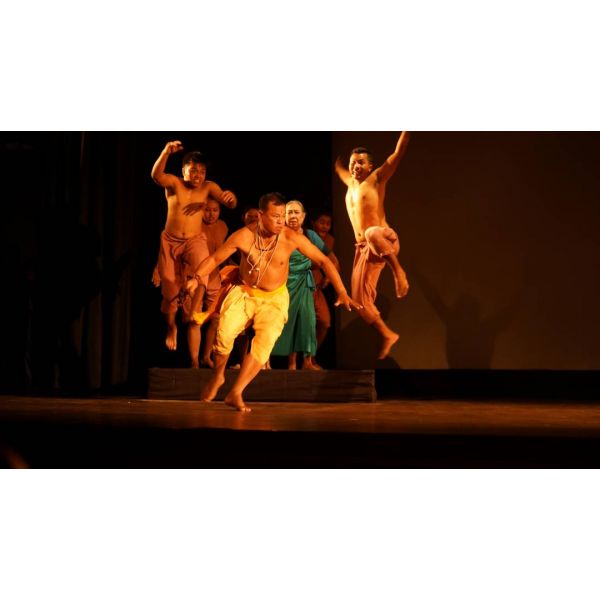 Events and ProgrammesPebet$1.00
Pebet is a ‘phunga wari’, a type of traditional fireside story told to Manipuri children by their grandparents. Directed by the renowned theatre practitioner Heisnam Kanhailal and performed first in 1975, it subverts the familiar icon of the bird and the cat to comment on political and cultural indoctrination.
Learn More -
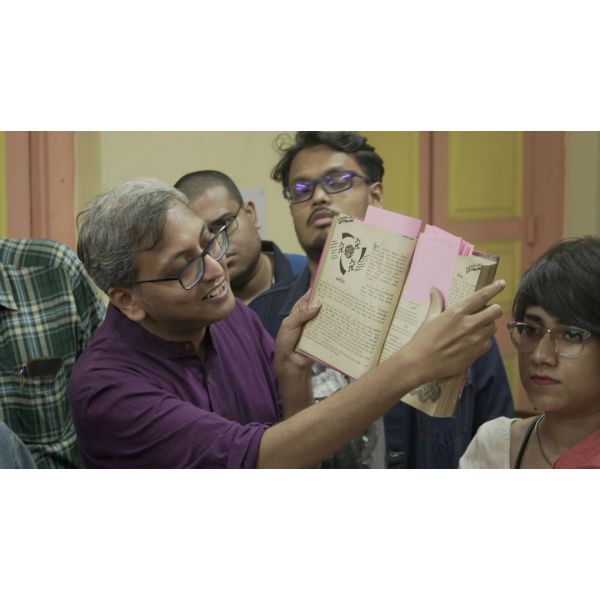 Events and ProgrammesPast in Print$1.00
A guided walk of the first free circulating public library of India—Uttarpara Public Library—with researcher Sarbajit Mitra, traversing the history of regional literary cultures, and sifting through their vast archive to delve into the vibrant world of illustrated periodicals in colonial Bengal, followed by a poetry reading by Sujoy Prasad Chatterjee.
Learn More -
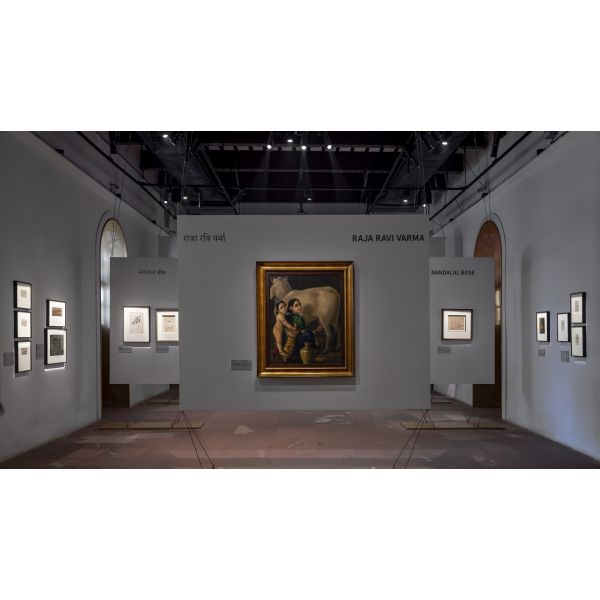 Institutional CollaborationsDRISHYAKALA$1.00
How did the multiple trajectories of visual arts develop in the subcontinent? Where did they originate and how did their paths converge? Drishyakala offers a sweeping journey into the heterogenous histories of visual arts in India, from the first European travelling artists who drew landscapes to popular prints of the earliest woodcuts and lithographs evolving into the thriving advertising visuals of the 20th century. The exhibition is broadly divided into four categories, each exploring an unique area of development—the art of portraiture through photography and painting, oriental sceneries drawn by European travelling artists, popular prints from the late eighteenth century to post-independence and artworks of the nine National Treasure Artists. Together, these sections give brief glimpses into the dizzying variety of forms, styles and languages of South Asian art.
Learn More -
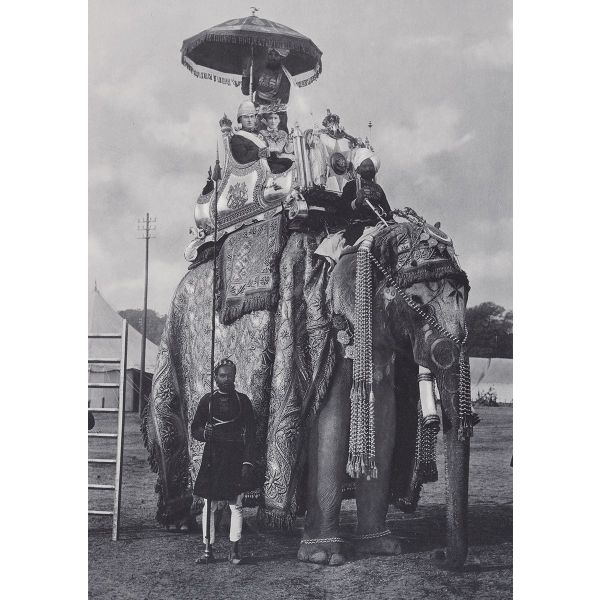 Collection StoriesAn Imperial Spectacle: The Delhi Durbars and its Ceremonies$1.00
The Delhi Durbars were a series of coronation events held by the British in India which formally declared the British monarch as the Emperor or Empress of India. They took place thrice—first, in 1887, acknowledging Queen Victoria as the Empress of India, followed by one in 1903, for King Edward VII, and finally in 1911 for King George V, which saw the monarch’s attendance in person.
Learn More -
 Art FairsArt Dubai$0.00
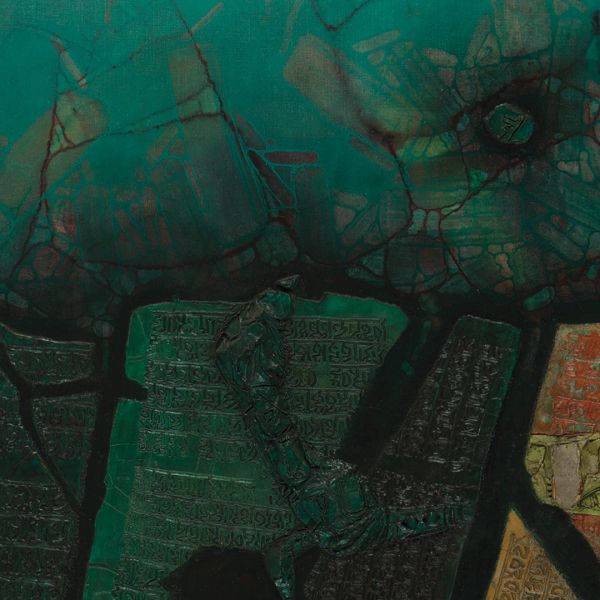
Shanti Dave’s abstracts resemble—at first—the familiar and the unknown. There are writings, figures, deities, forms and shapes that resonate with what we seem to know. If the language is indecipherable, perhaps it belongs to some ancient texts lost to history. Is this his ode to a civilisation that existed in the past, or a prophesy of one to come? Is it a world hidden underwater? Or perhaps one alien to us because it comes from some other planet? Are these tombstones, or markers, of some mythological or historical realm?
Learn More -
 Art FairsArt Basel$0.00
DAG’s booth at Art Basel Hong Kong at its second outing there consolidated its gains from the previous edition by building on the artists it had first presented at the seminal fair. It matched the fair’s focus of a vibrant Asian art with its premier selection of Indian modern art of the twentieth century. The selection presented twenty-five of the most significant Indian modern artists—consisting of painters and sculptors, figurative and abstract artists—who, with the innovations they brought to their art, contributed significantly to the rich diversity and expanse of Indian modern art as we know it today. Akbar Padamsee Ambadas Avinash Chandra B. Prabha Bikash Bhattacharjee Biren De F. N. Souza G. R. Santosh George Keyt Himmat Shah J. Sultan Ali K. H. Ara K. K. Hebbar K. Laxma Goud Krishen Khanna Laxman Pai M. F. Husain N. S. Bendre Rabin Mondal Ram Kumar S. H. Raza S. K. Bakre Sakti Burman Sohan Qadri Sunil Das
Learn More -
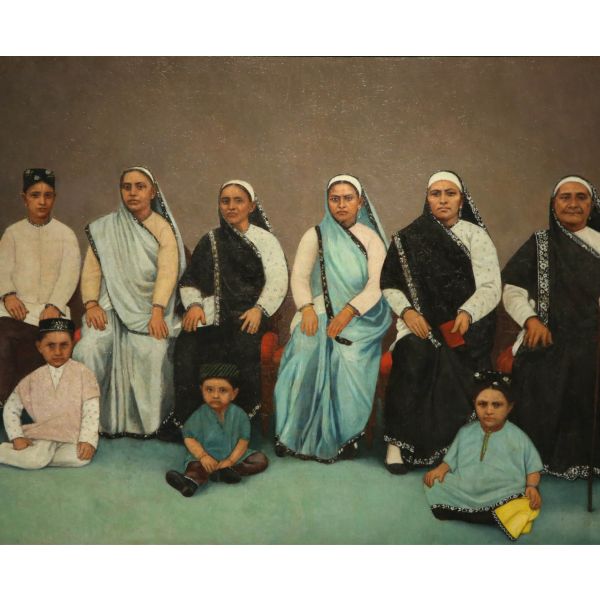 ArtistsAnonymous (Ravi Varma School)$0.00Raja Ravi Varma’s singular impact on Indian art is unparalleled by any artist. Largely self-taught, he is probably the first Indian artist to have articulated Indian subject matters through naturalism and the use of oil paints with brilliant mastery, considered until then a European idiom. Learn More
 -
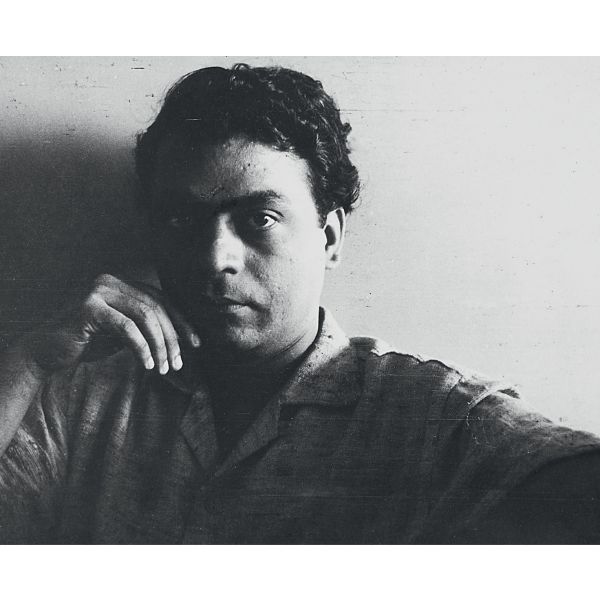 ArtistsV. S. Gaitonde$0.00One of India’s most revered ‘non-objective’ painters—he preferred that term over ‘abstraction’—Vasudeo Santu Gaitonde was born in Nagpur in 1924. He received his diploma in painting from Sir J. J. School of Art, Bombay, in 1948. Impressed by his work, the members of the Progressive Artists’ Group—formed in 1947—pulled him into their meetings. The strength of his talent was soon recognised elsewhere—he won the first prize of the Young Asian Artists Association in Tokyo in 1957, and a John D. Rockefeller III Fund fellowship in 1964. Learn More
 -
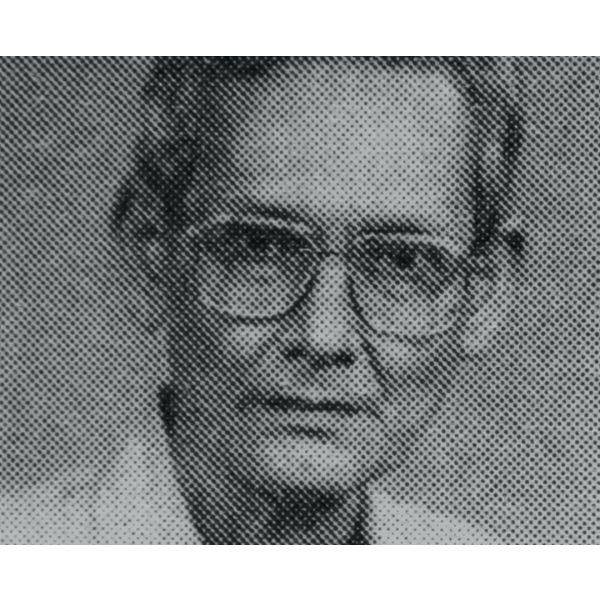 ArtistsAmalnath Chakladhar$0.00Born in present-day Bangladesh, Amalnath Chakladhar belongs to that category of Bengali modernists who carved an identity uniquely their own, despite the overarching influence of the three prominent strains of modern art in Bengal in the first half of the twentieth century—the Bengal School, academic training in art schools of Calcutta, and expressionism in Santiniketan. His contribution to furthering modernism in India, therefore, assumes importance for being a seminal, individual effort. Learn More
 -
 JournalUntitled (Tigers) by Amrita Sher Gil$1.00
The birth of Amrita Sher-Gil to an Indian father and Hungarian mother bequeathed to the nation one of its most incandescent artists. Known for her luminous paintings, her work changed the face of modern Indian art and paved the course it was to take in the country. In a rare sculpture of tigers made, poignantly enough, in the last year of her life, Amrita Sher-Gil is revealed as someone exploring new directions before her tragic demise in 1941.
Learn More