


Search results for: 'like a bridge over troubled water 歌詞'
-
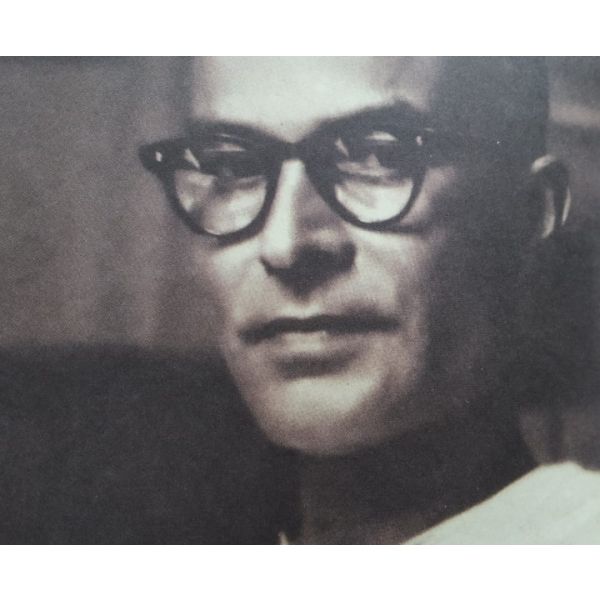 ArtistsManiklal Banerjee$0.00A watercolourist par excellence known for his paintings on silk, Maniklal Banerjee was born in Borisal in present-day Bangladesh. He studied at Government College of Art in Calcutta and while still a student, became the first Indian artist to receive the Government of India’s scholarship for the arts. Learn More
 -
 ArtistsM. S. Joshi$0.00Born in Nashik, Maharashtra, M. S. Joshi studied at Sir J. J. School of Art, Bombay, in the 1930s. Joshi combined his training in academic realism with a sense of vitality, precision and aesthetics to reveal India’s rich cityscapes and landscapes in his watercolour and gouache works. There was immense depth in the rendering of his subjects, which included people, places, architectural elements, all done in a subdued yet textured palette. Learn More
 -
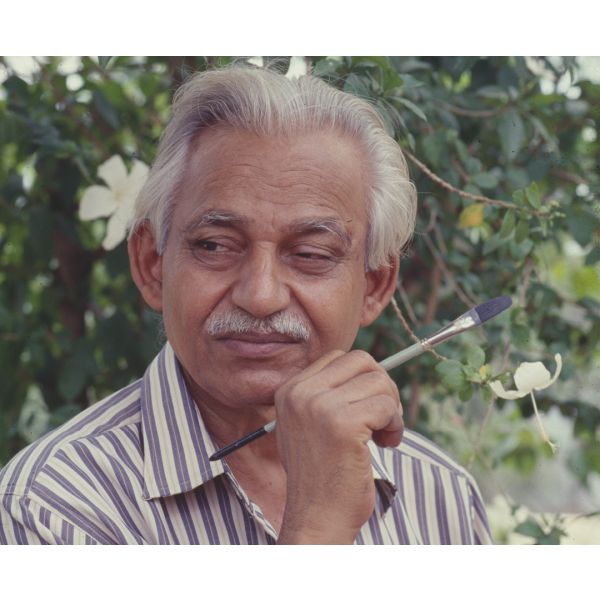 ArtistsLalu Prasad Shaw$0.00Born in Suri, Bengal, in 1937, Lalu Prasad Shaw obtained a diploma in painting from the Government College of Art and Craft, Calcutta, in 1959. Despite training in Company School art, traditional Kalighat pats and Ajanta cave frescos, Shaw evolved his distinctive style to work in watercolours and oil. His teachers were some of the leading artists of the time, such as Gopal Ghose, Rathin Maitra, and Maniklal Banerjee. Learn More
 -
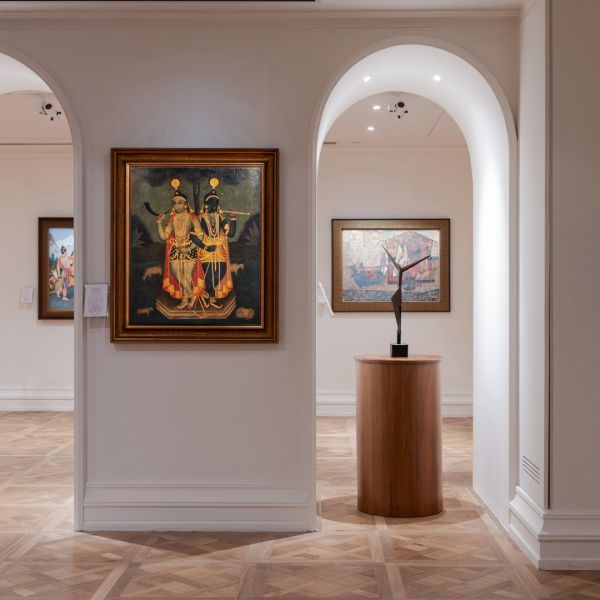 ExhibitionsIconicAs low as $1.00
'Iconic Masterpieces of Indian Modern Art' is an exhibition specially curated to commemorate the opening of DAG’s new galleries at the Taj Mahal Palace in Mumbai. The pathbreaking exhibition of some of the finest nineteenth and twentieth century art related to India consists of fifty outstanding works, each of them exceptional for their historicity, rarity, and quality. Established in 1993, DAG has created an enviable reputation over the decades for its collection and exhibitions of twentieth century art. But with 'Iconic Masterpieces of Indian Modern Art', it draws attention to its growing strength in nineteenth century art, a new area that it has now committed itself to with a growing inventory of Western artists who travelled to India to paint, as well as Indian artists whose identities have remained unknown for lack of adequate documentation. The earliest work in this exhibition, dated 1805-10, is of one of the largest recorded Company Paintings, and concludes with a rare sculpture cast as recently as 2021 in Indonesia. Ramachandran Adi Davierwalla Ambadas Avinash Chandra Bikash Bhattacharjee Dhanraj Bhagat Early Bengal Oils Edwin Lord Weeks F. N. Souza Frank Brooks G. R. Santosh Ganesh Haloi J. Sultan Ali J. Swaminathan Jamini Roy Jeram Patel Jogen Chowdhury K. C. S. Paniker K. G. Subramanyan K. K. Hebbar K. Laxma Goud K. S. Radhakrishnan Krishen Khanna Laxman Pai M. A. R. Chughtai M. F. Husain M. V. Dhurandhar Madhvi Parekh Marius Bauer Natvar Bhavsar Nicholas Roerich Nikhil Biswas Paritosh Sen Prabhakar Barwe Rabin Mondal Rabindranath Tagore Rajendra Dhawan Ram Kumar Rameshwar Broota Ramgopal Vijaivargiya Ramkinkar Baij Ranbir Singh Kaleka Satish Gujral Shanti Dave Sohan Qadri Stefan Norblin Studio of Raja Ravi Varma Sunil Das Tyeb Mehta Company Paintings
Learn More -
 Collection Stories150 years of Abanindranath Tagore$1.00
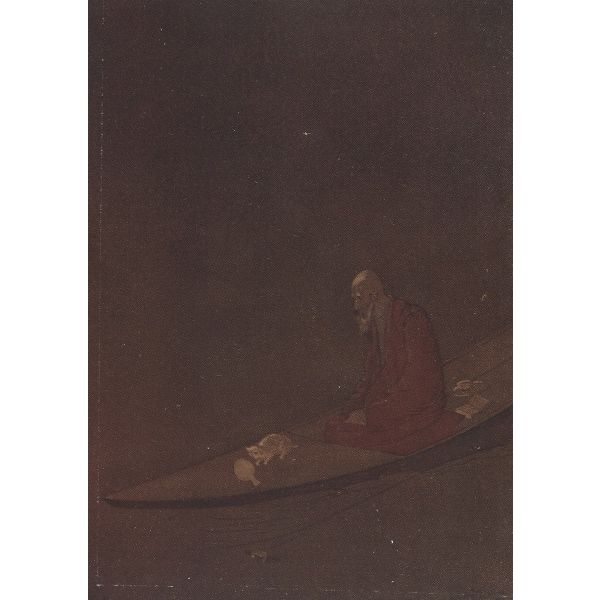
At the turn of the twentieth century, Abanindranath Tagore asked himself if the emerging artists of modern India should continue to paint in the manner of their European colonizers; or was there a new path waiting to be forged? His answers led him to envision a pan-Asian cultural identity, spanning traditions from Persia to Japan, and culminating in a ‘new “Indian” art.’ Regarded as the founder of the Bengal School, Abanindranath left an unparalleled legacy both in terms of his own diverse body of work, and through his pupils, like Nandalal Bose, who shaped the contours of art across the subcontinent in the twentieth century.
Learn More -
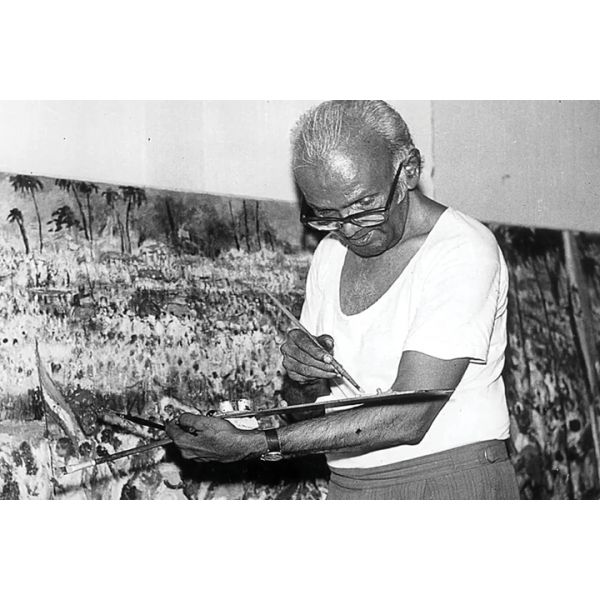 JournalK.H. Ara$0.00What do you make of a work of art? What was the artist attempting to communicate? These video shorts offer brief overviews on artists and their work in the way of expert opinions by scholars, curators art writers—and by the artists themselves. Learn More
 -
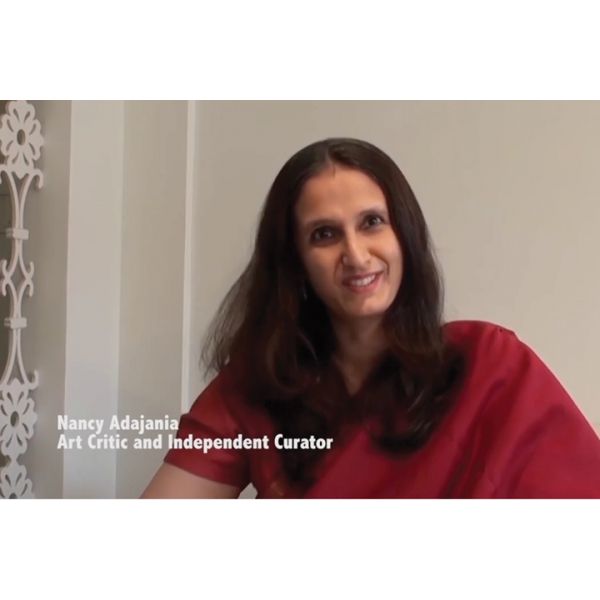 JournalAdi Davierwala$0.00What do you make of a work of art? What was the artist attempting to communicate? These video shorts offer brief overviews on artists and their work in the way of expert opinions by scholars, curators art writers—and by the artists themselves. Learn More
 -
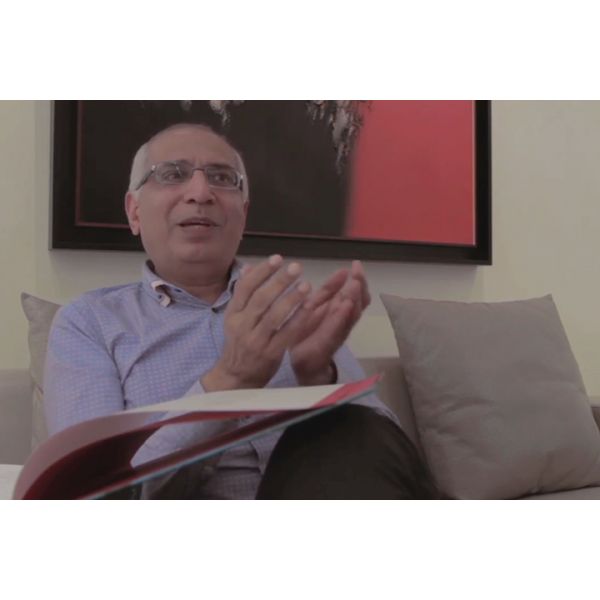 JournalMemory and Identity - Indian Artists Abroad$0.00What do you make of a work of art? What was the artist attempting to communicate? These video shorts offer brief overviews on artists and their work in the way of expert opinions by scholars, curators art writers—and by the artists themselves. Learn More
 -
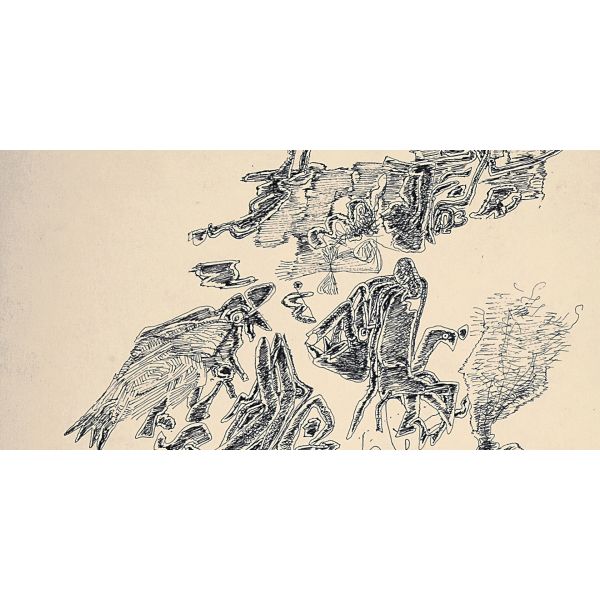 JournalRemembering Ambadas with art critic Prayag Shukla$0.00
A well-known poet and essayist, Prayag Shukla is also one the foremost writers on art in Hindi. He has authored monographs on artists like J. Swaminathan, M. F. Husain and Ambadas, expanding upon these artists’ relationships with local institutions and contexts of art-making in India since the 1960s.
Learn More -
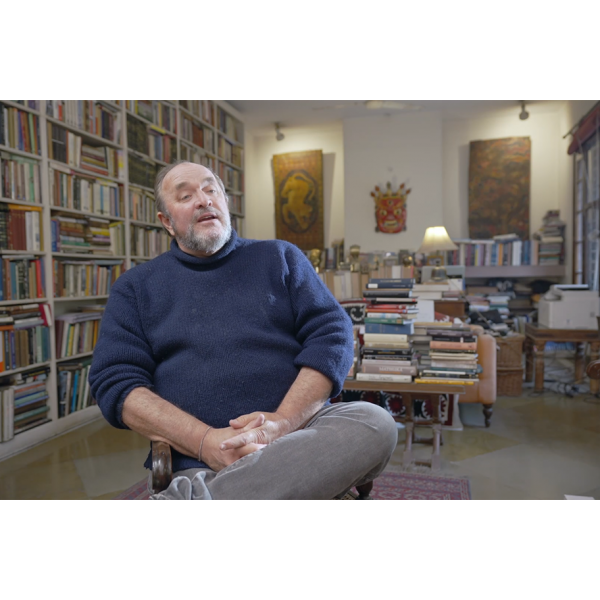 JournalWilliam Dalrymple on ‘Panorama of a Small British Station on the Ganges’$0.00
'Iconic Masterpieces of Indian Modern Art, Edition 2' opened on 11 February, featuring fifty artworks which shaped the trajectory of pre-modern and modern art in the country. As part of the exhibition, William Dalrymple reflects on the painting ‘Panorama of a Small British Station on the Ganges’. Commissioned by Major James Natheniel Rind and painted like a scientific record of a scenario, the composition evokes a transitional phase between an older Mughal ethos and the emerging world of the Company.
Join us for a talk by William Dalrymple on Indian Painting for the East India Company on Wednesday, 5th April 2023, 7pm at DAG, 22A Janpath Road, Windsor Place, New Delhi
Learn More -
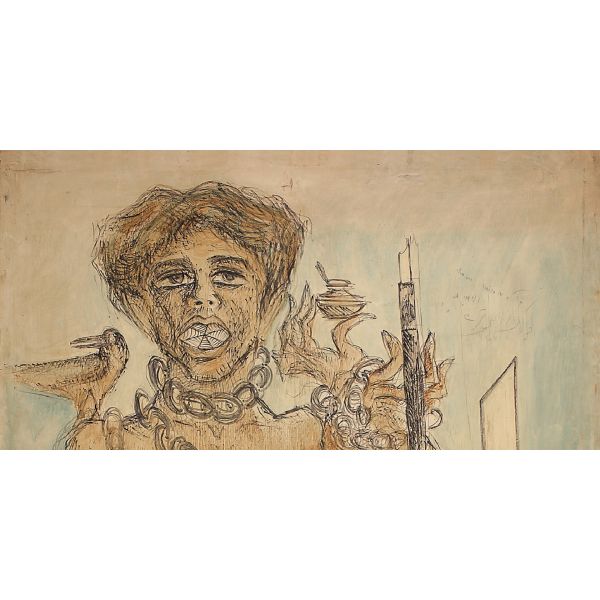 JournalDebating secularism in South Asian Art with Tapati Guha-Thakurta$0.00
This collection of essays, co-edited by eminent scholars of art history, Tapati Guha-Thakurta and Vazira Zamindar, navigate the fraught religio-political contexts of South Asia to bring into relief the fragility and amorphous nature of a contested term like the ‘secular’.
Learn More -
 JournalArt Lab: Transforming Classrooms into Museums$0.00
Art Lab by DAG’s Museums Programme is a pop-up art exhibition of facsimiles of works from the DAG Museum Collection that travels to schools and introduces students to modes of visual learning. After two successful iterations in CBSE and ICSE schools in Kolkata, Art Lab travelled to its first Bengali medium West Bengal Board school—Barisha Janakalyan Vidyapith for Girls. Through three days of workshops spread across two weeks, the students interacted with the artworks, learnt the basics of research, delved into historical material, and developed their own creative projects. Take a peek at some of the wonderful projects they curated as they took over the exhibition and made it their own.
Learn More