


Search results for: 'work life'
-
 ExhibitionsIndia ModernAs low as $1.00
Any new exhibition brings with it a frisson of excitement, but by any measure India Modern: Narratives From 20th Century Indian Art has been extra special. Most art lovers take Indian modernism for granted—but how many can truly claim to know what it really means. For too many years, the term has been loosely used, with very little awareness of what it includes, or omits. What the West understands and takes as a given is something that in India still remains a mystery, perhaps because art in India cannot strictly be viewed from the same trope as Western art. Perhaps this is true of most countries, but it is especially true of colonised nations where new engagements with art in the West were imposed without the benefit of growing their own local practices organically. This hybrid custom developed at various levels, which makes it exciting when viewed from some distance, but also imposes a challenge. Therefore the question: What does modernism in Indian art imply? Akbar Padamsee Ambadas Anjolie Ela Menon Avinash Chandra B. Prabha Bikash Bhattacharjee Bimal Dasgupta Biren De Dhanraj Bhagat Dharamnarayan Dasgupta F. N. Souza G. R. Santosh Ganesh Haloi Ganesh Pyne George Keyt Gieve Patel H.A. Gade Himmat Shah J. Sultan Ali J. Swaminathan Jehangir Sabavala Jeram Patel Jogen Chowdhury K. G. Subramanyan K. H. Ara K. K. Hebbar K. S. Kulkarni Krishen Khanna Laxman Goud Laxman Pai M. F. Husain Manjit Bawa P. Khemraj P.T. Reddy Rabin Mondal Ram Kumar S. K. Bakre S.H. Raza Sakti Burman Sohan Qadri Somnath Hore Sunil Das
Learn More -
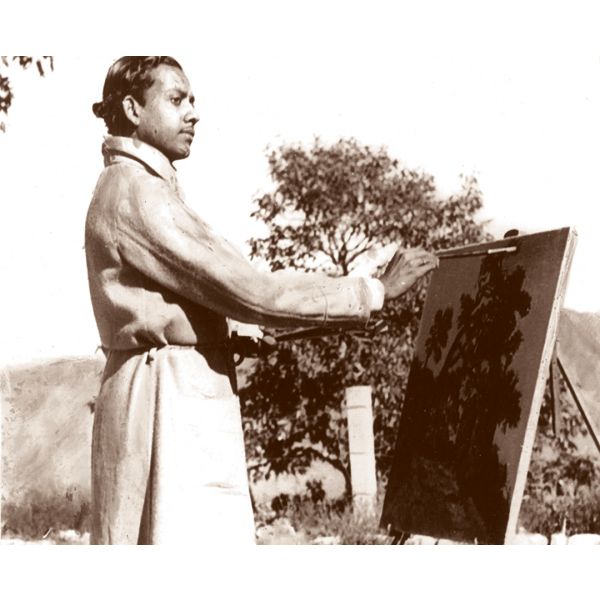 ArtistsKisory Roy$0.00Well-known for his landscape paintings, Kisory Roy was inspired to take up the arts by his father, who worked for the railways and was an occasional painter. Winning a school competition led Roy to the Government School of Art, Calcutta, where he studied from 1931-37. Under Mukul Dey, he learnt to work in several mediums like watercolour, oil, charcoal, and crayon. Learn More
 -
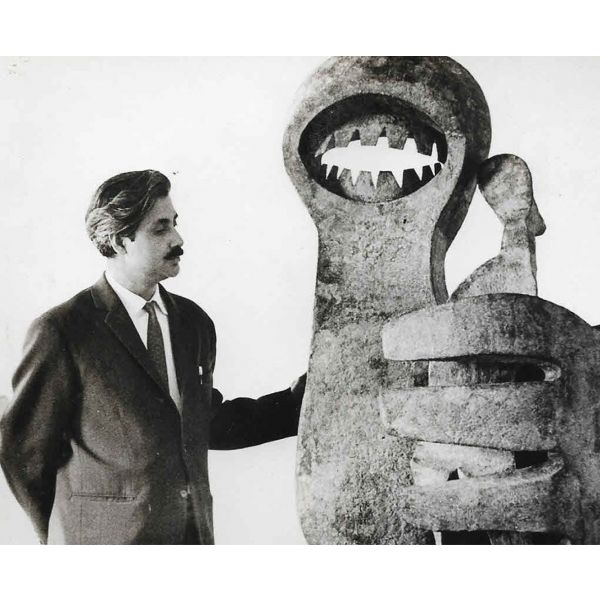 ArtistsAmar Nath Sehgal$0.00Modernist sculptor Amar Nath Sehgal was one of the earliest Indian artists to take legal action under the Indian Copyright Act defending his moral right over his work. In 1957, Sehgal created a mural for Vigyan Bhavan, New Delhi, on a government commission, which was pulled down without his permission or any intimation in 1979. Sehgal went to court and won the lawsuit. Learn More
 -
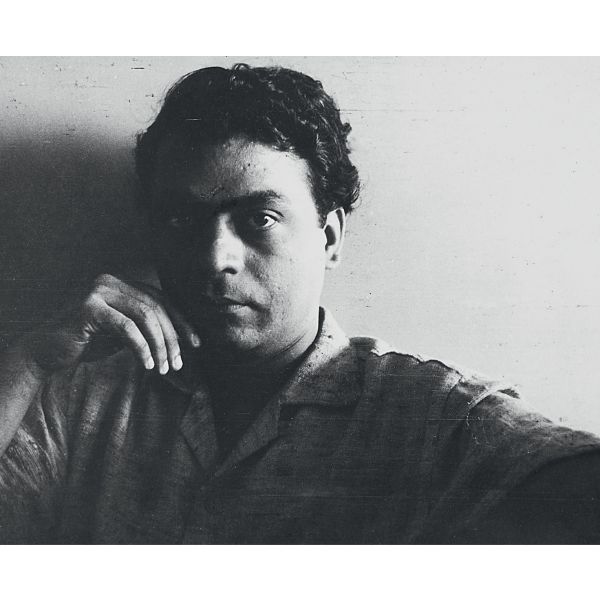 ArtistsV. S. Gaitonde$0.00One of India’s most revered ‘non-objective’ painters—he preferred that term over ‘abstraction’—Vasudeo Santu Gaitonde was born in Nagpur in 1924. He received his diploma in painting from Sir J. J. School of Art, Bombay, in 1948. Impressed by his work, the members of the Progressive Artists’ Group—formed in 1947—pulled him into their meetings. The strength of his talent was soon recognised elsewhere—he won the first prize of the Young Asian Artists Association in Tokyo in 1957, and a John D. Rockefeller III Fund fellowship in 1964. Learn More
 -
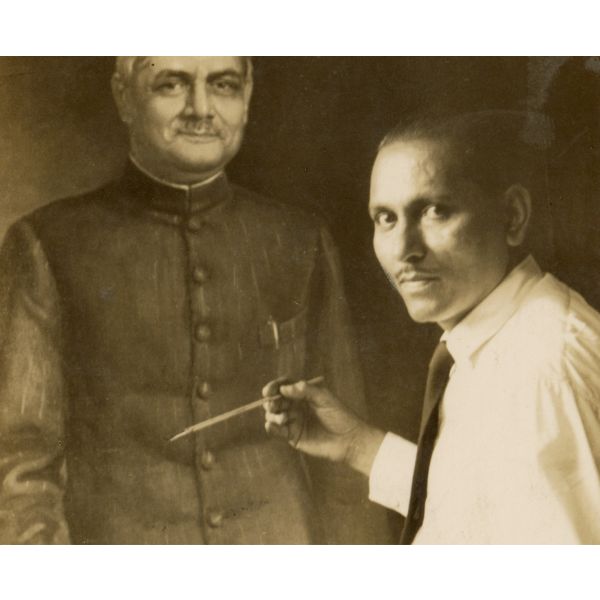 ArtistsV. A. Mali$0.00Born into a family of painters in Kolhapur, Vasant Anant Mali studied art professionally at Sir J. J. School of Art, Bombay, in the 1920s. It was here that he grasped the nuances of painting through academic realism. Working mostly in the medium of watercolour and oil, Mali keenly observed how some of his teachers, including Walter Langhammer, worked with various tools and applied bold brushstrokes with knife. Mali’s work had a forcefulness, a depth that was unique and could be seen, particularly, in portraits done by him. Learn More
 -
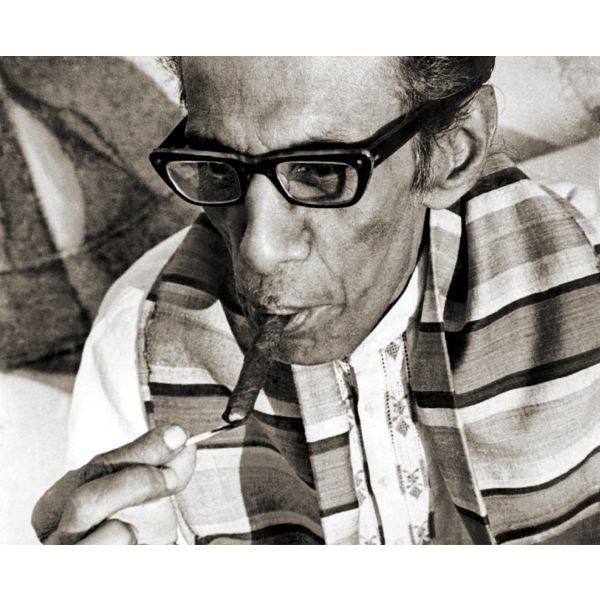 ArtistsSunil Madhav Sen$0.00Born in Purulia in West Bengal, Sunil Madhav Sen was a self-taught artist. Though he learned drawing as a child from a local teacher, he studied law and the liberal arts at Calcutta University and worked for the government. He pursued his passion for art privately alongside his legal practise, visiting the studios of Abanindranath Tagore, Atul Bose, J. P. Gangooly, and Satish Sinha. He also apprenticed for two years under Hemendranath Mazumdar, honing his skills in portrait painting. Learn More
 -
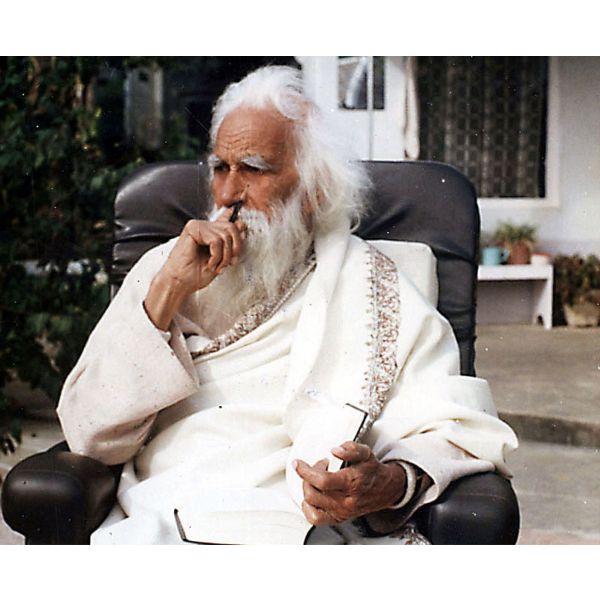 ArtistsSobha Singh$0.00The most definitive painter of the portraits of the Sikh gurus, Sobha Singh was born on 29 November 1901 at Gurdaspur in the Punjab. Interested in the arts since childhood, he learnt to draw and sculpt on his own, the early death of his parents depriving him of formal training in art. He joined the British Indian army as a draughtsman and continued to learn from studying the works of English and European artists. Learn More
 -
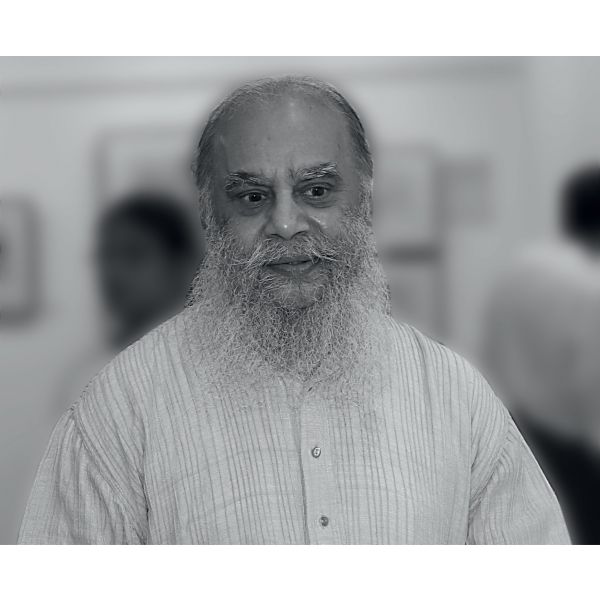 ArtistsShuvaprasanna$0.00Born in Calcutta on 20 October 1947, Shuvaprasanna is a quintessential painter of the eastern metropolis that he unabashedly loves. He graduated from Indian College of Art, Rabindra Bharati University, Calcutta, in 1969. An active member of Calcutta Painters group, urban themes are a constant in his work. Beset by problems and politics, but possessing great potential, Kolkata has remained his abiding inspiration as he absorbs and responds to its upheavals, the tumult of its masses, and its frequent political turbulence. Learn More
 -
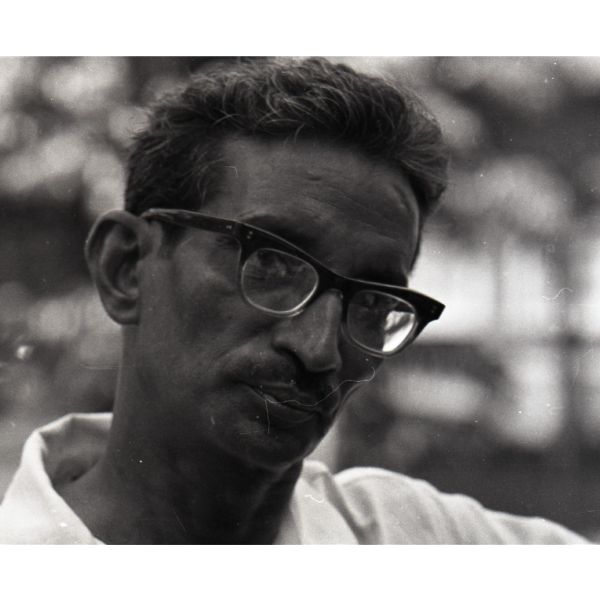 ArtistsSankho Chaudhuri$0.00One of India’s foremost sculptors, Sankho Chaudhuri’s work is an important key in the evolution of modern, abstract sculpture in the country, breaking away from traditional figuration and mid-Victorian academic naturalism. Learn More
 -
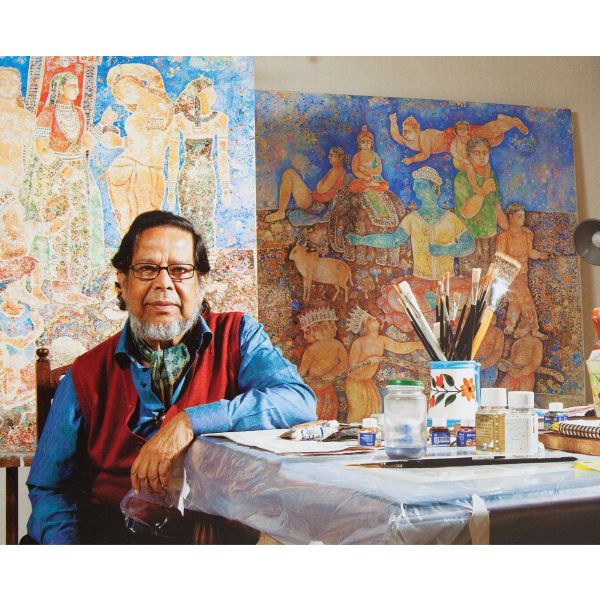 ArtistsSakti Burman$0.00Born in Calcutta, Sakti Burman studied at the city’s Government College of Arts and Crafts, and later at École Nationale des Beaux-Arts, Paris. Like most other Indian artists who studied or lived in the French capital, Paris-based Burman’s works blend European and Indian imagery. Learn More
 -
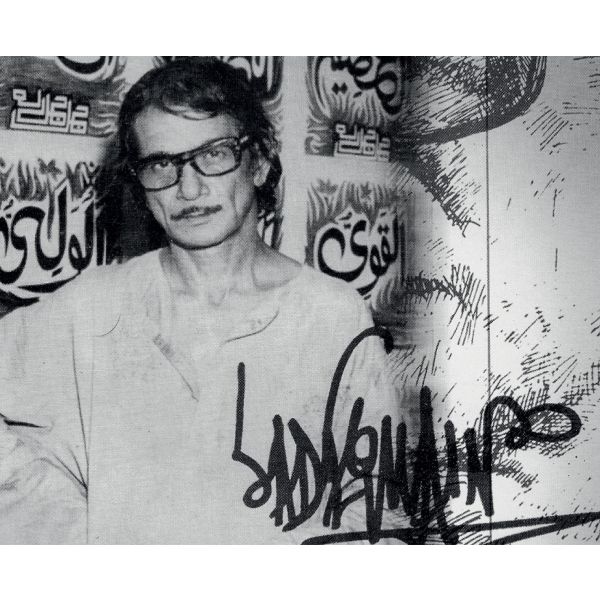 ArtistsSadequain$0.00One of the most important South Asian artists of the twentieth century, Syed Ahmed Sadequain Naqvi was born in Amroha in Uttar Pradesh in pre-Partition India and grew up in a family that highly valued calligraphy. He moved to Delhi in 1944 to work as a calligrapher-copyist with All India Radio where his elder brother was also working, but shifted to Pakistan following Partition. Moving between jobs for a few years in his new homeland, Sadequain devoted himself fully to the arts in 1955 after his fame as an artist rose with the patronage of the country’s prime minister, Huseyn Shaheed Suhrawardy. Learn More
 -
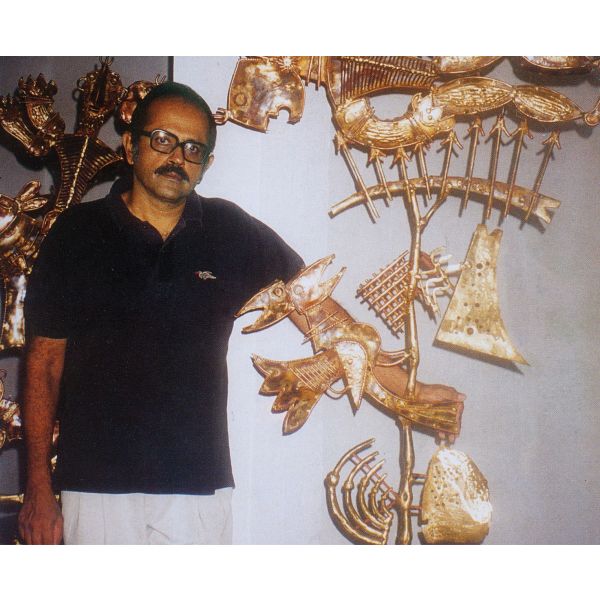 ArtistsS. Nandagopal$0.00Born in Bangalore to the illustrious K. C. S. Paniker, the father of the Madras Art Movement and the visionary behind Cholamandal Artists’ Village, S. Nandagopal’s tryst with art, unsurprisingly, began early on. Just like his father, Nandagopal’s work was a synthesis of tradition and modernity. Learn More