


Search results for: 'Graphics artists of india'
-
-
 ExhibitionsNavrasaAs low as $1.00
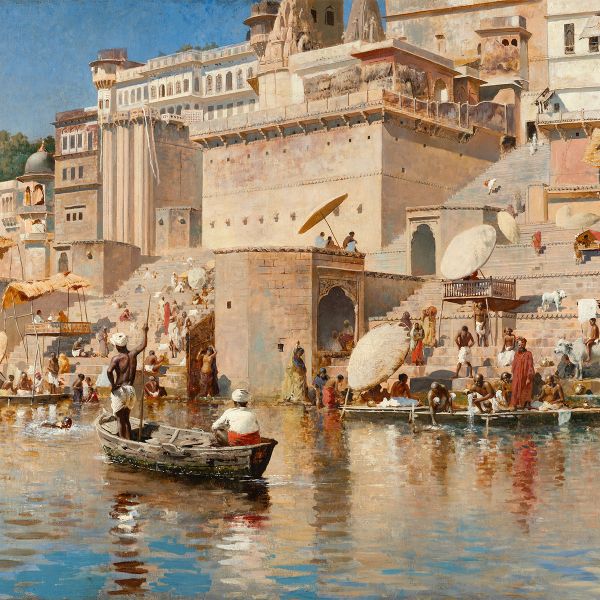
The pinwheel of emotions is the genesis of our current exhibition, 'Navrasa: The Nine Emotions of Art'. This unique treatise of emotions and moods has formed the foundation for the performing and visual arts in India. As we researched deeper to explore the dynamics it shares with Indian modern art, we found that all emotions are intrinsically linked with each other, that they trigger actions and reactions and are catalysts for change. 'Navrasa' explores Indian modernism and looks at the works of masters through the nine primary emotions, and breaks new ground in the visualisation of Indian art. Raiba A. H. Muller A. Ramachandran Altaf Amal Nath Chakladar Amit Ambalal Anonymous Anonymous (Bengal ‘School’) Anonymous (Early Bengal School) Anonymous (Early Bengal, Kalighat Style) Anonymous (Kalighat Pat Anupam Sud Arpana Caur Arun Bose Arup Das Asit Haldar B. N. Arya B. Prabha Badri Narayan Bijan Choudhury Bikash Bhattacharjee Bireswar Sen C. Douglas Chintamoni Kar Chittaprosad D. P. Roy Chowdhury Dattatraya Apte Dharamanarayan Dasgupta F. N. Souza G. Reghu Gogi Saroj Pal Gopal Ghose Gopal Sanyal Haren Das Indu Rakshit J. Sultan Ali Jagadish Dey Jai Zharotia Jamini Roy Jaya Ganguly Jogen Chowdhury Jyoti Bhatt K. C. S. Paniker K. G. Subramanyan K. H. Ara K. K. Hebbar K. S. Kulkarni Kanchan Chander Kartick Chandra Pyne Krishen Khanna Kshitindranath Mazumdar Laxman Pai M. F. Husain Madhvi Parekh Mukul Dey Navjot Nemai Ghosh Nikhil Biswas P. S. Chander Shekar P. T. Reddy Paritosh Sen Prodosh Das Gupta Prokash Karmakar Rabin Mondal Radhacharan Bagchi Raja Ravi Varma Rameshwar Broota Ranbir Singh Kaleka S. Dhanapal Sakti Burman Sanat Chatterjee Sanat Kar Satish Gujral Satish Sinha Shyamal Dutta Ray Somnath Hore Stefan Norblin Subba Ghosh Sudhir Khastgir Sukhvinder Singh Sunil Das Sunil Madhav Sen Thota Vaikuntam Tyeb Mehta V. Nageshkar
Learn More -
 Art FairsArt SG$1.00
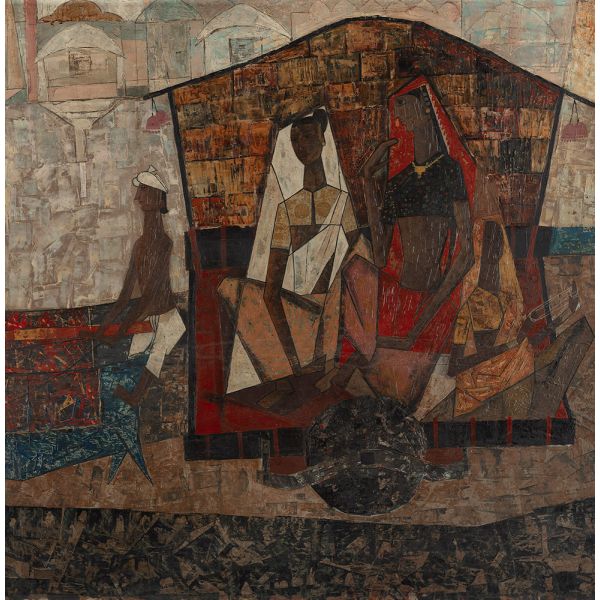
As with its history, trade, and culture, so with its art, India has always stood at the crossroads of assimilation, adaptation, change, and experimentation. Ancient and medieval art practices have informed her artists in the 20th century—a point when European and Asian movements found acceptance before being turned into a vibrant lexicon that has remained central to the pursuit of art in the subcontinent. Singapore
AVINASH CHANDRA BIRESWAR SEN F. N. SOUZA G. R. SANTOSH GOGI SAROJ PAL GOPAL GHOSE J. SULTAN ALI LAXMAN PAI M. F. HUSAIN MADHVI PAREKH NATVAR BHAVSAR S. H. RAZA SHANTI DAVE SHOBHA BROOTA SOHAN QADRI Learn More -
 Art FairsArt021 Shanghai$0.00
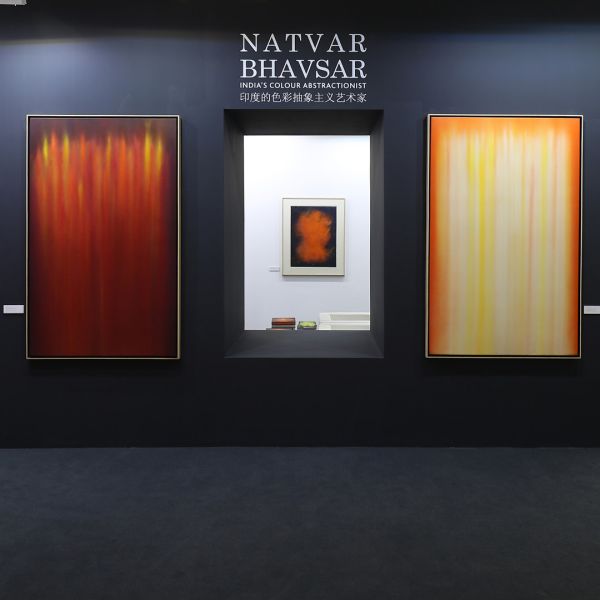
New York-based, Indian artist Natvar Bhavsar has been one of the most important painters of his generation. Influenced by the colour field artists of America in the 1960s, he became acquainted with them and took their language forward in his unique manner. A celebrated international artist, Bhavsar’s works have been widely collected by institutions and museums in America and the West.
Learn More -
 Collection StoriesAn Imperial Spectacle: The Delhi Durbars and its Ceremonies$1.00
The Delhi Durbars were a series of coronation events held by the British in India which formally declared the British monarch as the Emperor or Empress of India. They took place thrice—first, in 1887, acknowledging Queen Victoria as the Empress of India, followed by one in 1903, for King Edward VII, and finally in 1911 for King George V, which saw the monarch’s attendance in person.
Learn More -
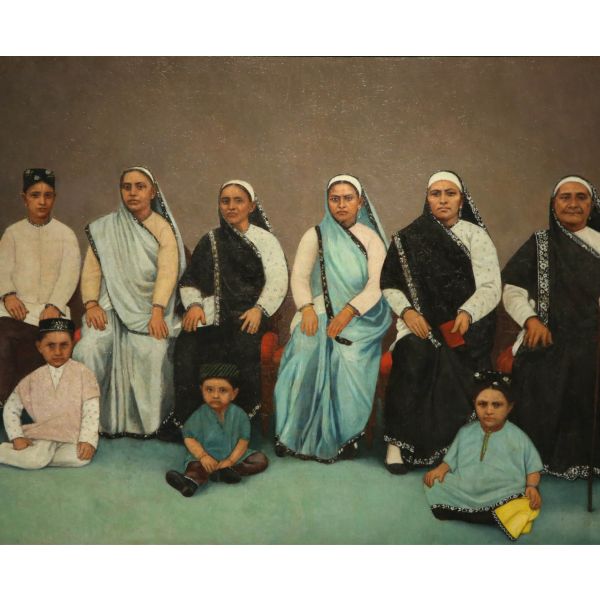 ArtistsAnonymous (Ravi Varma School)$0.00Raja Ravi Varma’s singular impact on Indian art is unparalleled by any artist. Largely self-taught, he is probably the first Indian artist to have articulated Indian subject matters through naturalism and the use of oil paints with brilliant mastery, considered until then a European idiom. Learn More
 -
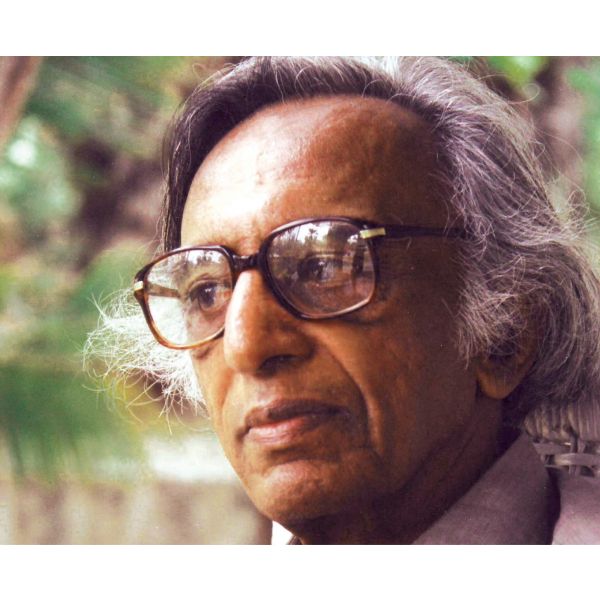 ArtistsTyeb Mehta$0.00It is ironical that works by Tyeb Mehta, who did not attach much merit to the financial value of art, were the first by a living Indian artist to sell for more than Rs 1 crore, and, soon, for more than a million dollars, indicating a beginning of interest in Indian art in the international market. His works Celebration, Kali and Mahishasura marked the beginning of the boom in the Indian art market at the start of this century. Learn More
 -
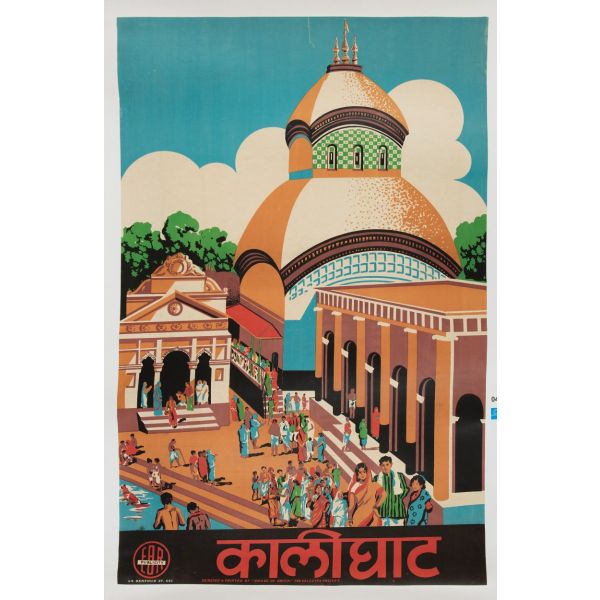 Events and ProgrammesMosaic Metropolis$1.00
A hop-in hop-off trail through the Calcutta underground metro rail, exploring the story of the murals that adorn the metro stations and enliven the everyday commute of millions of people.
Learn More -
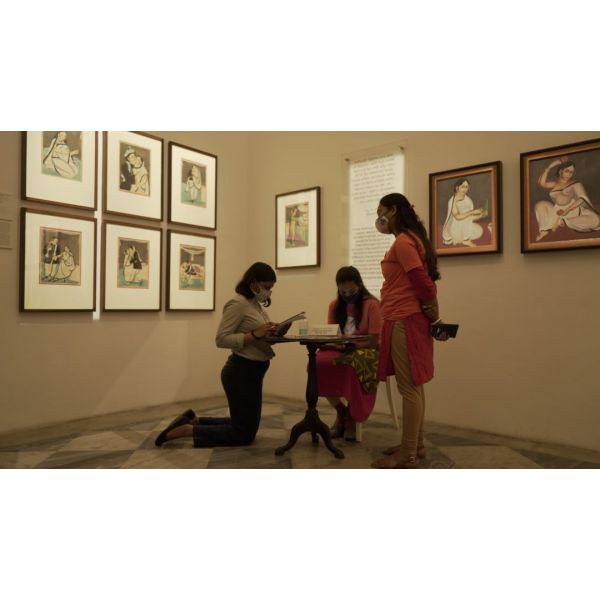 Events and ProgrammesMuseum Ambassadors$1.00
An experiential learning and apprenticeship programme for high school students in collaboration with arts education organisations, offering them a first-hand experience of working in a museum, learning about the art and history, and translating their learnings to develop museum experiences for their peers.
Learn More -
 Collection StoriesThe Afterlife of the Taj Gardens: Changes in the Landscape$1.00
Often described as ‘Poetry in Stone’, the Taj Mahal was laid out between 1631-43 by Mughal Emperor Shah Jahan as a mausoleum for his wife Mumtaz Mahal. It is the architectural elements of the Taj complex that grab the most attention, but in fact the garden is the heart of the complex . The visitors today are so transfixed by the Taj itself that they remember very little of the garden. DAG Archive attempts to illustrate the life and ‘afterlife’ of the Taj gardens, once its control was taken over by the British. This archive deep dive showcases the objects from A. E. P. Griessen’s (1875–1935) collection.
Learn More -
 Art FairsArt Dubai$0.00
Shown at the Shanghai Biennale, exhibited in New York, widely admired for his consistency throughout his career, Rabin Mondal’s excoriating paintings are a savage indictment of social and political ills. A reticent, reserved artist, Mondal’s works offer a scathing commentary on the pursuit and abuse of power. A primal, primordial figuration describes his work in which people in positions of authority are rendered vulnerable because of the very power they aspire to. Their contorted features and clawed hands and feet represent their venality. Strong outlines, naked brushstrokes and potent use of green and red characterise most his work.
Learn More -
 ArtistsSushil Chandra Sen$0.00Enamoured by watercolour as a medium, Sushil Chandra Sen studied at Government School of Art, Calcutta; in 1936, he joined the school as a lecturer. He also taught briefly at Delhi Polytechnic before returning to Calcutta to officiate as vice-principal of his alma mater. Learn More