Search results for: 'Toyota Motor Thailand Working Calendar'
-
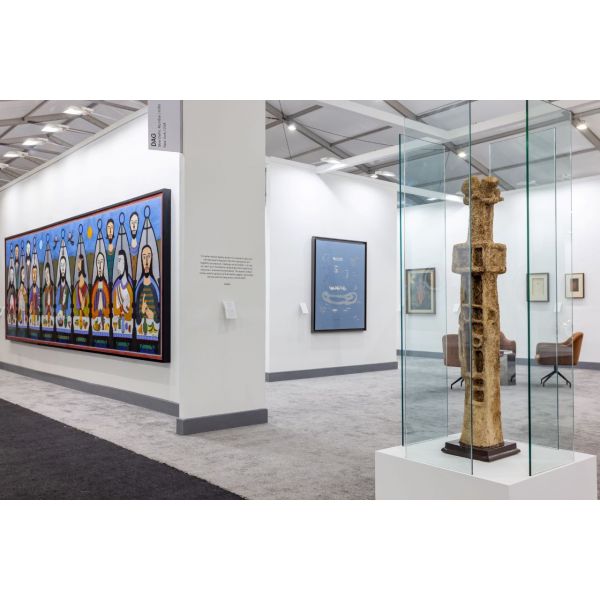 JournalModernists In Focus: Art Festivals, Early 2023$0.00
With the cultural calendar being packed till spring, join us as we travel through some of the most popular ongoing or upcoming art fairs and biennales. Take a close look at artists who bring modernist ideas to the contemporary art context. With some ubiquitous names from the twentieth century art world accompanied by a few of those that have been historically overlooked, discover how ideas around the Modern have evolved through these fairs and biennales, as we focus on notable artists from each art festival and delve into their practice.
Learn More -
 Collection OnlineDEVIS$1.00
The Devi or the female power in Hindu mythology appears in various avatars in our everyday lives—as idols during the puja, on covers of magazines, product labels, calendars and posters. The modern history of visualising the Devi goes back to naturalistic depictions in oil paintings by the Early Bengal artists, which were surpassed in popularity and fame by Raja Ravi Varma and his studio. His representation, however, was regarded as too human-like by artists of the Bengal School in the early twentieth century, who created idealised forms based on a synthesis of classical visual traditions. In the twentieth century, we find artists responding to distinctive traits of the goddess to portray specific aspects of her power, or to convey the artist's own relationship with divinity. Few artists who have turned to Hindu myths have been able to escape the temptation to interpret the female power in their own way, and the diversity in style, medium, and mood is a testament to that.
Learn More -
 Collection OnlineCHITTAPROSAD$1.00
Chittaprosad (1915 – 1978) was an artist of the people. A firm believer in the power of political art to bring tangible change in society, he is remembered for political cartoons and caricatures lampooning the ruling elite while championing the cause of the working class.
He was also a dedicated journalist working for the Communist Party of India (CPI) and was sent by the party to document the effects of the Great Bengal Famine of 1943 in Bengal’s villages and towns. He would come back with harrowing stories and sketches of hunger and death and publish them in the CPI’s journal People’s War, something that would prove to be extremely important in the face of British censorship on news about the famine.
Post-Independence, Chittaprosad distanced himself from the CPI due to ideological differences and moved to the outskirts of Bombay. He continued registering protest through his art but focussed increasingly on art for children. He setup a puppet studio, Khela-ghar and created beautiful retellings of epics and folk tales in print.
Learn More -
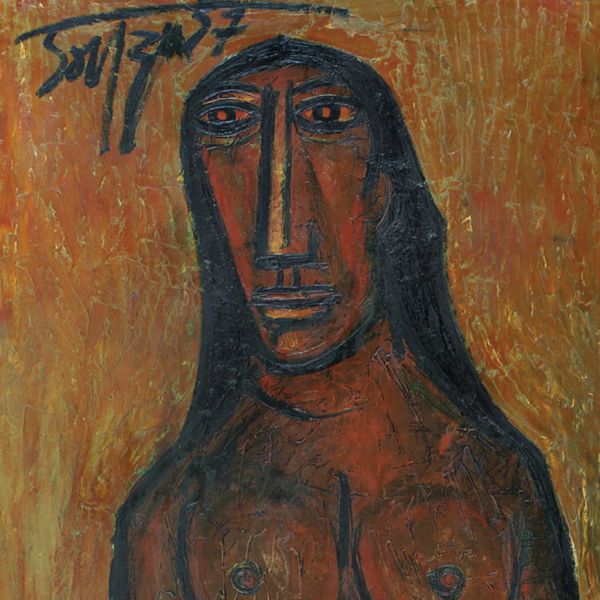 ExhibitionsThe Naked and the NudeAs low as $1.00
The nude. Just the term sends a frisson of excitement down the spine in most people. For the few of us who are part of the art fraternity, however, more than just the anticipation of being able to view the human body as an artistic work in its many forms and avatars, its beauty and its degradation both, is the true mark of an artist’s genius. And yet, the history of the nude in Indian art has remained curiously unmapped. A. A. Almelkar A. A. Raiba A. P. Bagchi A. Ramachandran Abalall Rahiman Akbar Padamsee Anita Roychowdhury Anupam Sud Avinash Chandra B. Prabha B.Vithal Bengal School (Anonymous) Bikash Bhattacharjee Chintamoni Kar Chittaprosad F. N. Souza G. R. Santosh George Keyt Gogi Saroj Pal Gopal Ghose Hemendranath Majumdar J. Sultan Ali Jamini Roy Jaya Ganguly Jehangir Sabavala Jeram Patel Jogen Chowdhury Jyoti Bhatt K. H. Ara K. K. Hebbar K. Laxma Goud K. S. Kulkarni L. Munuswamy Laxman Pai M. F. Husain M. R. Acharaker Madhav Bhattacharjee Maniklal Banerjee Nalini Malani Navjot Nikhil Biswas P. Khemraj P. T. Reddy Prodosh Das Gupta Prokash Karmakar R.Vijaivargiya Rabin Mondal Radha Charan Bagchi Rameshwar Broota Ramkinkar Baij Ranbir Kaleka Ravi Varma Press Rekha Rodwittiya S. Dhanapal Sakti Burman Satish Sinha Sudhir Khastgir Suhas Roy Sunil Das Sunil Madhav Sen Surendran Nair V. Nageshkar Ved Nayar
Learn More -
 ExhibitionsAmitava: The Complete WorksAs low as $1.00
In a career spanning four decades, Amitava’s location as an artist has determined the authority that he brings to his practice. As an artist studying and working in the 1960s, Amitava Das experienced a decade of fragmented locii. The ’60s, the period of his education at the College of Art, was the decade of wars, fiscal difficulty and an uncertain polity in the wake of the death of Jawaharlal Nehru. Further, as a second generation pravasi (non-residing Indian) Bengali, the roiling political violence of West Bengal’s Naxal movement came to him through the filter of poetry, film and art—much as he would have received the existential writing of Camus, Genet and Rilke. Through the 1960s and ’70s, small groups of artists and filmmakers in different pockets in India had a heightened response: the state of the nation found an uncanny echo in the language of modernism, of the artist’s isolation and purity even within a state of uncertainty.
Learn More -
 ExhibitionsHome is a PlaceAs low as $1.00
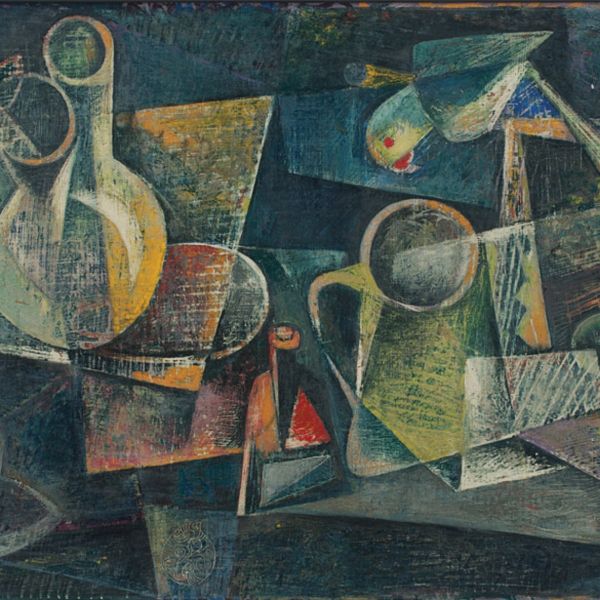
'Home is a Place’ explores the visual world of the home as a physical space having both an exterior and an interior—with all its magic, hope and memories—in villages and towns. Our homes are central to our existence and society, being the reason for shaping towns and countries, civilisations and histories. The exhibition covers the complexity of lives within the jurisdiction of the home—women at their toilettes, women painted alone gazing out of the window or gossiping in a group; figures working in their library, engaged in household work, or as parents bathing children; a family posing together or feuding over a game of cards, food or egos; and those fighting tyranny or painted as embracing lovers. Altaf Ambika Dhurandhar Amit Ambalal Anonymous Anonymous (Kalighat Pat) Anonymous (Waring & Gillow) Avinash Chandra Badri Narayan Bijan Choudhary Chakravorty Chittaprosad Dattatraya Apte Dhanraj Bhagat G. R. Santosh Ganesh Pyne Gogi Saroj Pal Gopal Ghose Haren Das Hemen Mazumdar Hiranmoy Indra Dugar Indu Rakshit Jagadish Dey Jagmohan Chopra Jamini Roy Jyoti Bhatt K. C. S. Paniker K. S. Kulkarni Kisory Roy M. A. R. Chughtai M. Bulkley M. F. Husain M. V. Dhurandhar Madhvi Parekh Maniklal Banerjee N. R. Sardesai Nandalal Bose Navjot Nemai Ghosh P. T. Reddy Partha Pratim Deb Piraji Sagara Prabhakar Barwe R. B. Bhaskaran Rabin Mondal Radha Charan Bagchi Ramendranath Rekha Rodwittiya Roychaudhuri S S. K. Bakre Sadequain Sakti Burman Sanat Kar Shanti Dave Shyamal Dutta Ray Somnath Hore Subba Ghosh V. A. Mali V. Nageshkar Ved Nayar Abani Sen Paritosh Sen Sunil Madhav Sen Sushil Chandra Sen Nataraj Sharma Shuvaprasanna Muni Singh Paramjeet Singh Paramjit Singh S. G. Thakar Singh Sobha Singh Satish Sinha F. N. Souza K. G. Subramanyan Anupam Sud L. N. Taskar Vasudha Thozhur
Learn More -
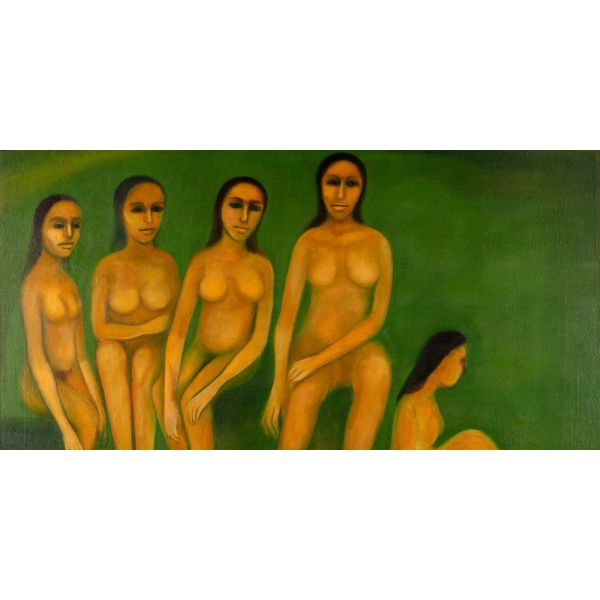 JournalSinging the Body Electric: A Conversation with Gogi Saroj Pal$0.00
Gogi Saroj Pal is one of India's most important artists working with the female body.
Learn More -
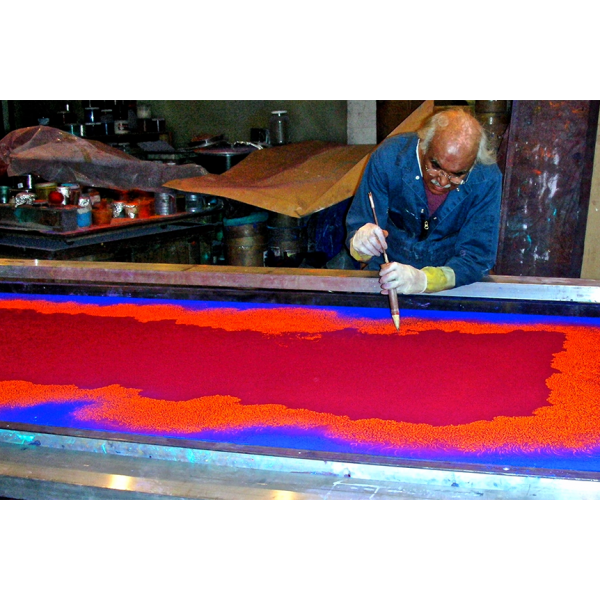 JournalNatvar Bhavsar: Cosmic Whispers$0.00‘Navtar Bhavsar: Cosmic Whispers’ opened on 1 March, featuring the art’s artworks which contributed to significantly to the discourse on abstractionism in New York and beyond. As part of the exhibition, Navtar Bhavsar speaks on working within the art scene in New York in the 1960s and his various points of reference rooted in Indian culture. Learn More
 -
 JournalManisha Parekh on Madhvi Parekh$0.00
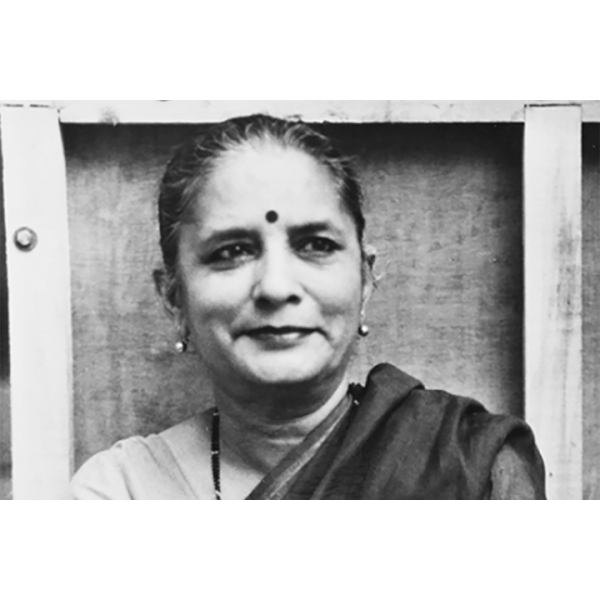
‘Iconic Masterpieces of Indian Modern Art, Edition 2’ opened on 11 February at DAG’s Janpath Gallery in New Delhi featuring fifty artworks which shaped the trajectory of pre-modern and modern art in the country. As part of the exhibition, Manisha Parekh recalls her memory of her mother Madhvi Parekh as an artist working within spaces of familial intimacy.
Learn More -
 JournalOn Collecting Textiles with Uthra Rajgopal$0.00
Are the histories of art and fashion distinct from each other? Even a cursory glimpse at the contemporary art landscape—on view during occasions such as the India Art Fair, 2023—tells us otherwise. Fabrics, textiles and weaving practices are being increasingly incorporated into the body of works produced by artists today. They bring with them a host of connotations, historical narratives and sensorial memories that working with other media does not. Uthra Rajgopal, a curator and collection adviser for museums, spoke with DAG briefly on the practice of collecting textiles for museums, their historical significance as artworks as well as trading commodities from South Asia, and how contemporary artists are responding to this complex colonial legacy through their own interventions.
Learn More