


Search results for: 'Secret Story theme'
-
 ExhibitionsMarch to FreedomAs low as $1.00March to Freedom re-interprets the well-known story of the Indian freedom struggle and anticolonial movement through works of art and some historic artefacts. Drawn from the collections of DAG, they range from eighteenth and nineteenth century European paintings and prints, to lesser known works by Indian artists that merit greater recognition, alongside some iconic pieces. Rather than following the usual chronological path, the story is structured around eight themes. Each represents one arena, or stage, on which the anti-colonial struggle took place, to expand the story beyond politics, politicians, and battles (which also feature). Conceived to commemorate and celebrate the 75th anniversary of India’s independence, this visual journey seeks to do more. A. A. Raiba Asit Kumar Haldar Alfred Crowdy Lovett Atul Bose Baburao Sadwelkar Bijan Chowdhury Biren De C. Stanfield Charles D’Oyly Charles Shepherd Charles Walter D’Oyly Chintamoni Kar Chittaprosad Dattatraya Apte David Gould Green Devayani Krishna D. Newsome Edward Orme Gobardhan Ash Gopal Ghose G. Tait Haren Das Hemanta Misra Henri Cartier-Bresson Henry Martens Henry Salt Henry Singleton Jacob Epstein James Hunter James Fraser John Gantz John Jabez Edwin Mayall K. K. Hebbar Kanwal Krishna K. C. S. Paniker K. G. Subramanyan K. Sreenivasulu K. S. Kulkarni Laxman Pai M. Eyre Proudman M. K. Parandekar M. S. Morgan Nemai Ghosh N. R. Sardesai Prahlad Anant Dhond Paritosh Sen Prokash Karmakar P. T. Reddy Radha Charan Bagchi Robert Dodd R. Vijay Satish Gujral Satish Sinha S. Dhanapal Stella Brown Sudhir Khastgir Sushil Chandra Sen Sunil Das Sunil Madhav Sen Thomas Anbury Thomas Daniell Thomas Jones Barker V. A. Mali V. B. Pathare V. Veevers William Daniell William Hodges Anonymous Artists Learn More
 -
 JournalThe Story of Bengal Art - Part 3$0.00
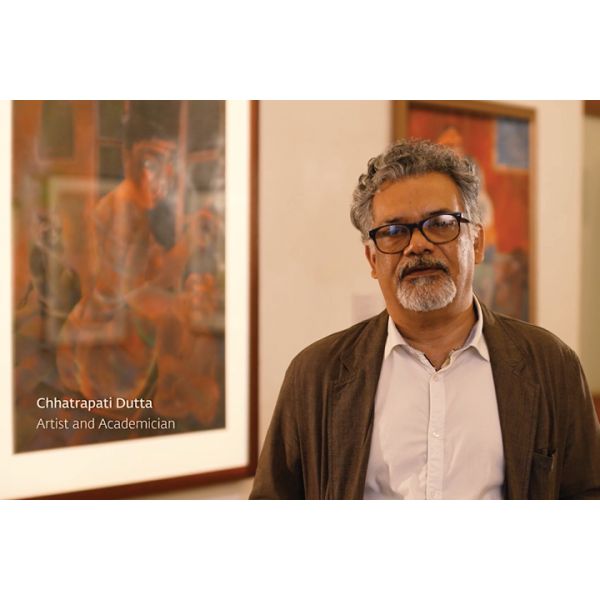
The Story of Bengal Art presents a panoramic view of the evolution of visual arts in the region. The final episode, presented by artist and academician, Prof. Chhatrapati Dutta, speaks of the fractious modernism that marks Bengal art in the mid and late 20th century. The series was shot in the majestic galleries of DAG's Ghare Baire museum-exhibition at Kolkata's Currency Building.
Learn More -
 JournalThe Story of Bengal Art - Part 2$0.00
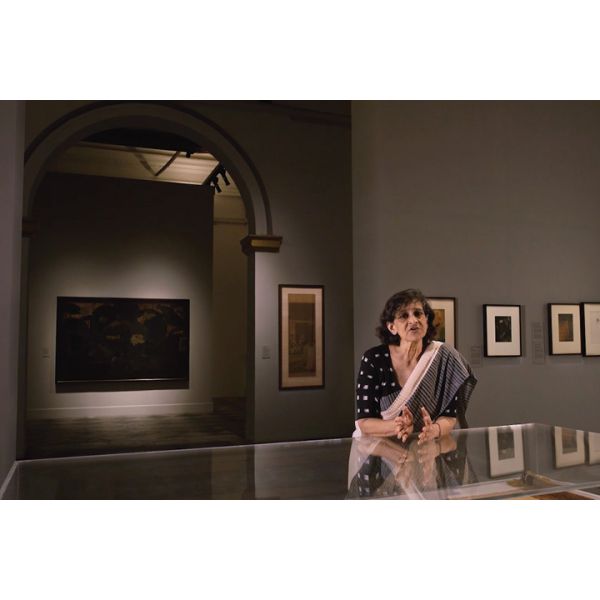
The Story of Bengal Art presents a panoramic view of the evolution of visual arts in the region. The second episode, presented by Prof. Tapati Guha-Thakurta, picks up at the turn of the 20th century, when Bengal became an important nerve-centre of India's nationalist movement. The series was shot in the majestic galleries of DAG's Ghare Baire museum-exhibition at Kolkata's Currecy Building.
Learn More -
 Institutional CollaborationsMARCH TO FREEDOM: REFLECTIONS ON INDIA'S INDEPENDENCE$1.00
March to Freedom re-interprets the well-known story of the Indian freedom struggle and anticolonial movement through works of art and some historic artefacts. Drawn from the collections of DAG, they range from eighteenth and nineteenth century European paintings and prints, to lesser known works by Indian artists that merit greater recognition, alongside some iconic pieces. Rather than following the usual chronological path, the story is structured around eight themes. Each represents one arena, or stage, on which the anti-colonial struggle took place, to expand the story beyond politics, politicians, and battles (which also feature). Conceived to commemorate and celebrate the 75th anniversary of India’s independence, this visual journey seeks to do more. For even as we remember the struggles, the sacrifices, and the stories, such anniversaries are also occasions for reflection, including upon the scholarship that has developed on South Asian history. Some of the latter may be familiar to academics, or those with special interests. For most of the rest of us, our knowledge of this past is derived in large part from hazy memories of school lessons, which change from one generation to the next, and are influenced by concurrent national politics. We also learn from narratives on offer through public channels or in the media, to mark moments of national remembrance or controversy.
Learn More -
 Events and ProgrammesAn Origin Story$1.00
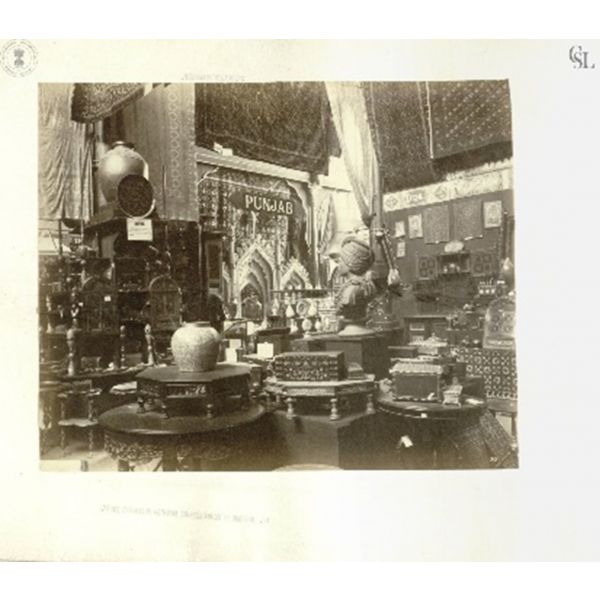
Join Tapati Guha-Thakurta for a museum visit and presentation as we explore the beginnings of the colonial traditions of art and design in India through the twin histories of the Indian Museum and the Government College of Art and Craft.
Learn More -
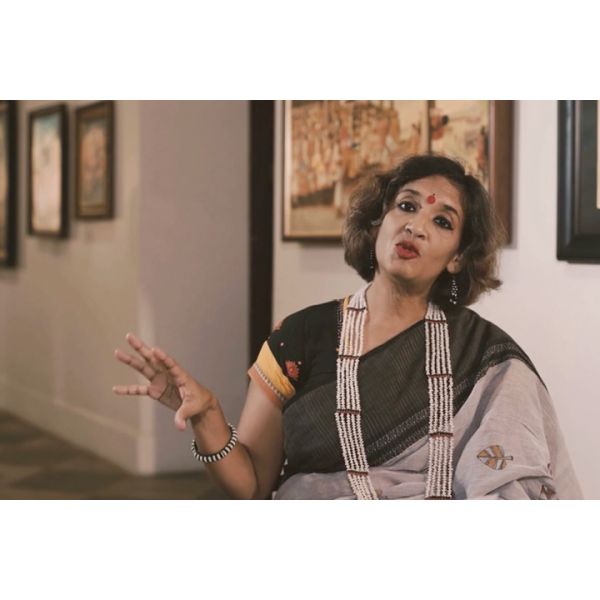 JournalThe Story of Bengal Art - Part 1$0.00The Story of Bengal Art presents a panoramic view of the evolution of visual arts in the region. The story of the first episode, presented by artist, academic, and curator, Dr. Paula Sengupta, begins in the late 18th century with the arrival of the first European traveling artists. The series was shot in the majestic galleries of DAG's Ghare Baire museum-exhibition at Kolkata's Currency Building. Learn More
 -
 ExhibitionsIndian DivineAs low as $1.00
The exhibition, Indian Divine, begins with the late nineteenth century art on mythological and religious themes from regions as diverse as Bombay and Bengal—these include Western style oil paintings of deities by such well-known artists of the academic realist styles as Raja Ravi Varma and M. V. Dhurandhar, and mythological/ religious episodes and figures featured in the hybrid style, a mix of Western realistic painting and traditional Indian art and concerns—the Early Bengal style, a very popular form, of which the exhibition presents over fifty works. It goes on to document Kalighat paintings on religious and mythological themes from the late nineteenth and early twentieth centuries that were very popular, as well popular bazaar prints on these themes that flooded the markets with the advent of lithography and mechanical printing. 19th-20th century Popular Print Art School Print A. A. Almelkar A. A. Raiba A. P. Bagchi Asit Haldar B. C. Law B. N. Jija Baburao Painter Bat-tala Print (Anonymous) Bikash Bhattacharjee Bipin Behari Goswami Bishnupada Roychowdhury Chittaprosad D. B. Onkar D. D. Burman D. N. Sharma Debabrata Chakraborty Devyani Krishna Dhanraj Bhagat Dhirendra Narayan Dhruva Mistry Dipen Bose Early Bengal Early Bengal (Anonymous) F. N. Souza G. R. Santosh Ganesh Pyne Gogi Saroj Pal Haren Das Heramba Kumar Ganguly Indu Rakshit J. Sultan Ali Jamini Roy K. C. Pyne K. K. Hebbar K. Laxma Goud K. S. Kulkarni Kalighat pat (Anonymous) Kalipada Ghoshal Kamal Chattopadhyay Kanwal Krishna Krishen Khanna Kshitindranath Majumdar Laxman Pai M. F. Husain M. V. Dhurandhar Madhvi Parekh Mukul Dey Nandalal Bose Nihar Ranjan Sengupta P. T. Reddy P. V. Janakiram R. Vijaivargiya Rabin Mondal Radha Charan Bagchi Raja Ravi Varma Ramananda Bandhopadhyay Ramendranath Chakravorty Ranada Charan Ukil Ravi Varma School (Anonymous) Reddappa Naidu Roopkrishna S. Dhanapal S. G. Vasudev Sanat Chatterjee Sanjay Bhattacharya Sarada Charan Ukil Shyamal Dutta Ray Sohan Qadri Sudhanshu Ghosh Sudhir Ranjan Khastagir Sunil Das Sunil Madhav Sen Surendranath Ganguly V. Nageshkar
Learn More -
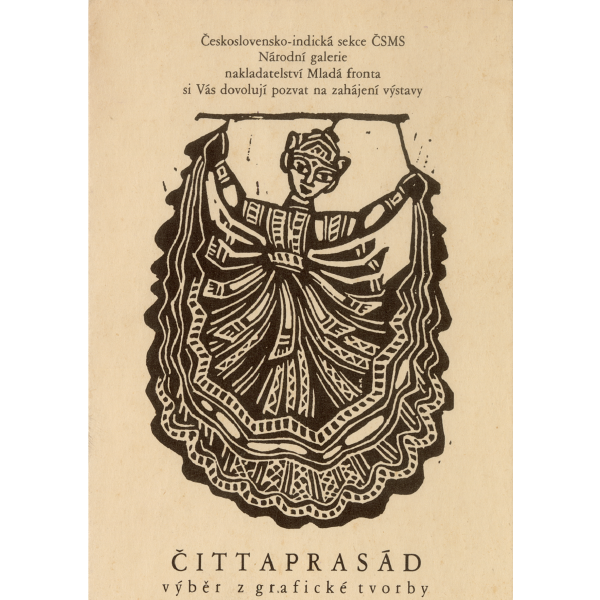 Collection StoriesAfter the Storm: Chittaprosad’s late oeuvre$0.00
Chittaprosad Bhattacharya (1913-1978) was a versatile artist and a lifelong adherent of the socialistic worldview. In 1943, he traveled across the famine-stricken villages of Bengal and produced realistic sketches of human suffering that were regularly published in the pages of the Communist Party journal 'People’s war'. These sketches were later compiled and published as a booklet under the title 'Hungry Bengal'. Fascinated by his artistic skills, the General Secretary of Communist Party of India, Puran Chand Joshi took Chittaprosad to the Party’s headquarters in Bombay (now Mumbai).
Learn More -
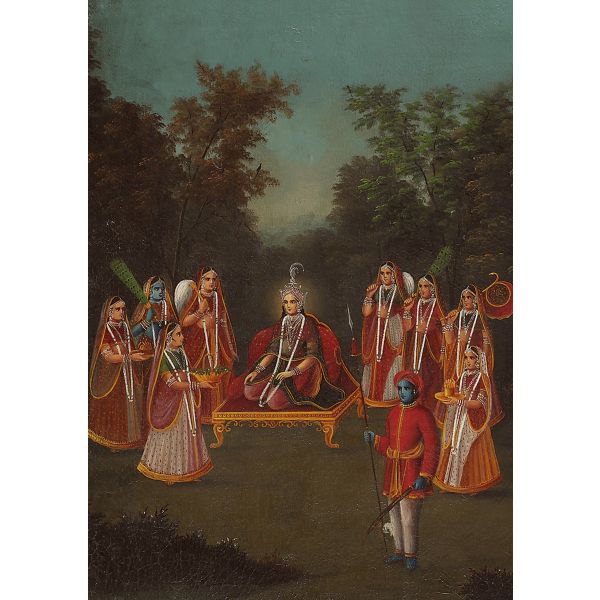 Collection StoriesUNTITLED (RADHA AS QUEEN)$1.00
Radha is painted as a queen in this Early Bengal oil painting, surrounded by her fellow Gopis (cowherds and companions) and Krishna—her divine consort and an incarnation of one of the Hindu trinity—dressed as a sentinel. She sits on her royal throne amid a forest landscape, perhaps recalling her identification as Vrindavaneshwari (goddess of Vrindavan). Going by the small but remarkable details of the jewellery, we can guess that it is the work of an artist trained in the miniature tradition. But does the painting hide other possible secrets?
Learn More -
 JournalThe French Connection: S. H. Raza at Paris' Centre Pompidou$0.00
In February, Paris' Centre Pompidou--a premier centre for modern art since its construction in 1977--mounted an extensive solo show looking back at S. H. Raza’s career in painting. It represents a historic moment for Indian modern art’s international story as it unfolded over the twentieth century, and also marked Raza's own symbolic return to the place where he stayed for most of his working life. The fertile post-independent period saw cross-cultural connections being forged by Indian artists in Europe and America on their own terms and this show is a testament to Raza’s evolving encounters with land and mythology. The curators, Catherine David and Diane Toubert, spoke to DAG highlighting some of the takeaways from this major retrospective.
Learn More -
 Collection OnlineTHE WASH TECHNIQUE$1.00
The wash technique has come to be associated in India with the art of the Bengal School, but the story of its origins in India takes us back to an era of rich cultural exchanges. In the early twentieth century artists like Abanindranath Tagore were trying to imagine a pan-Asian cultural identity, and they turned for inspiration to traditions from across Persia to Japan. Rabindranath Tagore's friendship with Okakura Kakuzō occasioned the arrival of several Japanese artists in Kolkata, such as Yokoyama Taikan, Hishida Shunsō and Katsuta Shōkin. While the latter found inspiration in the Hindu epics, artists in Bengal adapted techniques that were used by the Japanese, such as the wash technique or the subtle use of ink and brush. Since then, the wash technique has been interpreted widely by individual artists, offering an ethereal quality of light to their works, or, in some cases, like for Gaganendranath Tagore and Prosanto Roy, new possibilities of painting in various shades of darkness.
Learn More -
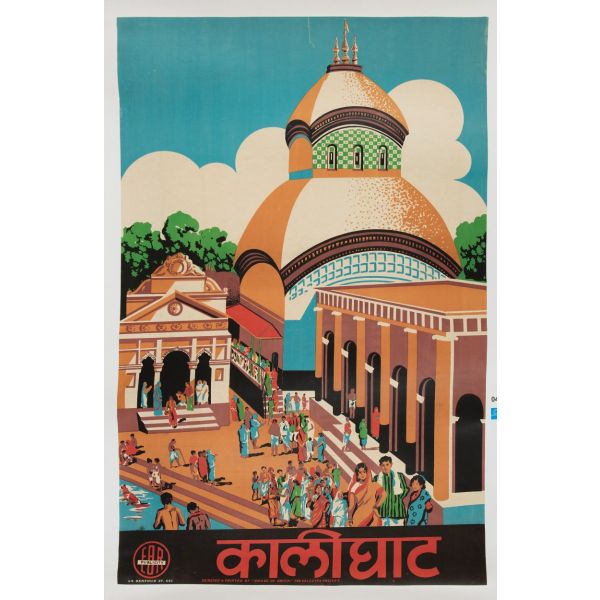 Events and ProgrammesMosaic Metropolis$1.00
A hop-in hop-off trail through the Calcutta underground metro rail, exploring the story of the murals that adorn the metro stations and enliven the everyday commute of millions of people.
Learn More