Search results for: 'Bride s Jo'
-
 ArtistsM. S. Joshi$0.00Born in Nashik, Maharashtra, M. S. Joshi studied at Sir J. J. School of Art, Bombay, in the 1930s. Joshi combined his training in academic realism with a sense of vitality, precision and aesthetics to reveal India’s rich cityscapes and landscapes in his watercolour and gouache works. There was immense depth in the rendering of his subjects, which included people, places, architectural elements, all done in a subdued yet textured palette. Learn More
 -
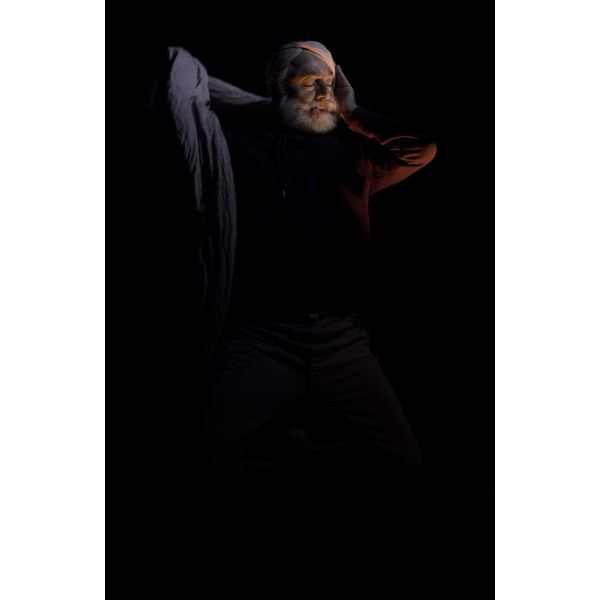 Events and ProgrammesTanashah: A Performance by Navtej Johar$1.00
A groundbreaking solo performance by Navtej Johar based on the jail diaries of Bhagat Singh, the drama explores a lesser-known side of the anguished young revolutionary during the last days of his life.
Learn More -
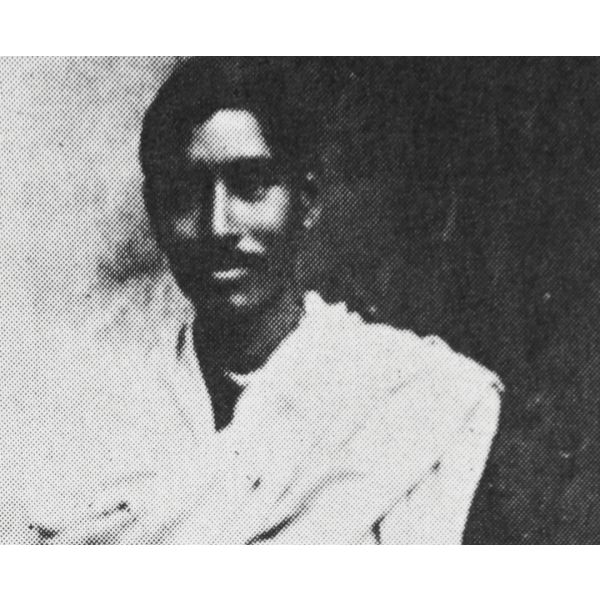 ArtistsJogesh Chandra Seal$0.00Jogesh Chandra Seal was an active member of the enthusiastic art scene of Calcutta in the early decades of the twentieth century. However, due to his short life of thirty-one years, he could not leave behind a comprehensive body of work. His academic oil paintings, Untitled (Disappointed), 1919, and Lady Lighting a Diya, 1921, have recently appeared at international auctions, bringing spotlight on this accomplished artist who was closely associated with the values of the Bengal School of painting. Learn More
 -
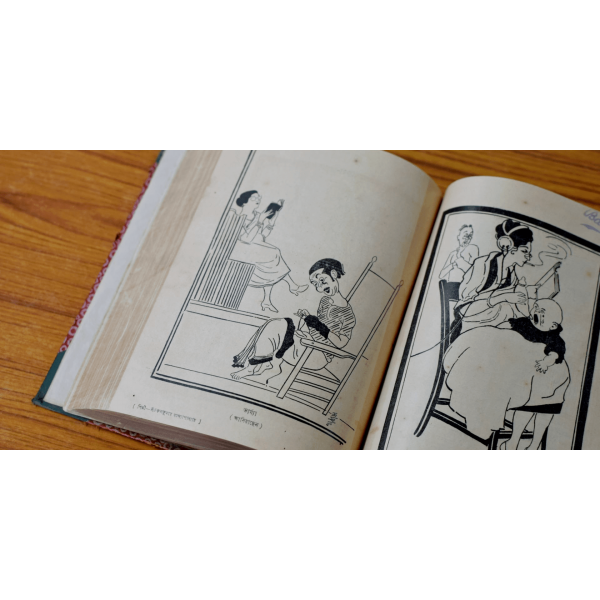 JournalThe Journal Goes Live$0.00
On the thirtieth year of DAG’s presence in the Indian art landscape, we are especially delighted to share with our readers the first issue of our Journal. DAG has upheld a high quality of research through exhibitions and publications that have shaped how people understand Indian modern art. Through this journal, we want to keep those discussions going and point towards newer ways to approach the period of modernism—joining the dots that lead those significant artistic breakthroughs into the contemporary. We also want to create a space where readers can gain privileged access into the people and organizations who works around the clock to keep the art world ticking.
Learn More -
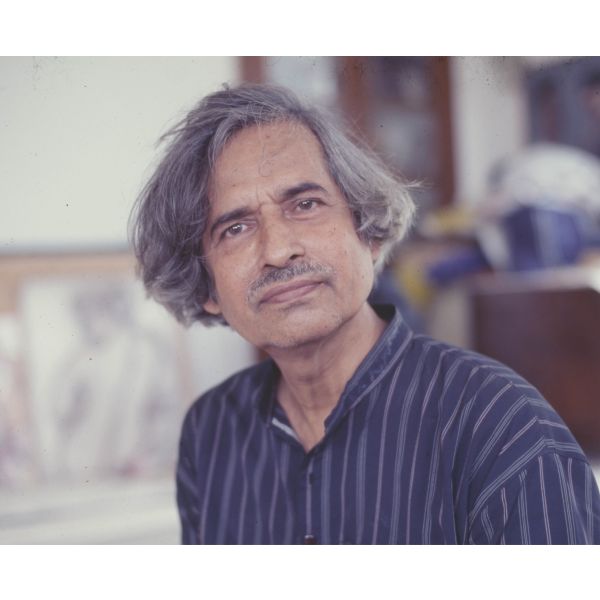 ArtistsJogen Chowdhury$0.00Born on 15 February 1939 in Faridpur (now in Bangladesh), Jogen Chowdhury’s family moved to Calcutta following the Partition. He studied art at the Government College of Art and Crafts, Calcutta, and subsequently at École Nationale Supérieure des Beaux-Arts, Paris. Learn More
 -
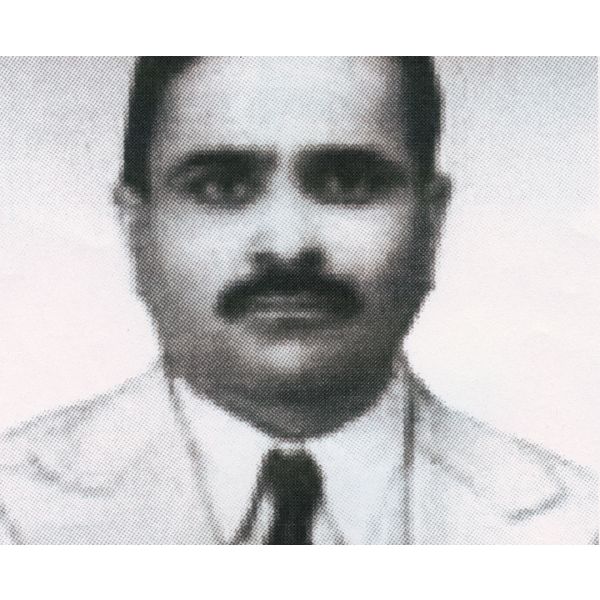 ArtistsD. C. Joglekar$0.00Exemplifying the art of the now-forgotten Bombay School, which was based on realism, or naturalism, as taught by the British, D. C. Joglekar was one of the finest artists who captured India’s panoramic landscapes along with her glorious architectural wonders, including temples, monuments, and archaeological sites. Learn More
 -
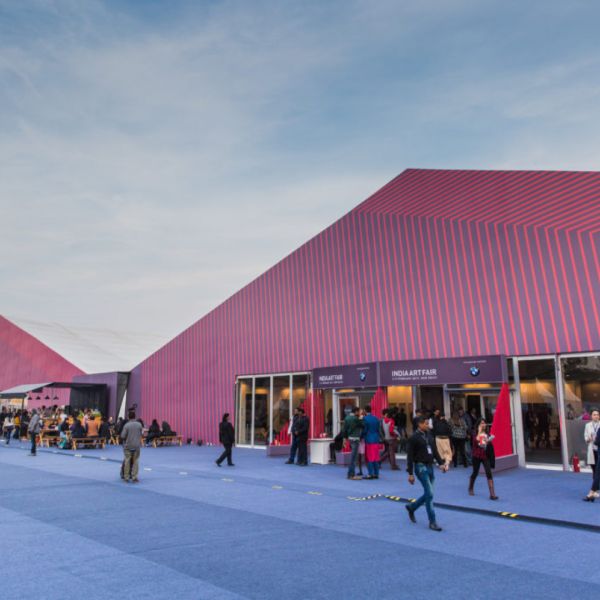 Art FairsIndia Art Fair$0.00
The 2015 edition of the India Art fair saw DAG securing a lavish booth across two different spaces spread over 11,000 sq. ft. Likened to a museum (albeit a temporary one), the gallery presented a show of close to one thousand artworks that consisted of both paintings and sculptures. The thematically curated exhibition consisted of nine categories: pre-modern art, the Bengal school, academic realism, the Bombay Progressive artists, high modernism, the Baroda School and Group 1890, the Cholamandal artists, tantra and sculptures. This categorically-placed collection successfully attempted to showcase the dynamic range of Indian art over two hundred years. A special sculpture gallery was set up in a covered courtyard and featured the largest sculpture in India—by K. S. Radhakrishnan. Pre-Moderns Early Bengal Kalighat Pat Company School Popular Prints Birth of Modernism M. R. Achrekar Almelkar Radha Charan Bagchi Richard Barron Pestonji E. Bomanji Atul Bose Sakti Burman William Carpenter Jogen Chowdhury Devraj Dakoji Thomas Daniell John Deschamps M. V. Dhurandhar Indra Dugar J. P. Gangooly Olinto Ghilardi S. L. Haldankar K. K. Hebbar Benjamin Hudson D. C. Joglekar Prahlad C. Karmakar J. A. Lalkaka B. C. Law Hemendranath Mazumdar M. Mali H. Muller Ramaswamy Naidu M. K. Parandekar William Parker Prema Pathare V. B. Pathare M. F. Pithawalla Portraiture (Anonymous) Thomas Prinsep Abalall Rahiman ‘Ravi Varma School’ Kisory Roy Baburao Sadwelkar N. R. Sardesai Bireswar Sen Lalit Mohan Sen Sushil Chandra Sen S. G. Thakar Singh Satish Chandra Sinha L. N. Taskar Raja Ravi Varma Revivalism and Beyond Radha Charan Bagchi Bengal School (Anonymous) Nandalal Bose Ramendranath Chakravorty M. A. R. Chughtai Haren Das Sunayini Devi 438 Mukul Dey Surendranath Ganguly Asit Kumar Haldar Chintamoni Kar Kshitindranath Majumdar Indu Rakshit Prosanto Roy Bisnhupada Roychowdhury D. P. Roy Chowdhury Abanindranath Tagore Sarada Charan Ukil Ramgopal Vijaivargiya Jamini Roy Santiniketan: A New Expressionism Ramkinkar Baij Nandalal Bose Benode Behari Mukherjee The Bengal Famine in Art Gobardhan Ash Ramkinkar Baij Chittaprosad Somnath Hore Bengal Modernist Calcutta Group Gopal Ghose Hemanta Misra Prankrishna Pal Paritosh Sen Sunil Madhav Sen Calcutta Painters Nikhil Biswas Bijan Chowdhury Jogen Chowdhury Prokash Karmakar Rabin Mondal Society of Contemporary Artists Bikash Bhattacharjee Sunil Das Shyamal Dutta Ray Ganesh Haloi Ganesh Pyne Lalu Prasad Shaw Lone Stars: Other Bengal Modernists Amalnath Chakladhar Partha Pratim Deb Nemai Ghosh Somnath Hore Sudhir Ranjan Khastgir Sailoz Mookherjea Gaganendranath Tagore Rabindranath Tagore Rise of Modernsim K. H. Ara S. K. Bakre Bal Chhabda H. A. Gade V. S. Gaitonde M. F. Husain Krishen Khanna Ram Kumar Tyeb Mehta Akbar Padamsee S. H. Raza Mohan Samant F. N. Souza A Modern Vernacular Baroda School N. S. Bendre Devraj Dakoji Shanti Dave Bhupen Khakhar Dhruva Mistry Haku Shah Nilima Sheikh K. G. Subramanyan Vivan Sundaram Group 1890 Ambadas Jyoti Bhatt Eric Bowen Jeram Patel Raghav Kaneria Himmat Shah Gulammohammed Sheikh J. Swaminathan Alternate Sensibilities Discourses in Feminism Arpana Caur Nalini Malani Navjot Gogi Saroj Pal Anupam Sud A Language of Minimalism Zarina Hashmi Nasreen Mohammedi The Topsy Turvy World of Magic Realism Amit Ambalal Sakti Burman Dharamnarayan Dasgupta Ranbir Singh Kaleka Sanat Kar P. Khemraj Anjolie Ela Menon New Delhi Modernists Amitava Manjit Bawa Rameshwar Broota Shobha Broota Bimal Dasgupta Biren De Manu Parekh Ved Nayar Ramachandran G. R. Santosh Arpita Singh Silpi Chakra Group Dhanraj Bhagat Avinash Chandra Satish Gujral Bishamber Khanna Devayani Krishna Kanwal Krishna K. S. Kulkarni C. Sanya Mumbai Modernists Altaf Prabhakar Barwe Chittaprosad K. K. Hebbar George Keyt Gieve Patel Prabha Raiba V. Nageshkar Jehangir Sabavala Laxman Shreshtha Region and Identity Cholamandal Artists’ Village J. Sultan Ali Reddappa Naidu Akkitham Narayanan K. C. S. Paniker K. Ramanujam M. Senathipathi S. G. Vasudev V. Viswanadhan Modernists of the South K. M. Adimoolam R. B. Bhaskaran S. Dhanapal P. V. Janakiram L. Munuswamy P. Santhanraj Laxman Pai K. Laxma Goud Badri Narayan G. Ravinder Reddy Krishna Reddy P. T. Reddy S. Krishnaswamy Srinivasulu Thota Vaikuntam Sacred and Sensual Neo-Tantra as a Modern Conceit Jyoti Bhatt Sunil Das Biren De K. V. Haridasan Jeram Patel Sohan Qadri P. T. Reddy G. R. Santosh Erotic Art Ramkinkar Baij Sunil Das K. Laxma Goud M. F. Husain Ranbir Singh Kaleka Prokash Karmakar K. S. Kulkarni Laxman Pai P. T. Reddy G. R. Santosh F. N. Souza Modernism in Indian Sculpture Ramkinkar Baij S. K. Bakre P. Roy Chowdhury Jogen Chowdhury Sankho Chaudhuri Prodosh Das Gupta M. Davierwala Jacob Epstein Tarak Garai Bipin Behari Goswami Satish Gujral Asit Kumar Haldar Dhruva Mistry Mrinalini Mukherjee S. Nandagopal Navjot Nagji Patel K. S. Radhakrishnan S. H. Raza Jamini Roy Himmat Shah Prabhas Sen B. Vithal Other Sculptors
Learn More -
 ExhibitionsA Place In The Sun: Women Artists From 20th Century IndiaAs low as $1.00
Sunayani Devi picked up a paintbrush in 1905 when she was thirty years old while supervising her kitchen duties, self-taught, but with enough talent to attract the critical attention of Stella Kramrisch who organised an exhibition of her paintings in Germany in 1927. It was in her worthy footsteps that India’s women artists followed. Devayani Krishna was born five years after Sunayani Devi began painting; Amrita Sher-Gil already had a career in Paris by the time India’s first art school-trained woman artist, Ambika Dhurandhar, earned her diploma in Bombay. B. Prabha followed next, her work reflecting the realities of the marginalised in a piquant language. By the time Nasreen Mohamedi and Zarina Hashmi, both born a decade before Independence, established their careers, women were joining art schools in greater numbers, validating their practice not on the basis of their gender but on its context. Anupam Sud Devayani Krishna Gogi Saroj Pal Latika Katt Madhvi Parekh Mrinalini Mukherjee Navjot Rekha Rodwittiya Shobha Broota Zarina Hashmi
Learn More -
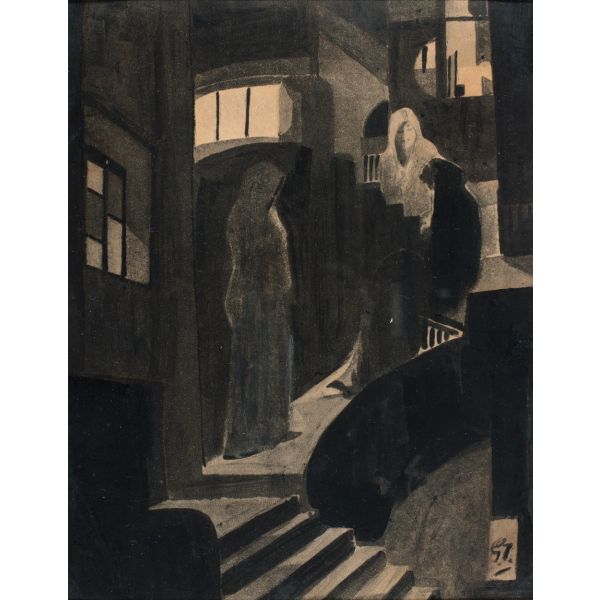 Events and ProgrammesMuseum as a Classroom: Jorasanko Thakurbari$1.00
A capacity building workshop for teachers on crafting museum-learning experiences for students at the historic house museum of the Tagore family. The workshop will focus on tools that can help make school visits to heritage sites more interactive and engaging.
Learn More