


Search results for: 'como borrar un digito en excel de derecha a izquierda'
-
 Events and ProgrammesGallery Teach-In$1.00
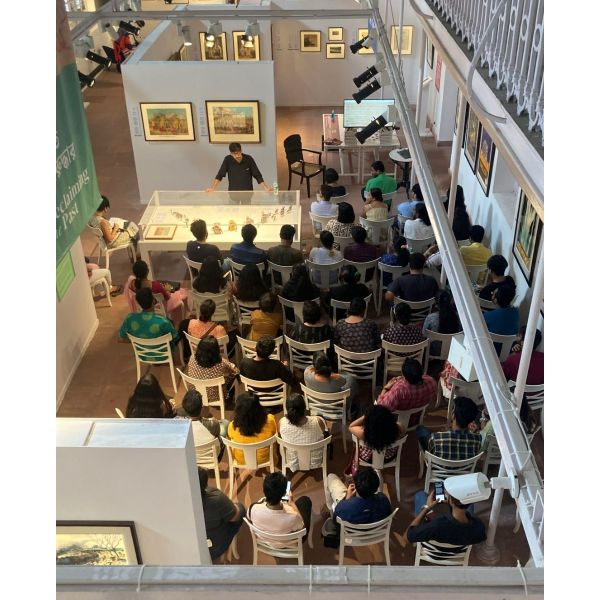
A unique academic engagement where professors from diverse disciplines bring their classrooms into the galleries, explore connections between their curriculum and the collection on view and experiment with new ways of teaching through art.
Learn More -
 JournalThe French Connection: S. H. Raza at Paris' Centre Pompidou$0.00
In February, Paris' Centre Pompidou--a premier centre for modern art since its construction in 1977--mounted an extensive solo show looking back at S. H. Raza’s career in painting. It represents a historic moment for Indian modern art’s international story as it unfolded over the twentieth century, and also marked Raza's own symbolic return to the place where he stayed for most of his working life. The fertile post-independent period saw cross-cultural connections being forged by Indian artists in Europe and America on their own terms and this show is a testament to Raza’s evolving encounters with land and mythology. The curators, Catherine David and Diane Toubert, spoke to DAG highlighting some of the takeaways from this major retrospective.
Learn More -
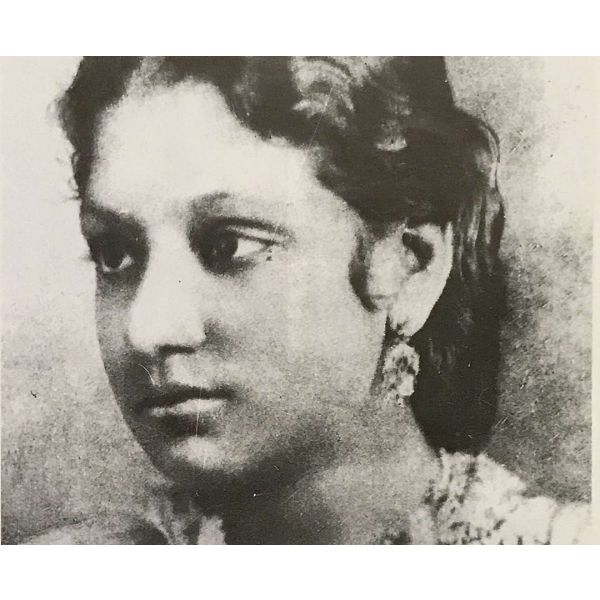 ArtistsSunayani Devi$0.00Sunayani Devi was born on 18 June 1875 in the Tagore family of talented writers and painters—Nobel-laureate Rabindranath Tagore was an uncle, and Gaganendranath and Abanindranath Tagore were her elder brothers. Essentially a self-taught artist, she witnessed the Bengal renaissance, but it was only in her thirties that she began to paint, encouraged by her husband, the grandson of reformist Raja Ram Mohun Roy. Learn More
 -
 ExhibitionsAmitava: The Complete WorksAs low as $1.00
In a career spanning four decades, Amitava’s location as an artist has determined the authority that he brings to his practice. As an artist studying and working in the 1960s, Amitava Das experienced a decade of fragmented locii. The ’60s, the period of his education at the College of Art, was the decade of wars, fiscal difficulty and an uncertain polity in the wake of the death of Jawaharlal Nehru. Further, as a second generation pravasi (non-residing Indian) Bengali, the roiling political violence of West Bengal’s Naxal movement came to him through the filter of poetry, film and art—much as he would have received the existential writing of Camus, Genet and Rilke. Through the 1960s and ’70s, small groups of artists and filmmakers in different pockets in India had a heightened response: the state of the nation found an uncanny echo in the language of modernism, of the artist’s isolation and purity even within a state of uncertainty.
Learn More -
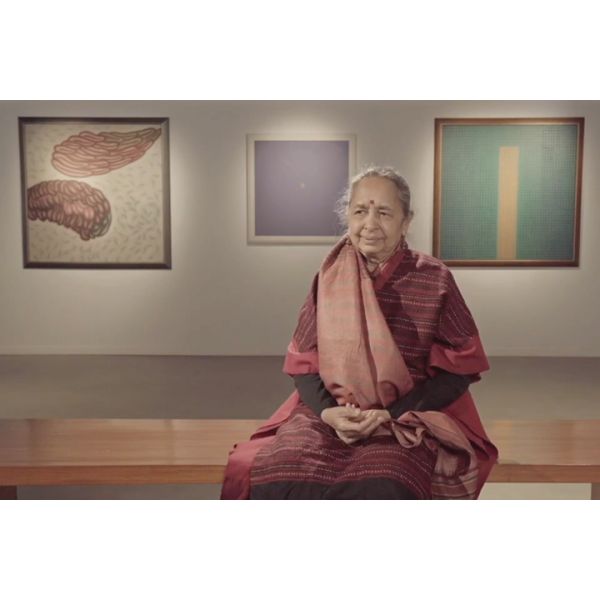 JournalArtists (Un)Scripted – Shobha Broota$0.00Shobha Broota is often described as among the most enigmatic artists of her generation. Her strength lies in ‘simplicity’, which she has used dexterously to explore the most complex of subjects in her art, making her a pioneer in choosing abstraction when very few women artists of India were doing so. Learn More
 -
 Institutional CollaborationsM. V. DHURANDHAR: A RETROSPECTIVE$1.00
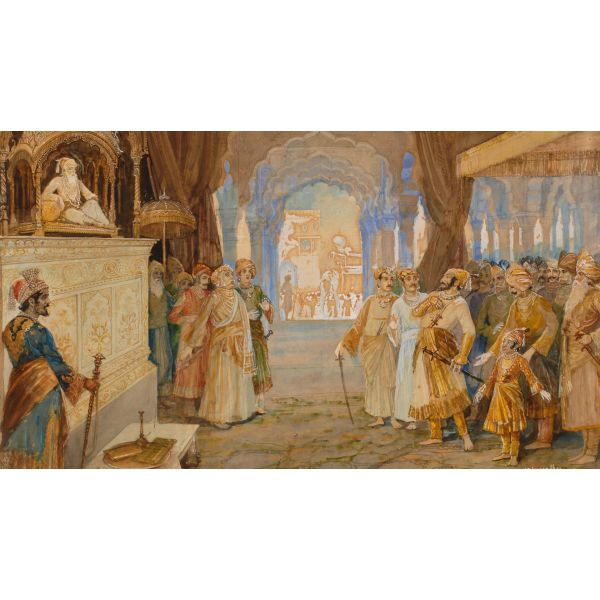
Few artists claim as rich and intriguing a legacy as M. V. Dhurandhar in the landscape of late 19th and early 20th century Indian art. His practice leaves us with challenging questions about encounters and exchanges with India's colonial past and the influence of Europeans in shaping the evolution of painting. This exhibition revisits Dhurandhar's vast oeuvre through DAG's extensive collection of his paintings, archival material and ephemera, in an attempt to understand the socio-cultural context of his emergence, and to re-examine his influence on institutional and commercial art in the country.
Learn More -
 ExhibitionsNavrasaAs low as $1.00
The pinwheel of emotions is the genesis of our current exhibition, 'Navrasa: The Nine Emotions of Art'. This unique treatise of emotions and moods has formed the foundation for the performing and visual arts in India. As we researched deeper to explore the dynamics it shares with Indian modern art, we found that all emotions are intrinsically linked with each other, that they trigger actions and reactions and are catalysts for change. 'Navrasa' explores Indian modernism and looks at the works of masters through the nine primary emotions, and breaks new ground in the visualisation of Indian art. Raiba A. H. Muller A. Ramachandran Altaf Amal Nath Chakladar Amit Ambalal Anonymous Anonymous (Bengal ‘School’) Anonymous (Early Bengal School) Anonymous (Early Bengal, Kalighat Style) Anonymous (Kalighat Pat Anupam Sud Arpana Caur Arun Bose Arup Das Asit Haldar B. N. Arya B. Prabha Badri Narayan Bijan Choudhury Bikash Bhattacharjee Bireswar Sen C. Douglas Chintamoni Kar Chittaprosad D. P. Roy Chowdhury Dattatraya Apte Dharamanarayan Dasgupta F. N. Souza G. Reghu Gogi Saroj Pal Gopal Ghose Gopal Sanyal Haren Das Indu Rakshit J. Sultan Ali Jagadish Dey Jai Zharotia Jamini Roy Jaya Ganguly Jogen Chowdhury Jyoti Bhatt K. C. S. Paniker K. G. Subramanyan K. H. Ara K. K. Hebbar K. S. Kulkarni Kanchan Chander Kartick Chandra Pyne Krishen Khanna Kshitindranath Mazumdar Laxman Pai M. F. Husain Madhvi Parekh Mukul Dey Navjot Nemai Ghosh Nikhil Biswas P. S. Chander Shekar P. T. Reddy Paritosh Sen Prodosh Das Gupta Prokash Karmakar Rabin Mondal Radhacharan Bagchi Raja Ravi Varma Rameshwar Broota Ranbir Singh Kaleka S. Dhanapal Sakti Burman Sanat Chatterjee Sanat Kar Satish Gujral Satish Sinha Shyamal Dutta Ray Somnath Hore Stefan Norblin Subba Ghosh Sudhir Khastgir Sukhvinder Singh Sunil Das Sunil Madhav Sen Thota Vaikuntam Tyeb Mehta V. Nageshkar
Learn More -
-
 ExhibitionsArt Exhibitions$0.00
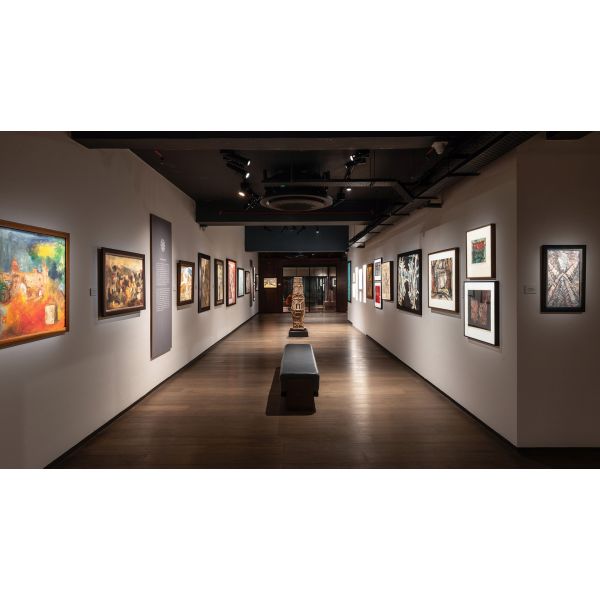
DAG has been a pioneer in curating exhibitions that have historical significance. These have ranged from themes around different genres and art movements to artist retrospectives as well as engagements with forgotten masters. Most exhibitions are sourced from its own inventory and in recent years DAG has begun to explore eighteenth and nineteenth century art and artists in addition to its presence as a stakeholder of twentieth century art. Exhibitions are routinely organised at its galleries in New Delhi, Mumbai, and New York, as well as in collaboration with museums and other institutions. All exhibitions are accompanied by well researched and designed books, adding considerably to the documentation of Indian art history.
Learn More -
 JournalThe Artist as Collector: At Home with Shuvaprasanna$0.00
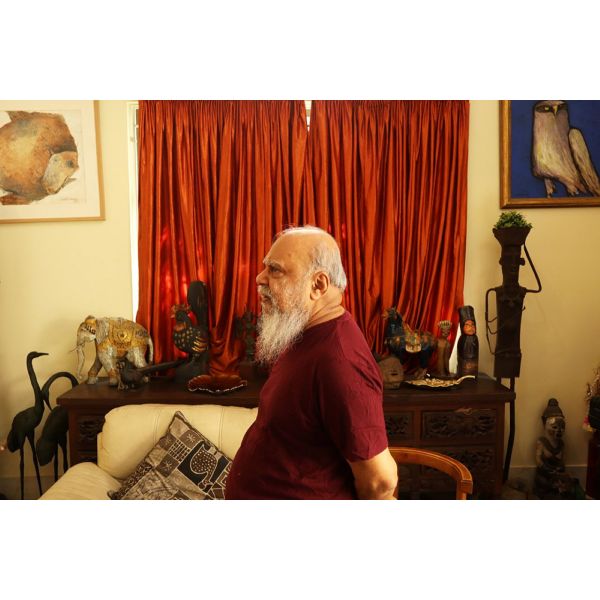
Artist and institution-builder Shuvaprasanna’s residence is located in a leafy corner of Kolkata’s suburban township, Bidhannagar or ‘Salt lake City’, which was envisaged by the former Chief Minister of West Bengal, Dr. Bidhan Chandra Roy in the late 1950s. Having grown up elsewhere—in College Street, in fact—the artist only moved here in 2002-03 with his family, which included his wife and fellow-artist, Shipra Bhattacharya. In this photo-essay we will learn about Shuvaprasanna’s personal collection and the relationship between his collecting practices and his art-making.
Learn More -
 JournalIn the Snows of Kashmir by G. R. Santosh$1.00
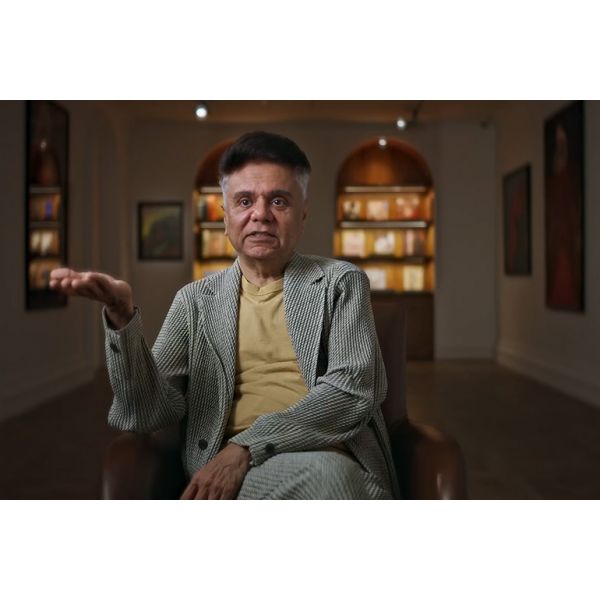
G. R. Santosh created a hugely accomplished career without formal training in art. His abstract paintings made in the early 1960s had Kashmir as his muse, and often used encaustic and beeswax—a process he learned from Shanti Dave. Architect and designer Pinakin Patel shares his views about In the Snows of Kashmir, Santosh’s masterful painting with textural relief in a monochrome palette.
Learn More -
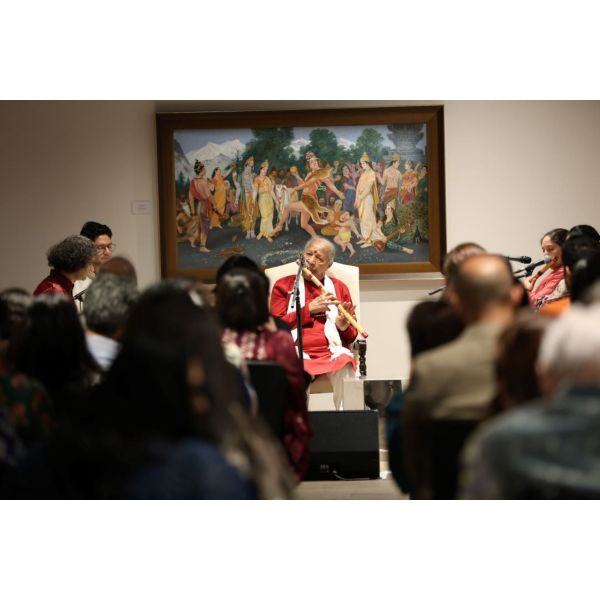 JournalAn Evening with Pandit Hariprasad Chaurasia$1.00
Guests joined DAG for an enchanting flute recital by internationally acclaimed Pandit Hariprasad Chaurasia and a curatorial walk-through of Delhi Durbar: Empire, Display and the Possession of History by historians and curators Rana Safvi and Swapna Liddle.
Learn More