Search results for: 'Amazing Long Legged Exotic Girl Having Sex with Her First Black Guy sex videos'
-
 JournalSketching a Temple: Nandalal Bose’s Konark album$0.00
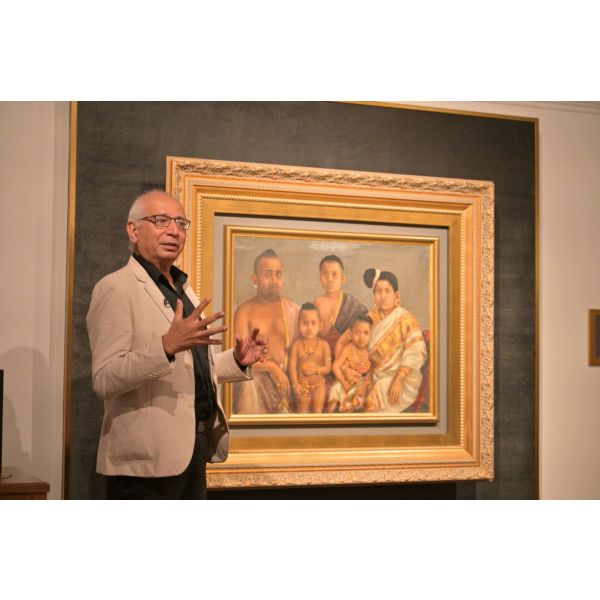
One of India’s nine national treasure artists, Nandalal Bose (1882—1966) forged a long and glittering career as the foremost artist-pedagogue bridging the late-colonial period and the first few decades after Indian independence. He maintained an active drawing practice throughout his life, with many small sketches done on postcards that he carried around with him as a sort of visual notebook.
Learn More -
 JournalUntitled by Nasreen Mohamedi$1.00
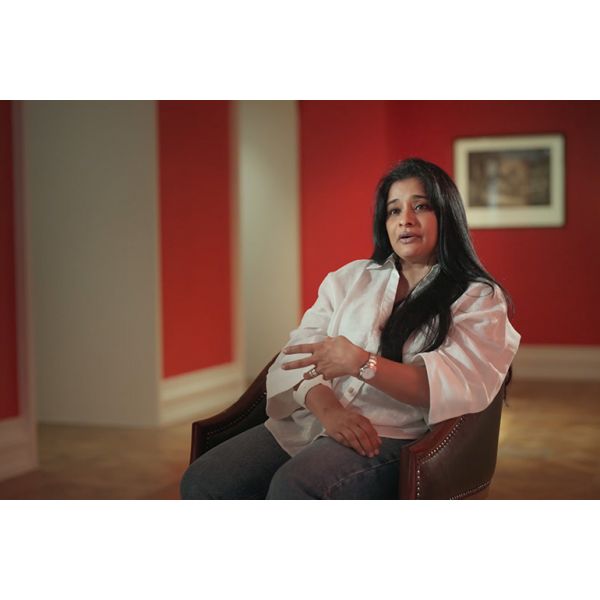
When the Met-Breuer opened in New York, its very first exhibition was a retrospective of Nasreen Mohamedi. Nasreen’s work is regarded as extremely important in the context of abstraction with delicate lines marking her compositions with a strength that is as remarkable as it is astounding, altering the way we see the world. The artist preferred drawing and sometimes photography, as a result her canvases are extremely rare to find. Sasha Altaf tells us more in this film about a canvas painted by her in Bahrain in 1969.
Learn More -
 ExhibitionsGogi Saroj Pal: The Feminine UnboundAs low as $1.00
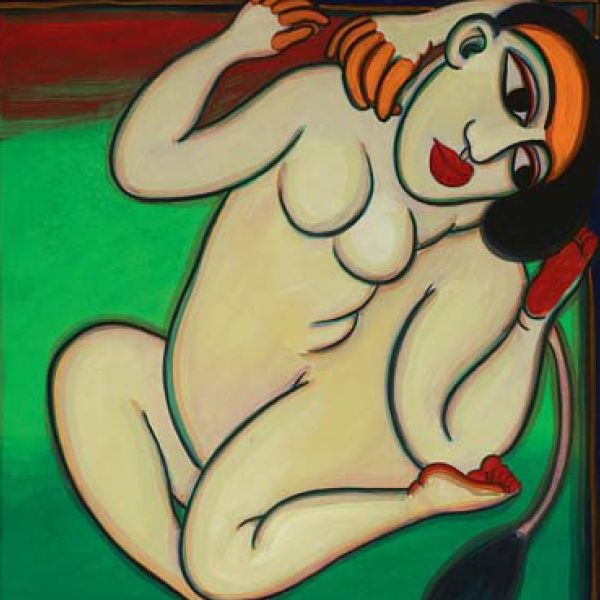
Gogi Saroj Pal, seen often as one of the first ‘feminist’ women painters in modern Indian art, has consistently explored the condition and inner life of women. Women’s lives, their desires and compulsions, and the complex and magical world of the feminine have been Gogi’s frequent subjects. In her work, Gogi explores and responds to the vast reserve of myths, fables and lore that abound in India, interested in excavating, in particular, its religious and literary traditions. She traces and frequently creates new mythical/celestial female beings of great strength and potency, such as the Hathyogini-Kali—skilled yoga practitioner and potent female force—who assert themselves in a modern landscape where women are frequently denied agency.
Learn More -
 ExhibitionsNew Found LandsAs low as $1.00
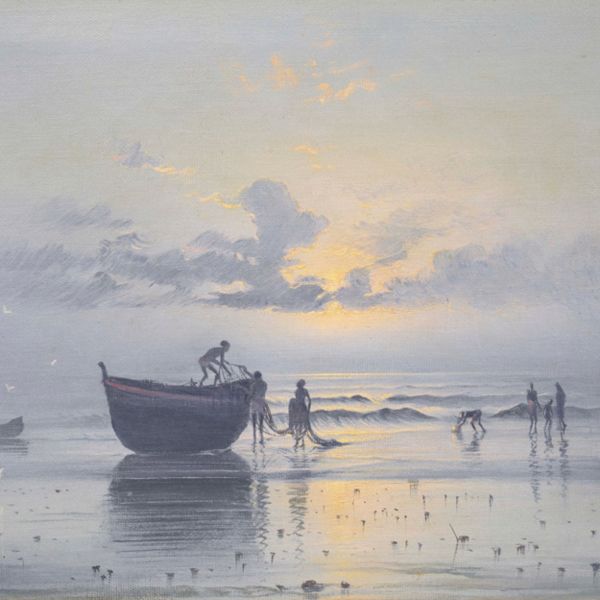
We might think of landscape as the most obvious and natural subject for painting. What could be simpler than an artistic response to the world of nature? And yet, civilisations have not always produced landscape paintings. Landscape as an independent genre—with the primary focus not on action but on scenery—was first championed by the Chinese in the ninth century. It was introduced into English art only in the eighteenth century. Elements of nature have appeared in Indian art since the murals of Ajanta, but in supporting roles, in images that are primarily sacred or courtly. Pure landscape painting arose in India only in the nineteenth century, in response to colonial practice. A A ALMELKAR AVINASH CHANDRA BABURAO SADWELKAR BHUNATH MUKERJEE BIJAN CHOUDHARY BIRESWAR SEN CHITTAPROSAD DEVRAJ DAKOJI DEVYANI KRISHNA DHARAMANARAYAN DASGUPTA GANESH HALOI GOBARDHAN ASH HAREN DAS K. K. HEBBAR KANWAL KRISHNA KISORY ROY M. K. PARANDEKAR M. V. DHURANDHAR MANISHI DEY MUKUL DEY New Found Lands NIKHIL BISWAS PESTONJI E BOMANJI PRAN KISHAN PAUL RABIN MONDAL RAMENDRANATH CHAKRAVORTY RAMKINKAR BAIJ SAKTI BURMAN SUNIL DAS THOMAS DANIELL WILLIAM HODGES WILLIAM PARKER
Learn More -
 JournalThe Artist as Collector: At Home with Shuvaprasanna$0.00
Artist and institution-builder Shuvaprasanna’s residence is located in a leafy corner of Kolkata’s suburban township, Bidhannagar or ‘Salt lake City’, which was envisaged by the former Chief Minister of West Bengal, Dr. Bidhan Chandra Roy in the late 1950s. Having grown up elsewhere—in College Street, in fact—the artist only moved here in 2002-03 with his family, which included his wife and fellow-artist, Shipra Bhattacharya. In this photo-essay we will learn about Shuvaprasanna’s personal collection and the relationship between his collecting practices and his art-making.
Learn More -
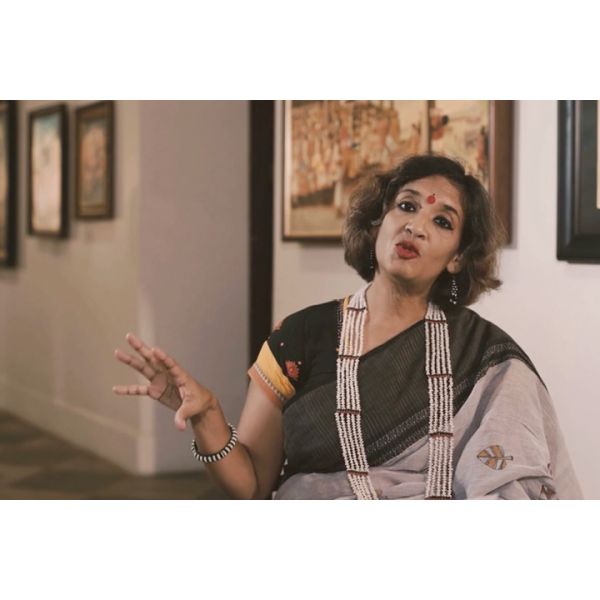 JournalThe Story of Bengal Art - Part 1$0.00The Story of Bengal Art presents a panoramic view of the evolution of visual arts in the region. The story of the first episode, presented by artist, academic, and curator, Dr. Paula Sengupta, begins in the late 18th century with the arrival of the first European traveling artists. The series was shot in the majestic galleries of DAG's Ghare Baire museum-exhibition at Kolkata's Currency Building. Learn More
 -
 ExhibitionsThe Art Of SantiniketanAs low as $1.00
The Art of Santiniketan showcases the work of its four chief artists—Santiniketan’s founder, Rabindranath Tagore, its first principal and the architect of the Santiniketan pedagogy, Nandalal Bose, and his two illustrious students who went on to make a name for themselves as highly original and significant artists—Benode Behari Mukherjee and Ramkinkar Baij. Santiniketan was a path-breaking educational institution Rabindranath Tagore set up in rural Bengal in the early twentieth century, and the exhibition begins by examining its genesis in Tagore’s radical ideas of basing education in freedom and in the midst of nature. Benode Behari Mukherjee Nandalal Bose Rabindranath Tagore Ramkinkar Baij
Learn More -
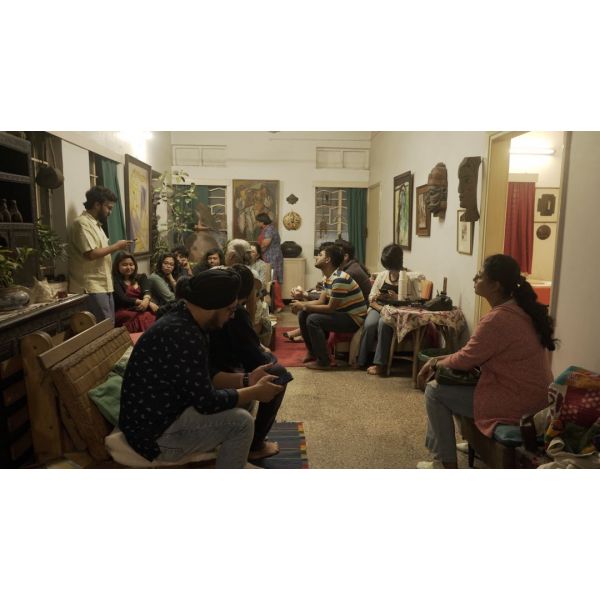 Events and ProgrammesA World Within a Home$1.00
An intimate evening at the home of the artist Shanu Lahiri, featuring stories about the family collection and archive told by a family member, and looking at the close-knit world of Calcutta’s creative community post-independence.
Learn More -
-
 ExhibitionsLiving Traditions & The Art of Jamini RoyAs low as $1.00
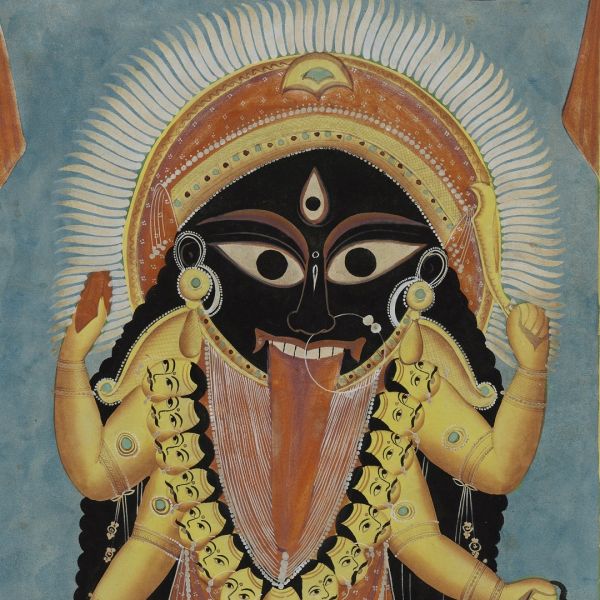
Jamini Roy’s was an art of quiet resistance that assimilated so seamlessly into the folk and craft traditions of Bengal that it did not cause any discernible ripples among the prevalent artistic mood. All around him, art was being nurtured, questioned, uprooted—it was, after all, a period when nationalist feelings ran high and a search for an indigenous lexicon was paramount—but Jaminida’s ability to look to tradition for a modern approach, though revolutionary, was instinctively natural and organic. It was art that everyone understood and wanted to take home. No wonder Jamini babu became a household name in his native Calcutta and went on to be honoured as one of the pre-eminent National Treasure artists of the country whose art has the greatest acceptance of any known Indian modernist.
Learn More -
 ExhibitionsManifestations XI: 75 ArtistsAs low as $1.00
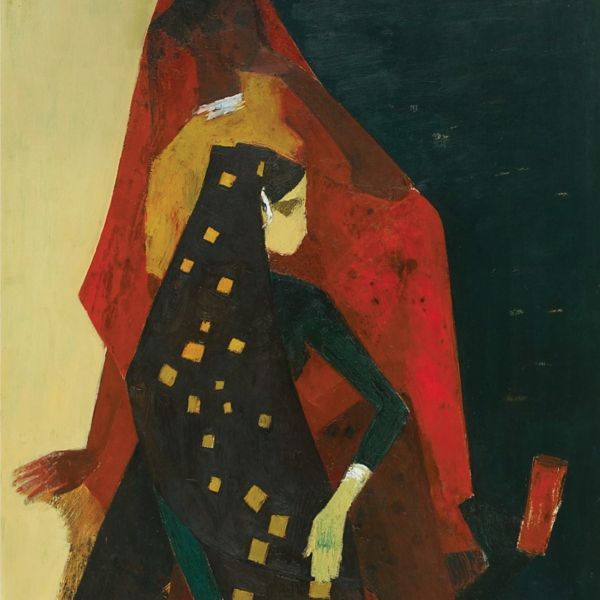
The art of the twentieth century may be too recent for us to judge it from the viewpoint of longevity, but if the past is any criterion, art is set to outlive us by far—a reason why its documentation is one of the more important tasks before us. This is where the Manifestations series is so important. It encourages discussion and debates around the selection of unique works by seventy-five acknowledged artists spanning a century (or more) of Indian modernism across a range of variously permutable combinations: periods, movements, mediums, materials, regions. Raiba Ambadas Arpana Caur Arun Bose Asit Kumar Haldar Avinash Chandra Bal Chhabda Bikash Bhattacharjee Bimal Dasgupta Biren De Bireswar Sen C. Douglas Chittaprosad Devayani Krishna Dhanraj Bhagat Dharamnarayan Dasgupta Early Bengal (Anonymous) F. N. Souza G. R. Santosh Ganesh Pyne Gogi Saroj Pal Himmat Shah Indra Dugar J. C. Seal J. Sultan Ali J. Swaminathan Gaganendranath Tagore Raja Ravi Varma Jamini Roy Jeram Patel Jyoti Bhatt K. Adimoolam K. C. S. Paniker K. G. Subramanyan K. H. Ara K. K. Hebbar K. Laxma Goud K. S. Radhakrishnan Kalighat Pat (Anonymous) Khagen Roy Krishen Khanna L. Munuswamy Laxman Pai Laxman Shrestha M. F. Husain M. Senathipathi M. V. Dhurandhar N. S. Bendre Nandalal Bose Navjot Nemai Ghosh Nikhil Biswas P. Khemraj P. T. Reddy Paritosh Sen Partha Pratim Deb Prokash Karmakar Prosanto Roy Rabin Mondal Rabindranath Tagore Radha Charan Bagchi Ram Kumar Ranbir S. Kaleka Robert Ker Porter S. H. Raza Sakti Burman Satish Gujral Shanti Dave Shyamal Dutta Ray Gopal Ghose Sohan Qadri Sunil Das Sunil Madhav Sen Thota Vaikuntam Ved Nayar
Learn More