


Search results for: 'Palaniappan R. M.'
-
 JournalIn the Snows of Kashmir by G. R. Santosh$1.00
G. R. Santosh created a hugely accomplished career without formal training in art. His abstract paintings made in the early 1960s had Kashmir as his muse, and often used encaustic and beeswax—a process he learned from Shanti Dave. Architect and designer Pinakin Patel shares his views about In the Snows of Kashmir, Santosh’s masterful painting with textural relief in a monochrome palette.
Learn More -
 JournalEighty-Five Safety Pins by Prabhakar Barwe$1.00
Prabhakar Barwe’s Eighty-Five Safety Pins is a pioneering work that merges technology and traditional art. Created in 1991 using graphic design software on an Apple Macintosh, Barwe explored the concept of pixels, a hallmark of the digital era, while incorporating his signature enamel paint. This innovative approach reflects his curiosity about embracing the unknown future and reinterpreting it artistically. By abstracting the safety pin from its conventional form, Barwe invites viewers to reconsider its essence, offering an open-ended visual experience that challenges preconceived notions and encourages alternative perspectives. Art connoisseur Shireen Gandhy, a friend of the late artist, takes us behind the making of this extraordinary painting.
Learn More -
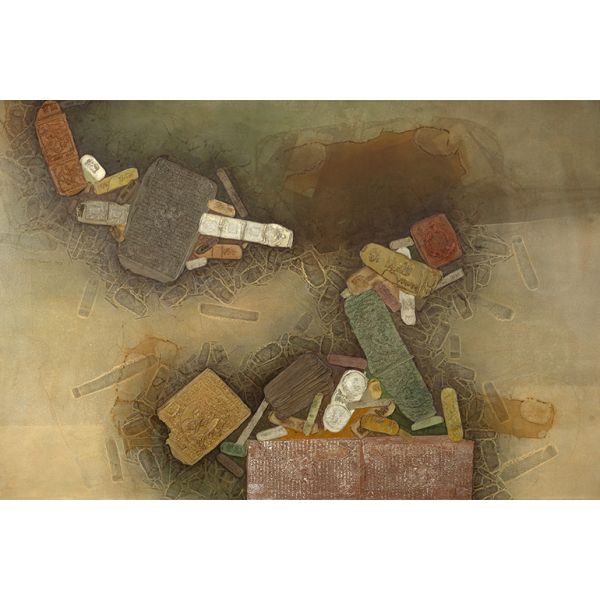 JournalUntitled by Shanti Dave$1.00
This Untitled painting, created in the early-to-mid-1970s, reflects Shanti Dave's fervent experimentation during a prolific period marked by international recognition in mural making and exhibitions. Drawing inspiration from childhood memories of Badapura and nearby archaeological ruins, the abstract composition blends colour pigments, beeswax, and oil solutions in a dynamic interplay. Employing a reverse image technique with molten wax, the painting challenges perceptions and invites contemplation on the nature of truth. Noted fashion designer and art-collector Tarun Tahiliani explains the nuances of Shanti Dave’s work in a film specially created on the painting.
Learn More -
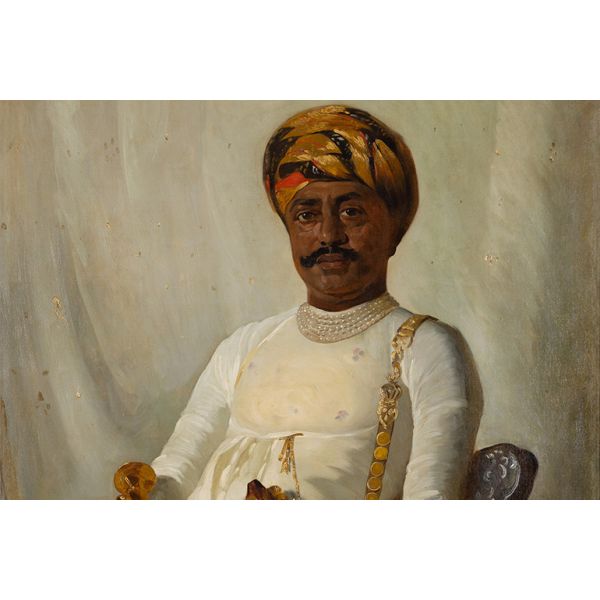 JournalThakor Becharsinhji of Chuda by Frank Brooks$1.00
Did you know that the portrait painter Frank Brooks whose two trips to India won him commissions from the rulers of principalities in the Bombay Presidency, trained Raja Ravi Varma’s brother in the art of figure painting? For his second India voyage (1892-93), he was invited specially to paint the heads of the twenty-eight rulers of the Kathiawar Agency. The subject of this stunning portrait is Thakur Becharsinhji of Chuda, a state so small it did not even merit a gun salute for its ruler. Explore in detail with Kishore Singh, SVP, DAG.
Learn More -
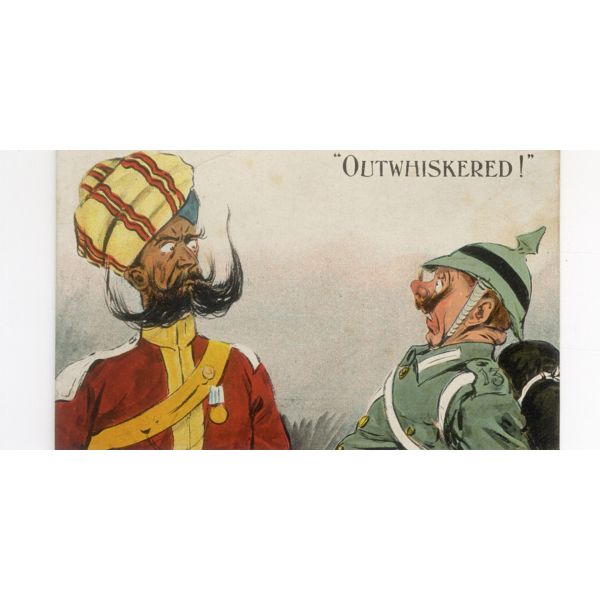 JournalArchive Case Files$0.00
The DAG Archives travel to schools and colleges for the first time with a new education programme—Archive Case Files. Follow the journey of these students as they work with a collection of World War I postcards, to learn more about the role of visual archives in the classroom.
Learn More -
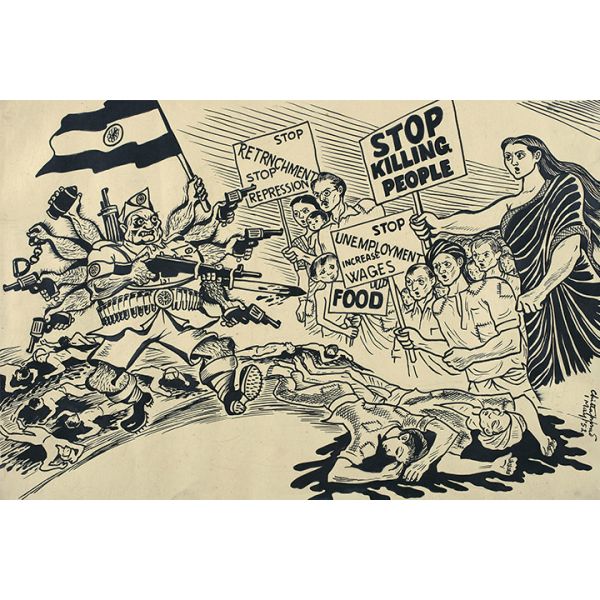 JournalBangladesh War by Chittaprosad$1.00
Chittaprosad couldn’t have created a more germane work in honour of the people who successfully fought their oppressors to create an independent nation. A close examination of his masterpiece, Bangladesh War, reveals the artist’s use of symbols of hope against persecution and domination, art collector and philanthropist Nadia Samdani tells us.
Learn More -
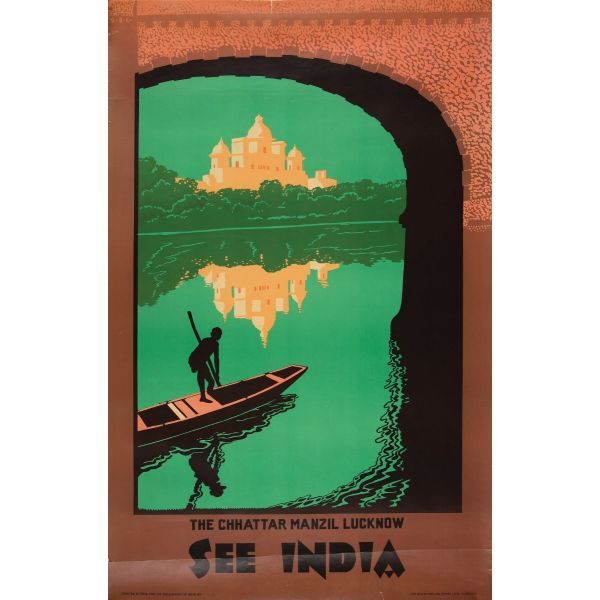 Events and ProgrammesFont, Form, Function$1.00
A workshop on typography and the art of font-making, facilitated by Diptanshu Roy, Creative Director (Wunderman Thompson) and Musician, inspired by the poster art of early 20th century.
Learn More -
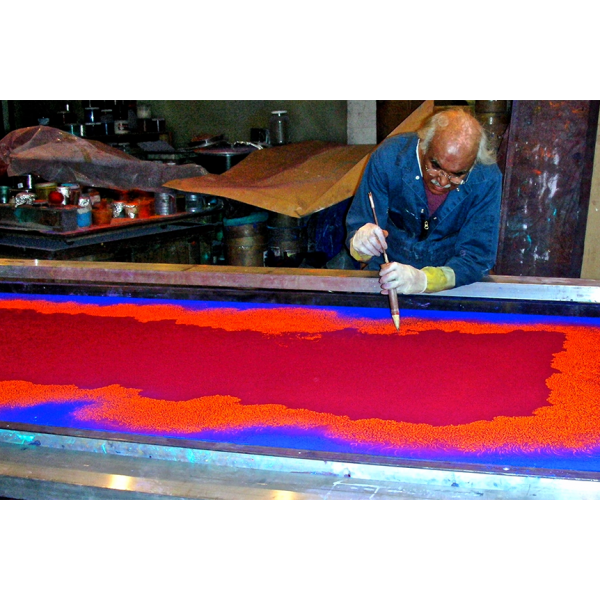 JournalNatvar Bhavsar: Cosmic Whispers$0.00‘Navtar Bhavsar: Cosmic Whispers’ opened on 1 March, featuring the art’s artworks which contributed to significantly to the discourse on abstractionism in New York and beyond. As part of the exhibition, Navtar Bhavsar speaks on working within the art scene in New York in the 1960s and his various points of reference rooted in Indian culture. Learn More
 -
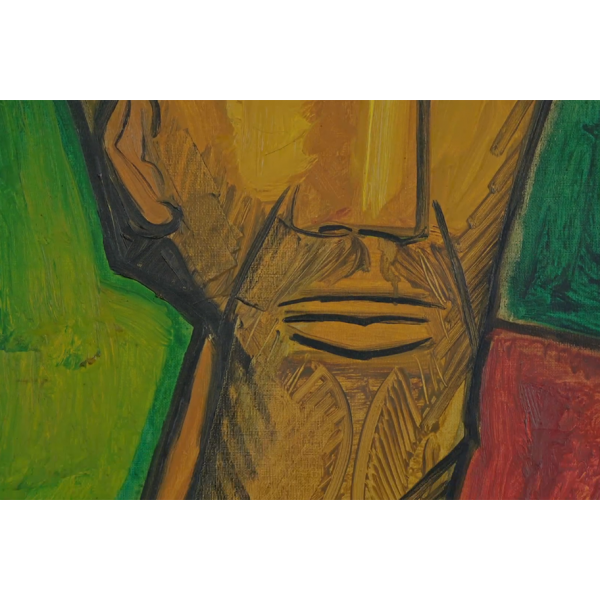 JournalYashodhara Dalmia on F.N. Souza$0.00'Iconic Masterpieces of Indian Modern Art, Edition 2' opened on 11 February, featuring fifty artworks which shaped the trajectory of pre-modern and modern art in the country. As part of the exhibition, Yashodhara Dalmia speaks on F. N. Souza’s language of distortion, referring specifically to his painting ‘St. Peter’, which reflected his keen awareness of problems which plagued society. Learn More
 -
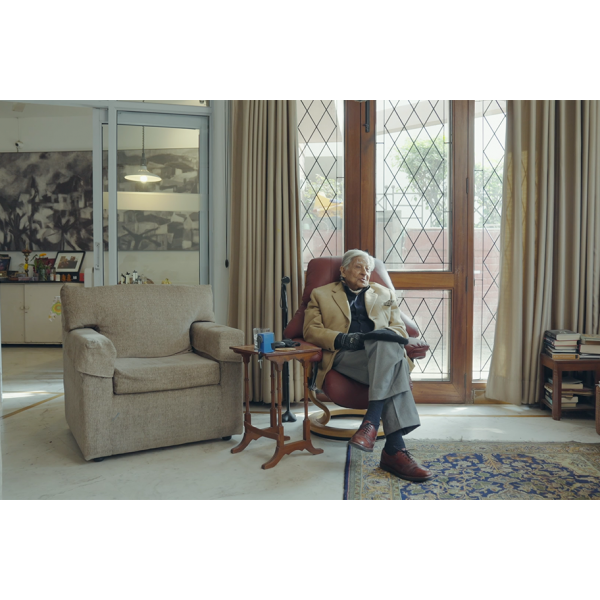 JournalKrishen Khanna on ‘Woman with a Basket of Fruit’$0.00'Iconic Masterpieces of Indian Modern Art, Edition 2' opened on 11 February, featuring fifty artworks which shaped the trajectory of pre-modern and modern art in the country. As part of the exhibition, Krishen Khanna speaks on the relationship between colors in his work and reflects on his painting ‘Woman with a Basket of Fruit’ which draws gestural elements, like the swinging posture, from South Asian bronzes. Learn More
 -
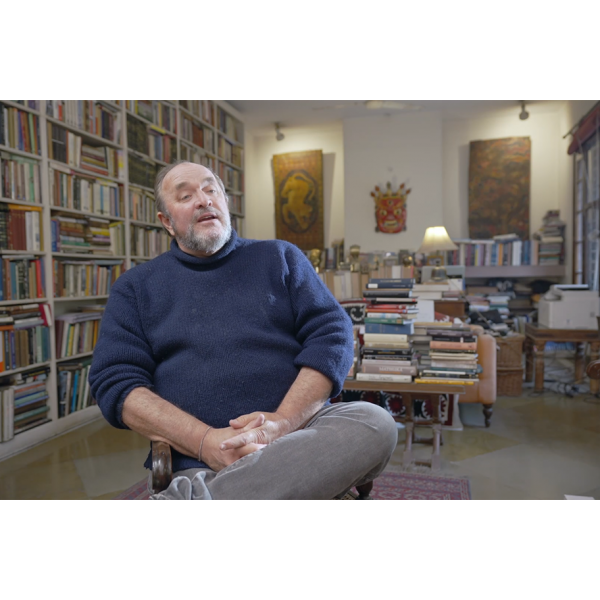 JournalWilliam Dalrymple on ‘Panorama of a Small British Station on the Ganges’$0.00
'Iconic Masterpieces of Indian Modern Art, Edition 2' opened on 11 February, featuring fifty artworks which shaped the trajectory of pre-modern and modern art in the country. As part of the exhibition, William Dalrymple reflects on the painting ‘Panorama of a Small British Station on the Ganges’. Commissioned by Major James Natheniel Rind and painted like a scientific record of a scenario, the composition evokes a transitional phase between an older Mughal ethos and the emerging world of the Company.
Join us for a talk by William Dalrymple on Indian Painting for the East India Company on Wednesday, 5th April 2023, 7pm at DAG, 22A Janpath Road, Windsor Place, New Delhi
Learn More -
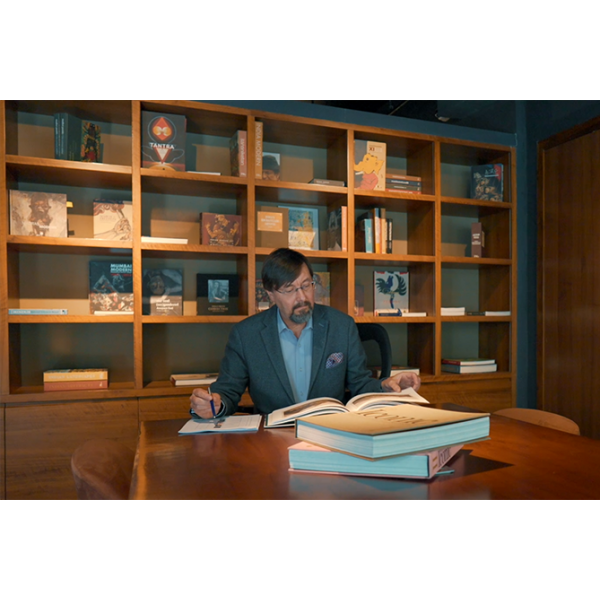 JournalGiles Tillotson on Thomas Daniell$0.00'Iconic Masterpieces of Indian Modern Art, Edition 2' opened on 11 February, featuring fifty artworks which shaped the trajectory of pre-modern and modern art in the country. As part of the exhibition, Giles Tillotson reflects on Thomas Daniell’s painting ‘Hunting the Serow in India’, which draws from the artist’s experience of travelling to India. The painting depicts an unusual hunting scene, where an act of sudden violence is juxtaposed with a space of tranquility. Learn More