Search results for: 'can I output bluetooth to an old pair of wired speakers'
-
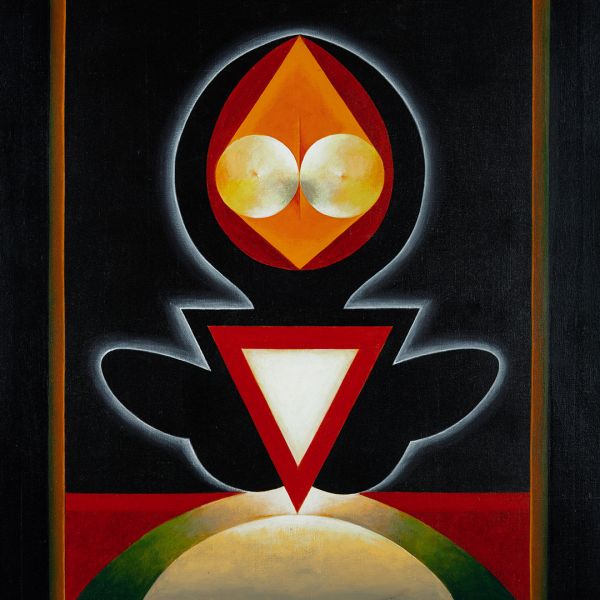 Art FairsFrieze Masters 2023$1.00The medieval ages saw the rise in India and parts of Asia of philosophical, theological, cultural, literary and visual manifestations that derived from diverse faiths but with one aim—to attain enlightened liberation. Its resistance to Brahmanical texts and hegemony resulted in the creation of geometrical aesthetics that were interpreted by way of texts, paintings, and architecture and had a monumental impact on society. At the centre of its geometric configurations—the triangle, the square, and the circle—lay the idea of Creation itself, the source of primal energy that could to be diverted towards a higher consciousness, and all universe was manifest in this. Learn More
 -
 JournalArt Lab: Transforming Classrooms into Museums$0.00
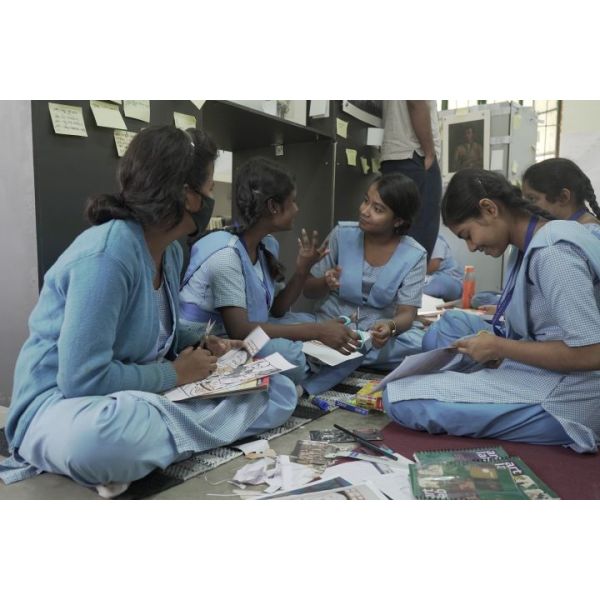
Art Lab by DAG’s Museums Programme is a pop-up art exhibition of facsimiles of works from the DAG Museum Collection that travels to schools and introduces students to modes of visual learning. After two successful iterations in CBSE and ICSE schools in Kolkata, Art Lab travelled to its first Bengali medium West Bengal Board school—Barisha Janakalyan Vidyapith for Girls. Through three days of workshops spread across two weeks, the students interacted with the artworks, learnt the basics of research, delved into historical material, and developed their own creative projects. Take a peek at some of the wonderful projects they curated as they took over the exhibition and made it their own.
Learn More -
 ExhibitionsALTAF: Early DrawingsAs low as $0.00
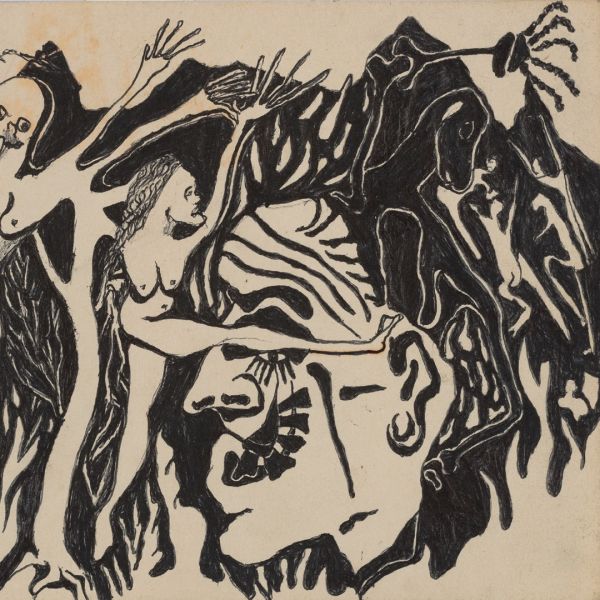
England shaped Altaf’s political consciousness as well as his persona. He engaged in the anti-apartheid demonstration at Trafalgar Square held against the imprisonment of Nelson Mandela; a peaceful protest at the American Embassy opposing the bombing in North Vietnam; the Aldermaston March against the nuclear bomb; the Campaign for Nuclear Disarmament; he became a member of the Youth Wing of the Communist Party of Great Britain (CPGB) and the Young Communist League (YCL). Any examination of the theoretical aspect of Altaf’s work must start with the knowledge that the work in question exemplified an element of ‘existentialist’ thought.
Learn More -
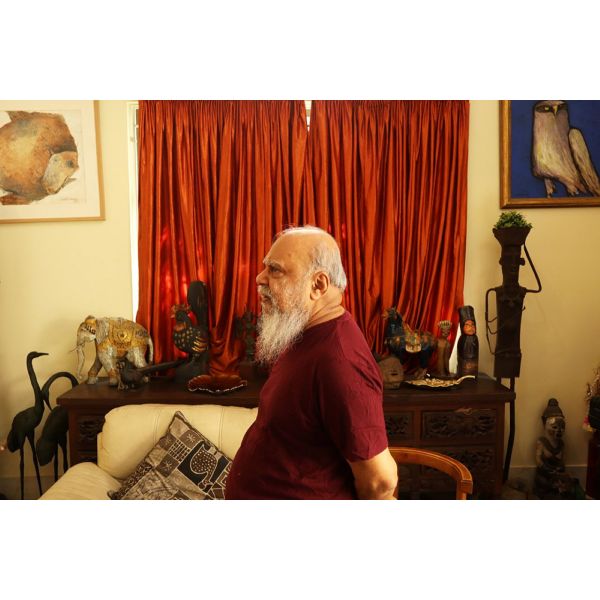 JournalThe Artist as Collector: At Home with Shuvaprasanna$0.00
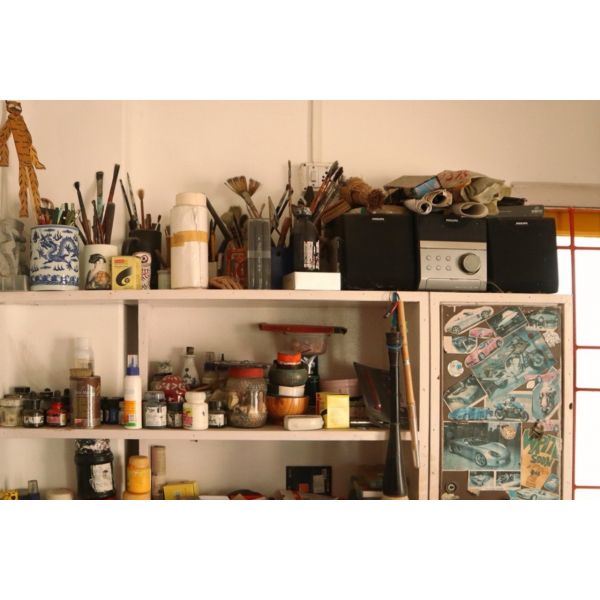
Artist and institution-builder Shuvaprasanna’s residence is located in a leafy corner of Kolkata’s suburban township, Bidhannagar or ‘Salt lake City’, which was envisaged by the former Chief Minister of West Bengal, Dr. Bidhan Chandra Roy in the late 1950s. Having grown up elsewhere—in College Street, in fact—the artist only moved here in 2002-03 with his family, which included his wife and fellow-artist, Shipra Bhattacharya. In this photo-essay we will learn about Shuvaprasanna’s personal collection and the relationship between his collecting practices and his art-making.
Learn More -
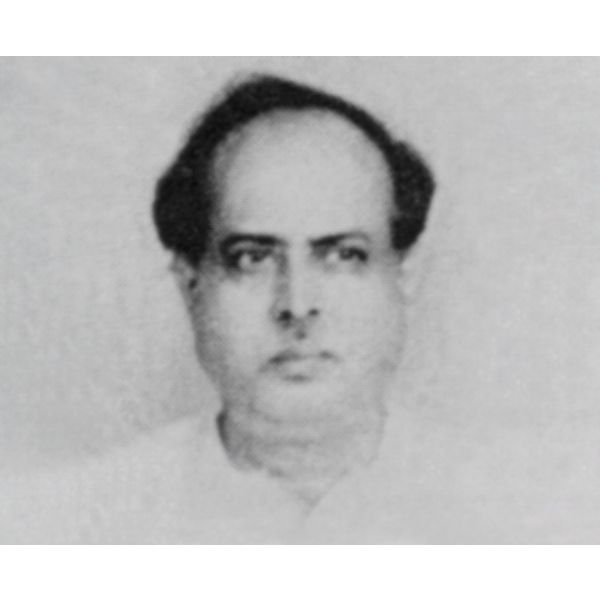 ArtistsSushil Chandra Sen$0.00Enamoured by watercolour as a medium, Sushil Chandra Sen studied at Government School of Art, Calcutta; in 1936, he joined the school as a lecturer. He also taught briefly at Delhi Polytechnic before returning to Calcutta to officiate as vice-principal of his alma mater. Learn More
 -
-
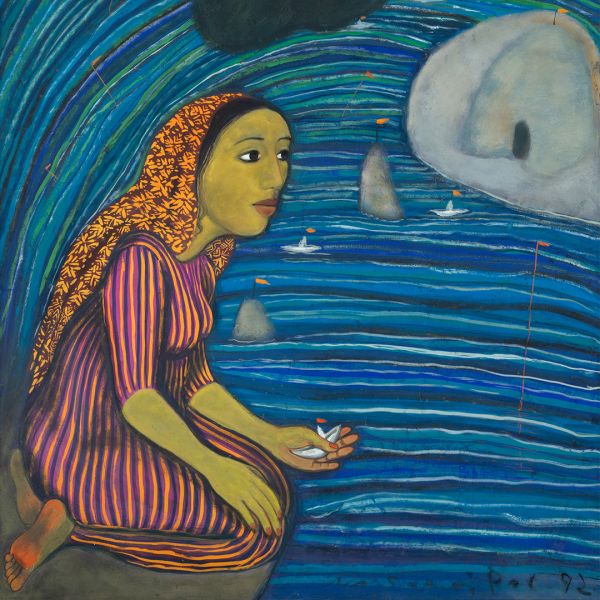
 ExhibitionsThe Sixties ShowAs low as $1.00
The 1960s was a period of immense change around the world, and it had deep ramifications on India’s socio-political scenario. The country had left behind the jubilation of Independence and was feeling the pinch of a nation grappling with the issues of development that impacted society and environment. A war with China in 1962 and Pakistan in 1965 had far-reaching implications on the national psyche— the first of shame, the latter of pride. Crippling shortages and unemployment were impacting life, even as the country’s success with the Green Revolution was directed at self-sufficiency. Migration from the villages to urban centres was increasing. Disparities—economic, gender or class—provided fertile ground for the alienation of the other. The more anglicised among the youth found themselves being drawn into the vortex of a global hippie movement. A. A. RAIBA AMBADAS ANUPAM SUD AVINASH CHANDRA BIKASH BHATTACHARJEE BIMAL DASGUPTA DHANRAJ BHAGAT F. N. SOUZA G. R. SANTOSH HIMMAT SHAH J. SULTAN ALI J. SWAMINATHAN JAMINI ROY JERAM PATEL JOGEN CHOWDHURY JYOTI BHATT K. G. SUBRAMANYAN K. LAXMA GOUD KRISHEN KHANNA LAXMAN PAI M. F. HUSAIN MADHVI PAREKH P. T. REDDY PARITOSH SEN PRABHAKAR BARWE PRODOSH DASGUPTA PROKASH KARMAKAR RABIN MONDAL RAM KUMAR RAMESHWAR BROOTA S. H. RAZA S. K. BAKRE SAKTI BURMAN SATISH GUJRAL SHANTI DAVE SOHAN QADRI SOMNATH HORE SUNIL DAS ZARINA HASHMI
Learn More -
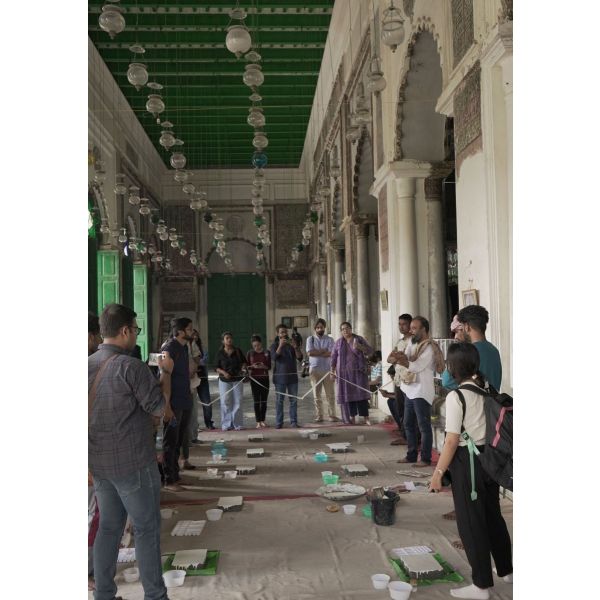 Collection StoriesThe City as a Museum, Kolkata—A Visual Journey$1.00
DAG Museum’s annual festival ‘The City as a Museum’ attempts to explore the various archives, communities and artistic traditions that cohere around the life of a city. Put together, they tell different stories about the city across time and space, from the point of view of neighbourhoods, collections and institutions, but not just limited to those either.
In order to learn more about this unique programme that seeks to explore heritage outside the walls of a traditional gallery or museum, read on!
Learn More -
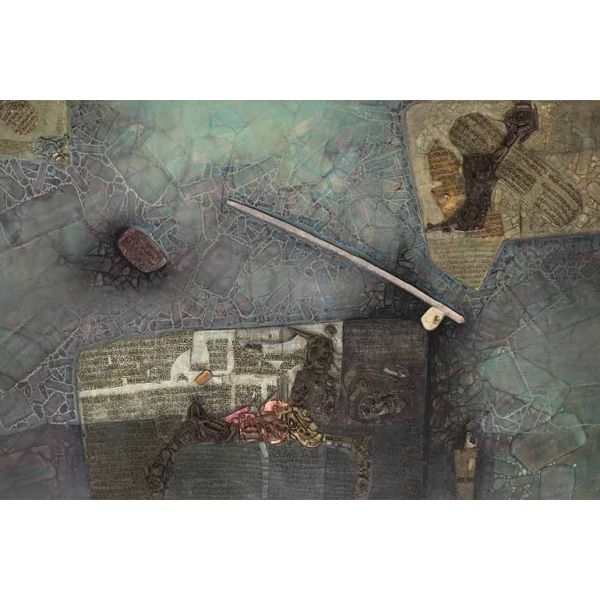 JournalShanti Dave: Neither Earth nor Sky$1.00
Curator Jesal Thacker and art writer Meera Menezes speak about Shanti Dave’s art practice and choice of medium that allowed several elements to come together in his encaustic paintings and layered watercolours.
Learn More -
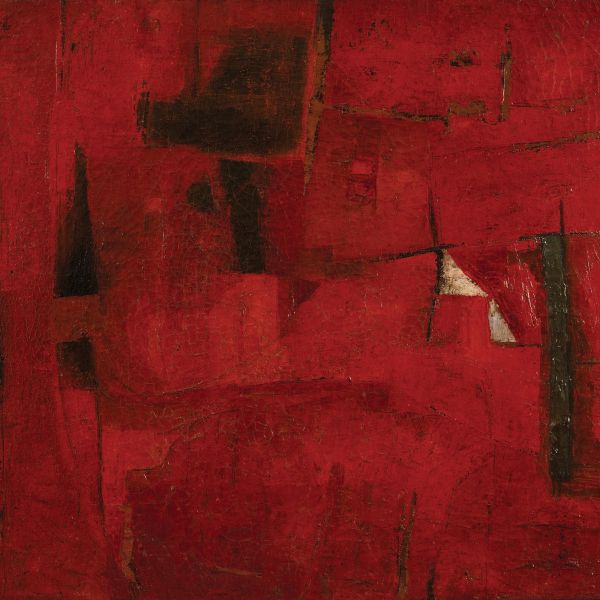 ExhibitionsIndia’s French ConnectionAs low as $1.00
This historic exhibition based on the association twenty-seven Indian artists had with art institutions, museums and art movements in Paris throws light on France as a cradle of modernism and what Indian artists gained from this relationship. Akbar Padamsee Amrita Sher-Gil Anjolie Ela Menon Arun Bose Chintamoni Kar Himmat Shah Jehangir Sabavala Jogen Chowdhury K. K. Hebbar Kanwal Krishna Krishna Reddy Laxman Pai Laxman Shrestha Nalini Malani Nasreen Mohamedi Nirode Mazumdar P. Khemraj Paritosh Sen Prodosh Das Gupta Prokash Karmakar Rajendra Dhawan Ram Kumar Sailoz Mukherjea Sakti Burman Sunil Das Syed Haider Raza V. Nageshkar V. Viswanadhan Zarina Hashmi
Learn More -
 Institutional CollaborationsBirds of India: Company Paintings c. 1800 to 1835$1.00
In celebration of birds and the long relationship art has shared with the winged creatures, this exhibition brings together four folios to present portraits of Indian birds made in the early nineteenth century. While representations of birds date back to the Ajanta murals, naturalistic imagery reached its peak in Mughal art under Emperor Jahangir. In the late 18th century two connected developments emerged in Lucknow and Calcutta. While General Claude Martin provided imported European paper to the artists in Lucknow to prepare botanical studies and other natural history works, in Calcutta Mary, Lady Impey (wife of Chief Justice of the Supreme Court in Bengal, Elijah Impey) had a menagerie where she employed artists to portray variety of animals and birds. Dr. William Roxburgh, superintendent of Calcutta Botanical Garden from 1793, also added to the discourse of natural history by appointing local artists to make botanical studies of the specimens in his charge. The efforts of Martin, Impey, Roxburgh and their artists gave rise to a large body of Company Paintings dedicated to natural history.
Learn More