


Search results for: 'mang and the gang happy birthday to you'
-
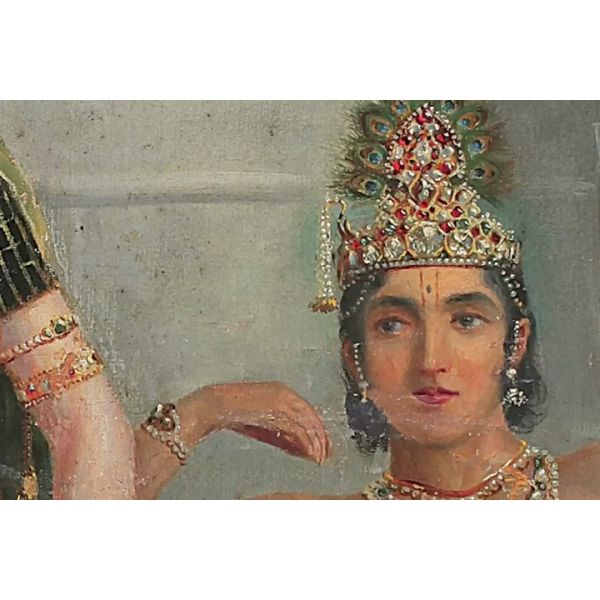 JournalM. V. Dhurandhar$0.00What do you make of a work of art? What was the artist attempting to communicate? These video shorts offer brief overviews on artists and their work in the way of expert opinions by scholars, curators art writers—and by the artists themselves. Learn More
 -
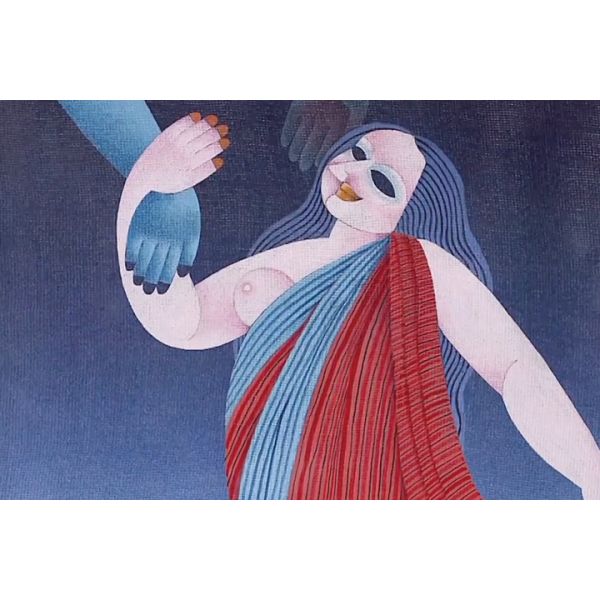 JournalDharamnarayan Dasgupta$0.00What do you make of a work of art? What was the artist attempting to communicate? These video shorts offer brief overviews on artists and their work in the way of expert opinions by scholars, curators art writers—and by the artists themselves. Learn More
 -
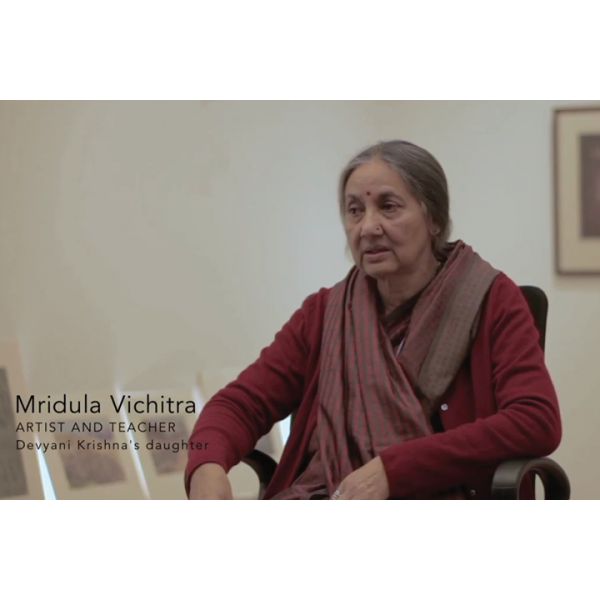 JournalDevayani Krishna$0.00What do you make of a work of art? What was the artist attempting to communicate? These video shorts offer brief overviews on artists and their work in the way of expert opinions by scholars, curators art writers—and by the artists themselves. Learn More
 -
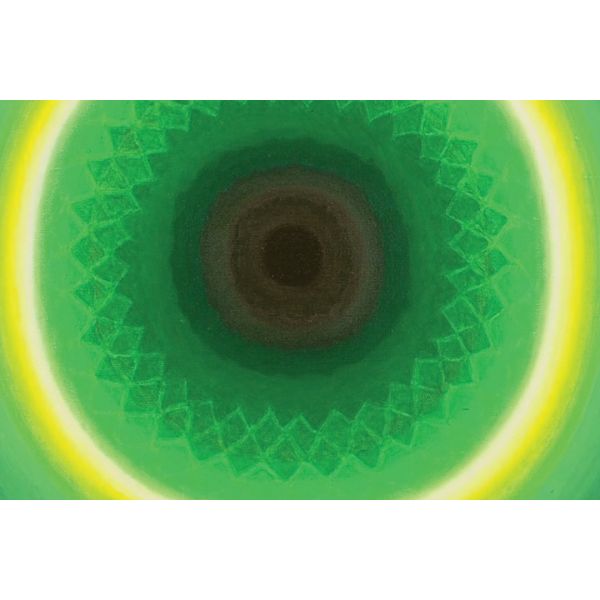 JournalBiren De$0.00What do you make of a work of art? What was the artist attempting to communicate? These video shorts offer brief overviews on artists and their work in the way of expert opinions by scholars, curators art writers—and by the artists themselves. Learn More
 -
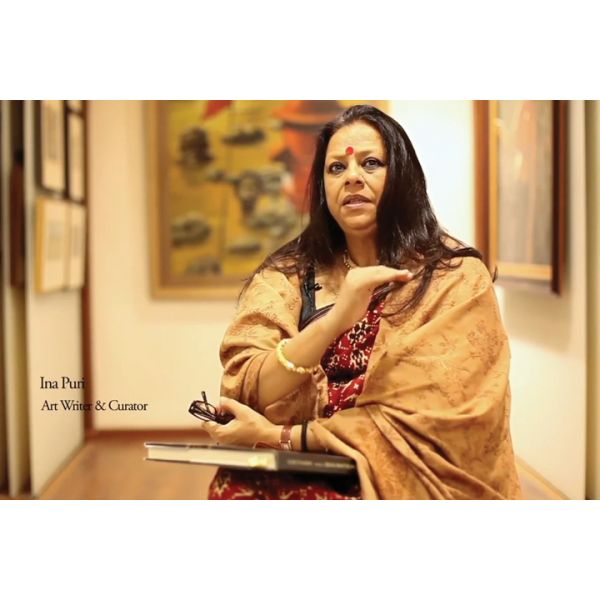 JournalBikash Bhattacharjee$0.00What do you make of a work of art? What was the artist attempting to communicate? These video shorts offer brief overviews on artists and their work in the way of expert opinions by scholars, curators art writers—and by the artists themselves. Learn More
 -
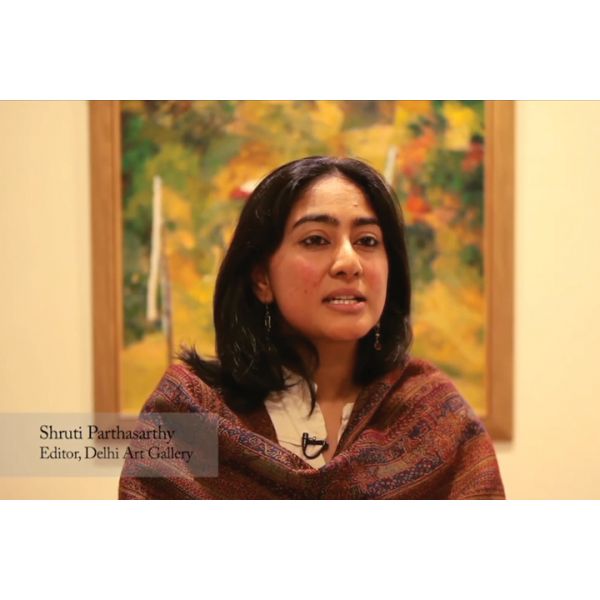 JournalRam Kumar$0.00What do you make of a work of art? What was the artist attempting to communicate? These video shorts offer brief overviews on artists and their work in the way of expert opinions by scholars, curators art writers—and by the artists themselves. Learn More
 -
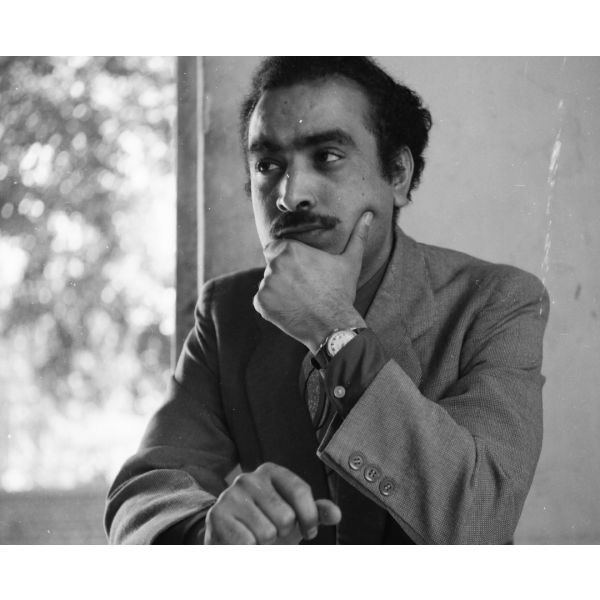 ArtistsG. R. Santosh$0.00Born Gulam Rasool Dar in a Shia Muslim family in Srinagar in Kashmir on 20 June 1929, the artist took on his wife’s Hindu name ‘Santosh’ as his own, in a move opposing patriarchy and religion. His father’s death forced a young Gulam to work as a signboard painter, papier-mâché artist, and weaver. He learnt to paint watercolour landscapes from Dina Nath Raina in Kashmir before studying under N. S. Bendre at M. S. University, Baroda, on the recommendation of S. H. Raza. In Baroda, he produced a large body of figurative and landscape works, mainly in the cubist style. Learn More
 -
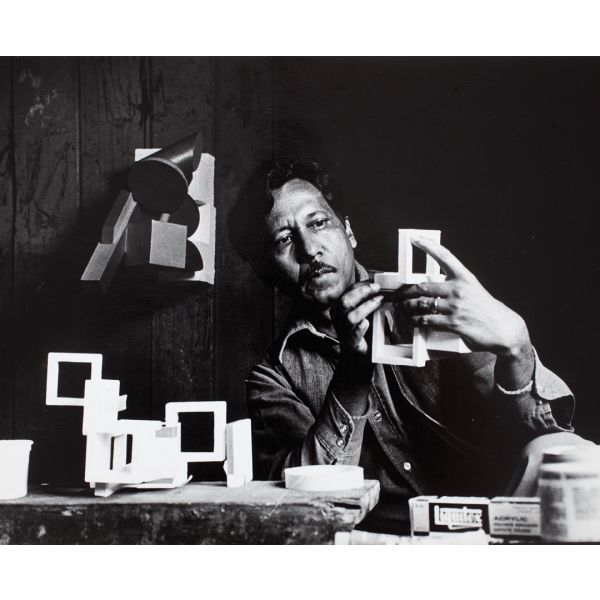 ArtistsEric Bowen$0.00Eric Bowen was born in Allahabad on 3 May 1929 and received a diploma from the College of Art, New Delhi, in 1959. Though he joined the short-lived Group 1890, his journey to be a part of the significant art movements in the 1960s took root when he and Paramjit Singh started the Group Unknown, a Delhi-based collective of young artists and sculptors. Learn More
 -
 ExhibitionsThe Fifties ShowAs low as $1.00
The twentieth century was marked by two important decades—the 1910s, when the Bengal School saw the establishment of a revivalist practice that came to signify Indian modern art in general; and the 1950s, when a newly independent nation put its colonised past behind it and embraced a triumphant modernism. A. A. RAIBA ADI DAVIERWALLA AVINASH CHANDRA BABURAO SADWELKAR BADRI NARAYAN BIREN DE CHITTAPROSAD D. P. ROY CHOWDHURY DEVYANI KRISHNA DHANRAJ BHAGAT G. R. SANTOSH GANESH PYNE HAREN DAS Indra Dugar J. SULTAN ALI JYOTI BHATT K C S PANIKER K S Kulkarni K. G. SUBRAMANYAN K. K. HEBBAR KANWAL KRISHNA KISORY ROY KRISHEN KHANNA KRISHNA REDDY Laxman Pai M. F. HUSAIN MOHAN SAMANT NANDALAL BOSE NIKHIL BISWAS P. T. REDDY PARITOSH SEN S. H. RAZA S. K. BAKRE SAKTI BURMAN SHANTI DAVE SUNIL DAS SUNIL MADHAV SEN VISHWANATH NAGESHKAR
Learn More -
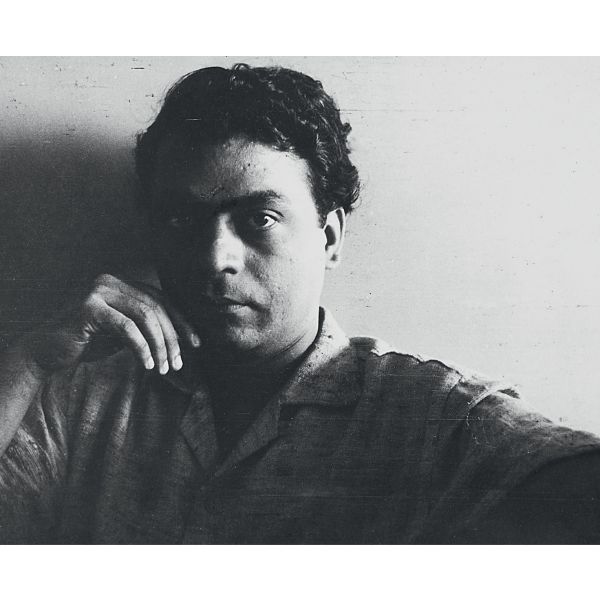 ArtistsV. S. Gaitonde$0.00One of India’s most revered ‘non-objective’ painters—he preferred that term over ‘abstraction’—Vasudeo Santu Gaitonde was born in Nagpur in 1924. He received his diploma in painting from Sir J. J. School of Art, Bombay, in 1948. Impressed by his work, the members of the Progressive Artists’ Group—formed in 1947—pulled him into their meetings. The strength of his talent was soon recognised elsewhere—he won the first prize of the Young Asian Artists Association in Tokyo in 1957, and a John D. Rockefeller III Fund fellowship in 1964. Learn More
 -
 ExhibitionsPrimitivism and Modern Indian ArtAs low as $1.00
The idea of primitivism centres on the wish to identify with, or respond to, elements of a society that are deemed ‘primitive’. In artistic terms, it is about rejecting realism, simplifying technique and reducing the formal means of expression to a ‘primitive’ state. The term itself is borrowed from discussions of Western art, where high-profile examples include the images of Tahiti and its people made in the 1890s by Paul Gauguin, and responses to African sculpture by Pablo Picasso in 1906-09. The second thread of primitivism—the reduction of formal means—is best exemplified by the ‘cut-outs’ made by Henri Matisse in the 1940s.
Learn More -
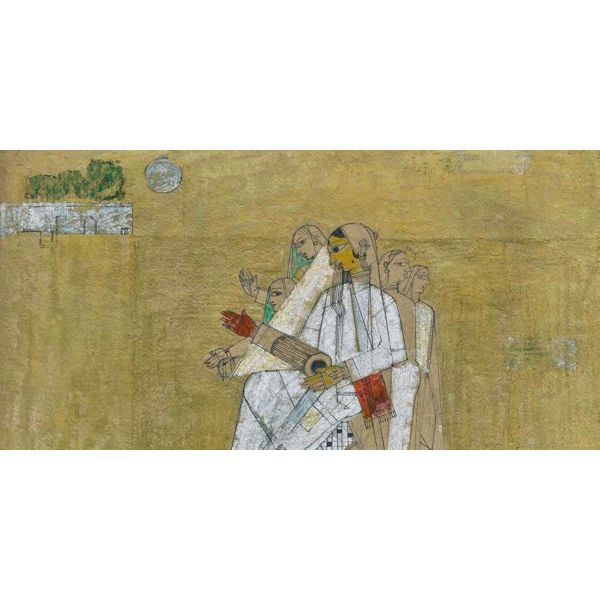 JournalBefore the Chaos of Destruction: Jeram Patel's Iconic Works$0.00
Artists often proceed through a trial and error method—an incessant experimentation—leaving behind a singular trail of oeuvre composed of an irreconcilable, yet inseparable, set of works. Born in the small town of Sojitra in the Kheda district of Gujarat, Jeram Patel studied drawing and painting at Sir J. J. School of Art, Bombay. In 1959, excellence in his work led him to pursue commercial design at Central School of Arts and Crafts, London, on a scholarship, and also travel to France and Japan. Thereafter, he successfully held solo exhibition at various places in India and abroad, and participated in international events such as the Tokyo Biennale and Sao Paulo Art Biennale (both in 1963).
Learn More