


Search results for: 'Cement bird bath near narragansett ri for sale'
-
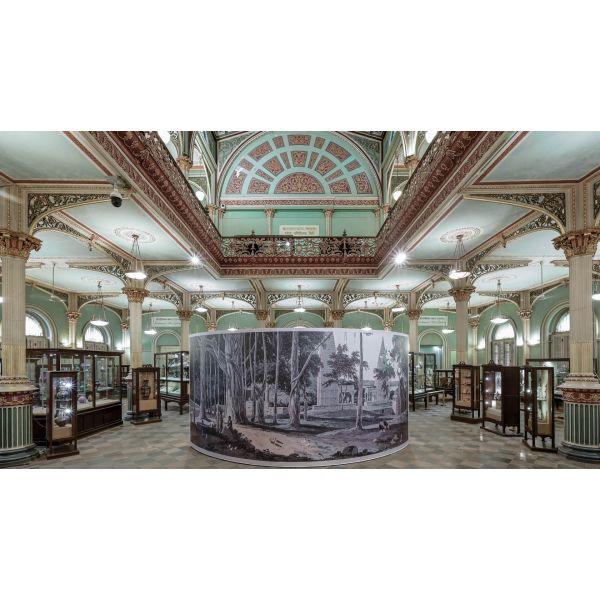 Institutional CollaborationsNew Found Lands: The Indian Landscape from Empire to Freedom$1.00
This exhibition looks at landscape painting in India over a period of two hundred years, from 1780 to 1980. We start with English artists who travelled in India from the late eighteenth century onwards, to rediscover what they were looking for, and how they saw what they found. The introduction of new materials, and the teaching of new methods in the art schools from the middle of the 19th century, encouraged some Indian artists to adopt similar academic style approaches. In the twentieth century, a reaction set in, as Indian artists sought new modes of expression. As if reclaiming their patrimony and the right to represent it, they invented a glorious array of new landscape styles.
Learn More -
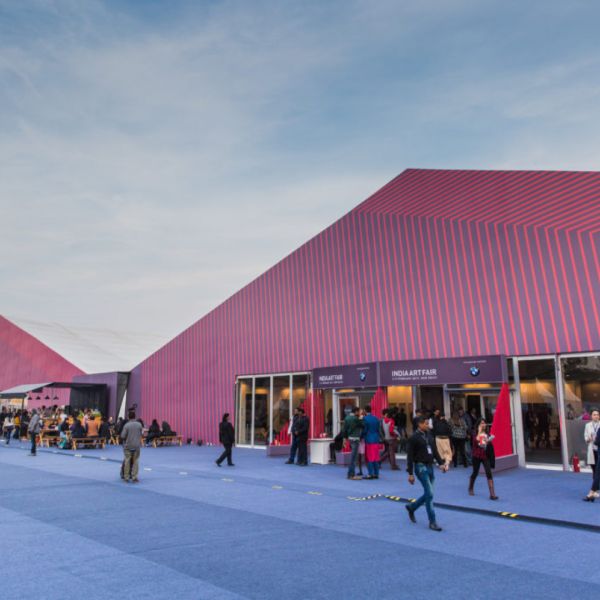 Art FairsIndia Art Fair$0.00
The 2015 edition of the India Art fair saw DAG securing a lavish booth across two different spaces spread over 11,000 sq. ft. Likened to a museum (albeit a temporary one), the gallery presented a show of close to one thousand artworks that consisted of both paintings and sculptures. The thematically curated exhibition consisted of nine categories: pre-modern art, the Bengal school, academic realism, the Bombay Progressive artists, high modernism, the Baroda School and Group 1890, the Cholamandal artists, tantra and sculptures. This categorically-placed collection successfully attempted to showcase the dynamic range of Indian art over two hundred years. A special sculpture gallery was set up in a covered courtyard and featured the largest sculpture in India—by K. S. Radhakrishnan. Pre-Moderns Early Bengal Kalighat Pat Company School Popular Prints Birth of Modernism M. R. Achrekar Almelkar Radha Charan Bagchi Richard Barron Pestonji E. Bomanji Atul Bose Sakti Burman William Carpenter Jogen Chowdhury Devraj Dakoji Thomas Daniell John Deschamps M. V. Dhurandhar Indra Dugar J. P. Gangooly Olinto Ghilardi S. L. Haldankar K. K. Hebbar Benjamin Hudson D. C. Joglekar Prahlad C. Karmakar J. A. Lalkaka B. C. Law Hemendranath Mazumdar M. Mali H. Muller Ramaswamy Naidu M. K. Parandekar William Parker Prema Pathare V. B. Pathare M. F. Pithawalla Portraiture (Anonymous) Thomas Prinsep Abalall Rahiman ‘Ravi Varma School’ Kisory Roy Baburao Sadwelkar N. R. Sardesai Bireswar Sen Lalit Mohan Sen Sushil Chandra Sen S. G. Thakar Singh Satish Chandra Sinha L. N. Taskar Raja Ravi Varma Revivalism and Beyond Radha Charan Bagchi Bengal School (Anonymous) Nandalal Bose Ramendranath Chakravorty M. A. R. Chughtai Haren Das Sunayini Devi 438 Mukul Dey Surendranath Ganguly Asit Kumar Haldar Chintamoni Kar Kshitindranath Majumdar Indu Rakshit Prosanto Roy Bisnhupada Roychowdhury D. P. Roy Chowdhury Abanindranath Tagore Sarada Charan Ukil Ramgopal Vijaivargiya Jamini Roy Santiniketan: A New Expressionism Ramkinkar Baij Nandalal Bose Benode Behari Mukherjee The Bengal Famine in Art Gobardhan Ash Ramkinkar Baij Chittaprosad Somnath Hore Bengal Modernist Calcutta Group Gopal Ghose Hemanta Misra Prankrishna Pal Paritosh Sen Sunil Madhav Sen Calcutta Painters Nikhil Biswas Bijan Chowdhury Jogen Chowdhury Prokash Karmakar Rabin Mondal Society of Contemporary Artists Bikash Bhattacharjee Sunil Das Shyamal Dutta Ray Ganesh Haloi Ganesh Pyne Lalu Prasad Shaw Lone Stars: Other Bengal Modernists Amalnath Chakladhar Partha Pratim Deb Nemai Ghosh Somnath Hore Sudhir Ranjan Khastgir Sailoz Mookherjea Gaganendranath Tagore Rabindranath Tagore Rise of Modernsim K. H. Ara S. K. Bakre Bal Chhabda H. A. Gade V. S. Gaitonde M. F. Husain Krishen Khanna Ram Kumar Tyeb Mehta Akbar Padamsee S. H. Raza Mohan Samant F. N. Souza A Modern Vernacular Baroda School N. S. Bendre Devraj Dakoji Shanti Dave Bhupen Khakhar Dhruva Mistry Haku Shah Nilima Sheikh K. G. Subramanyan Vivan Sundaram Group 1890 Ambadas Jyoti Bhatt Eric Bowen Jeram Patel Raghav Kaneria Himmat Shah Gulammohammed Sheikh J. Swaminathan Alternate Sensibilities Discourses in Feminism Arpana Caur Nalini Malani Navjot Gogi Saroj Pal Anupam Sud A Language of Minimalism Zarina Hashmi Nasreen Mohammedi The Topsy Turvy World of Magic Realism Amit Ambalal Sakti Burman Dharamnarayan Dasgupta Ranbir Singh Kaleka Sanat Kar P. Khemraj Anjolie Ela Menon New Delhi Modernists Amitava Manjit Bawa Rameshwar Broota Shobha Broota Bimal Dasgupta Biren De Manu Parekh Ved Nayar Ramachandran G. R. Santosh Arpita Singh Silpi Chakra Group Dhanraj Bhagat Avinash Chandra Satish Gujral Bishamber Khanna Devayani Krishna Kanwal Krishna K. S. Kulkarni C. Sanya Mumbai Modernists Altaf Prabhakar Barwe Chittaprosad K. K. Hebbar George Keyt Gieve Patel Prabha Raiba V. Nageshkar Jehangir Sabavala Laxman Shreshtha Region and Identity Cholamandal Artists’ Village J. Sultan Ali Reddappa Naidu Akkitham Narayanan K. C. S. Paniker K. Ramanujam M. Senathipathi S. G. Vasudev V. Viswanadhan Modernists of the South K. M. Adimoolam R. B. Bhaskaran S. Dhanapal P. V. Janakiram L. Munuswamy P. Santhanraj Laxman Pai K. Laxma Goud Badri Narayan G. Ravinder Reddy Krishna Reddy P. T. Reddy S. Krishnaswamy Srinivasulu Thota Vaikuntam Sacred and Sensual Neo-Tantra as a Modern Conceit Jyoti Bhatt Sunil Das Biren De K. V. Haridasan Jeram Patel Sohan Qadri P. T. Reddy G. R. Santosh Erotic Art Ramkinkar Baij Sunil Das K. Laxma Goud M. F. Husain Ranbir Singh Kaleka Prokash Karmakar K. S. Kulkarni Laxman Pai P. T. Reddy G. R. Santosh F. N. Souza Modernism in Indian Sculpture Ramkinkar Baij S. K. Bakre P. Roy Chowdhury Jogen Chowdhury Sankho Chaudhuri Prodosh Das Gupta M. Davierwala Jacob Epstein Tarak Garai Bipin Behari Goswami Satish Gujral Asit Kumar Haldar Dhruva Mistry Mrinalini Mukherjee S. Nandagopal Navjot Nagji Patel K. S. Radhakrishnan S. H. Raza Jamini Roy Himmat Shah Prabhas Sen B. Vithal Other Sculptors
Learn More -
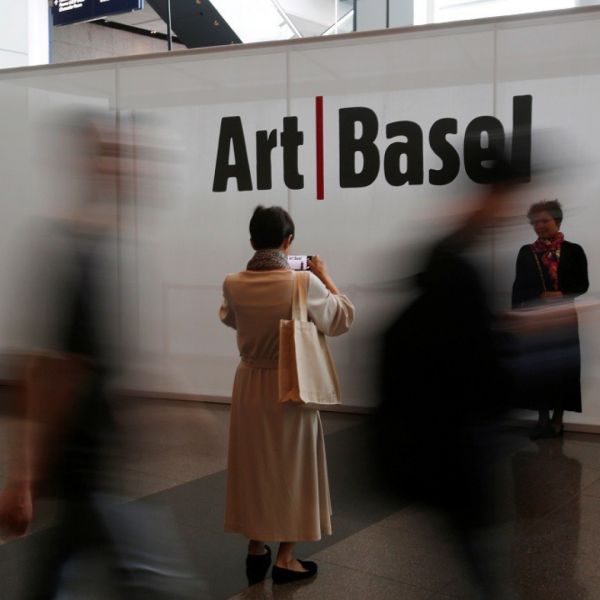 Art FairsArt Basel$0.00
DAG’s booth at Art Basel Hong Kong at its second outing there consolidated its gains from the previous edition by building on the artists it had first presented at the seminal fair. It matched the fair’s focus of a vibrant Asian art with its premier selection of Indian modern art of the twentieth century. The selection presented twenty-five of the most significant Indian modern artists—consisting of painters and sculptors, figurative and abstract artists—who, with the innovations they brought to their art, contributed significantly to the rich diversity and expanse of Indian modern art as we know it today. Akbar Padamsee Ambadas Avinash Chandra B. Prabha Bikash Bhattacharjee Biren De F. N. Souza G. R. Santosh George Keyt Himmat Shah J. Sultan Ali K. H. Ara K. K. Hebbar K. Laxma Goud Krishen Khanna Laxman Pai M. F. Husain N. S. Bendre Rabin Mondal Ram Kumar S. H. Raza S. K. Bakre Sakti Burman Sohan Qadri Sunil Das
Learn More -
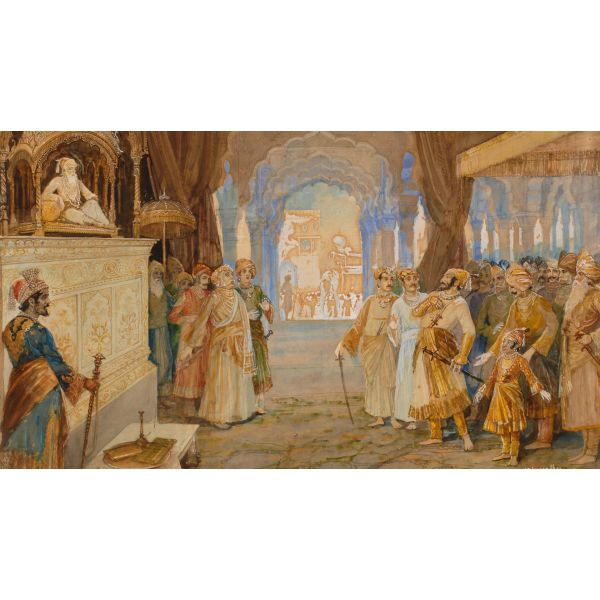 Institutional CollaborationsM. V. DHURANDHAR: A RETROSPECTIVE$1.00
Few artists claim as rich and intriguing a legacy as M. V. Dhurandhar in the landscape of late 19th and early 20th century Indian art. His practice leaves us with challenging questions about encounters and exchanges with India's colonial past and the influence of Europeans in shaping the evolution of painting. This exhibition revisits Dhurandhar's vast oeuvre through DAG's extensive collection of his paintings, archival material and ephemera, in an attempt to understand the socio-cultural context of his emergence, and to re-examine his influence on institutional and commercial art in the country.
Learn More -
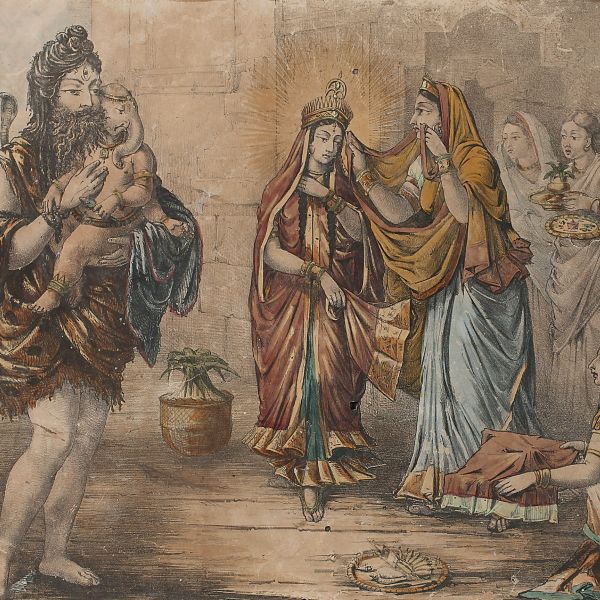 ExhibitionsThe Printed PictureAs low as $1.00
A print is an original work of art created and printed by hand by an artist or a professional printing assistant from a ‘matrix’—a plate, block of stone, wood or stencil. The image is created on the matrix and the artist takes a limited number of impressions or prints off it. These impressions are numbered and signed by the artist and belong to a limited edition, and this makes the print an original work of art and not a reproduction. Printmaking consists of a wide range of processes: relief printmaking which consists of techniques like engraving, woodcut and linocut; planographic processes such as lithography and oleography, intaglio processes such as drypoint, etching, aquatint, mezzotint, photo processes and collography; and serigraphy, where the image is printed through a silk screen on to the paper. A P Bagchi A Ramachandran Abanindranath Tagore Ajit Dubey Akhilesh verma Akkitham Naryanan Amitabh Banerjee Amitava Anonymous Print Anupam Sud Arun Bose B P Banerjee Basudev Roy Bengal Lithograph Bengal Oleographs Bengal Woodcut Benod Behari Mukherjee Bhupen Khakhar Bijan Choudhury Chittaprosad Daniell William Devraj Dakoji Devyani Krishna Francis N Souza F. B Solvyns Ganesh Haloi Gulam Sheikh Haren Das Himmat Shah Indu Rakshit Indumati Roop Krishna Jagdish Dey Jagmohan Chopra Jai Zahrotia Jamini Roy Jyoti Bhatt K Laxma Goud K V Haridasan Krishna Ahuja Krishna Reddy Lalu Prasad Shaw M F Husain M. V Dhurandhar Madhvi Parekh Maniklal Banerjee Manu Parekh Moti Zahrotia Mrinalini Mukherjee Mukul Dey Nagji Patel Nalini Malani Nandalal Bose Navjot Paneer Selvam Partha Pratim Deb Portrait Punjab Litho Qamrool Hassan R B Bhaskaran Rabin Mondal Radha Charan Bagchi Ram Kumar Ramendranath Chakravorthy Ramkinkar Baij Rani Dey Ravi Varma Press Ravi Varma Print Rini Dhumal Sakti Burman Sanat Kar Satish Gujral Shobha Broota Shyamal Dutta Ray Somnath Hore Sudhir Khastgir Sunil Das Sunil Madhav Sen Suren Gangooly Sushanta Guha Sushil Sen Suvaprasanna Tapan Bhowmik Tarak Basu Thoman Daniell V Vishwanadhan Various Litho and Olio Vijay Bagodi Vinayak Masoji Vivan Sundaram Walter D’Souza Yogesh Rawal Zainul Abedin
Learn More -
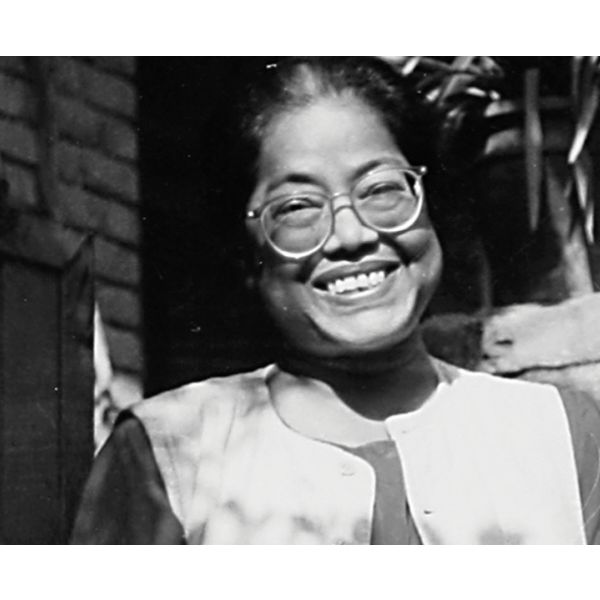 ArtistsArpita Singh$0.00An influential artist who is known for her richly detailed oils and watercolours, Arpita Singh was born in Calcutta in 1937. She studied art at Delhi Polytechnic (now College of Art) from 1954-59, and then joined the Government of India’s cottage industries restoration programme in 1959, which allowed her to meet weavers and artisans. Learn More
 -
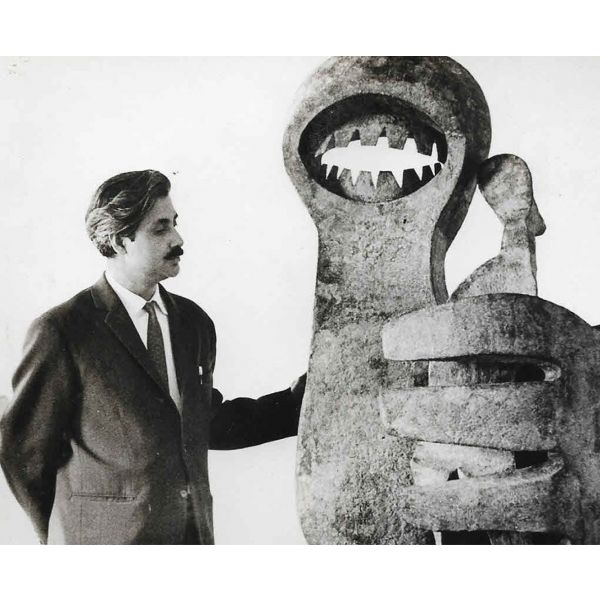 ArtistsAmar Nath Sehgal$0.00Modernist sculptor Amar Nath Sehgal was one of the earliest Indian artists to take legal action under the Indian Copyright Act defending his moral right over his work. In 1957, Sehgal created a mural for Vigyan Bhavan, New Delhi, on a government commission, which was pulled down without his permission or any intimation in 1979. Sehgal went to court and won the lawsuit. Learn More
 -
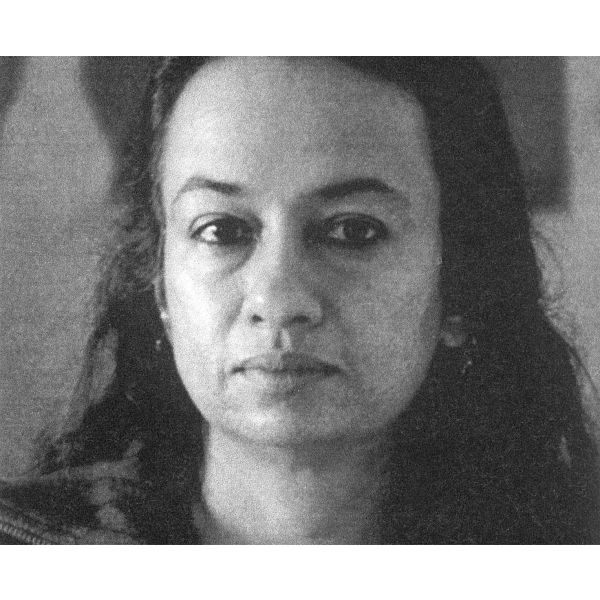 ArtistsVasudha Thozur$0.00Vasudha Thozhur is known for her conscious art practice that seeks to give expression to conflicts which humans encounter daily in a tension-ridden contemporary society. Born in Mysore on 14 October 1956, Thozhur received a diploma in painting from the College of Art and Craft, Madras, in 1972. She received a post diploma in painting from Croydon School of Art and Design, U.K., in 1982. Learn More
 -
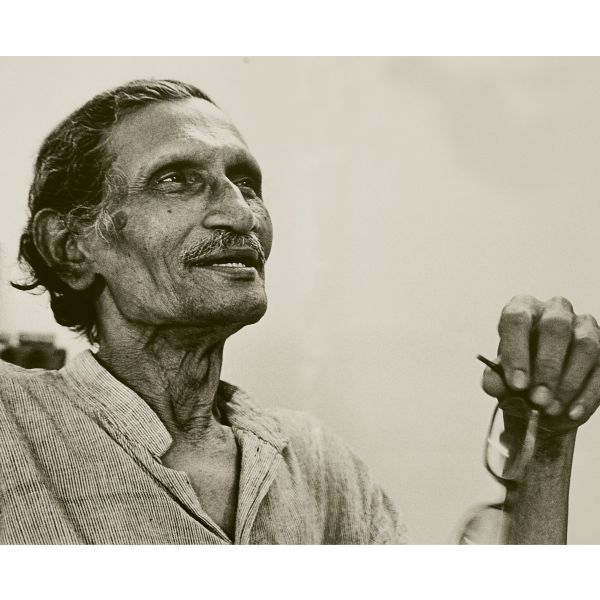 ArtistsRabin Mondal$0.00The son of a mechanical draughtsman, Mondal took to drawing and painting at the age of twelve when he injured his knee and was confined to bed. The Bengal famine of 1943 and the Calcutta communal riots of 1946 deeply impacted his psyche; he joined the Communist Party and became an activist. Mondal’s final refuge was art as the ultimate weapon of protest. Learn More
 -
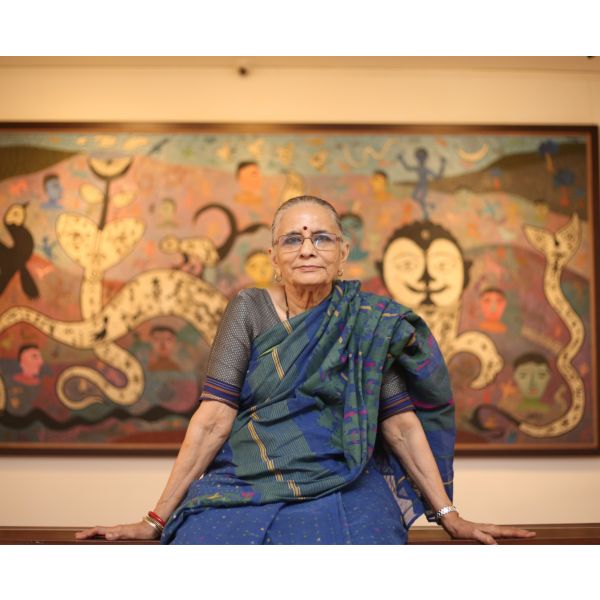 ArtistsMadhvi Parekh$0.00Madhvi Parekh was born and raised in Sanjaya, a village in Gujarat. Though she is self-taught and took up painting only in 1964, inspired by her artist-husband Manu Parekh, art remained a part of her consciousness through childhood memories, her family’s rituals such as the traditional floor designs of rangoli, popular folk stories, and simple village life. While expecting their first child, Parekh’s husband gifted her a book on drawing exercises by Paul Klee, and soon she was taking the first steps towards creating her own art vocabulary. Learn More
 -
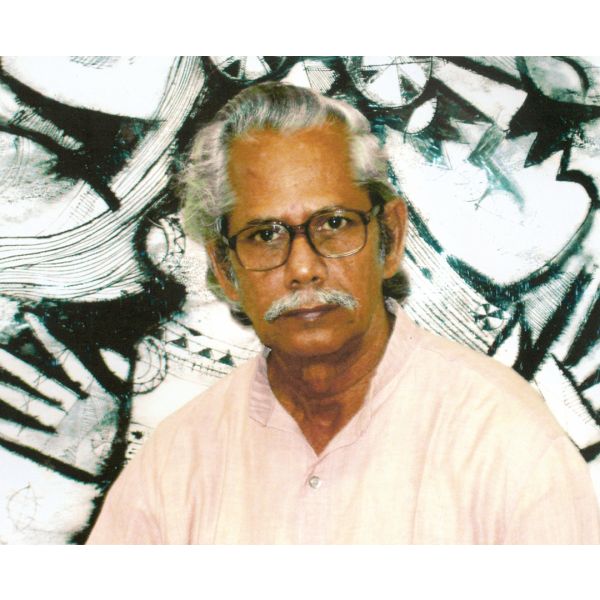 ArtistsM. Senathipathi$0.00A student of K. C. S. Paniker—the influential artist-teacher and founding father of the Madras Art Movement—M. Senathipathi is known for his richly textured works drawn from mythology and contextualised in contemporary social issues. Learn More
 -
 ArtistsM. S. Joshi$0.00Born in Nashik, Maharashtra, M. S. Joshi studied at Sir J. J. School of Art, Bombay, in the 1930s. Joshi combined his training in academic realism with a sense of vitality, precision and aesthetics to reveal India’s rich cityscapes and landscapes in his watercolour and gouache works. There was immense depth in the rendering of his subjects, which included people, places, architectural elements, all done in a subdued yet textured palette. Learn More