Search results for: 'Calendar Art from the 19th century'
-
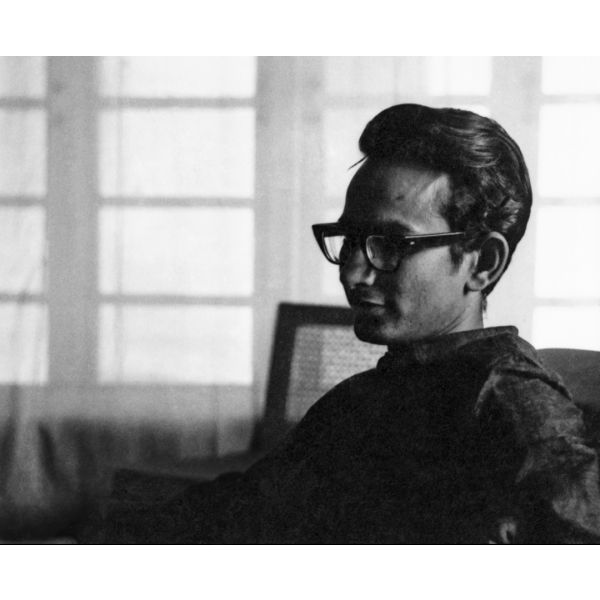 ArtistsGulammohammed Sheikh$0.00Born in Saurashtra, Gujarat, on 16 February 1937, painter, poet, art critic and historian Gulammohammed Sheikh has been a seminal presence on the modern Indian art scene for several decades now. Sheikh obtained a master’s degree in painting from M. S. University, Baroda, in 1961, and studied at the Royal College of Art, London, from 1963-69, on a Commonwealth scholarship. Learn More
 -
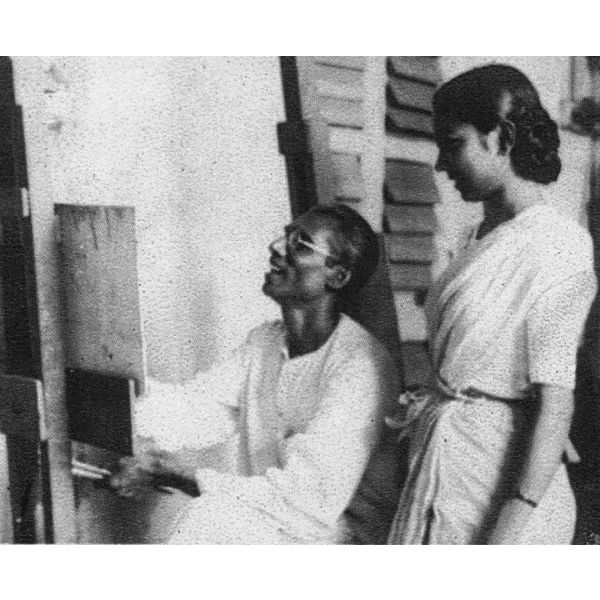 ArtistsGobardhan Ash$0.00Born in 1907, Gobardhan Ash came into his own as an artist at a time when Indian art was in a state of historical flux, when the imagination of young artists was infused with the spirit of country’s freedom from colonial rule. He trained at the Government College of Art in Calcutta from 1926-30, and at the Government School of Arts and Crafts, Madras, till 1932. He was an active member of various artist collectives such as the Calcutta Group that he joined in 1950, the Art Rebel Centre, and the Young Artists Union, of which he was a founder member. Learn More
 -
-
 ExhibitionsShanti Dave: Neither Earth, Nor SkyAs low as $1.00
For Shanti Dave, creativity is a consistent and persistent exploration of the word or akshara—a term defined in the Natyashastra as a stroke in musical notes—which he perceives as the source of all creation. Dave’s abstract iconography, beginning in the early 1950s, adapted to modernism, aesthetic continuity and transcultural exchange. He altered, rejected and improvised the archaic image into a resonant form resembling an ancient script.
Learn More -
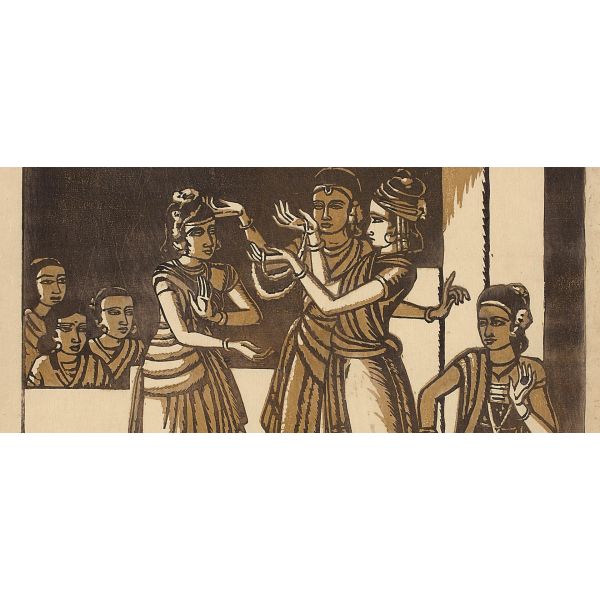 Events and ProgrammesMis-en-stage$1.00
Tracing the evolution of set design in Bengal, responding to the theatre archive at Natya Sodh Sansthan with scholar Trina Nileema Banerjee.
Learn More -
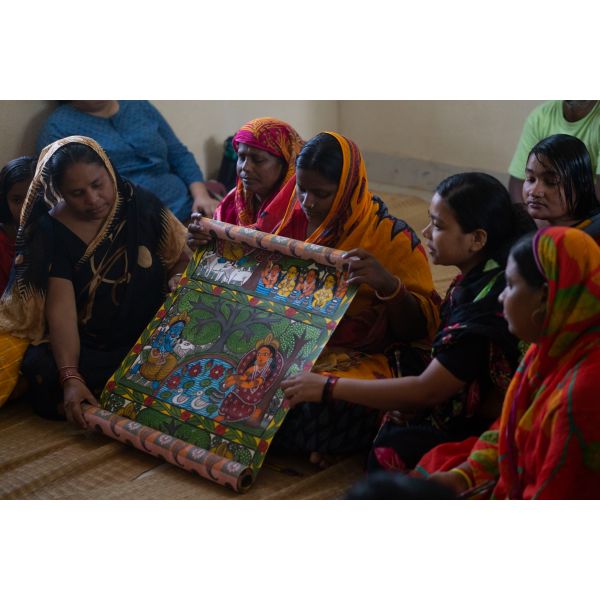 Events and ProgrammesPigment: Material Matters$1.00
A workshop on making botanical pigments with the Patachitrakars at Naya Village, who will share their songs and painted scrolls.
Learn More -
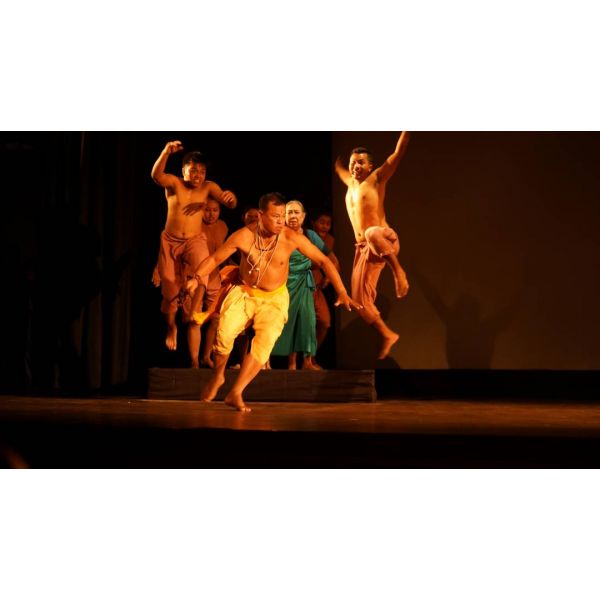 Events and ProgrammesPebet$1.00
Pebet is a ‘phunga wari’, a type of traditional fireside story told to Manipuri children by their grandparents. Directed by the renowned theatre practitioner Heisnam Kanhailal and performed first in 1975, it subverts the familiar icon of the bird and the cat to comment on political and cultural indoctrination.
Learn More -
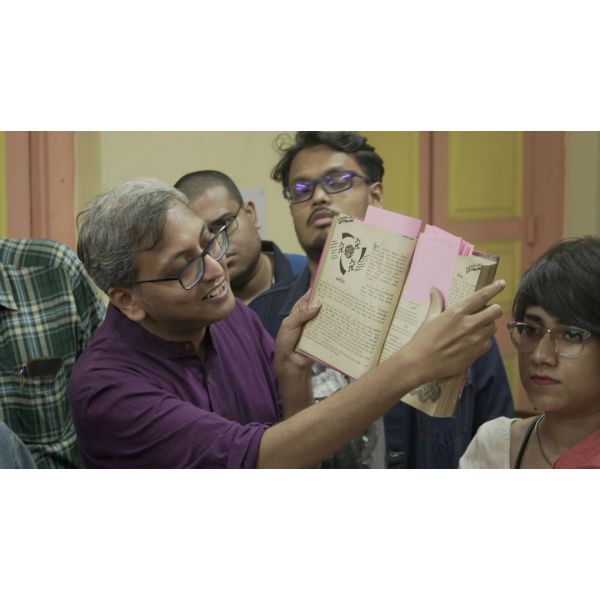 Events and ProgrammesPast in Print$1.00
A guided walk of the first free circulating public library of India—Uttarpara Public Library—with researcher Sarbajit Mitra, traversing the history of regional literary cultures, and sifting through their vast archive to delve into the vibrant world of illustrated periodicals in colonial Bengal, followed by a poetry reading by Sujoy Prasad Chatterjee.
Learn More -
 Events and ProgrammesCrossing the Midnight Hour$1.00
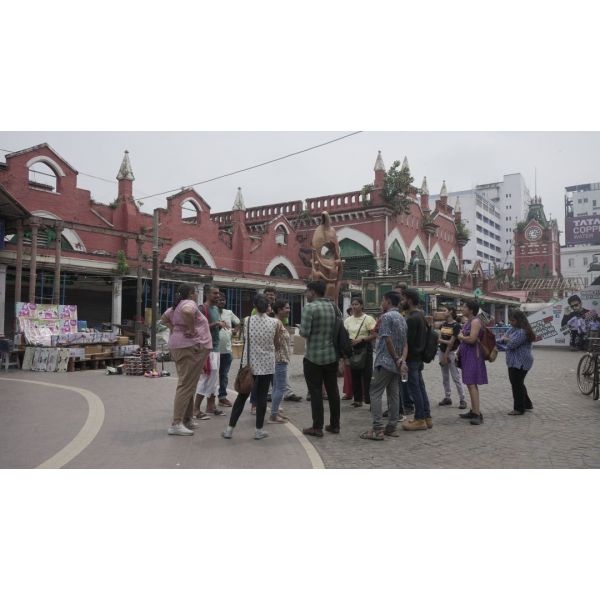
A guided walk by urban history researcher Sujaan Mukherjee, uncovering the forgotten histories of monuments and sites around the Indian Museum, and their changing fates after Independence.
Learn More -
 Events and ProgrammesMapping the Colony$1.00
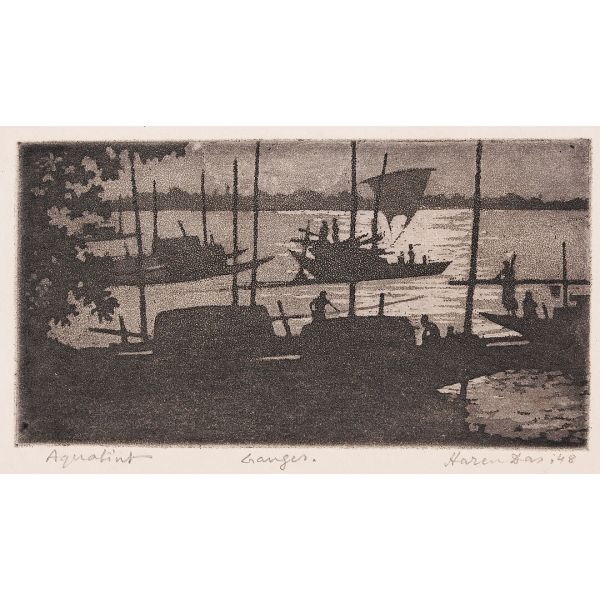
A workshop by Priyank Patel, from the Department of Geography, Presidency University, for ages 16 and above, on mapmaking in the colonial and postcolonial era and how maps of Calcutta (and later, Kolkata) were shaped through these different ways of knowing the world.
Learn More -
 Collection StoriesAn Imperial Spectacle: The Delhi Durbars and its Ceremonies$1.00
The Delhi Durbars were a series of coronation events held by the British in India which formally declared the British monarch as the Emperor or Empress of India. They took place thrice—first, in 1887, acknowledging Queen Victoria as the Empress of India, followed by one in 1903, for King Edward VII, and finally in 1911 for King George V, which saw the monarch’s attendance in person.
Learn More