


Search results for: 'pros and cons of short and lenthy songs'
-
 ExhibitionsBIRDS OF INDIAAs low as $1.00
Works of art made by Indian artists for Western patrons in the early colonial period are what we now call Company Painting. The artists, who might otherwise have worked for an Indian court, sought new markets among those employed in various capacities by the European trading companies, and especially the British East India Company. Some patrons supplied the artists with new materials such as European-made paper and transparent watercolour pigments, and expressed preferences regarding subject matter, leading to new departures in both style and substance in Indian art. One of the most delightful genres of Company Painting was natural history: images of India’s plants, animals, and birds. Company Painting Company Paintings British Era
Learn More -
 JournalThe Last Effort and Fall of Tippoo Sultaun by Henry Singleton$1.00
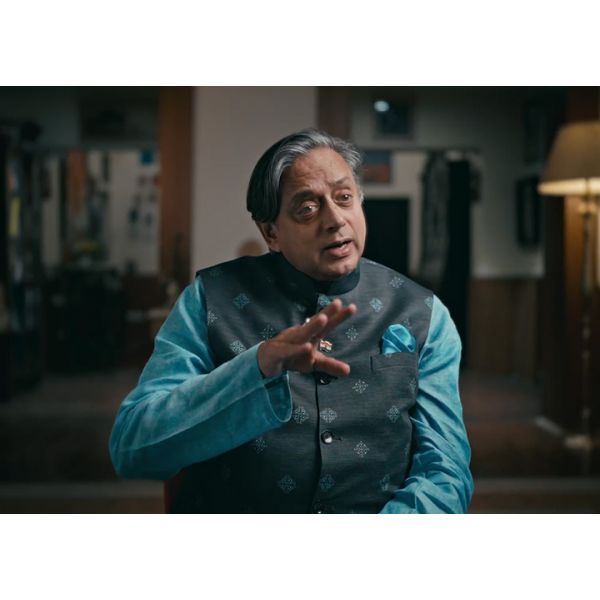
Henry Singleton’s The Last Effort and Fall of Tippoo Sultaun belongs to a genre known as history painting: the depiction of important historical events, usually on a large scale, as if they were playing out in front of one’s eyes. Author and parliamentarian Shashi Tharoor and art historian Giles Tillotson explain the lively imagination deployed in Singleton’s painting that depicts the British assault on Seringapatam and the killing of its ruler, Tipu Sultan—himself the source of so many stories that it was difficult to unravel the truth from the many falsities spun by the biased colonial administration and historians of the time.
Learn More -
-
 ExhibitionsNemai GhoshAs low as $1.00
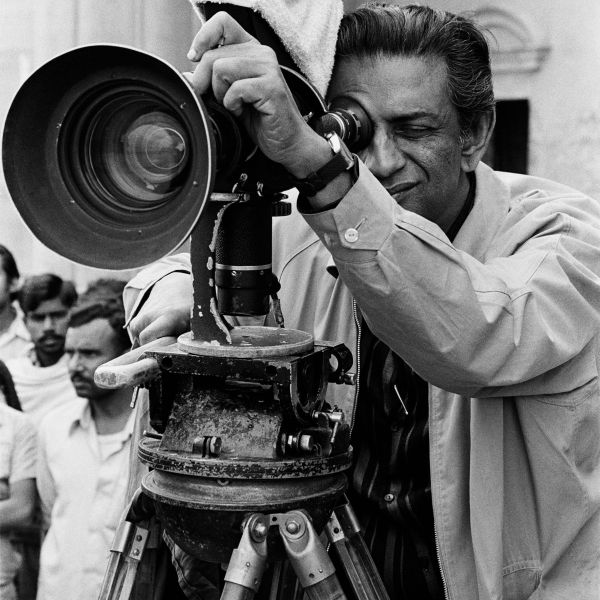
Photographer Nemai Ghosh has been the quintessential Satyajit Ray biographer through his decades-long close association with the master filmmaker. Over a lifetime of work, he has built up a vast and valuable photographic archive, now housed at DAG.
Learn More -
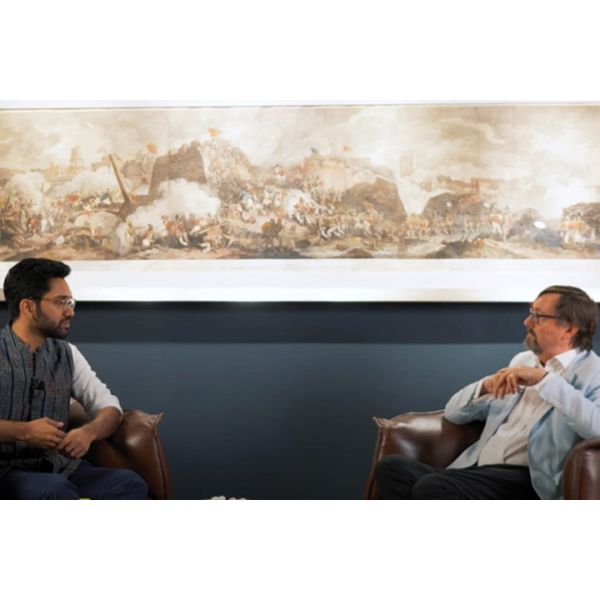 JournalRemembering Tipu Sultan: Manu Pillai and Giles Tillotson$0.00Historian and author Manu S. Pillai in conversation with art historian and curator Giles Tillotson on the subject of Tipu Sultan in the context of DAG’s exhibition, 'Tipu Sultan: Image and Distance' Learn More
 -
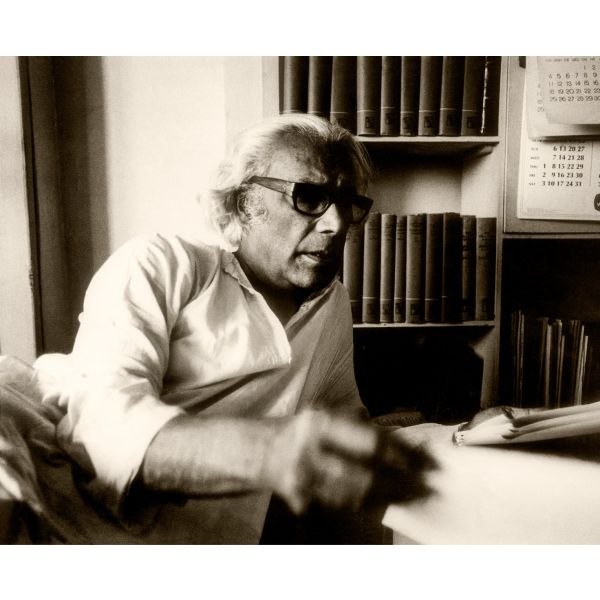 ArtistsProdosh Das Gupta$0.00Born in Dacca (now Dhaka) in present-day Bangladesh, Prodosh Das Gupta studied sculpture under Hiranmoy Roy Chowdhary at the Lucknow School of Arts and Crafts (1932-33), and under D. P. Roy Chowdhury at Government School of Art and Craft, Madras (1933-37). Over the next two years, he studied bronze casting at LCC Central School, London, and sculpture at Royal Academy of Arts, London, and Académie de la Grande Chaumière, Paris. He returned to India in 1940 and set up his studio in Calcutta. He subsequently taught at M. S. University, Baroda, and at Calcutta’s Government College of Arts and Crafts. Learn More
 -
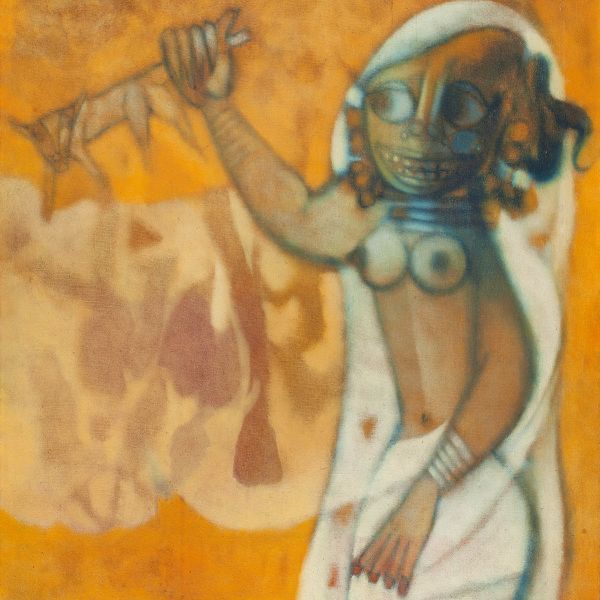 ExhibitionsThe Gold SeriesAs low as $1.00
When we launched the Silver Series in May 2020 as our attempt to stay engaged with art-lovers no longer able to visit our galleries, we were unsure of the response. But the feedback we received was heartening, and it was backed by commensurate sales to prove that the art-loving fraternity supported the initiative and gave it a resounding thumbs-up. J. Sultan Ali Altaf Amit Ambalal Amitava Anonymous (Early Bengal) Anonymous (Kalighat Pat) Anonymous (Portraiture) K. H. Ara Prabhakar Barwe Bikash Bhattacharjee Nikhil Biswas Nandalal Bose Eric Bowen Shobha Broota Sakti Burman Avinash Chandra Jogen Chowdhury Sunil Das Prodosh Das Gupta Shanti Dave Rajendra Dhawan M. V. Dhurandhar K. Laxma Goud Satish Gujral Zarina Hashmi K. K. Hebbar M. F. Husain George Keyt Krishen Khanna K. S. Kulkarni Ram Kumar Rabin Mondal S. Nandagopal Laxman Pai Gogi Saroj Pal Madhvi Parekh Jeram Patel Ganesh Pyne Sohan Qadri A. A. Raiba S. H. Raza P. T. Reddy Rekha Rodwittiya Jamini Roy G. R. Santosh Paritosh Sen F. N. Souza Anupam Sud Ramgopal Vijaivargiya
Learn More -
 ExhibitionsMaster Maqbool: Works by M. F. HusainAs low as $1.00
He was the colossus of the Indian art world whose reign over twentieth-century modern art remains unparalleled. M. F. Husain (1913-2011) was the face of Indian modernism and owned it completely. Having started out as a painter of billboards in Bombay, he became its unchallenged monarch as a member of the influential Progressive Artists’ Group in 1947. He claimed the first National Award instituted by the Lalit Kala Akademi in 1955, and went on to become India’s most celebrated artist. In a practice that spanned over seventy years, Husain was playful, experimental, provocative, controversial—but never mediocre.
Learn More -
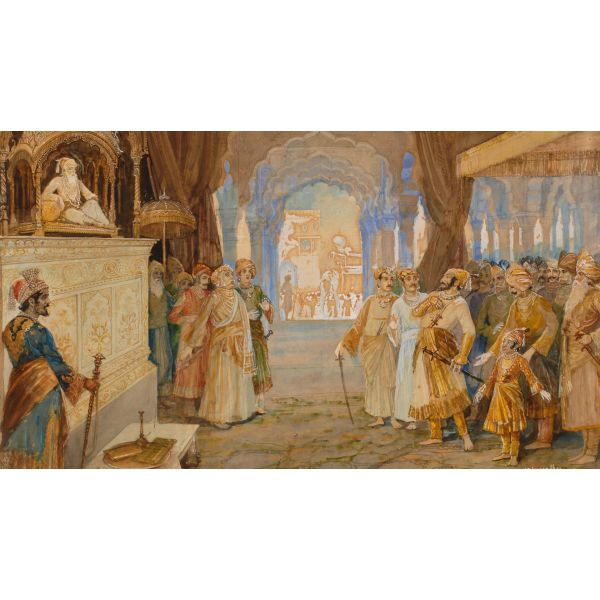 Institutional CollaborationsM. V. DHURANDHAR: A RETROSPECTIVE$1.00
Few artists claim as rich and intriguing a legacy as M. V. Dhurandhar in the landscape of late 19th and early 20th century Indian art. His practice leaves us with challenging questions about encounters and exchanges with India's colonial past and the influence of Europeans in shaping the evolution of painting. This exhibition revisits Dhurandhar's vast oeuvre through DAG's extensive collection of his paintings, archival material and ephemera, in an attempt to understand the socio-cultural context of his emergence, and to re-examine his influence on institutional and commercial art in the country.
Learn More -
 Institutional CollaborationsGhare Baire: The World, the Home and Beyond 18th – 20th Century Art in Bengal$1.00
Ghare Baire was a museum-exhibition showcasing over 200 years of art in Bengal. Presented by DAG in collaboration with the National Gallery of Modern Art and the Archaeological Survey of India, the exhibition was housed at the historic Currency Building, across twelve galleries featuring over 700 artworks. The exhibition was the largest showcase of Bengal Art, presenting a panoramic view of the evolution of art in a region that has been critical to the development of Indian modern art. The exhibition starts with the arrival of the travelling European artists at a time of exchange between Bengal and the world. This confluence of cultures stimulated new visual languages as we see in the Kalighat pat, the Bengal School, and the subsequent emergence of artists who fearlessly and freely experimented with form and subject, reshaping the trajectory of art in India.
Learn More -
-
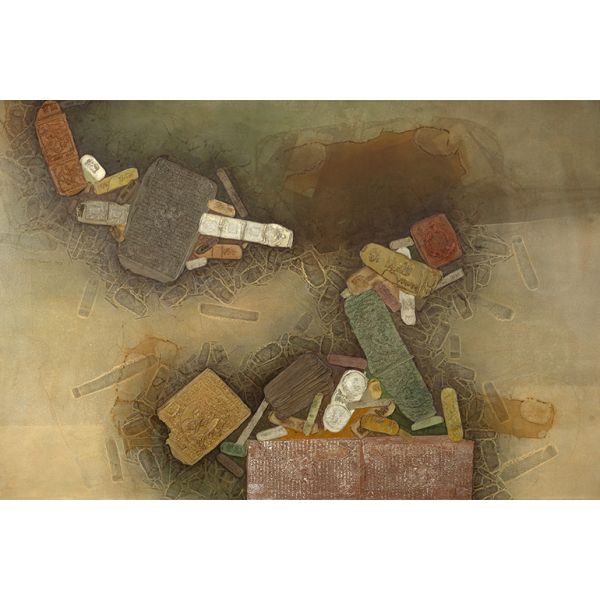 JournalUntitled by Shanti Dave$1.00
This Untitled painting, created in the early-to-mid-1970s, reflects Shanti Dave's fervent experimentation during a prolific period marked by international recognition in mural making and exhibitions. Drawing inspiration from childhood memories of Badapura and nearby archaeological ruins, the abstract composition blends colour pigments, beeswax, and oil solutions in a dynamic interplay. Employing a reverse image technique with molten wax, the painting challenges perceptions and invites contemplation on the nature of truth. Noted fashion designer and art-collector Tarun Tahiliani explains the nuances of Shanti Dave’s work in a film specially created on the painting.
Learn More