


Search results for: 'MADHVI PAREKH,Sea God- 1971, Oil and oil pastel on canvas 48.0 x 72.2 in Item Code: DAG000003163'
-
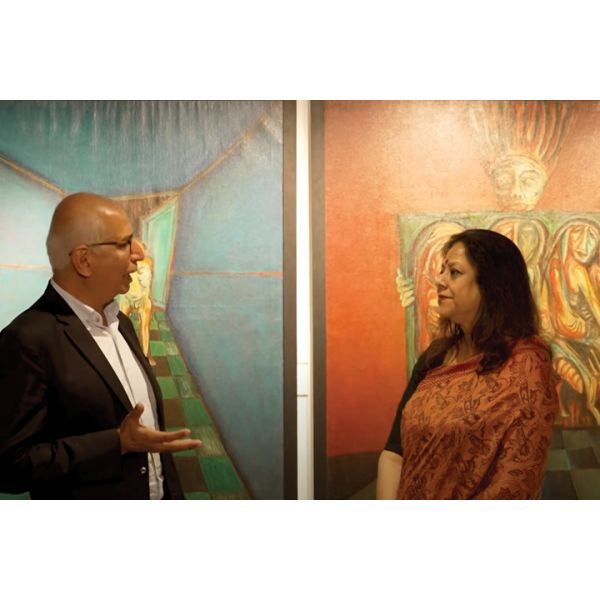 JournalThe Art of Rabin Mondal$0.00A great admirer of Indian modernist Rabin Mondal's works and curator of ‘Kingdom of Exile, a major retrospective on the artist, Kishore Singh of DAG is joined by Ina Puri, documentarian, collector and an old acquaintance of the artist as, together, they explore the circumstances of Mondal’s painterly life, particularly his vaunted King Series. A set of eight powerful paintings on the theme and hubris of power, now going on view at the upcoming Art Dubai 2022 Learn More
 -
 JournalThe Making of the Dhaka Art Summit: Behind the scenes with the Curator$0.00
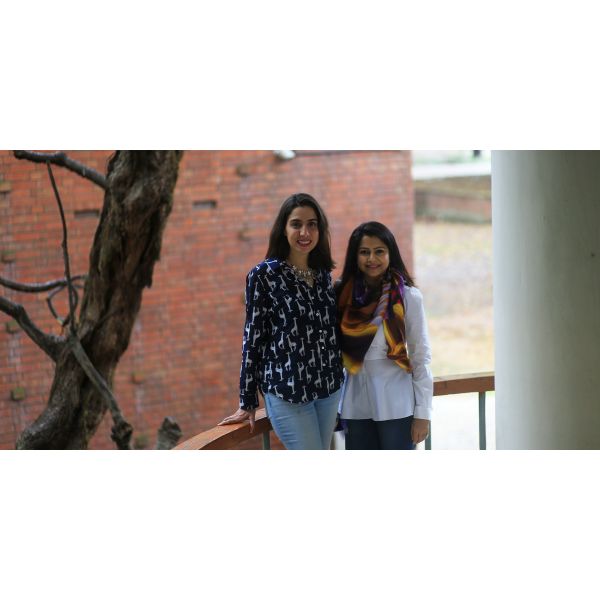
Diana Campbell is the Artistic Director of the Samdani Art Foundation, now in its 10th year, and chief curator of the prestigious Dhaka Art Summit, whose sixth edition starts on February 3, 2023. She spoke with the DAG Journal’s editorial team to discuss her own curatorial process and how she makes room for experimentation, and unpacks the intriguing thematic of this new edition: ‘flood’, or bonna.
Learn More -
 ExhibitionsMemory & IdentityAs low as $1.00
Much of Indian modernism is enriched by the work that some of its best known artists produced after they had left the country, choosing as home another land. F. N. Souza was among the first to leave, in 1949, to head for London, where a successful practice catapulted him to the top of Britain’s artists. He was followed, in 1950, by S. H. Raza, who settled in Paris, winning the coveted critics’ award (Prix de la critique) in 1956, while others such as Krishna Reddy (Paris and New York), S. K. Bakre (London), Sakti Burman (Paris), Avinash Chandra (London and New York), Mohan Samant (New York), Natvar Bhavsar (New York), V. Viswanadhan (Paris), Sohan Qadri (Copenhagen), Rajendra Dhawan (Paris), Eric Bowen (Oslo), Ambadas (Oslo), and Zarina Hashmi (New York), followed in the 1950s-70s. These fourteen artists, with their diverse styles and concerns in art making, are masters lauded for the sheer range of responses to their environment that their work has registered. However, the question this exhibition forefronts, as its curator Kishore Singh asks, is: ‘Does the artist’s ethnic identity mean art too has an ethnic identity?’ Ambadas Avinash Chandra Eric Bowen F. N. Souza Krishna Reddy Mohan Samant Natvar Bhavsar Rajendra Dhawan S. H. Raza S. K. Bakre Sakti Burman Sohan Qadri V. Viswanadhan Zarina Hashmi
Learn More -
 JournalToits (Rooftops) by S. H. Raza$1.00
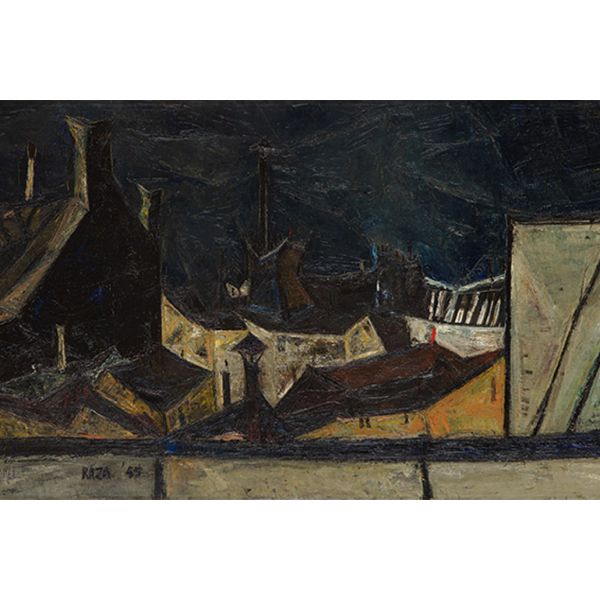
S. H. Raza had begun to paint using oils, moving away from his impressionistic watercolours, on his way to winning the prestigious critics’ award in 1956. Just a year before, he completed a stunning painting of Parisian rooftops, revealing not a daylight scene but one of the night, only yellow lamplight from the streets dimly silhouetting the chimneys and sloping roofs. This period of Raza’s career is somewhat lesser known than his later, tantra-inspired works, as Ashok Vajpeyi and Aman Nath explain to us.
Learn More -
 ExhibitionsThe Art Of SantiniketanAs low as $1.00
The Art of Santiniketan showcases the work of its four chief artists—Santiniketan’s founder, Rabindranath Tagore, its first principal and the architect of the Santiniketan pedagogy, Nandalal Bose, and his two illustrious students who went on to make a name for themselves as highly original and significant artists—Benode Behari Mukherjee and Ramkinkar Baij. Santiniketan was a path-breaking educational institution Rabindranath Tagore set up in rural Bengal in the early twentieth century, and the exhibition begins by examining its genesis in Tagore’s radical ideas of basing education in freedom and in the midst of nature. Benode Behari Mukherjee Nandalal Bose Rabindranath Tagore Ramkinkar Baij
Learn More -
 Collection OnlineTHE TAGORES$1.00
One of the most distinguished families in Bengal, the Tagores exercised unparalleled influence over the cultural landscape of the region. The Nobel Laureate, Rabindranath Tagore (1861 - 1941), and two of his nephews, Gaganendranath Tagore (1867-1938) and Abanindranath Tagore (1871 - 1951) were recognised as India’s National Art Treasure artists. Sunayani Devi (1875 -1962), their sister, is regarded as one of modern India’s first women painters known by name. Her lyrical paintings and embroideries often looked inward to an imagined world of fables and myths. At the turn of the twentieth century, we see Abanindranath emerging as the founder of the Bengal School as he envisioned a new Indian art that was free of colonial influence, rooted in pan-Asianism. Gaganendranath, on the other hand, was a prolific satirist and cartoonist, who imagined new forms and perspectives inspired by Cubism. Together they formed the influential Indian Society of Oriental Art in 1907, while Rabindranath’s school and university at Santiniketan would continue to shape modern art in Bengal for generations to come.
Learn More -
 ExhibitionsBIRDS OF INDIAAs low as $1.00
Works of art made by Indian artists for Western patrons in the early colonial period are what we now call Company Painting. The artists, who might otherwise have worked for an Indian court, sought new markets among those employed in various capacities by the European trading companies, and especially the British East India Company. Some patrons supplied the artists with new materials such as European-made paper and transparent watercolour pigments, and expressed preferences regarding subject matter, leading to new departures in both style and substance in Indian art. One of the most delightful genres of Company Painting was natural history: images of India’s plants, animals, and birds. Company Painting Company Paintings British Era
Learn More -
 JournalUntitled by Shanti Dave$1.00
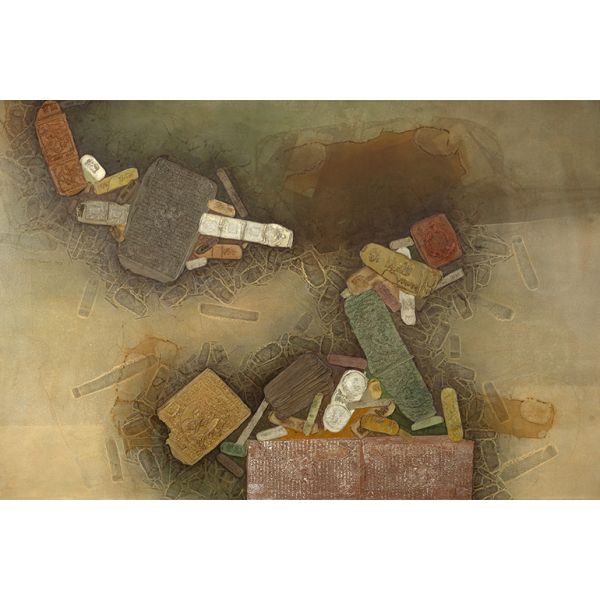
This Untitled painting, created in the early-to-mid-1970s, reflects Shanti Dave's fervent experimentation during a prolific period marked by international recognition in mural making and exhibitions. Drawing inspiration from childhood memories of Badapura and nearby archaeological ruins, the abstract composition blends colour pigments, beeswax, and oil solutions in a dynamic interplay. Employing a reverse image technique with molten wax, the painting challenges perceptions and invites contemplation on the nature of truth. Noted fashion designer and art-collector Tarun Tahiliani explains the nuances of Shanti Dave’s work in a film specially created on the painting.
Learn More -
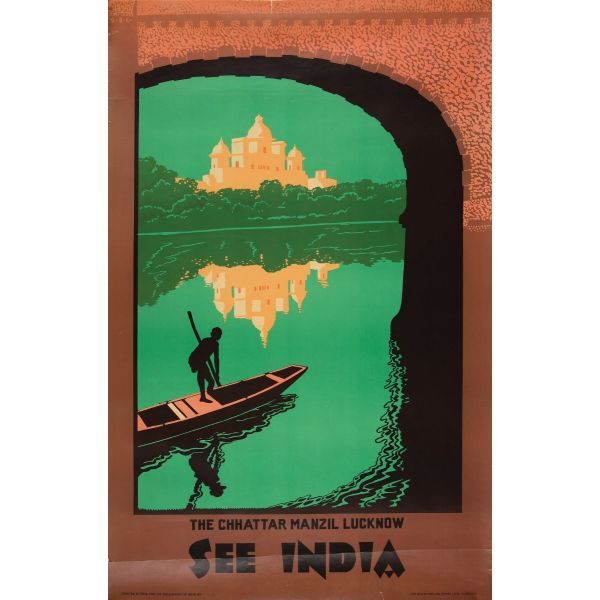 Events and ProgrammesFont, Form, Function$1.00
A workshop on typography and the art of font-making, facilitated by Diptanshu Roy, Creative Director (Wunderman Thompson) and Musician, inspired by the poster art of early 20th century.
Learn More -
-
-
 Institutional CollaborationsDRISHYAKALA$1.00
How did the multiple trajectories of visual arts develop in the subcontinent? Where did they originate and how did their paths converge? Drishyakala offers a sweeping journey into the heterogenous histories of visual arts in India, from the first European travelling artists who drew landscapes to popular prints of the earliest woodcuts and lithographs evolving into the thriving advertising visuals of the 20th century. The exhibition is broadly divided into four categories, each exploring an unique area of development—the art of portraiture through photography and painting, oriental sceneries drawn by European travelling artists, popular prints from the late eighteenth century to post-independence and artworks of the nine National Treasure Artists. Together, these sections give brief glimpses into the dizzying variety of forms, styles and languages of South Asian art.
Learn More