


Search results for: '19th century india through the eyes of foreign'
-
 ExhibitionsTipu SultanAs low as $1.00
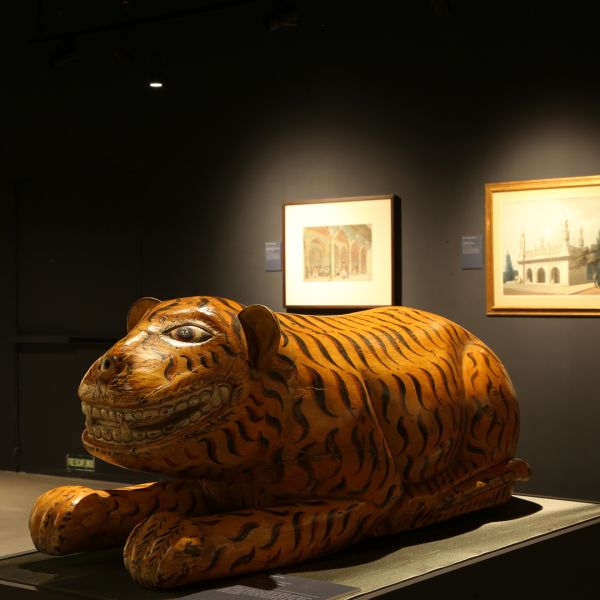
An extraordinary exhibition of paintings, prints, maps and other objects, curated by Giles Tillotson, that recounts a visual history of the Mysore Wars between the East India Company and Tipu Sultan, this DAG exhibition explores how the narrative might have changed 222 years after the siege of Seringapatnam. The images, based on the British view of the time, reflect changing perceptions and Indian views on this epic battle and its political and social fallouts. A highlight of the exhibition is a painting by Henry Singleton depicting The Last Effort and Fall of Tippoo Sultaun, among other stellar works, that will be seen in India for the first time. Alexander Allan Cpt. R. Frazer David Wilkie Edward Orme Henry Singleton J. B. Mauzaisse James Hunter Johann Peter Krafft John Smart Mather Brown Obadiah Sherratt Robert Hyde Colebrooke Robert Home Robert Ker Porter Thomas Stothard
Learn More -
 JournalInvocation - 27 by Sohan Qadri$1.00
Sohan Qadri was truly a global artist whose travels and practice spanned India, its Himalayan neighbours, Africa, Europe and Canada. His paintings can be summed up as yantras that serve as visual meditation tools. Invocation – 27 is a vibrant sea of yellow ochre with a band of blue in the middle. A captivating work, Geeti Sen explains, the painting serves to offer viewers a profound experience of transformation and self-discovery.
Learn More -
 JournalSearching for the ‘Inner Form’ in Prabhakar Barwe’s Blank Canvas$0.00
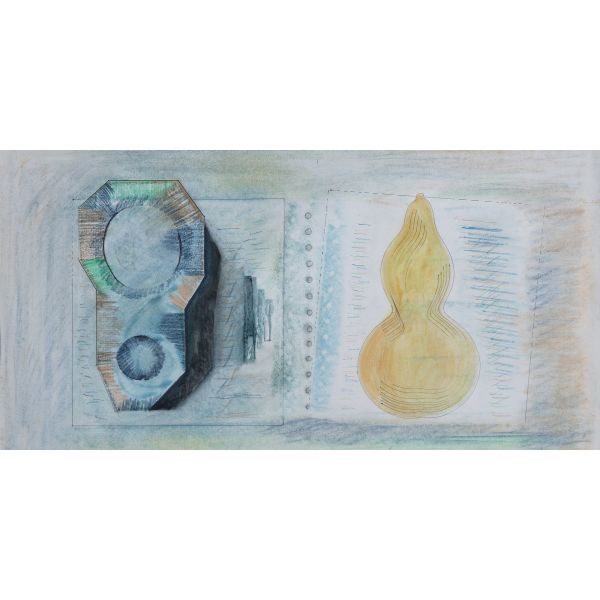
Artists have often formulated their theories and observations to analyse and become aware of the cognitive modes of art making, and to associate with broader contemporaneous art movements. These manifestos become a window into an artist’s process. Prabhakar Barwe’s seminal treatise, <i>Kora Canvas</I> (The Blank Canvas, 1989), exemplifies his deep understanding of the fundamental elements of art and keen observations of nature and his surroundings.
Learn More -
 JournalThe City as a Museum: Edition 2, Kolkata 2023$0.00
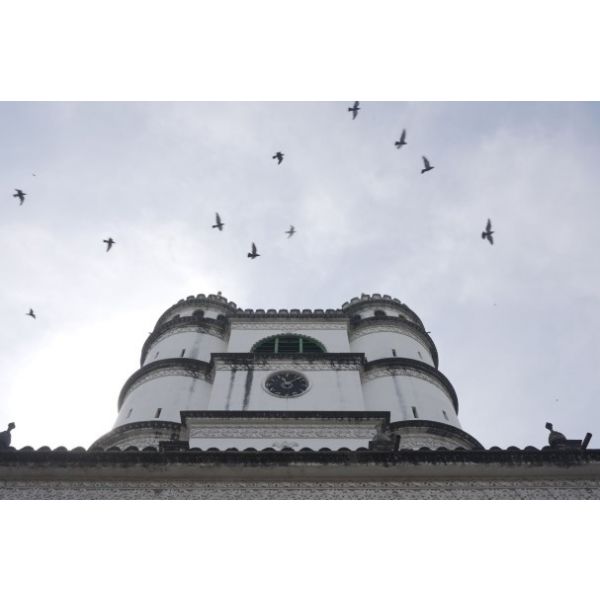
'The City as a Museum' in an annual art and heritage festival by DAG's Museums Programme. The second edition returned to Kolkata to celebrate the city's rich history of artistic practices and exchange. We travelled across the city and beyond to heritage spaces, artists' homes, and rare collections through unique walks, workshops, talks, performances and more. Explore a snapshot of this journey through photographs by Parameshwar Halder.
Learn More -
 Events and ProgrammesMosaic Metropolis$1.00
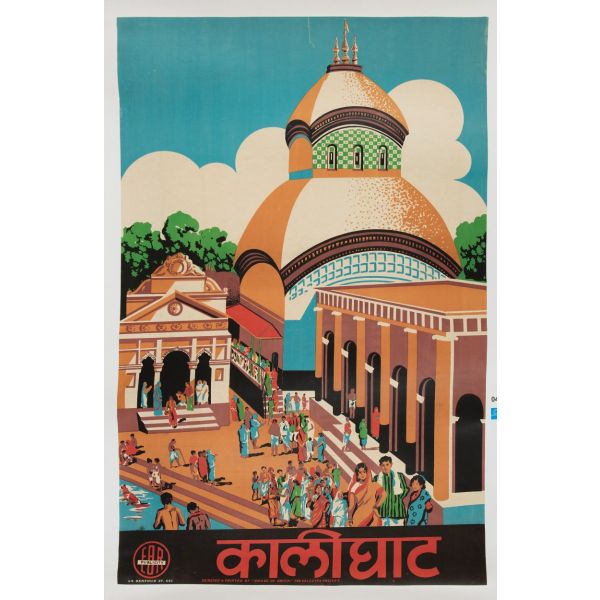
A hop-in hop-off trail through the Calcutta underground metro rail, exploring the story of the murals that adorn the metro stations and enliven the everyday commute of millions of people.
Learn More -
 ExhibitionsThe Sixties ShowAs low as $1.00
The 1960s was a period of immense change around the world, and it had deep ramifications on India’s socio-political scenario. The country had left behind the jubilation of Independence and was feeling the pinch of a nation grappling with the issues of development that impacted society and environment. A war with China in 1962 and Pakistan in 1965 had far-reaching implications on the national psyche— the first of shame, the latter of pride. Crippling shortages and unemployment were impacting life, even as the country’s success with the Green Revolution was directed at self-sufficiency. Migration from the villages to urban centres was increasing. Disparities—economic, gender or class—provided fertile ground for the alienation of the other. The more anglicised among the youth found themselves being drawn into the vortex of a global hippie movement. A. A. RAIBA AMBADAS ANUPAM SUD AVINASH CHANDRA BIKASH BHATTACHARJEE BIMAL DASGUPTA DHANRAJ BHAGAT F. N. SOUZA G. R. SANTOSH HIMMAT SHAH J. SULTAN ALI J. SWAMINATHAN JAMINI ROY JERAM PATEL JOGEN CHOWDHURY JYOTI BHATT K. G. SUBRAMANYAN K. LAXMA GOUD KRISHEN KHANNA LAXMAN PAI M. F. HUSAIN MADHVI PAREKH P. T. REDDY PARITOSH SEN PRABHAKAR BARWE PRODOSH DASGUPTA PROKASH KARMAKAR RABIN MONDAL RAM KUMAR RAMESHWAR BROOTA S. H. RAZA S. K. BAKRE SAKTI BURMAN SATISH GUJRAL SHANTI DAVE SOHAN QADRI SOMNATH HORE SUNIL DAS ZARINA HASHMI
Learn More -
 Art FairsFrieze Seoul 2024$1.00
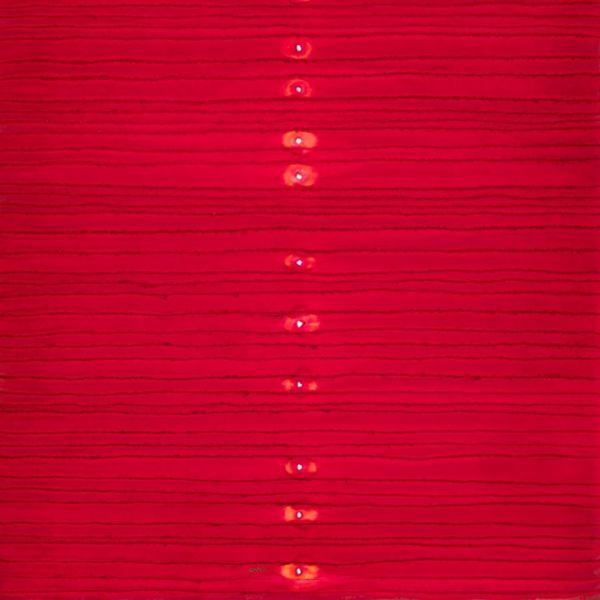
Steeped in sacred iconography particular to the Indian artist, Sohan Qadri (1932-2011), whose practice in Copenhagen brought him international renown, the ink and dye works represent the artist’s modernist vocabulary – minimalist, rendered in vibrant colours, with a tactile dimensionality that established him as a twentieth century painter whose legacy has impacted viewers around the world. Perhaps no other Indian artist has been as widely collected as Sohan Qadri.
Learn More -
 ArtistsCompany Paintings$0.00
Ethnographic mapping and documentation of a vast country like India was an important part of the political and economic expansion of the East India Company from the middle of the seventeenth century onwards.
Learn More -
 ArtistsWilliam Hodges$1.00
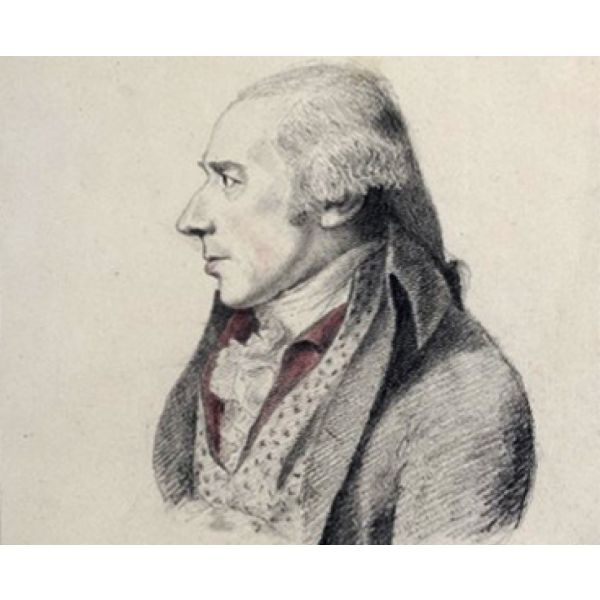
The earliest English landscape artist to arrive in India in the eighteenth century, William Hodges is known for his fine landscape drawings and paintings of India made during his four-year stay from 1780-83.
Learn More -
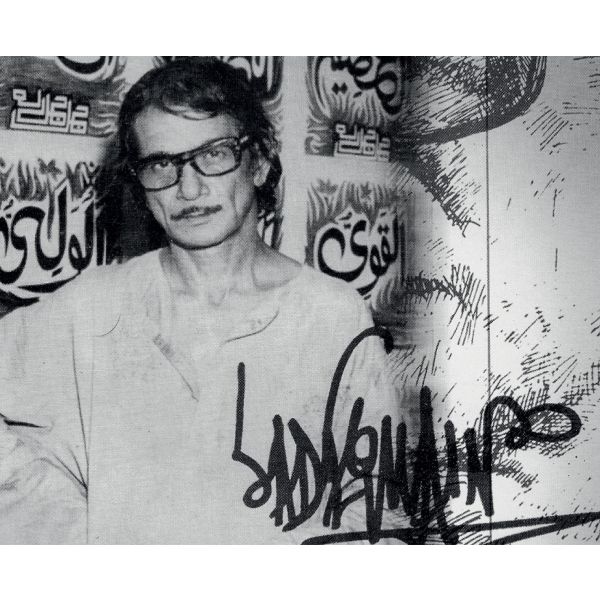 ArtistsSadequain$0.00One of the most important South Asian artists of the twentieth century, Syed Ahmed Sadequain Naqvi was born in Amroha in Uttar Pradesh in pre-Partition India and grew up in a family that highly valued calligraphy. He moved to Delhi in 1944 to work as a calligrapher-copyist with All India Radio where his elder brother was also working, but shifted to Pakistan following Partition. Moving between jobs for a few years in his new homeland, Sadequain devoted himself fully to the arts in 1955 after his fame as an artist rose with the patronage of the country’s prime minister, Huseyn Shaheed Suhrawardy. Learn More
 -
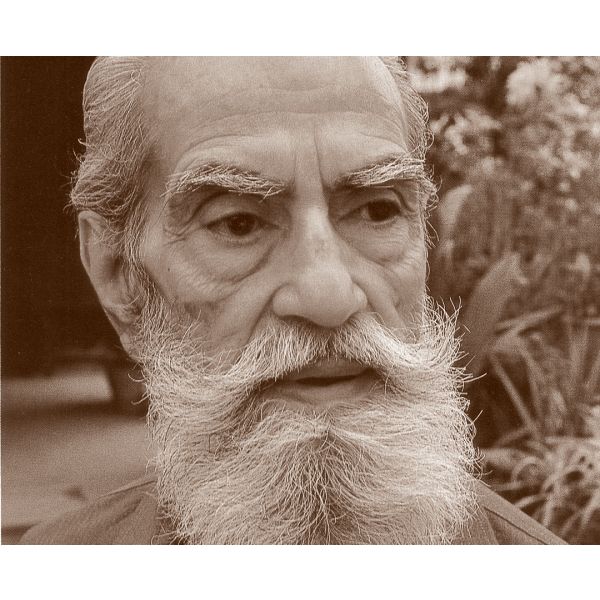 ArtistsB. C. Sanyal$0.00Bhabhesh Chandra Sanyal lived a unique life in the world of Indian art, witnessing the huge arc it cut across the twentieth century—he was born when the revivalist Bengal School was beginning to bloom, and by the time he passed away, modern Indian art had gone global and carved an international art market for itself. Learn More
 -
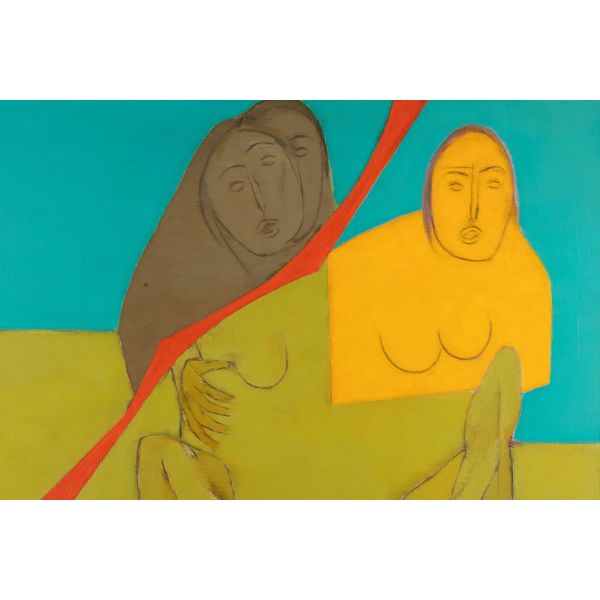 JournalTerm Of The Month: The Diagonal Method$0.00
As one of India’s most well-known artists, Tyeb Mehta still commands our attention for his commitment to experimentation. His ‘Diagonal series’ established him as a dynamic figure within the world of modern art, but how did this diagonal method come to be an important tool of composition in the last century? It all started with the invention of another compoitional tool called the 'rule of thirds'. Read below as we explore the origins of this artistic tool and see how it has evolved over time.
Learn More