


Search results for: 'central cee st. patrick's 和訳'
-
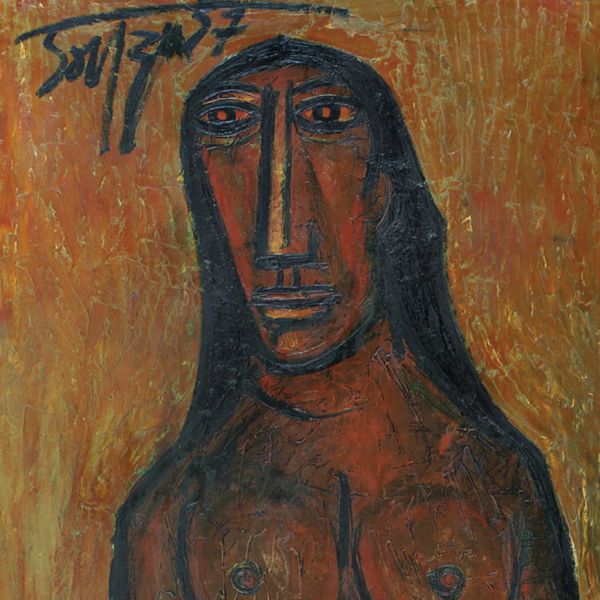 ExhibitionsThe Naked and the NudeAs low as $1.00
The nude. Just the term sends a frisson of excitement down the spine in most people. For the few of us who are part of the art fraternity, however, more than just the anticipation of being able to view the human body as an artistic work in its many forms and avatars, its beauty and its degradation both, is the true mark of an artist’s genius. And yet, the history of the nude in Indian art has remained curiously unmapped. A. A. Almelkar A. A. Raiba A. P. Bagchi A. Ramachandran Abalall Rahiman Akbar Padamsee Anita Roychowdhury Anupam Sud Avinash Chandra B. Prabha B.Vithal Bengal School (Anonymous) Bikash Bhattacharjee Chintamoni Kar Chittaprosad F. N. Souza G. R. Santosh George Keyt Gogi Saroj Pal Gopal Ghose Hemendranath Majumdar J. Sultan Ali Jamini Roy Jaya Ganguly Jehangir Sabavala Jeram Patel Jogen Chowdhury Jyoti Bhatt K. H. Ara K. K. Hebbar K. Laxma Goud K. S. Kulkarni L. Munuswamy Laxman Pai M. F. Husain M. R. Acharaker Madhav Bhattacharjee Maniklal Banerjee Nalini Malani Navjot Nikhil Biswas P. Khemraj P. T. Reddy Prodosh Das Gupta Prokash Karmakar R.Vijaivargiya Rabin Mondal Radha Charan Bagchi Rameshwar Broota Ramkinkar Baij Ranbir Kaleka Ravi Varma Press Rekha Rodwittiya S. Dhanapal Sakti Burman Satish Sinha Sudhir Khastgir Suhas Roy Sunil Das Sunil Madhav Sen Surendran Nair V. Nageshkar Ved Nayar
Learn More -
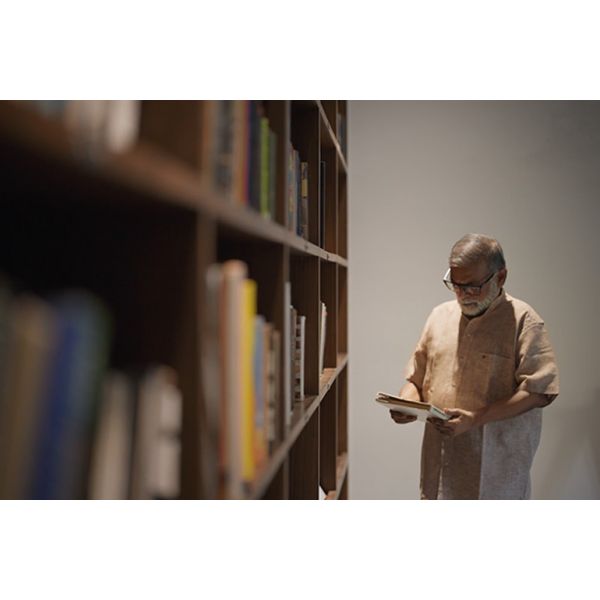 JournalThe Poet (Head of Rabindranath Tagore) by Ramkinkar Baij$1.00
Ramkinkar Baij is rightfully described as India’s first modernist sculptor for his pathbreaking use of cement and laterite as material, his choice of subjects and scale in public art projects, and his unconventional development of ideas.
The Poet is an abstract portrait of Rabindranath Tagore, imagined through negative spaces, concaves and convexes forming the eyes in a hollowed head, a masterclass in Baij’s cubist vocabulary. The portrait shared almost no physical attributes with the subject, instead focusing on distorting Tagore’s visage to give us insights into the state of his mind.
Learn More -
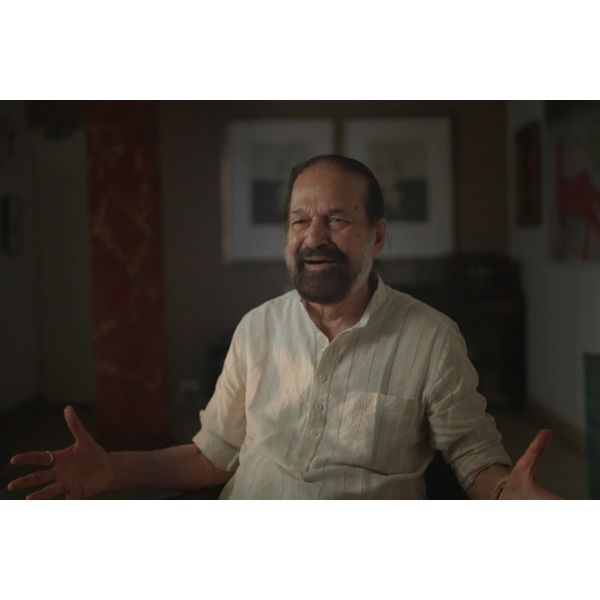 JournalA Child, the Youth, now Man by Rameshwar Broota$1.00
Painted in 2003 by Rameshwar Broota and titled A Child, the Youth, now Man, is bisected horizontally by a hyper-realistic finger, which partially covers a comparatively hazy vertical male torso. The evocative cruciform structure of this composition, possibly alluding to ideas of masculinity, corruption and persecution, also aides the artist in highlighting human vulnerability. There is no face visible here, only an unprotected body.
Learn More -
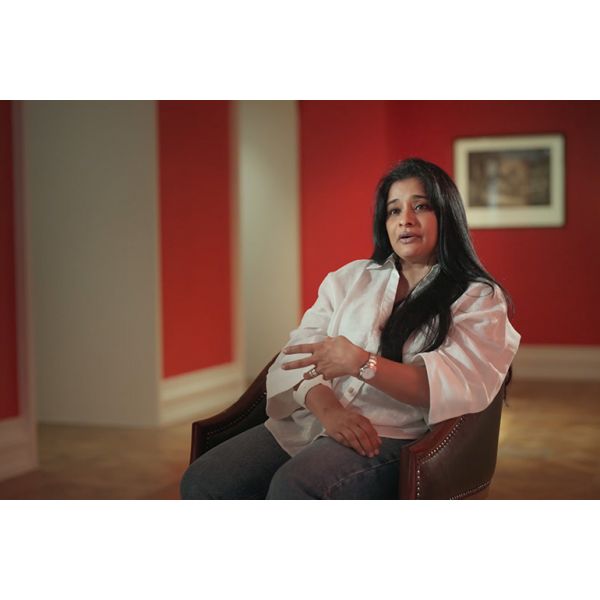 JournalUntitled by Nasreen Mohamedi$1.00
When the Met-Breuer opened in New York, its very first exhibition was a retrospective of Nasreen Mohamedi. Nasreen’s work is regarded as extremely important in the context of abstraction with delicate lines marking her compositions with a strength that is as remarkable as it is astounding, altering the way we see the world. The artist preferred drawing and sometimes photography, as a result her canvases are extremely rare to find. Sasha Altaf tells us more in this film about a canvas painted by her in Bahrain in 1969.
Learn More -
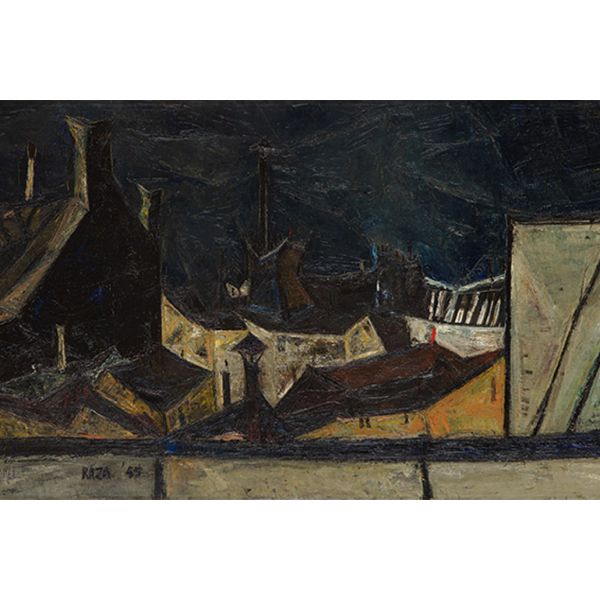 JournalToits (Rooftops) by S. H. Raza$1.00
S. H. Raza had begun to paint using oils, moving away from his impressionistic watercolours, on his way to winning the prestigious critics’ award in 1956. Just a year before, he completed a stunning painting of Parisian rooftops, revealing not a daylight scene but one of the night, only yellow lamplight from the streets dimly silhouetting the chimneys and sloping roofs. This period of Raza’s career is somewhat lesser known than his later, tantra-inspired works, as Ashok Vajpeyi and Aman Nath explain to us.
Learn More -
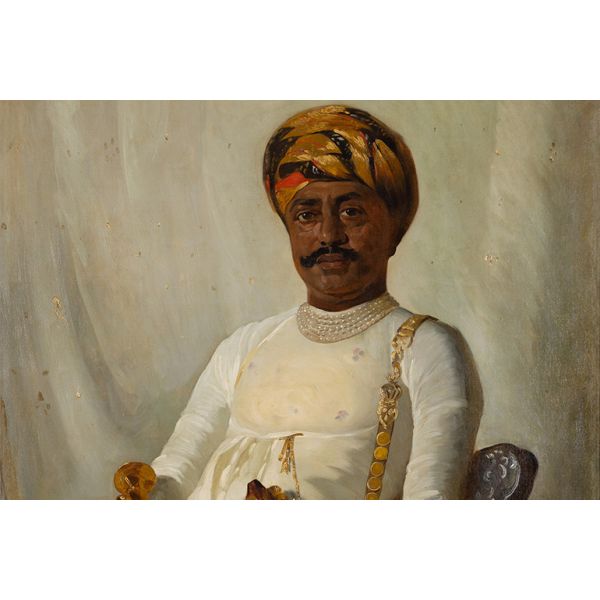 JournalThakor Becharsinhji of Chuda by Frank Brooks$1.00
Did you know that the portrait painter Frank Brooks whose two trips to India won him commissions from the rulers of principalities in the Bombay Presidency, trained Raja Ravi Varma’s brother in the art of figure painting? For his second India voyage (1892-93), he was invited specially to paint the heads of the twenty-eight rulers of the Kathiawar Agency. The subject of this stunning portrait is Thakur Becharsinhji of Chuda, a state so small it did not even merit a gun salute for its ruler. Explore in detail with Kishore Singh, SVP, DAG.
Learn More -
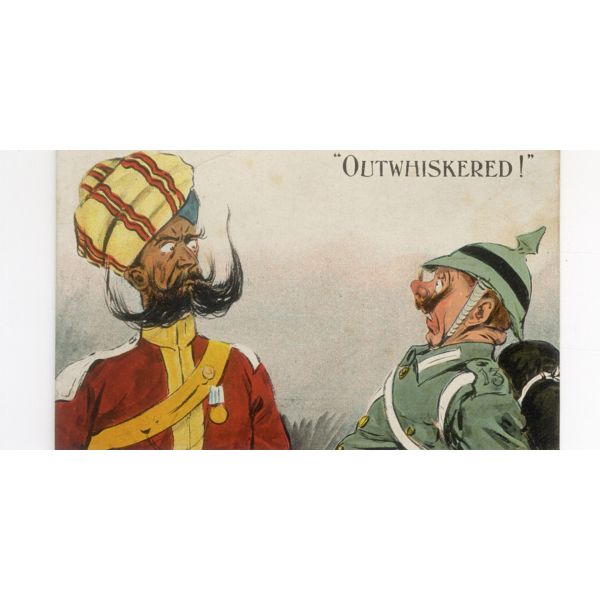 JournalArchive Case Files$0.00
The DAG Archives travel to schools and colleges for the first time with a new education programme—Archive Case Files. Follow the journey of these students as they work with a collection of World War I postcards, to learn more about the role of visual archives in the classroom.
Learn More -
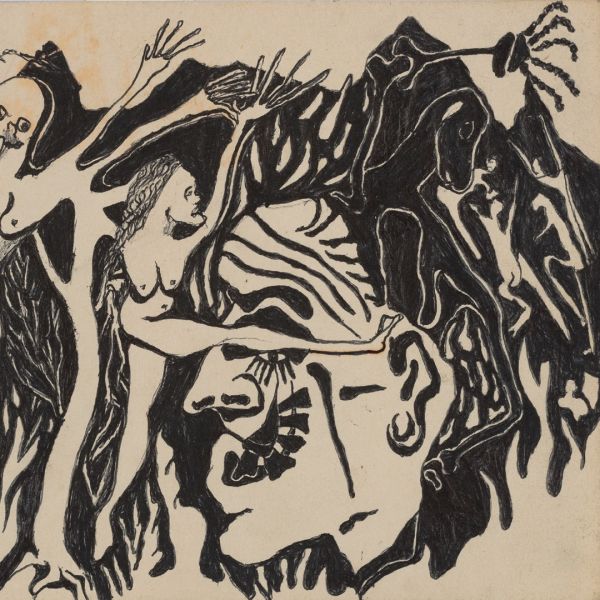 ExhibitionsALTAF: Early DrawingsAs low as $0.00
England shaped Altaf’s political consciousness as well as his persona. He engaged in the anti-apartheid demonstration at Trafalgar Square held against the imprisonment of Nelson Mandela; a peaceful protest at the American Embassy opposing the bombing in North Vietnam; the Aldermaston March against the nuclear bomb; the Campaign for Nuclear Disarmament; he became a member of the Youth Wing of the Communist Party of Great Britain (CPGB) and the Young Communist League (YCL). Any examination of the theoretical aspect of Altaf’s work must start with the knowledge that the work in question exemplified an element of ‘existentialist’ thought.
Learn More -
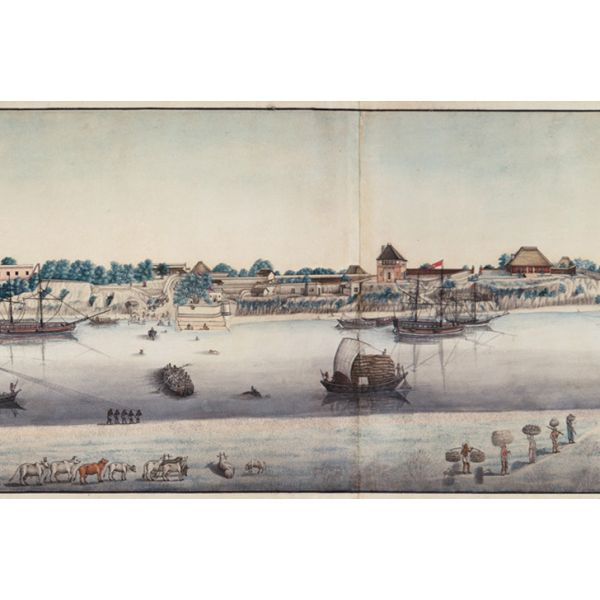 JournalWilliam Dalrymple on 'Indian Painting for the East India Company'$1.00
Also known as Company School, this genre is the Indo-European style of painting made in India by Indian artists, most of whom worked under the patronage of the East India Company. Focusing on a spectacular painting, William Dalrymple takes us through a journey of this neglected yet outstanding genre of art from nineteenth century India.
Learn More -
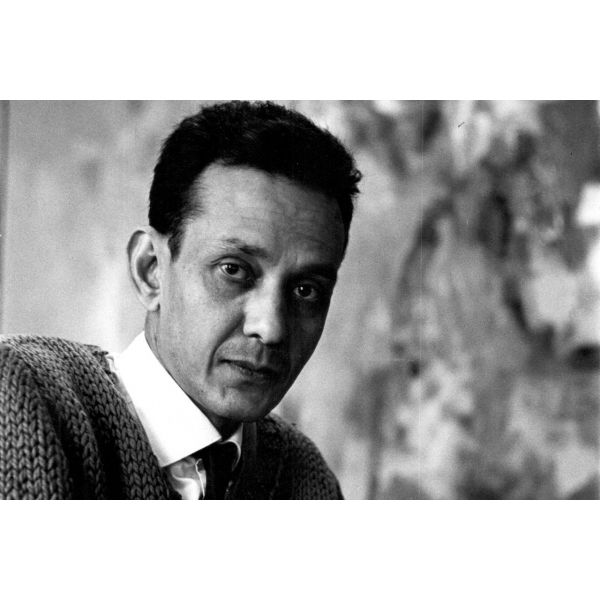 JournalThe French Connection: S. H. Raza at Paris' Centre Pompidou$0.00
In February, Paris' Centre Pompidou--a premier centre for modern art since its construction in 1977--mounted an extensive solo show looking back at S. H. Raza’s career in painting. It represents a historic moment for Indian modern art’s international story as it unfolded over the twentieth century, and also marked Raza's own symbolic return to the place where he stayed for most of his working life. The fertile post-independent period saw cross-cultural connections being forged by Indian artists in Europe and America on their own terms and this show is a testament to Raza’s evolving encounters with land and mythology. The curators, Catherine David and Diane Toubert, spoke to DAG highlighting some of the takeaways from this major retrospective.
Learn More -
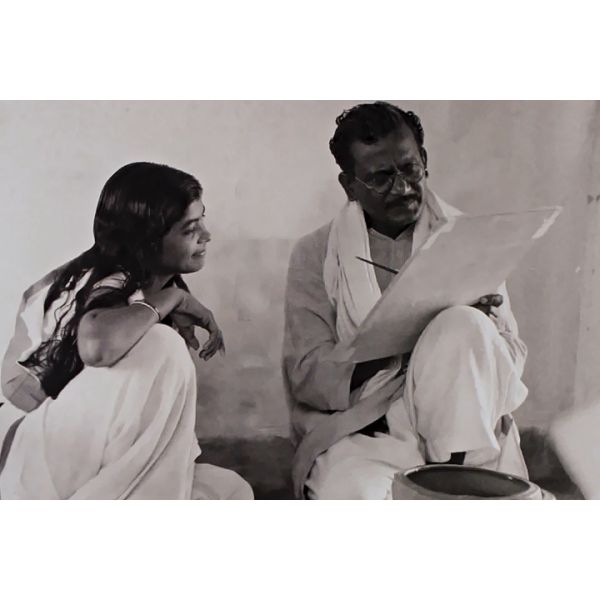 JournalDr. Tapati Guha-Thakurta on Nandalal Bose$1.00'Iconic Masterpieces of Indian Modern Art, Edition 2' opened on 11 February, featuring fifty artworks which shaped the trajectory of pre-modern and modern art in the country. As part of the exhibition, Tapati Guha-Thakurta discusses Nandalal Bose seminal role in cultivating a new ethos of art practice at Kala Bhavan and reflects on his untitled work commonly known as ‘The Artist’s Studio’ drawn in the caricaturist mode. Learn More
 -
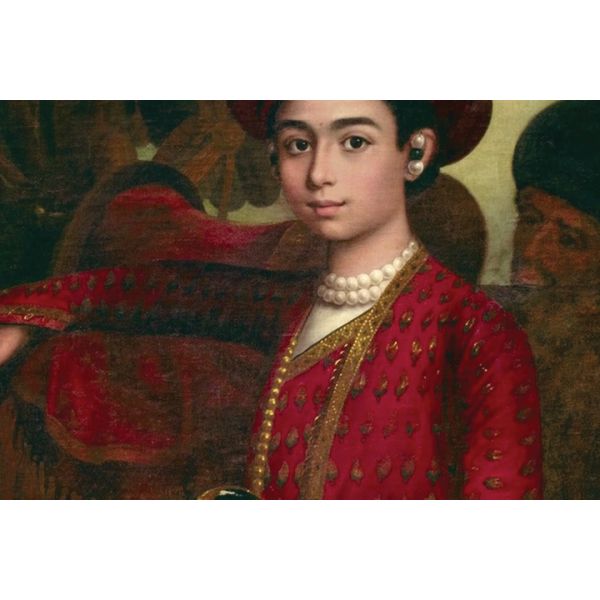 JournalPortraits$0.00With ‘Indian Portraits: The Face of a People’, DAG uncovers the layers that have gone into the practice of portraiture in the country—a survey exhibition spanning two centuries of the genre in India. From British and Indian royalty to streetside portraiture, this is a quick overview of an India past and present. Learn More