


Search results for: 'was ist die warscheinlichkeit das ein tralalerotralala spawnt in steal a brainrot'
-
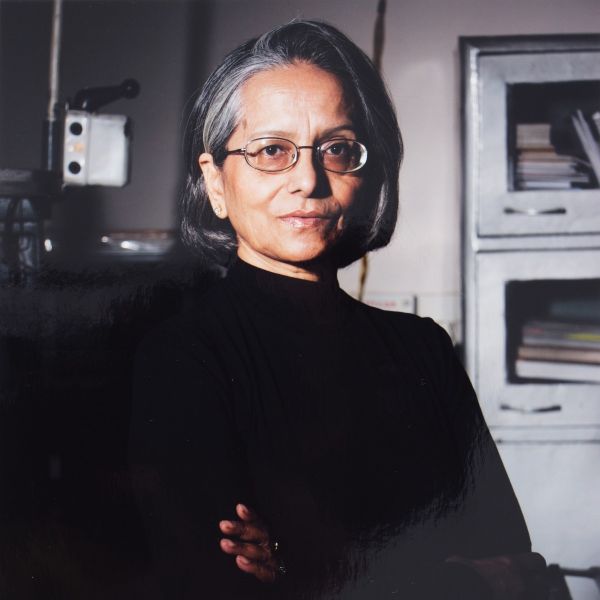 ExhibitionsAnupam SudAs low as $1.00
That Anupam Sud is one of the most prominent printmakers in the country is a given, even though it would be unfair to limit so versatile an artist to only being a printmaker. Indeed, her body of work includes paintings, drawings, sculpture, bookmaking—and as you will see through the pages of the book accompanying the exhibition, a record-keeper observing the passage of time with self-portraits that she has undertaken to make periodically. A role-model for generations of artists and printmakers through her work and for her influence as a teacher at the prestigious College of Art, New Delhi, Anupam Sud’s name evokes recognition around the world where she has admirers, collectors of her work, and students who have trained under her.
Learn More -
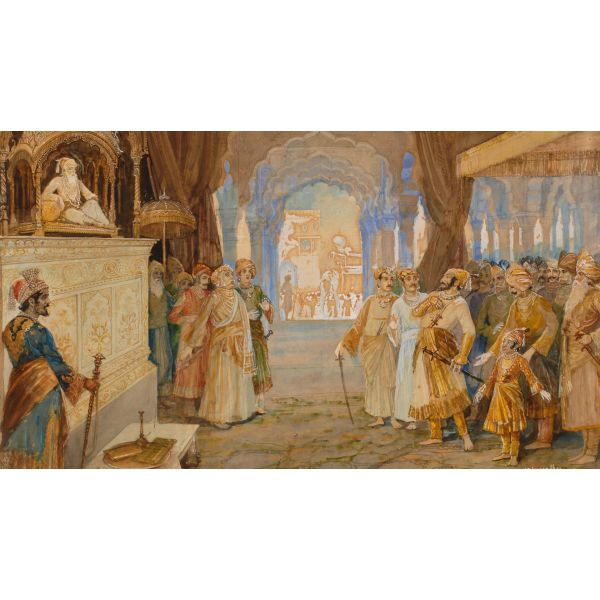 Institutional CollaborationsM. V. DHURANDHAR: A RETROSPECTIVE$1.00
Few artists claim as rich and intriguing a legacy as M. V. Dhurandhar in the landscape of late 19th and early 20th century Indian art. His practice leaves us with challenging questions about encounters and exchanges with India's colonial past and the influence of Europeans in shaping the evolution of painting. This exhibition revisits Dhurandhar's vast oeuvre through DAG's extensive collection of his paintings, archival material and ephemera, in an attempt to understand the socio-cultural context of his emergence, and to re-examine his influence on institutional and commercial art in the country.
Learn More -
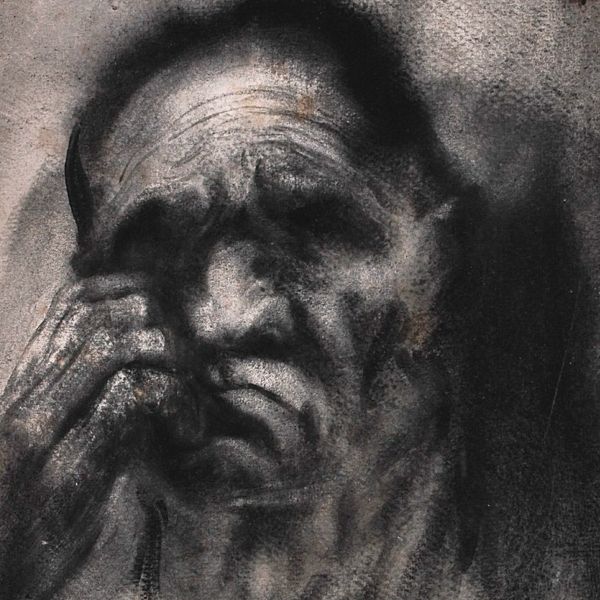 ExhibitionsMadras ModernAs low as $1.00
The Madras Art Movement that emerged in the early 1960s was a late phenomenon of modernity in south India within the national context. It developed as a regional phenomenon that began to take shape from the mid-1950s onwards as a search for authenticity in modernism derived largely from the region’s cultural heritage. D. P. ROY CHOWDHURY A P SANTHANARAJ ACHUTHAN KUDALLUR AKKITHAM NARAYANAN ALPHONSO DOSS C DOUGLAS C J ANTHONY DOSS J. SULTAN ALI K C S PANIKER K M ADIMOOLAM K RAMANUJAM K SREENIVASULU K V HARIDASAN L MUNUSWAMY M SENATHIPATI M SURYAMOORTHY P GOPINATH P PERUMAL P S NANDHAN PANEER SELVAM R B BHASKARAN REDDEPPA NAIDU Rm. PALANIAPPAN S G VASUDEV S. DHANAPAL S. NANDAGOPAL V. VISWANADHAN VIDYASHANKAR STHAPATI
Learn More -
 Institutional CollaborationsIndia Modern: Narratives from 20th Century Indian Art$1.00
This exhibition takes us on a journey into the lives and works of artists from a diverse range of traditions and practices. Despite differences in technique, philosophy and politics, they are united by an attempt to forge a new language of Indian art which rebels against existing visual vocabularies while seamlessly combining influences from European modernism and the rich history of visual arts from South Asia. This assimilation is achieved in different ways. From M. F. Husain’s figurative renditions of Indian deities to the many languages of abstraction developed by artists like Ram Kumar, Ganesh Haloi and others—we see artists responding variously to the socio-cultural problems of a post-colonial nation.
Learn More -
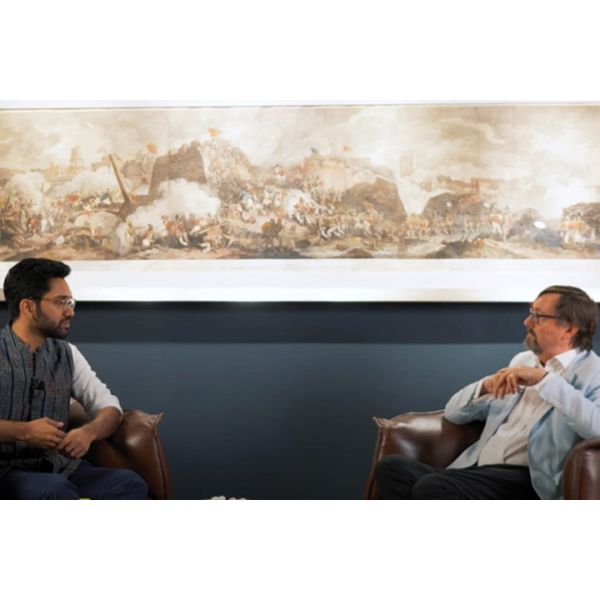 JournalRemembering Tipu Sultan: Manu Pillai and Giles Tillotson$0.00Historian and author Manu S. Pillai in conversation with art historian and curator Giles Tillotson on the subject of Tipu Sultan in the context of DAG’s exhibition, 'Tipu Sultan: Image and Distance' Learn More
 -
-
 JournalThe Making of the Dhaka Art Summit: Behind the scenes with the Curator$0.00
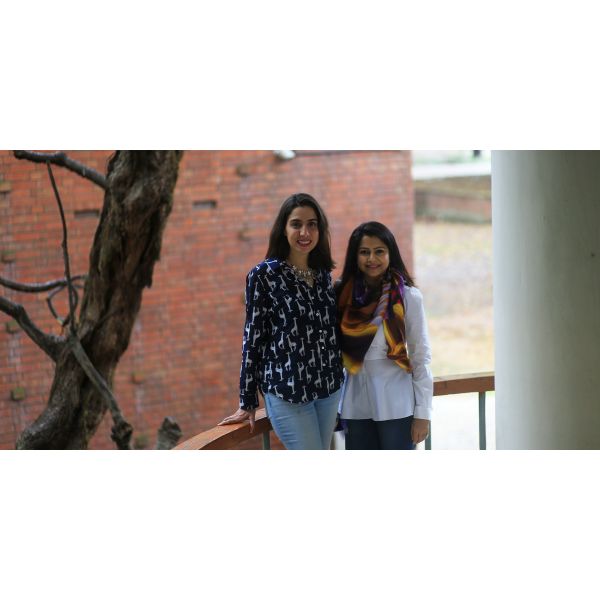
Diana Campbell is the Artistic Director of the Samdani Art Foundation, now in its 10th year, and chief curator of the prestigious Dhaka Art Summit, whose sixth edition starts on February 3, 2023. She spoke with the DAG Journal’s editorial team to discuss her own curatorial process and how she makes room for experimentation, and unpacks the intriguing thematic of this new edition: ‘flood’, or bonna.
Learn More -
 Collection StoriesAn Imperial Spectacle: The Delhi Durbars and its Ceremonies$1.00
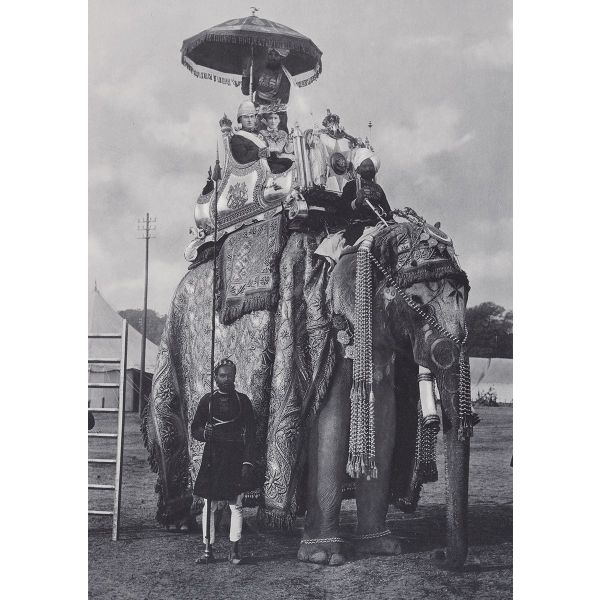
The Delhi Durbars were a series of coronation events held by the British in India which formally declared the British monarch as the Emperor or Empress of India. They took place thrice—first, in 1887, acknowledging Queen Victoria as the Empress of India, followed by one in 1903, for King Edward VII, and finally in 1911 for King George V, which saw the monarch’s attendance in person.
Learn More -
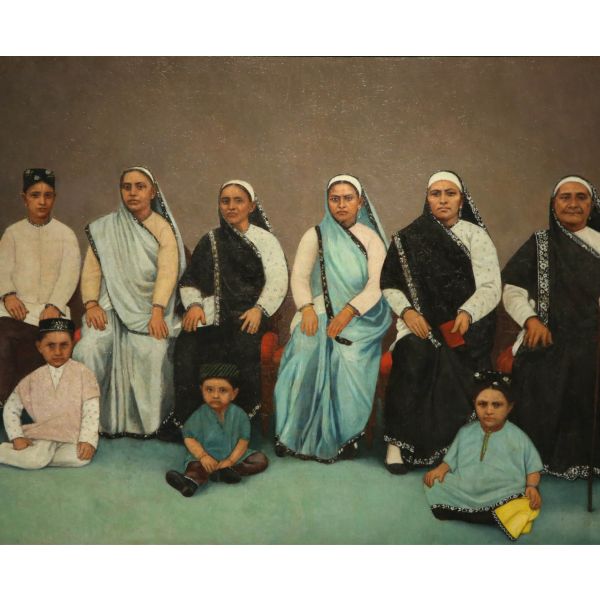 ArtistsAnonymous (Ravi Varma School)$0.00Raja Ravi Varma’s singular impact on Indian art is unparalleled by any artist. Largely self-taught, he is probably the first Indian artist to have articulated Indian subject matters through naturalism and the use of oil paints with brilliant mastery, considered until then a European idiom. Learn More
 -
 ExhibitionsALTAF: Early DrawingsAs low as $0.00
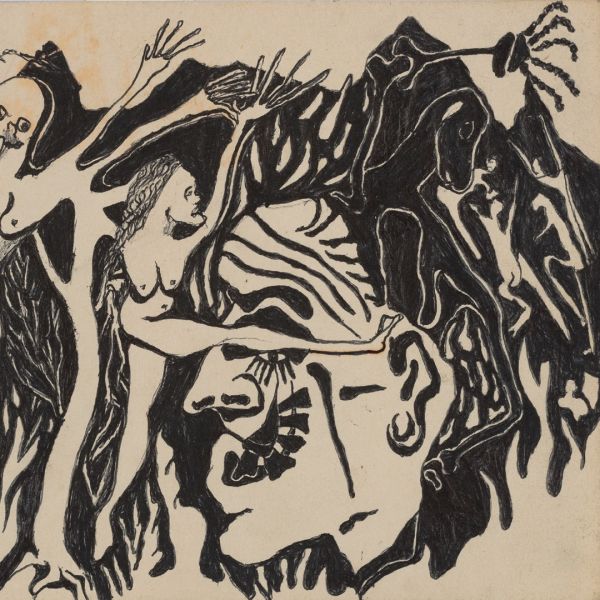
England shaped Altaf’s political consciousness as well as his persona. He engaged in the anti-apartheid demonstration at Trafalgar Square held against the imprisonment of Nelson Mandela; a peaceful protest at the American Embassy opposing the bombing in North Vietnam; the Aldermaston March against the nuclear bomb; the Campaign for Nuclear Disarmament; he became a member of the Youth Wing of the Communist Party of Great Britain (CPGB) and the Young Communist League (YCL). Any examination of the theoretical aspect of Altaf’s work must start with the knowledge that the work in question exemplified an element of ‘existentialist’ thought.
Learn More -
 ExhibitionsA Place In The Sun: Women Artists From 20th Century IndiaAs low as $1.00
Sunayani Devi picked up a paintbrush in 1905 when she was thirty years old while supervising her kitchen duties, self-taught, but with enough talent to attract the critical attention of Stella Kramrisch who organised an exhibition of her paintings in Germany in 1927. It was in her worthy footsteps that India’s women artists followed. Devayani Krishna was born five years after Sunayani Devi began painting; Amrita Sher-Gil already had a career in Paris by the time India’s first art school-trained woman artist, Ambika Dhurandhar, earned her diploma in Bombay. B. Prabha followed next, her work reflecting the realities of the marginalised in a piquant language. By the time Nasreen Mohamedi and Zarina Hashmi, both born a decade before Independence, established their careers, women were joining art schools in greater numbers, validating their practice not on the basis of their gender but on its context. Anupam Sud Devayani Krishna Gogi Saroj Pal Latika Katt Madhvi Parekh Mrinalini Mukherjee Navjot Rekha Rodwittiya Shobha Broota Zarina Hashmi
Learn More -
 JournalBourne's Legacy: Tracing Samuel Bourne's travels in India$0.00
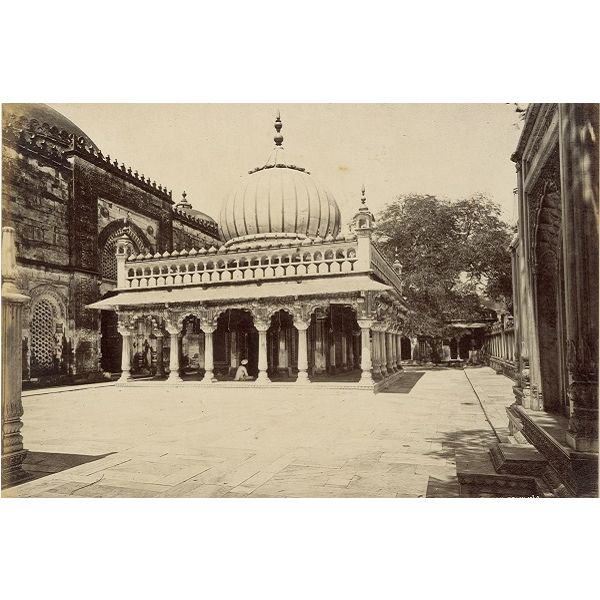
Samuel Bourne (1834—1912) was a British photographer known for his prolific seven years' work in India, from 1863 to 1870. Landing first at Madras, then Calcutta, he travelled across the subcontinent—leading some of the earliest photographic trips to the Himalayas—and wrote about his first impressions of the places he visited.
Learn More