Search results for: 'background for cushion covers sublimation print png'
-
 ExhibitionsArt Exhibitions$0.00
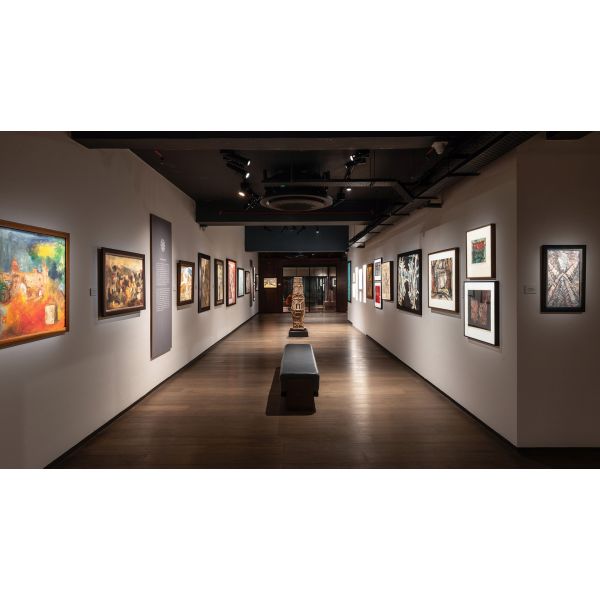
DAG has been a pioneer in curating exhibitions that have historical significance. These have ranged from themes around different genres and art movements to artist retrospectives as well as engagements with forgotten masters. Most exhibitions are sourced from its own inventory and in recent years DAG has begun to explore eighteenth and nineteenth century art and artists in addition to its presence as a stakeholder of twentieth century art. Exhibitions are routinely organised at its galleries in New Delhi, Mumbai, and New York, as well as in collaboration with museums and other institutions. All exhibitions are accompanied by well researched and designed books, adding considerably to the documentation of Indian art history.
Learn More -
-
 ExhibitionsPrabhakar Barwe: Between Object and SpaceAs low as $1.00
Prabhakar Barwe (1936-95) could well have ended up a theoretician whose book 'Kora Canvas' (Blank Canvas) was a manifesto that established the multi-dimensional relationship between an artist, the object on which he paints, and his subjects. That he was not just an intellectual scholar but an artist whose work speaks for him, is evident through a range of works in which Barwe dissects our understanding of the world and how we view it. Taking commonplace objects and our perception of their existence in the space they occupy, he shifts the dialogue to a point of discomfiture that makes us question our understanding of them. Using scale, discordant juxtapositions, and displacements, he reimagines the everyday in a manner that is thought-provoking, even provocative, as alternate realities—whether perceived or imagined.
Learn More -
 ExhibitionsA Place In The Sun: Women Artists From 20th Century IndiaAs low as $1.00
Sunayani Devi picked up a paintbrush in 1905 when she was thirty years old while supervising her kitchen duties, self-taught, but with enough talent to attract the critical attention of Stella Kramrisch who organised an exhibition of her paintings in Germany in 1927. It was in her worthy footsteps that India’s women artists followed. Devayani Krishna was born five years after Sunayani Devi began painting; Amrita Sher-Gil already had a career in Paris by the time India’s first art school-trained woman artist, Ambika Dhurandhar, earned her diploma in Bombay. B. Prabha followed next, her work reflecting the realities of the marginalised in a piquant language. By the time Nasreen Mohamedi and Zarina Hashmi, both born a decade before Independence, established their careers, women were joining art schools in greater numbers, validating their practice not on the basis of their gender but on its context. Anupam Sud Devayani Krishna Gogi Saroj Pal Latika Katt Madhvi Parekh Mrinalini Mukherjee Navjot Rekha Rodwittiya Shobha Broota Zarina Hashmi
Learn More -
-
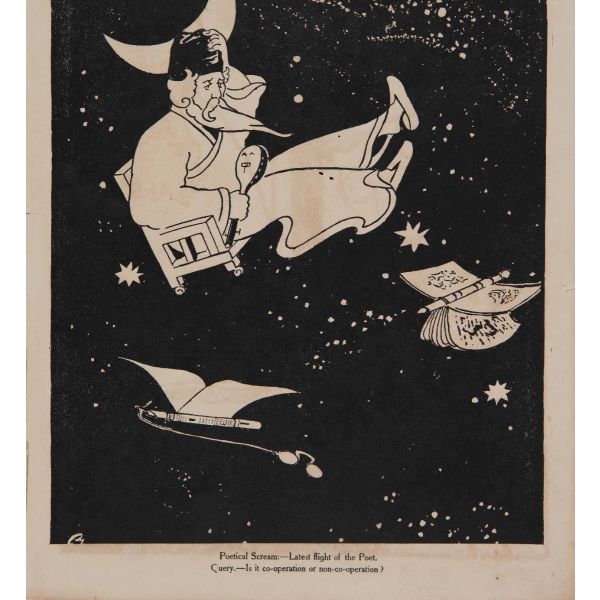 Events and ProgrammesSwadeshi Baithakkhana$1.00
A visit to an antique furniture warehouse and the former home of historian Sir Jadunath Sarkar with Professor Rosinka Chaudhuri, as we trace the Swadeshi influence on our living spaces, and the transformation of furniture design.
Learn More -
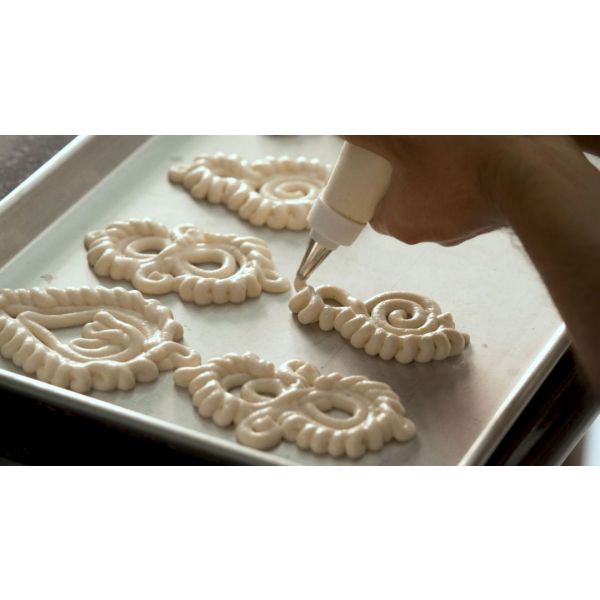 Events and ProgrammesSunday Adda with Bong Eats$1.00
An online cook along with Bong Eats and Pritha Sen, a food historian to delve into the history of dishes, made by our grandmothers and mothers, that form a large part of the art that we experience in our day-to-day life, in the kitchen and on our plates.
Learn More -
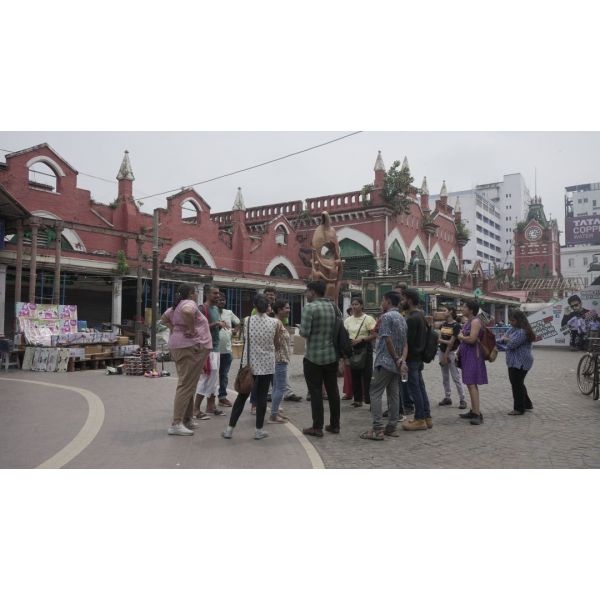 Events and ProgrammesCrossing the Midnight Hour$1.00
A guided walk by urban history researcher Sujaan Mukherjee, uncovering the forgotten histories of monuments and sites around the Indian Museum, and their changing fates after Independence.
Learn More -
 Collection StoriesAn Imperial Spectacle: The Delhi Durbars and its Ceremonies$1.00
The Delhi Durbars were a series of coronation events held by the British in India which formally declared the British monarch as the Emperor or Empress of India. They took place thrice—first, in 1887, acknowledging Queen Victoria as the Empress of India, followed by one in 1903, for King Edward VII, and finally in 1911 for King George V, which saw the monarch’s attendance in person.
Learn More -
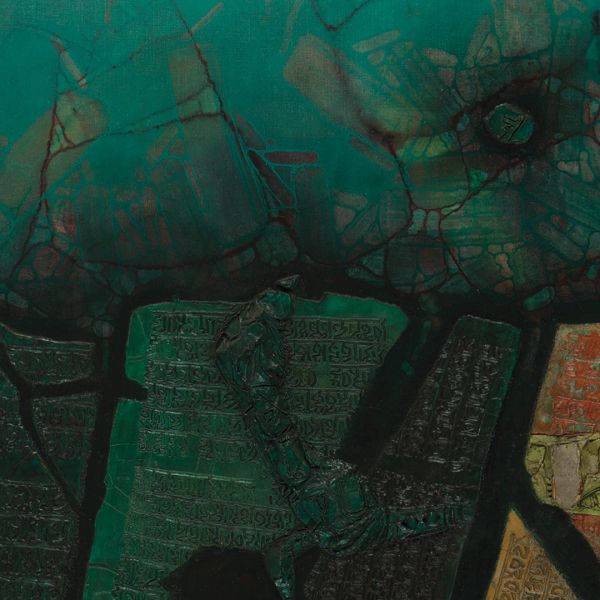 Art FairsArt Dubai$0.00
Shanti Dave’s abstracts resemble—at first—the familiar and the unknown. There are writings, figures, deities, forms and shapes that resonate with what we seem to know. If the language is indecipherable, perhaps it belongs to some ancient texts lost to history. Is this his ode to a civilisation that existed in the past, or a prophesy of one to come? Is it a world hidden underwater? Or perhaps one alien to us because it comes from some other planet? Are these tombstones, or markers, of some mythological or historical realm?
Learn More -
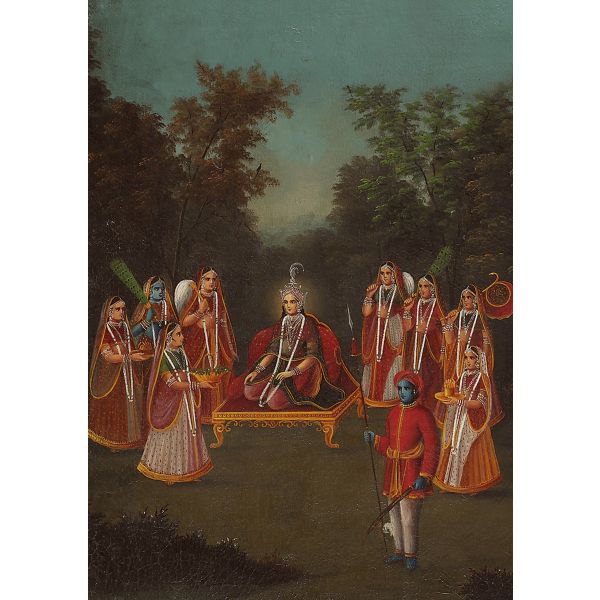 Collection StoriesUNTITLED (RADHA AS QUEEN)$1.00
Radha is painted as a queen in this Early Bengal oil painting, surrounded by her fellow Gopis (cowherds and companions) and Krishna—her divine consort and an incarnation of one of the Hindu trinity—dressed as a sentinel. She sits on her royal throne amid a forest landscape, perhaps recalling her identification as Vrindavaneshwari (goddess of Vrindavan). Going by the small but remarkable details of the jewellery, we can guess that it is the work of an artist trained in the miniature tradition. But does the painting hide other possible secrets?
Learn More