Hand-tinted aquatint with soft-ground etching on paper
The picturesque vision of William Hodges, the first British professional landscape painter to visit India, treated architecture as a component of landscape. The fort of Monghyr depicted here was built in the sultanate and Mughal era. It was still in use, under British control, when Hodges visited in 1781. His picturesque aesthetic favours the irregular forms of ruins, so he exaggerates its state of decay and thereby implies that India’s greatness is a thing of the past.
Thomas Daniell
A Ruined Hindu Temple on a Rocky Outcrop
Oil on canvas
Thomas Daniell toured India with his nephew William between 1786 and 1793. In this classic picturesque composition, the soaring temple is presented as a proud sentinel, overlooking the vast plain below, but also as somewhat forlorn, being partially ruined, sprouting a tree from its side, and visited by a solitary pilgrim.
William Parker
View of Rajmahal
Watercolour on paper pasted on paper
Major William Parker served in the Bengal Army, returning to Britain in 1807. Many officers of his era were trained in draughtsmanship, for the purposes of surveying. They deployed their skill in their leisure hours to produce amateur but accomplished landscapes. This view shows figures smoking and cooking on a bank of the River Ganga, behind one of the mosques of Rajmahal, built during the Mughal period.
William Hodges
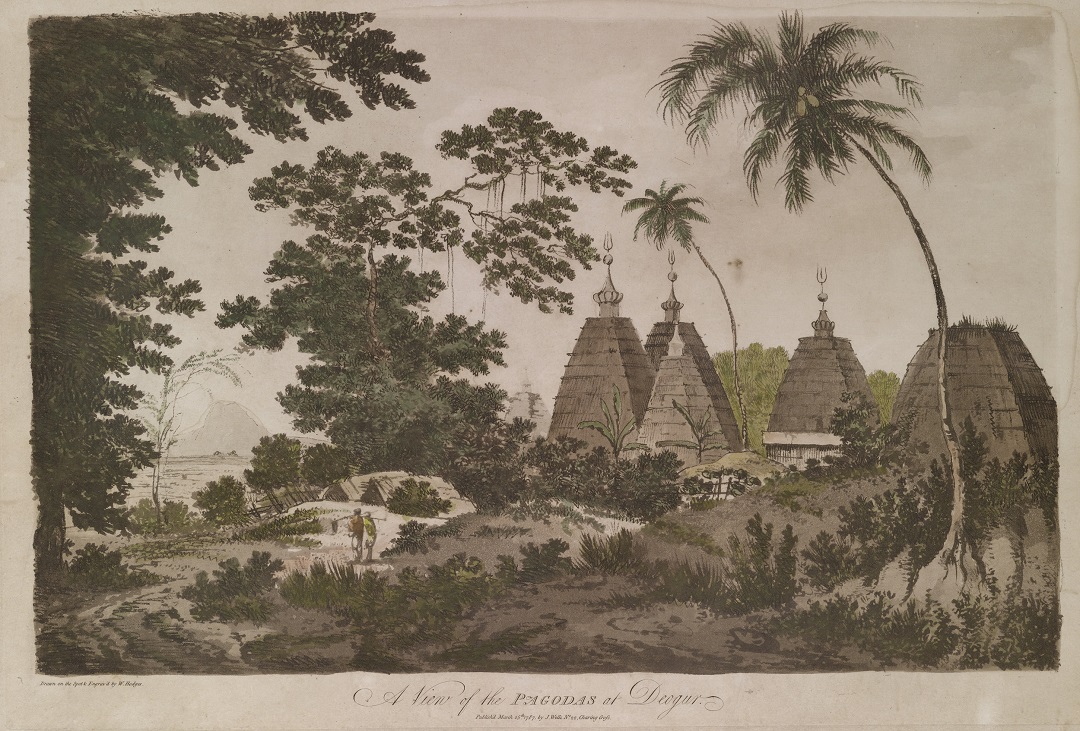
A View of the Pagodas of Deogur
Hand-tinted aquatint with soft-ground etching on paper
The picturesque vision of William Hodges, the first British professional landscape painter to visit India, treated architecture as a component of landscape. The fort of Monghyr depicted here was built in the sultanate and Mughal era. It was still in use, under British control, when Hodges visited in 1781. His picturesque aesthetic favours the irregular forms of ruins, so he exaggerates its state of decay and thereby implies that India’s greatness is a thing of the past.
Thomas Daniell
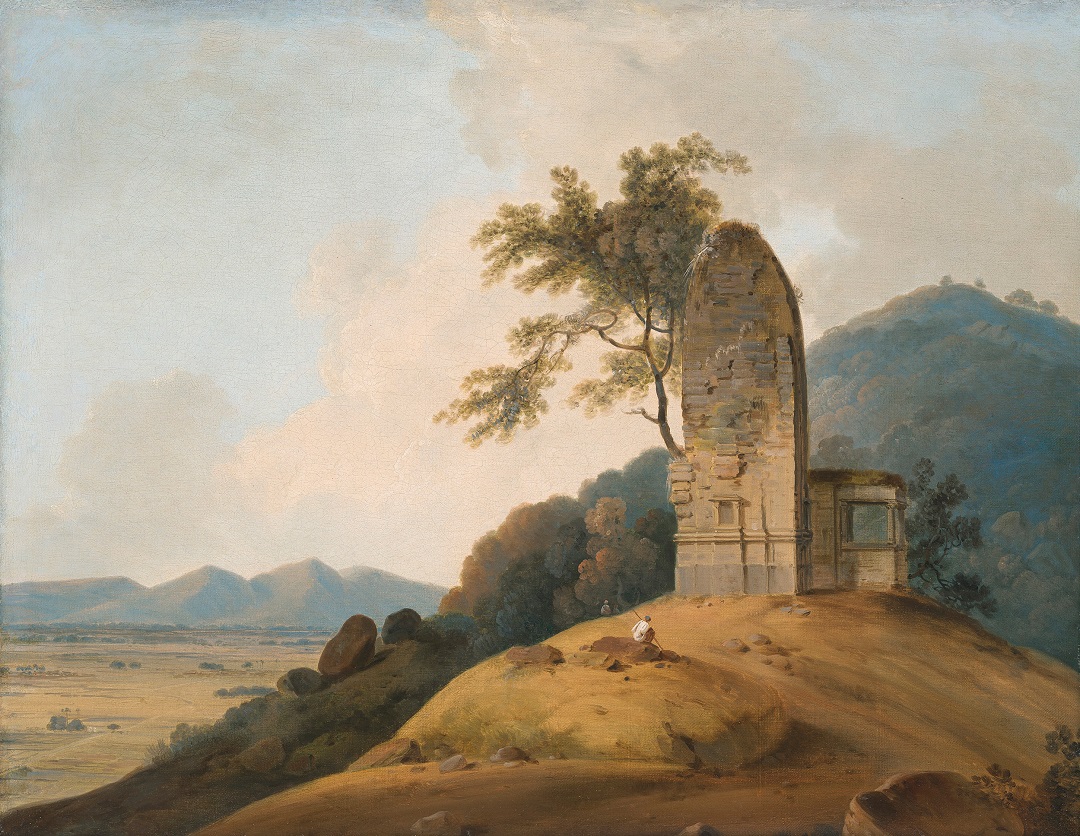
A Ruined Hindu Temple on a Rocky Outcrop
Oil on canvas
Thomas Daniell toured India with his nephew William between 1786 and 1793. In this classic picturesque composition, the soaring temple is presented as a proud sentinel, overlooking the vast plain below, but also as somewhat forlorn, being partially ruined, sprouting a tree from its side, and visited by a solitary pilgrim.
William Parker
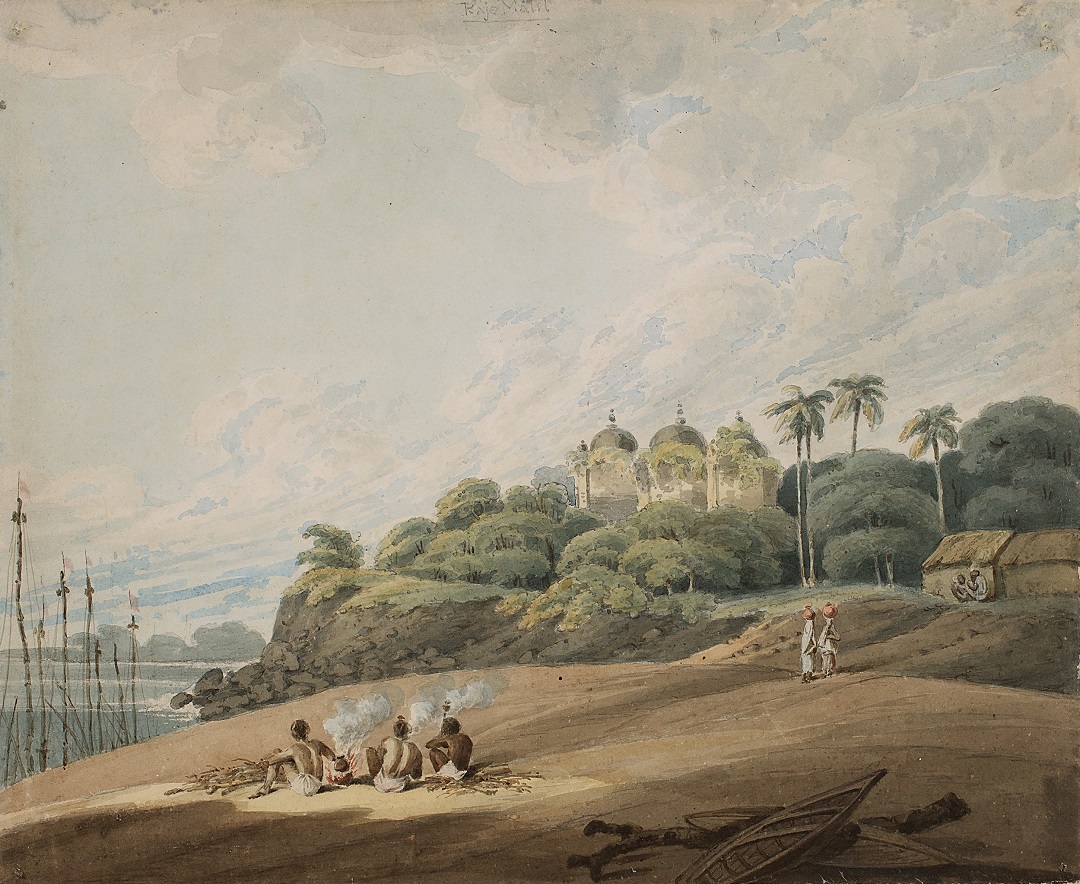
View of Rajmahal
Watercolour on paper pasted on paper
Major William Parker served in the Bengal Army, returning to Britain in 1807. Many officers of his era were trained in draughtsmanship, for the purposes of surveying. They deployed their skill in their leisure hours to produce amateur but accomplished landscapes. This view shows figures smoking and cooking on a bank of the River Ganga, behind one of the mosques of Rajmahal, built during the Mughal period.
William Hodges
A View of the Pagodas of Deogur
Hand-tinted aquatint with soft-ground etching on paper
The picturesque vision of William Hodges, the first British professional landscape painter to visit India, treated architecture as a component of landscape. The fort of Monghyr depicted here was built in the sultanate and Mughal era. It was still in use, under British control, when Hodges visited in 1781. His picturesque aesthetic favours the irregular forms of ruins, so he exaggerates its state of decay and thereby implies that India’s greatness is a thing of the past.
Thomas Daniell
A Ruined Hindu Temple on a Rocky Outcrop
Oil on canvas
Thomas Daniell toured India with his nephew William between 1786 and 1793. In this classic picturesque composition, the soaring temple is presented as a proud sentinel, overlooking the vast plain below, but also as somewhat forlorn, being partially ruined, sprouting a tree from its side, and visited by a solitary pilgrim.
William Parker
View of Rajmahal
Watercolour on paper pasted on paper
Major William Parker served in the Bengal Army, returning to Britain in 1807. Many officers of his era were trained in draughtsmanship, for the purposes of surveying. They deployed their skill in their leisure hours to produce amateur but accomplished landscapes. This view shows figures smoking and cooking on a bank of the River Ganga, behind one of the mosques of Rajmahal, built during the Mughal period.
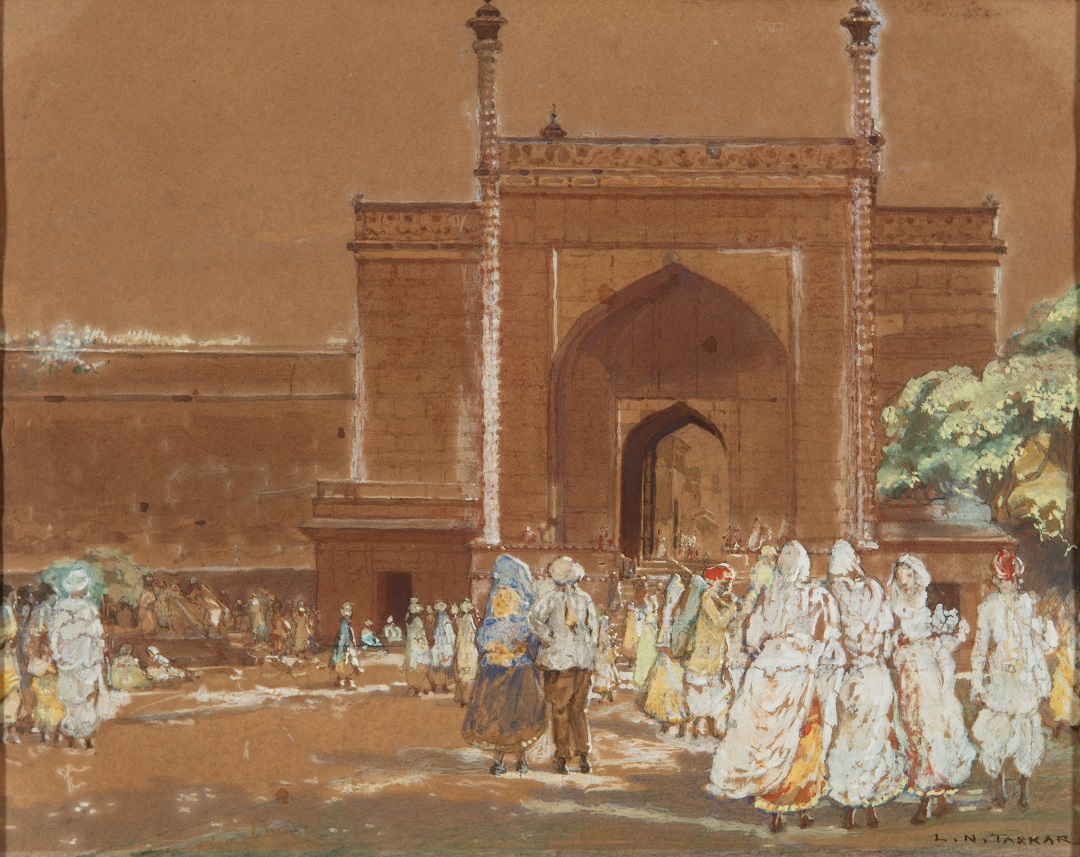
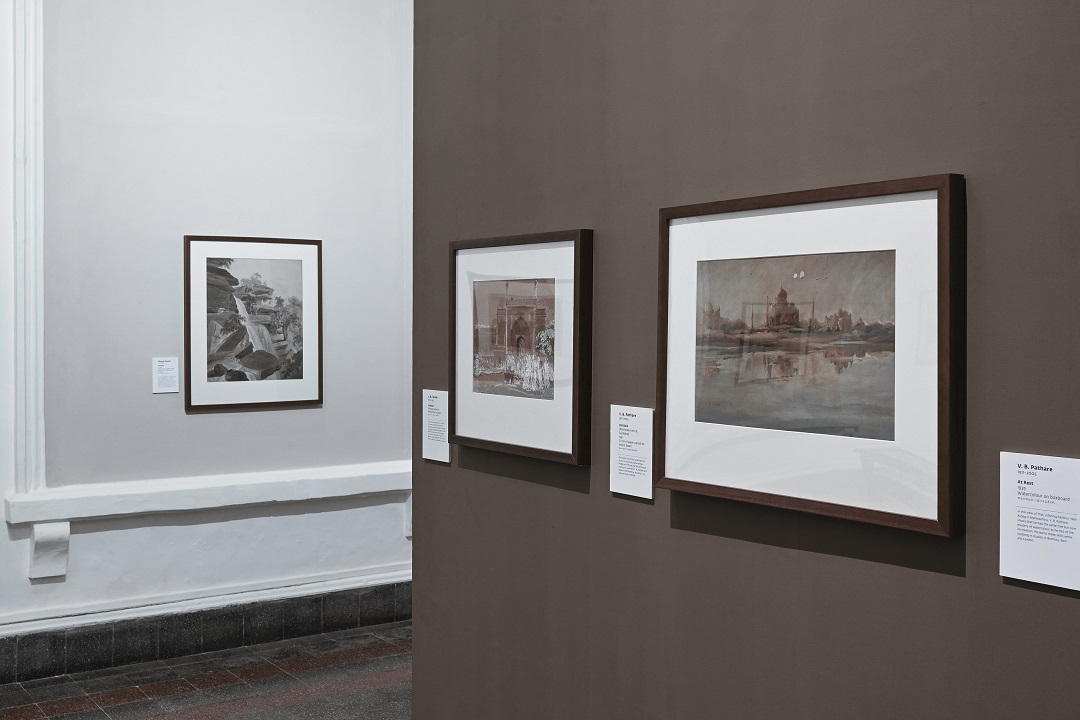
L. N. Taskar
Untitled (Mughal gateway)
Watercolour on paper
L. N. Taskar taught at the J. J. School of Art where he helped to promote a naturalistic style of landscape. This lively scene depicts people milling about in the Jilaukhana, the forecourt immediately in front of the Taj Mahal in Agra. The gateway is the entrance to the forecourt from the market area known as Taj Ganj.
S. L. Haldankar
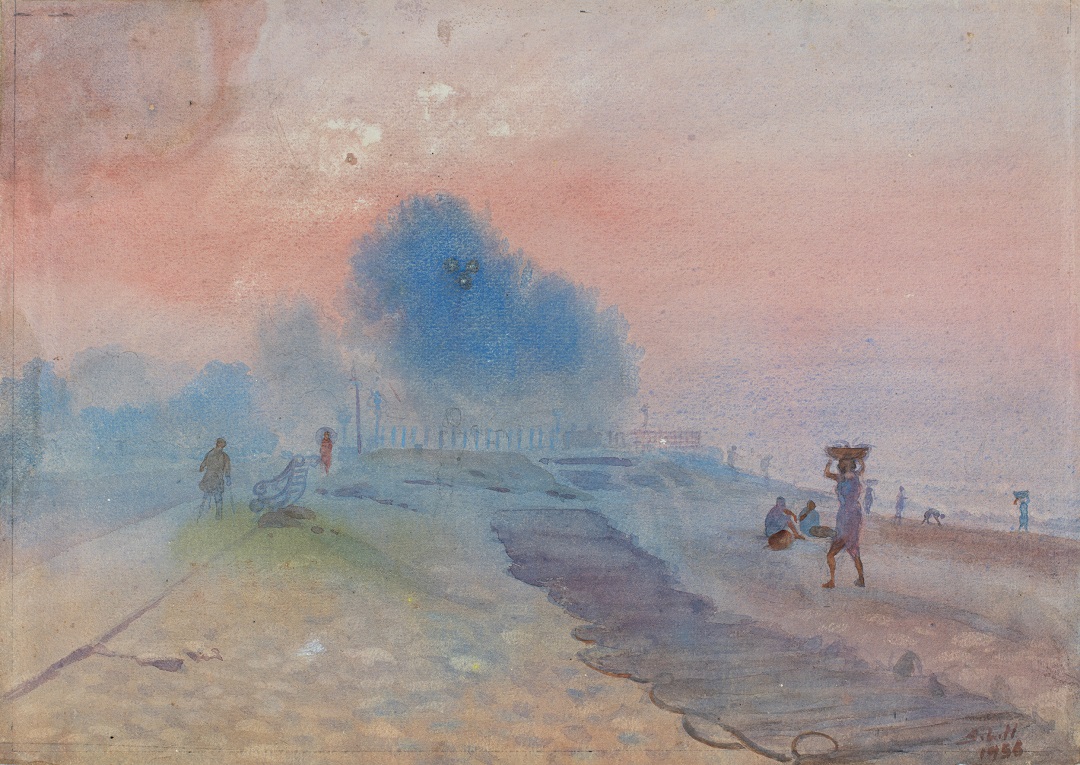
Early Morning at Chowpati
Watercolour on handmade paper pasted on mount board
A student at the J. J. School of Art, S. L. Haldankar emerged as a versatile artist, winning important portrait commissions. He also produced naturalistic landscapes in both oil and watercolour, often focusing—as here—on atmospheric effects over water
Prema Pathare
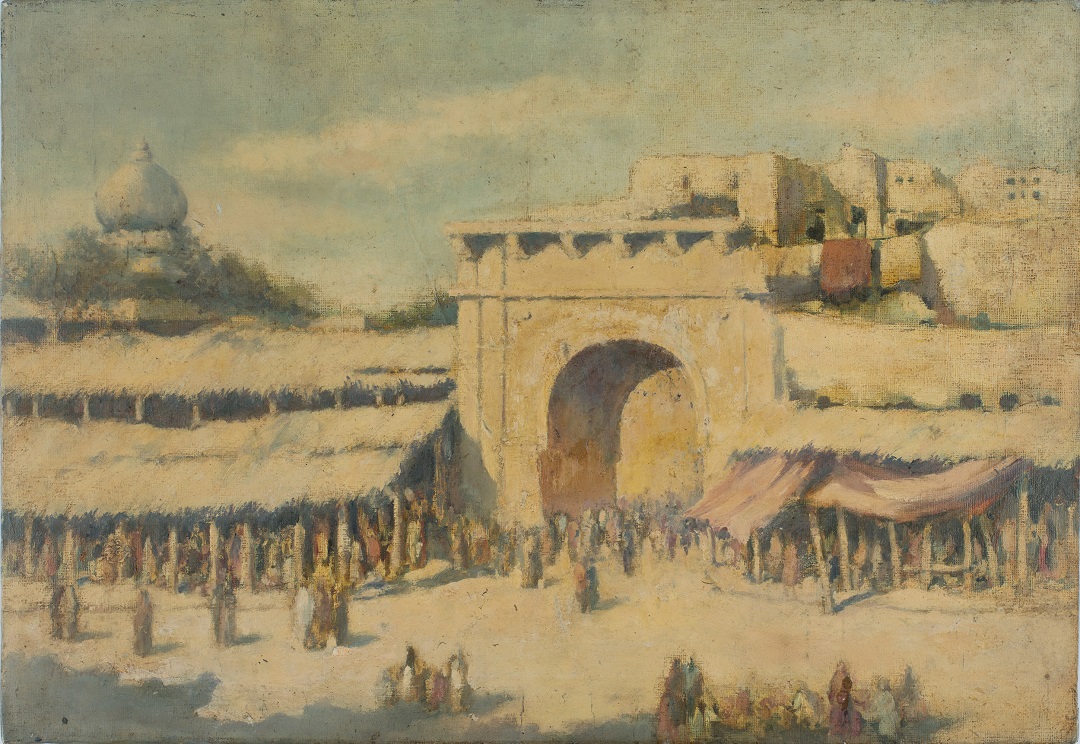
Untitled
Oil on canvas pasted on Masonite board
Prema Pathare studied at the J. J. School of Art in Bombay under W. E. Gladstone Solomon, a pugnacious advocate of realism in art and severe critic of Bengali revivalism. She painted numerous urban landscapes. In this view of a traditional gateway and market, she uses the contrast between sunlit surfaces and deep shadows to create an animated rhythm, complementing the bustle of the figures.
L. N. Taskar
Untitled (Mughal gateway)
Watercolour on paper
L. N. Taskar taught at the J. J. School of Art where he helped to promote a naturalistic style of landscape. This lively scene depicts people milling about in the Jilaukhana, the forecourt immediately in front of the Taj Mahal in Agra. The gateway is the entrance to the forecourt from the market area known as Taj Ganj.
S. L. Haldankar
Early Morning at Chowpati
Watercolour on handmade paper pasted on mount board
A student at the J. J. School of Art, S. L. Haldankar emerged as a versatile artist, winning important portrait commissions. He also produced naturalistic landscapes in both oil and watercolour, often focusing—as here—on atmospheric effects over water
Prema Pathare
Untitled
Oil on canvas pasted on Masonite board
Prema Pathare studied at the J. J. School of Art in Bombay under W. E. Gladstone Solomon, a pugnacious advocate of realism in art and severe critic of Bengali revivalism. She painted numerous urban landscapes. In this view of a traditional gateway and market, she uses the contrast between sunlit surfaces and deep shadows to create an animated rhythm, complementing the bustle of the figures.
L. N. Taskar
Untitled (Mughal gateway)
Watercolour on paper
L. N. Taskar taught at the J. J. School of Art where he helped to promote a naturalistic style of landscape. This lively scene depicts people milling about in the Jilaukhana, the forecourt immediately in front of the Taj Mahal in Agra. The gateway is the entrance to the forecourt from the market area known as Taj Ganj.
S. L. Haldankar
Early Morning at Chowpati
Watercolour on handmade paper pasted on mount board
A student at the J. J. School of Art, S. L. Haldankar emerged as a versatile artist, winning important portrait commissions. He also produced naturalistic landscapes in both oil and watercolour, often focusing—as here—on atmospheric effects over water
Prema Pathare
Untitled
Oil on canvas pasted on Masonite board
Prema Pathare studied at the J. J. School of Art in Bombay under W. E. Gladstone Solomon, a pugnacious advocate of realism in art and severe critic of Bengali revivalism. She painted numerous urban landscapes. In this view of a traditional gateway and market, she uses the contrast between sunlit surfaces and deep shadows to create an animated rhythm, complementing the bustle of the figures.
Haren Das
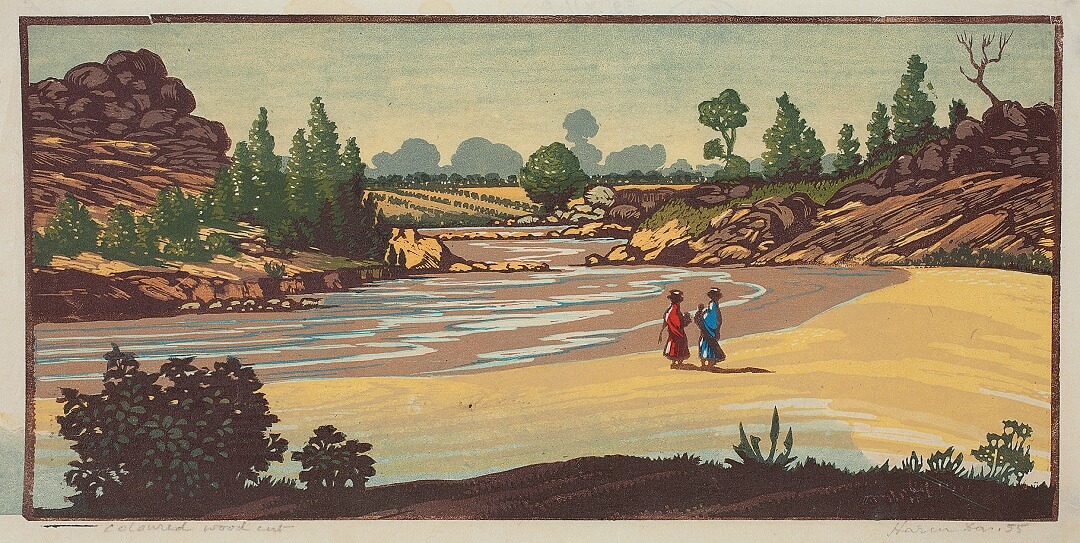
The Chalor River
Colour woodcut on paper
Haren Das studied graphic arts at the Government College of Art and Craft in Calcutta, selecting a specialisation which was not fashionable at the time, but his leading example and mastery helped to promote printmaking as a medium. Though he produced many images of rural people at work, his predominant vision was of a quiet, unchanging landscape.
Indra Dugar
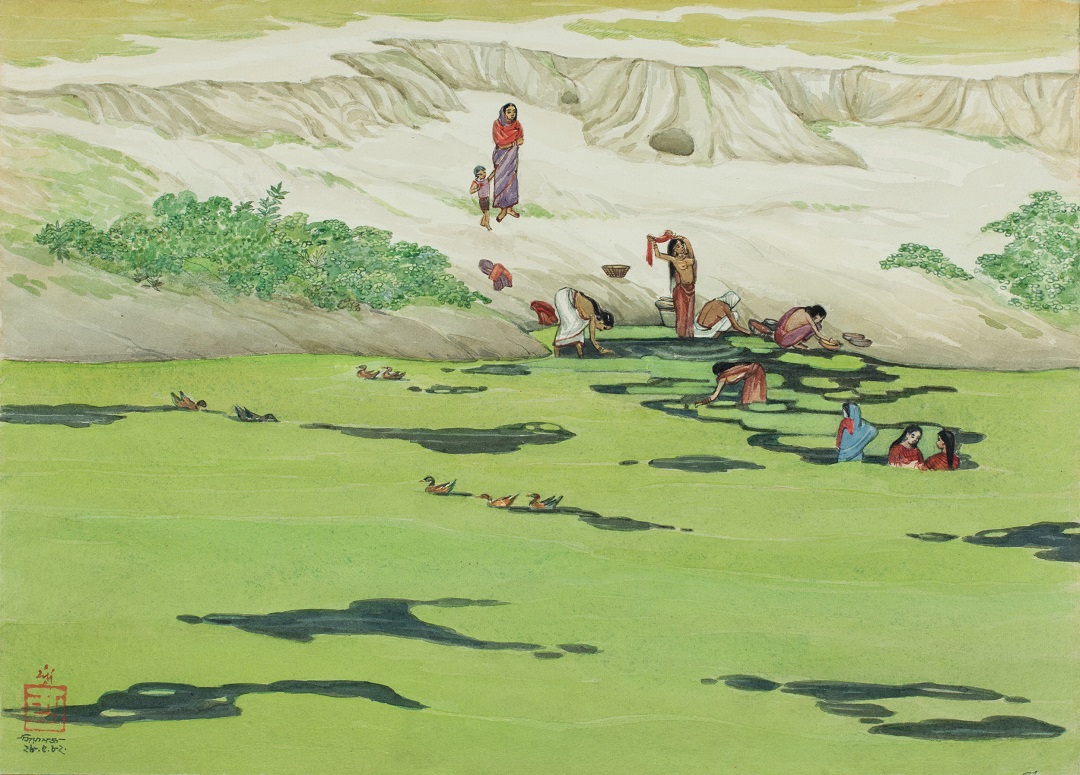
Bathers
Watercolour wash on paper
Indra Dugar received no formal artistic training but learned from the example of his more famous father, Hirachand Dugar, and imbibed the influence of Nandalal Bose while doing his schooling at Santiniketan. The broad expanse of vivid green, of the algae coating the surface of the pond, contrasts with the bright white of the parched bank, to make this one of Indra Dugar’s most arresting compositions. A fierce heat is suggested by the total absence of shadow.
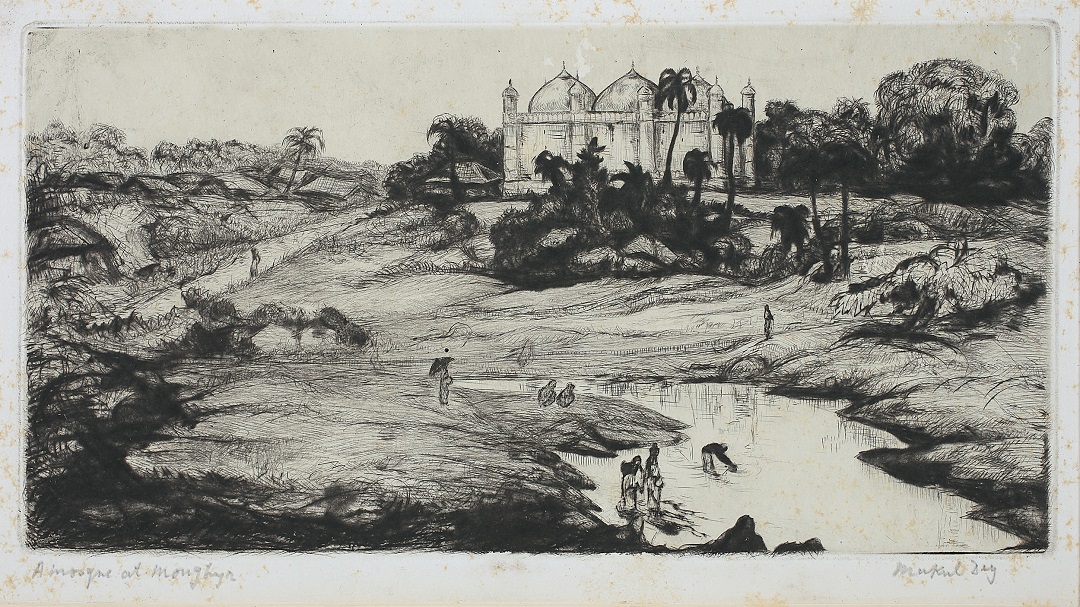
Mukul Dey
A Mosque at Monghyr
Etching and drypoint on paper
Located on the River Ganga in Bihar, the town and fort of Monghyr were developed by rulers of the sultanate and Mughal periods. A pioneer of Indian printmaking, Mukul Dey here revisits the site, which Hodges had portrayed in a print nearly two hundred years before.
Haren Das
The Chalor River
Colour woodcut on paper
Haren Das studied graphic arts at the Government College of Art and Craft in Calcutta, selecting a specialisation which was not fashionable at the time, but his leading example and mastery helped to promote printmaking as a medium. Though he produced many images of rural people at work, his predominant vision was of a quiet, unchanging landscape.
Indra Dugar
Bathers
Watercolour wash on paper
Indra Dugar received no formal artistic training but learned from the example of his more famous father, Hirachand Dugar, and imbibed the influence of Nandalal Bose while doing his schooling at Santiniketan. The broad expanse of vivid green, of the algae coating the surface of the pond, contrasts with the bright white of the parched bank, to make this one of Indra Dugar’s most arresting compositions. A fierce heat is suggested by the total absence of shadow.
Mukul Dey
A Mosque at Monghyr
Etching and drypoint on paper
Located on the River Ganga in Bihar, the town and fort of Monghyr were developed by rulers of the sultanate and Mughal periods. A pioneer of Indian printmaking, Mukul Dey here revisits the site, which Hodges had portrayed in a print nearly two hundred years before.
Haren Das
The Chalor River
Colour woodcut on paper
Haren Das studied graphic arts at the Government College of Art and Craft in Calcutta, selecting a specialisation which was not fashionable at the time, but his leading example and mastery helped to promote printmaking as a medium. Though he produced many images of rural people at work, his predominant vision was of a quiet, unchanging landscape.
Indra Dugar
Bathers
Watercolour wash on paper
Indra Dugar received no formal artistic training but learned from the example of his more famous father, Hirachand Dugar, and imbibed the influence of Nandalal Bose while doing his schooling at Santiniketan. The broad expanse of vivid green, of the algae coating the surface of the pond, contrasts with the bright white of the parched bank, to make this one of Indra Dugar’s most arresting compositions. A fierce heat is suggested by the total absence of shadow.
Mukul Dey
A Mosque at Monghyr
Etching and drypoint on paper
Located on the River Ganga in Bihar, the town and fort of Monghyr were developed by rulers of the sultanate and Mughal periods. A pioneer of Indian printmaking, Mukul Dey here revisits the site, which Hodges had portrayed in a print nearly two hundred years before.
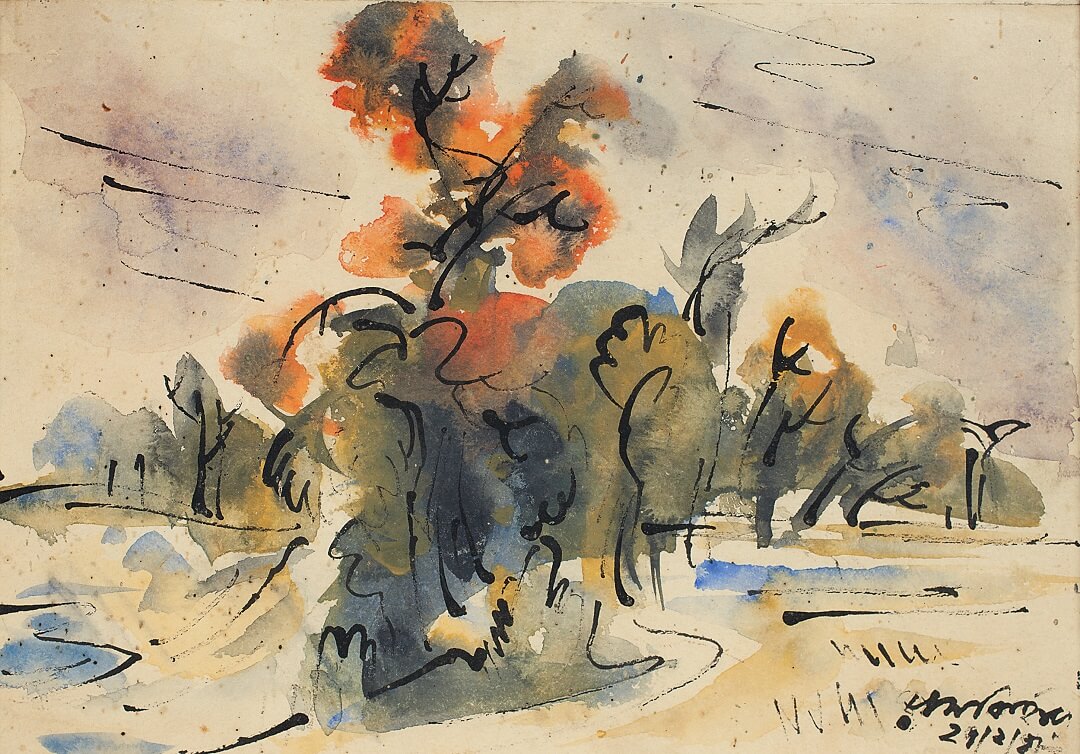
Ramkinkar Baij
Untitled
Ink and watercolour on handmade paper
One of the most celebrated teachers at Kala Bhavana in Bengal, Ramkinkar Baij is best remembered for his large sculptural groups depicting members of the Santhal community living nearby. His watercolour sketches are characterised by a strong, seemingly spontaneous black line, overlaid with patches of vivid colour.
Sudhir Khastgir
Untitled
Oil and oil pastel on masonite board
Born in Chittagong, Sudhir Khastgir studied at Kala Bhavana in Santiniketan under Nandalal Bose. Like his classmate Ramkinkar Baij, he was both a sculptor and a painter, producing portraits and landscapes. The high horizon, close view, and intense colouring in this work combine to create a sense of heat and enclosure.
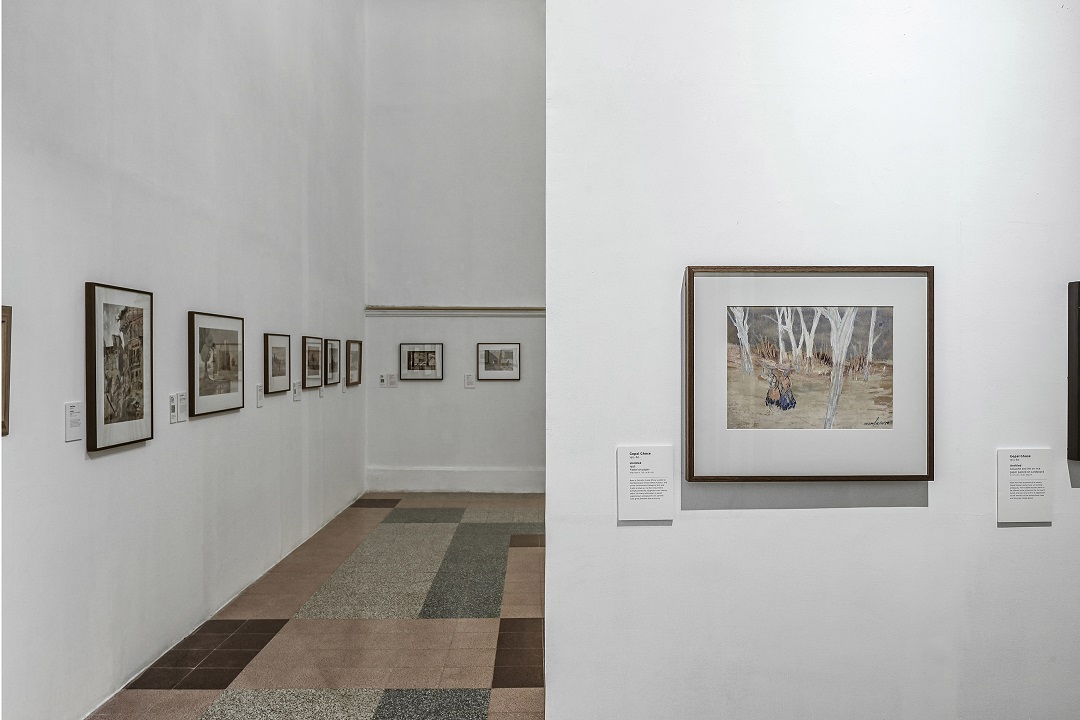
Gopal Ghose
Untitled
Gouache on paper
Gopal Ghose was a founder member of the Calcutta Group, set up in 1943. His work at that time focused on recording atrocities and human misery. By the late 1950s he was producing images with a different kind of intensity: highly coloured visions of imagined landscapes.
Ramkinkar Baij
Untitled
Ink and watercolour on handmade paper
One of the most celebrated teachers at Kala Bhavana in Bengal, Ramkinkar Baij is best remembered for his large sculptural groups depicting members of the Santhal community living nearby. His watercolour sketches are characterised by a strong, seemingly spontaneous black line, overlaid with patches of vivid colour.
Sudhir Khastgir
Untitled
Oil and oil pastel on masonite board
Born in Chittagong, Sudhir Khastgir studied at Kala Bhavana in Santiniketan under Nandalal Bose. Like his classmate Ramkinkar Baij, he was both a sculptor and a painter, producing portraits and landscapes. The high horizon, close view, and intense colouring in this work combine to create a sense of heat and enclosure.
Gopal Ghose
Untitled
Gouache on paper
Gopal Ghose was a founder member of the Calcutta Group, set up in 1943. His work at that time focused on recording atrocities and human misery. By the late 1950s he was producing images with a different kind of intensity: highly coloured visions of imagined landscapes.
Ramkinkar Baij
Untitled
Ink and watercolour on handmade paper
One of the most celebrated teachers at Kala Bhavana in Bengal, Ramkinkar Baij is best remembered for his large sculptural groups depicting members of the Santhal community living nearby. His watercolour sketches are characterised by a strong, seemingly spontaneous black line, overlaid with patches of vivid colour.
Sudhir Khastgir
Untitled
Oil and oil pastel on masonite board
Born in Chittagong, Sudhir Khastgir studied at Kala Bhavana in Santiniketan under Nandalal Bose. Like his classmate Ramkinkar Baij, he was both a sculptor and a painter, producing portraits and landscapes. The high horizon, close view, and intense colouring in this work combine to create a sense of heat and enclosure.
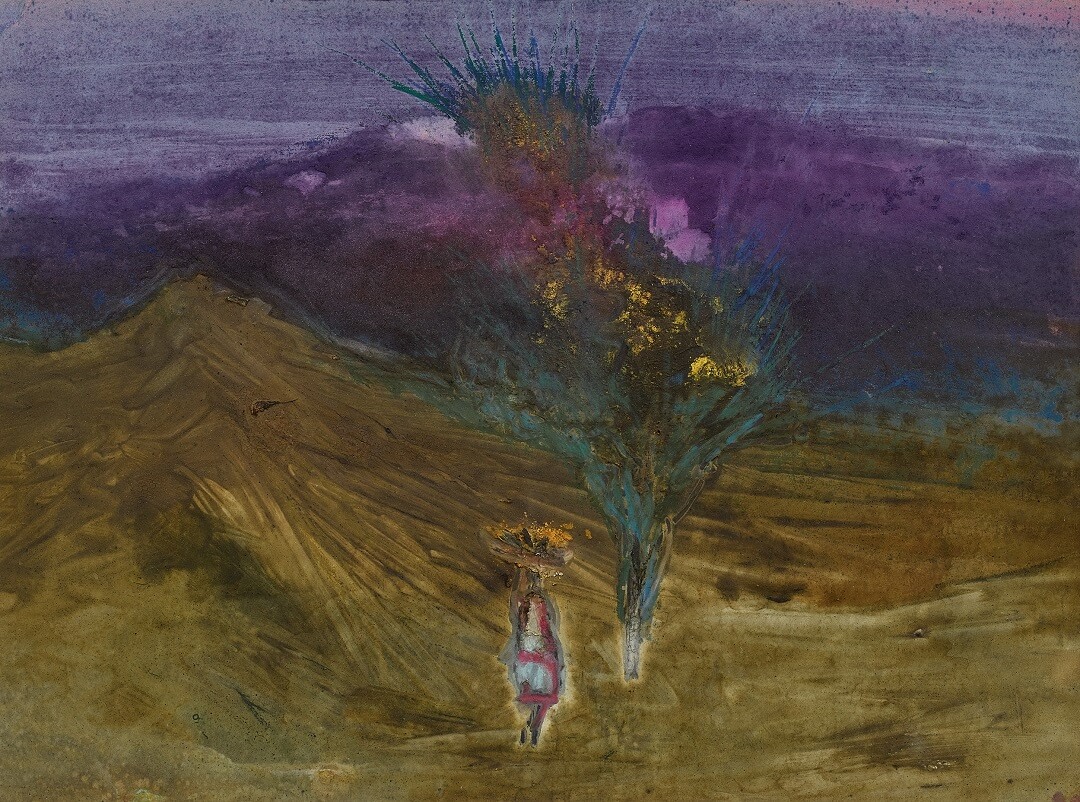
Gopal Ghose
Untitled
Gouache on paper
Gopal Ghose was a founder member of the Calcutta Group, set up in 1943. His work at that time focused on recording atrocities and human misery. By the late 1950s he was producing images with a different kind of intensity: highly coloured visions of imagined landscapes.
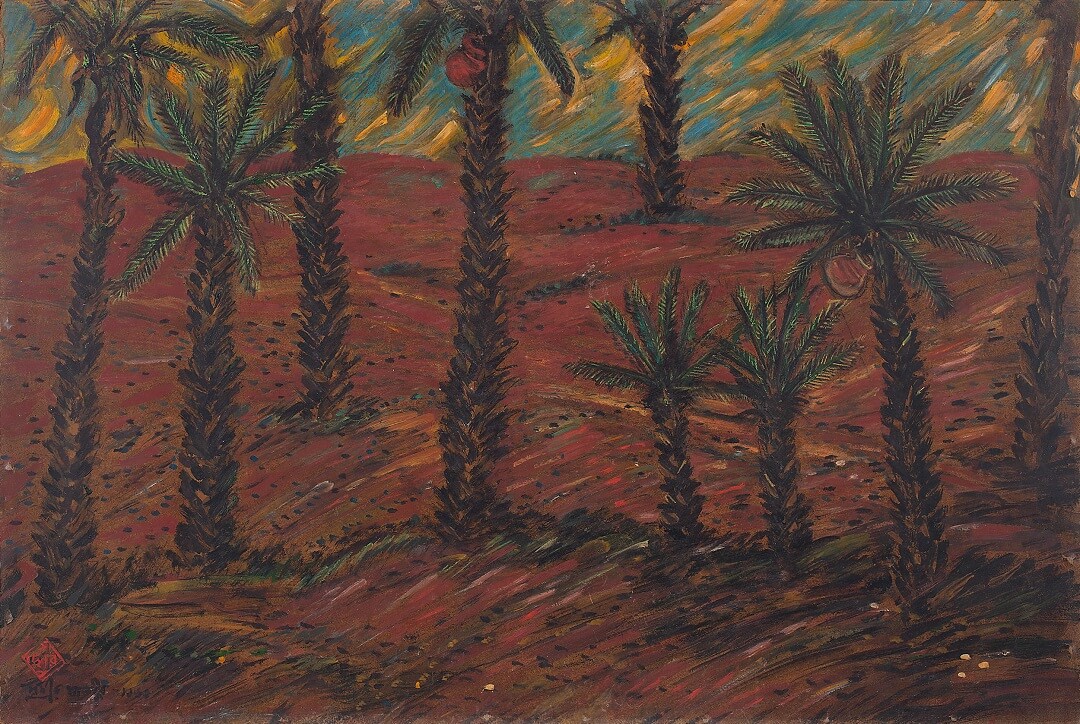
K. K. Hebbar
Untitled (Caravan)
Oil on canvas
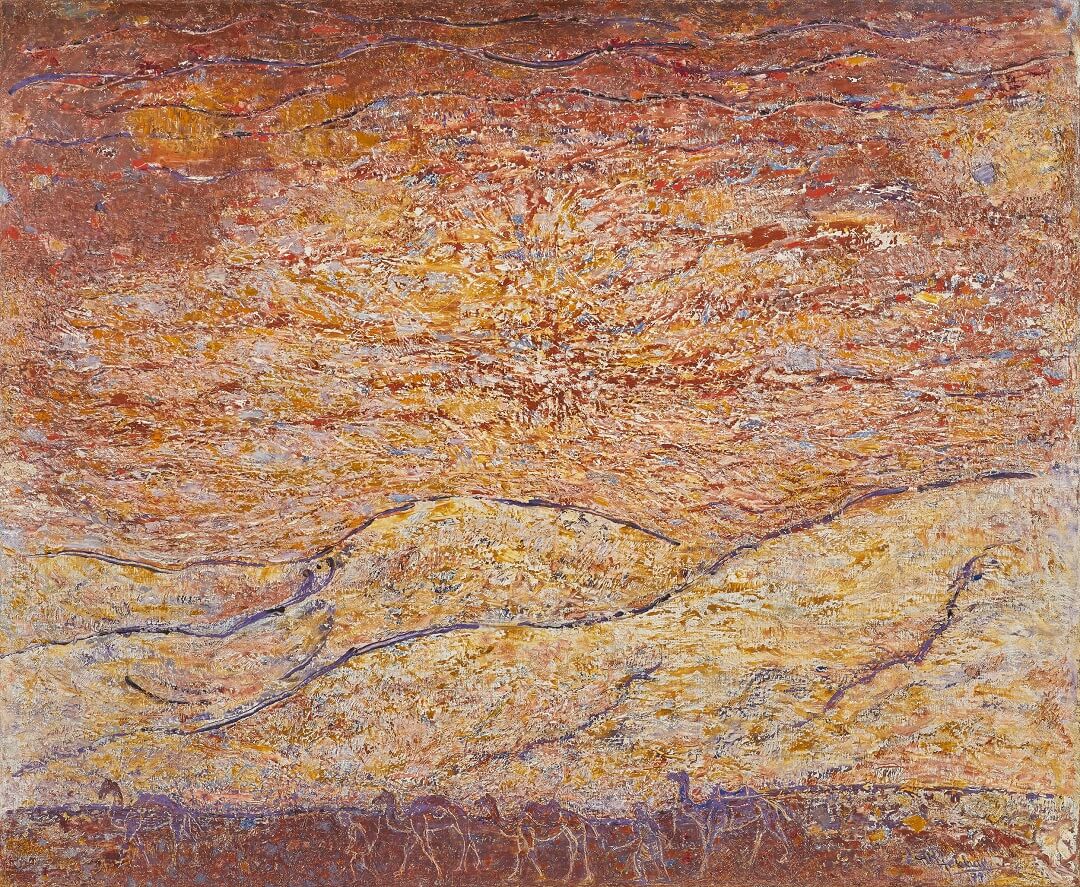
K. K. Hebbar studied at the Sir J. J. School of Art in Bombay, and later in Paris and his early work owes much to Impressionism. In the late 1970s he was much drawn to Rajasthan. The rich texture but simple palette of this painting evoke the heat and the empty expanse of the desert, as the intensely coloured sky looks like burnished metal.
A. A. Almelkar
Untitled
Oil on cardboard
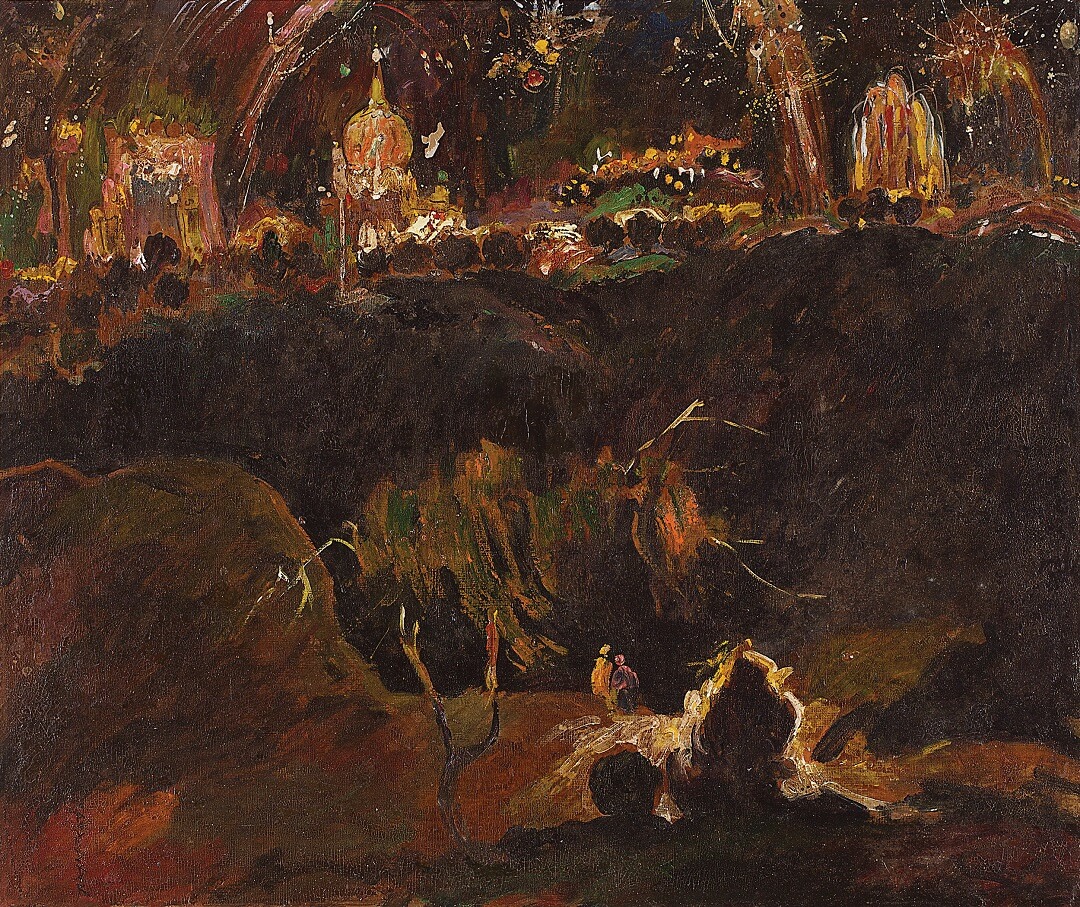
Also a student of the the Sir J. J. School of Art in Bombay, A. A. Almelkar’s work focusses on traditional Indian subjects, painted in modernist styles. This work, which seems to show a festival taking place at night, exudes an expressionist intensity.
B. Prabha
Untitled
Oil on canvas
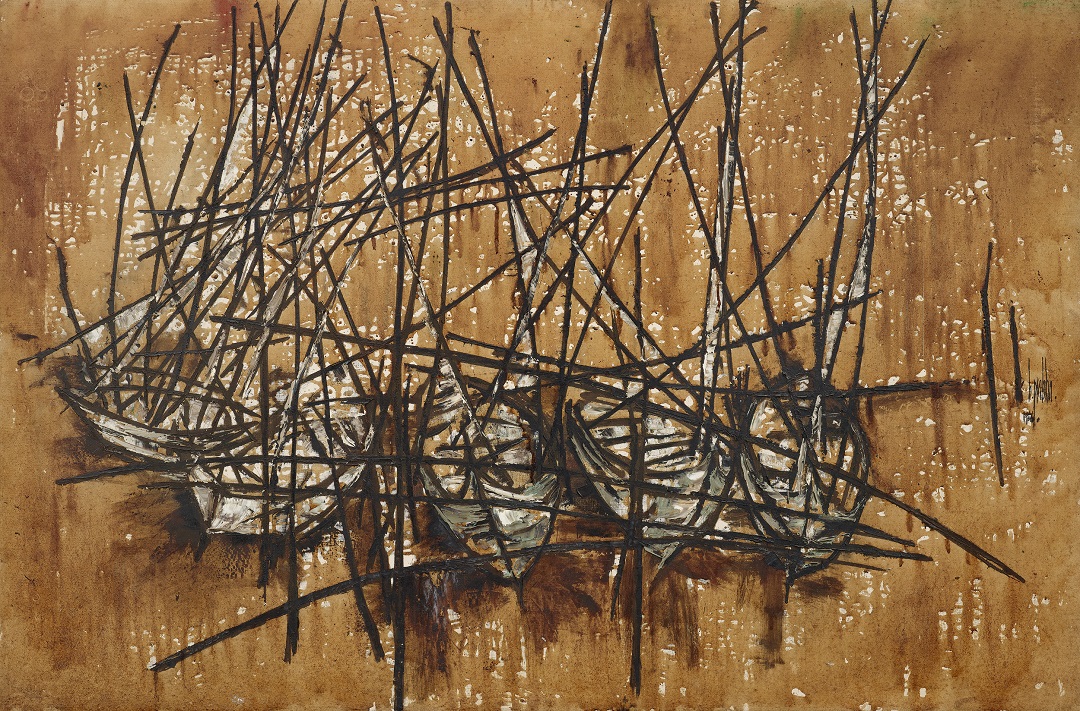
B. Prabha studied first at the Nagpur School of Art, and later at the Sir J. J. School of Art in Bombay. She is best known for her graceful but solemn depictions of rural women. She often deployed a deliberately controlled and restricted palette, as in this image of a group of idle boats. It would be hard to account for every fiercely scored line in terms of masts or rigging, and the line of boats is merely a starting point for a linear pattern that begins to edge towards abstraction.
K. K. Hebbar
Untitled (Caravan)
Oil on canvas
K. K. Hebbar studied at the Sir J. J. School of Art in Bombay, and later in Paris and his early work owes much to Impressionism. In the late 1970s he was much drawn to Rajasthan. The rich texture but simple palette of this painting evoke the heat and the empty expanse of the desert, as the intensely coloured sky looks like burnished metal.
A. A. Almelkar
Untitled
Oil on cardboard
Also a student of the the Sir J. J. School of Art in Bombay, A. A. Almelkar’s work focusses on traditional Indian subjects, painted in modernist styles. This work, which seems to show a festival taking place at night, exudes an expressionist intensity.
B. Prabha
Untitled
Oil on canvas
B. Prabha studied first at the Nagpur School of Art, and later at the Sir J. J. School of Art in Bombay. She is best known for her graceful but solemn depictions of rural women. She often deployed a deliberately controlled and restricted palette, as in this image of a group of idle boats. It would be hard to account for every fiercely scored line in terms of masts or rigging, and the line of boats is merely a starting point for a linear pattern that begins to edge towards abstraction.
K. K. Hebbar
Untitled (Caravan)
Oil on canvas
K. K. Hebbar studied at the Sir J. J. School of Art in Bombay, and later in Paris and his early work owes much to Impressionism. In the late 1970s he was much drawn to Rajasthan. The rich texture but simple palette of this painting evoke the heat and the empty expanse of the desert, as the intensely coloured sky looks like burnished metal.
A. A. Almelkar
Untitled
Oil on cardboard
Also a student of the the Sir J. J. School of Art in Bombay, A. A. Almelkar’s work focusses on traditional Indian subjects, painted in modernist styles. This work, which seems to show a festival taking place at night, exudes an expressionist intensity.
B. Prabha
Untitled
Oil on canvas
B. Prabha studied first at the Nagpur School of Art, and later at the Sir J. J. School of Art in Bombay. She is best known for her graceful but solemn depictions of rural women. She often deployed a deliberately controlled and restricted palette, as in this image of a group of idle boats. It would be hard to account for every fiercely scored line in terms of masts or rigging, and the line of boats is merely a starting point for a linear pattern that begins to edge towards abstraction.
Sakti Burman
Untitled
Acrylic on canvas
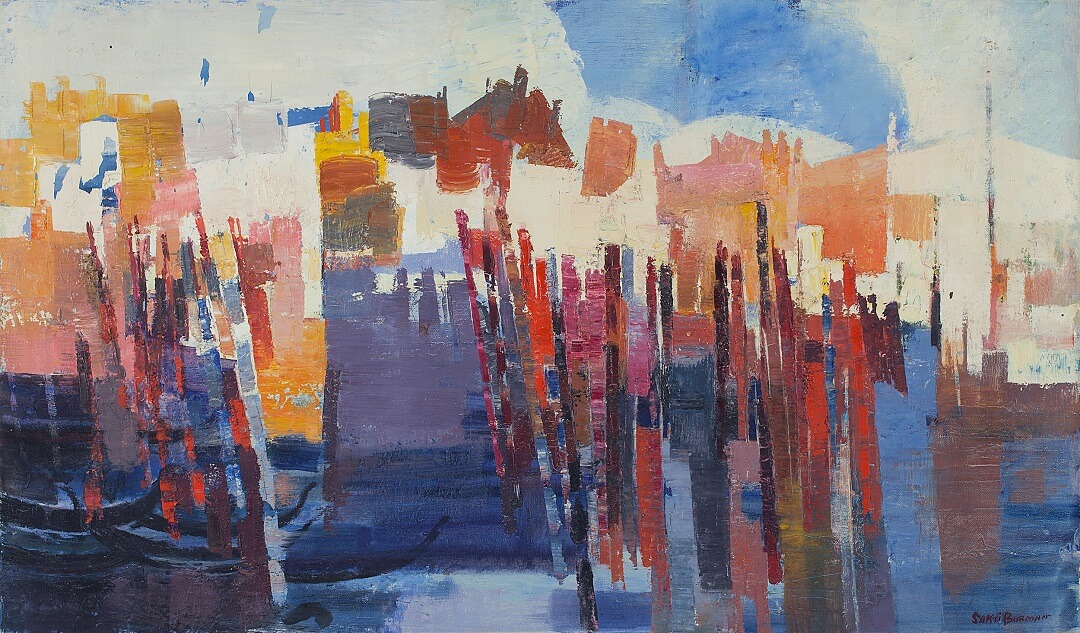
The modern landscape attempts less to record the appearance of a place than to convey a personal experience of it. This Untitled landscape by Sakti Burman seems to recall a joyful encounter with the gondolas and canals of Venice.
Ganesh Haloi
Untitled
Oil on canvas
Born in East Bengal (now Bangladesh), Ganesh Haloi moved with his family to Calcutta following the Partition and later studied at the Government College of Art and Craft. His early landscapes are nostalgic and picturesque evocations of his lost homeland, but in the 1970s he moved towards abstraction, creating compositions like this one, which suggest landscape forms while brimming with ambiguity.
Sakti Burman
Untitled
Acrylic on canvas
The modern landscape attempts less to record the appearance of a place than to convey a personal experience of it. This Untitled landscape by Sakti Burman seems to recall a joyful encounter with the gondolas and canals of Venice.
Ganesh Haloi
Untitled
Oil on canvas
Born in East Bengal (now Bangladesh), Ganesh Haloi moved with his family to Calcutta following the Partition and later studied at the Government College of Art and Craft. His early landscapes are nostalgic and picturesque evocations of his lost homeland, but in the 1970s he moved towards abstraction, creating compositions like this one, which suggest landscape forms while brimming with ambiguity.
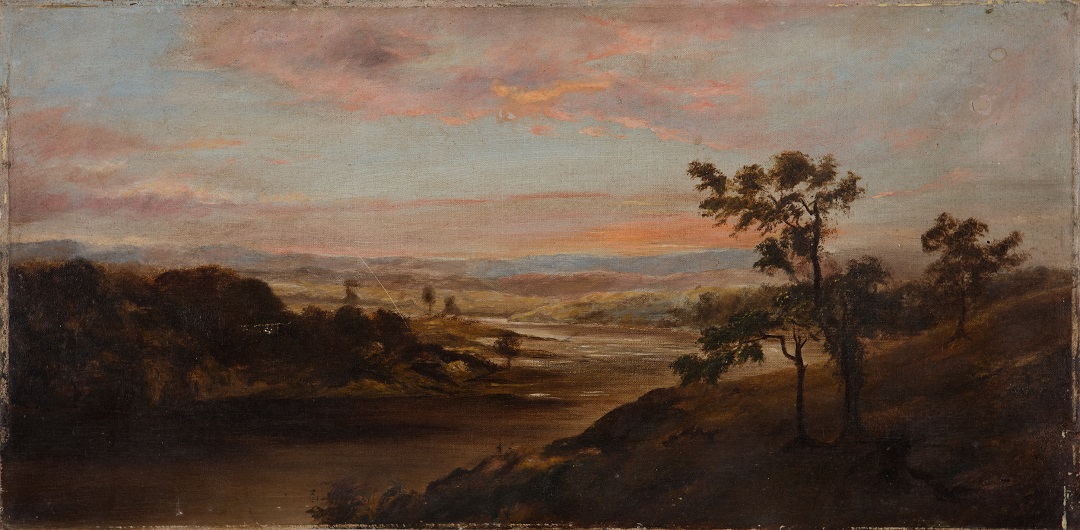
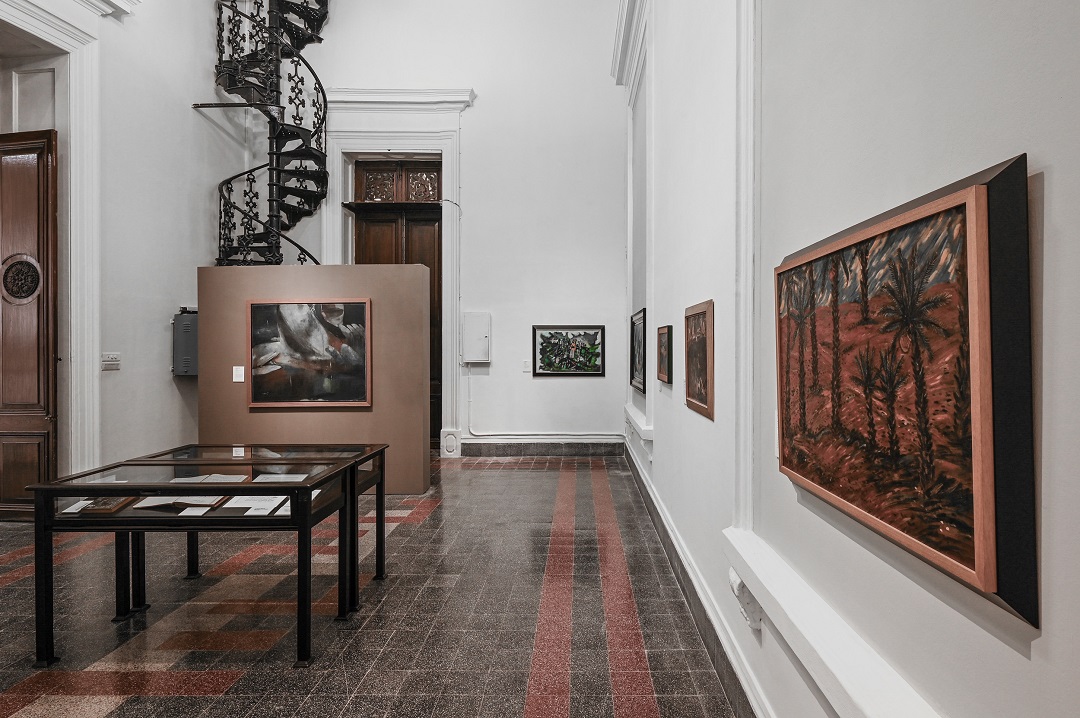
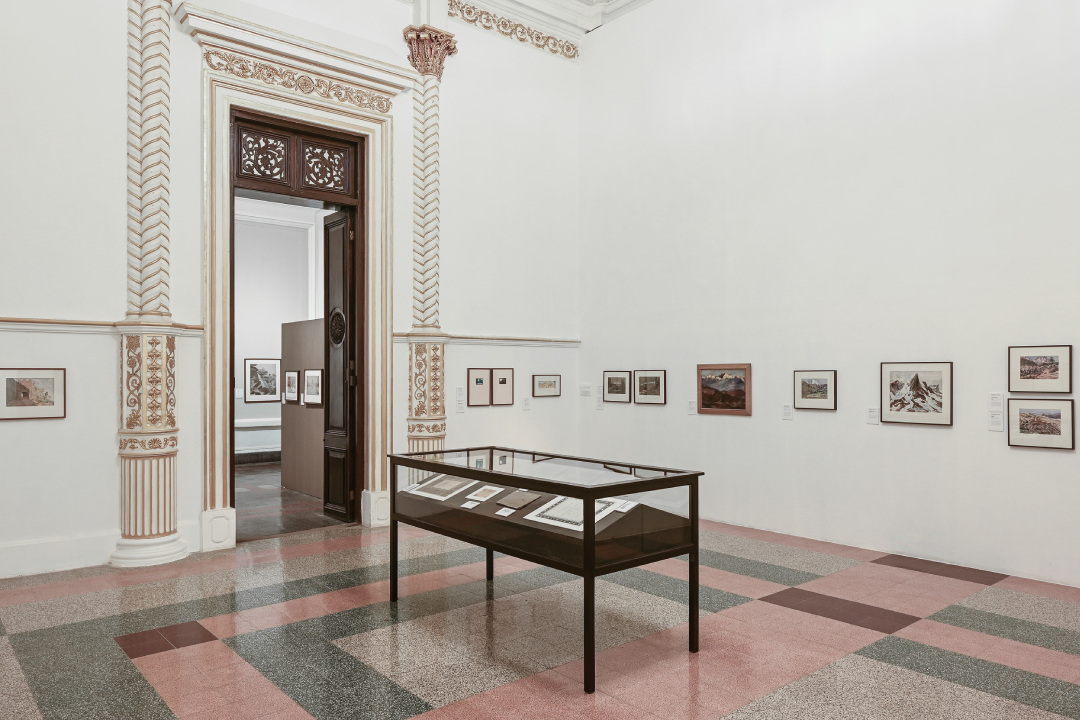
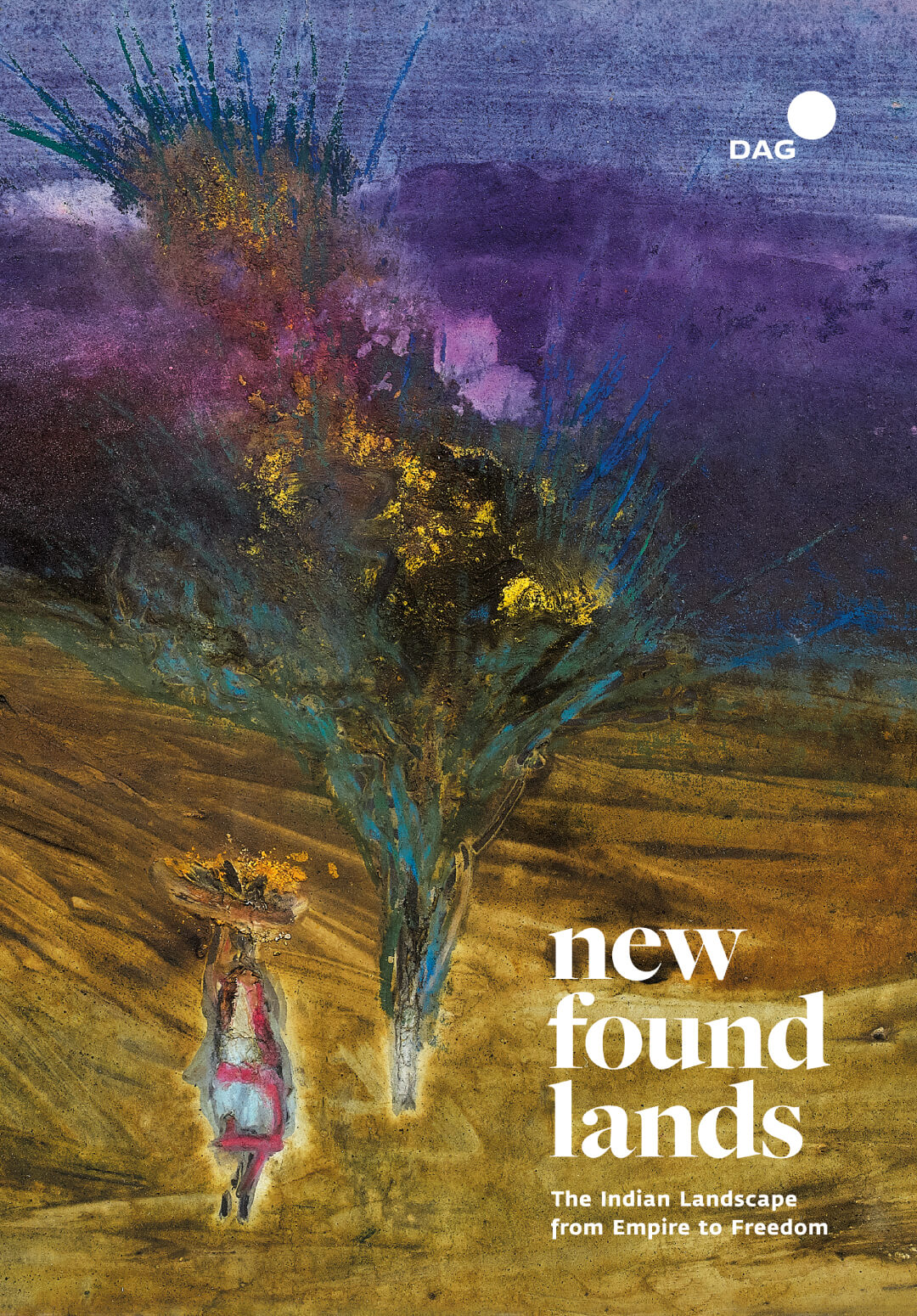
This exhibition looks at landscape painting in India over a period of two hundred years, from 1780 to 1980. We start with English artists who travelled in India from the late eighteenth century onwards, to rediscover what they were looking for, and how they saw what they found. The introduction of new materials, and the teaching of new methods in the art schools from the middle of the 19th century, encouraged some Indian artists to adopt similar academic style approaches. In the twentieth century, a reaction set in, as Indian artists sought new modes of expression. As if reclaiming their patrimony and the right to represent it, they invented a glorious array of new landscape styles.
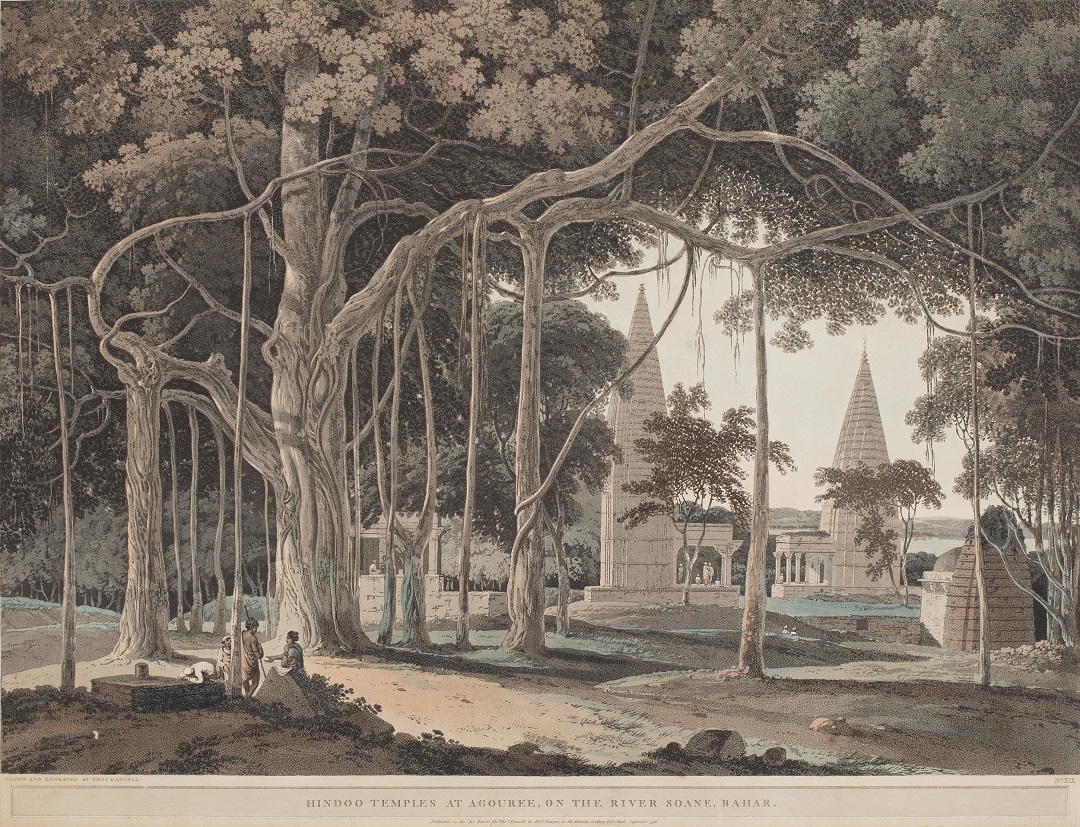
Thomas Daniell
Hindoo Temples at Agouree, On the River Soane, Bahar
Hand-tinted aquatint on paper
THE PICTURESQUE LANDSCAPE
The English aesthetic known as the picturesque developed in the late eighteenth century. William Gilpin’s volumes of Observations, in which he commended or disparaged various famous scenic spots for being either sufficiently or inadequately picturesque, were particularly influential. He believed that a landscape should have rough and irregular forms, and strong contrasts of light and shade, as an antidote to the rounded smoothness of the classical ideal. It was not long before artists took the hint and began to travel in search of suitable subjects, seeking dramatic landscapes with rugged terrains, even as they ventured into the new colonies.
William Hodges
A View of the Pagodas of Deogur
Thomas Daniell
A Ruined Hindu Temple on a Rocky Outcrop
William Parker
View of Rajmahal
Before the days of the camera, many Europeans turned to local artists to supply images of the great monuments and sites of India that were now in their dominion, giving rise to one of the genres of Company Painting. Indian artists quickly mastered single-point perspective, enabling them to draw the Taj Mahal for example, in a manner that would be deemed 'accurate'. But with a few exceptions, most in this early period were more hesitant about assimilating the picturesque. A fuller engagement with the picturesque by Indian artists would come later.
Agra artist (Company painting)
The Taj Mahal
Watercolour on paper
Pestonji E. Bomanji
Untitled
Oil on canvas
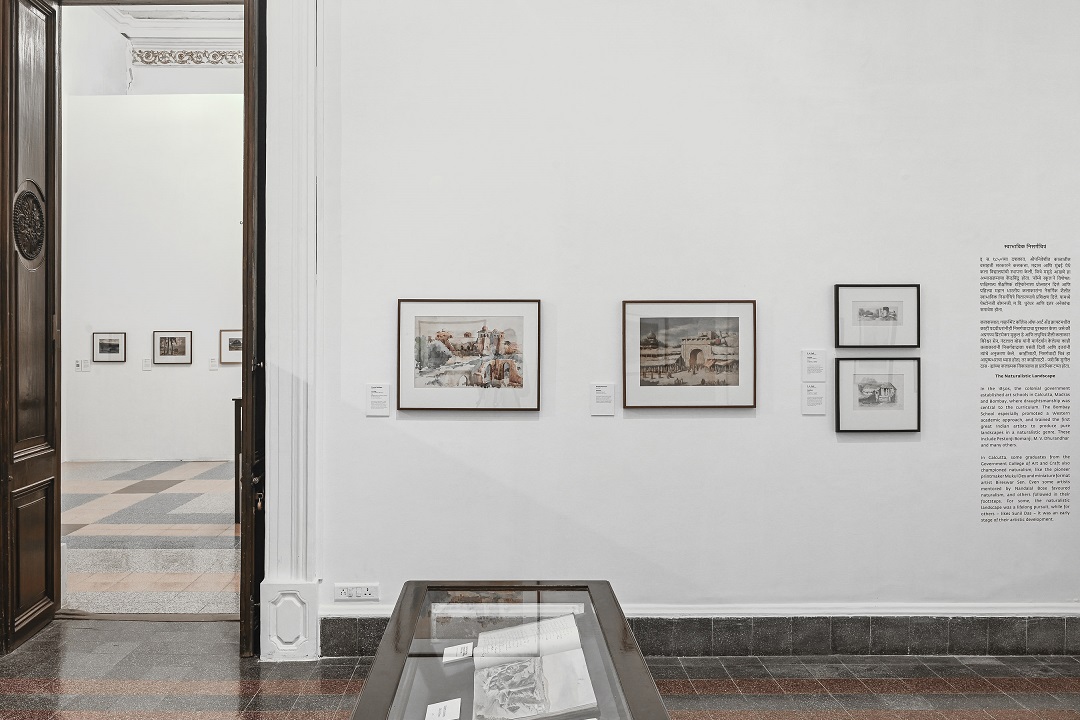
THE NATURALISTIC LANDSCAPE
The Schools of Art that the colonial government established in the 'Presidency' towns—Calcutta, Madras and Bombay—in the 1850s were initially intended to promote India’s industrial arts and crafts. Contrary to the original intention, this emphasis swiftly turned the schools into institutes of fine art and promoted Western methods. When E. B. Havell was appointed as the principal in Calcutta in 1896 he tried to establish a new, distinctively Indian art, rejecting Western realism. However, this was countered by John Griffiths, W. E. Gladstone Solomon and their Indian counterparts in Bombay, who upheld the naturalistic, academic style as a hallmark of modern, progressive art. It is not surprising therefore that the first great Indian artists to produce pure landscapes—as distinct from literary or religious ones—were all associated with the Bombay School.
L. N. Taskar
Untitled (Mughal gateway)
S. L. Haldankar
Early Morning at Chowpati
Prema Pathare
Untitled
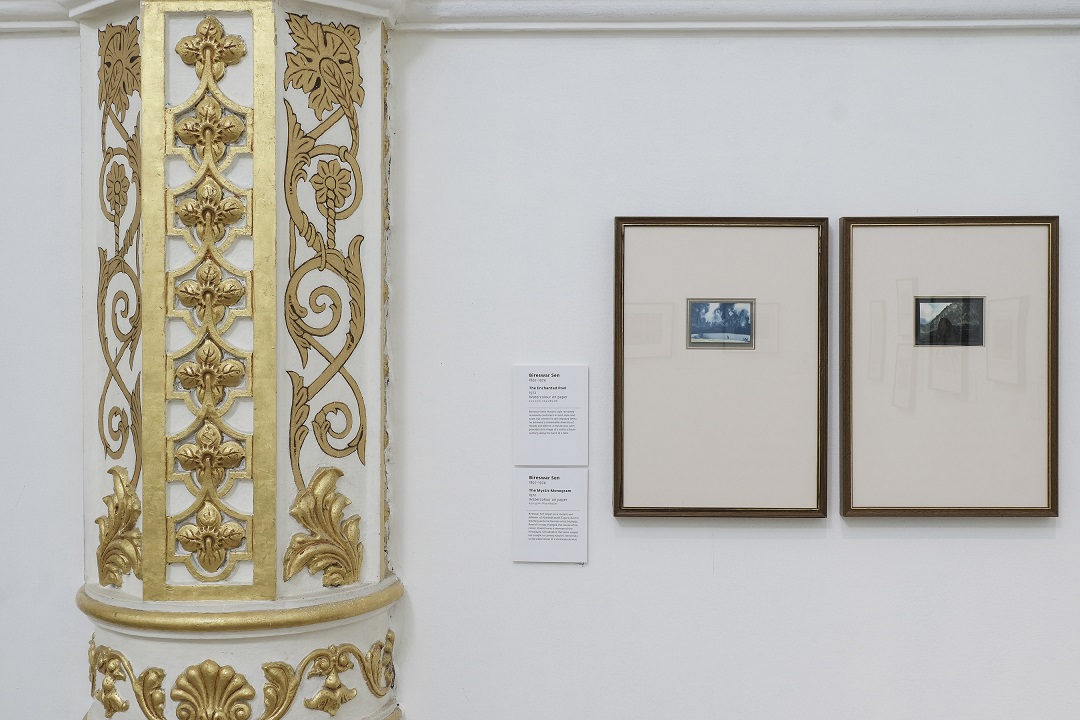
A tradition of naturalism also evolved in Bengal. Bireswar Sen’s early works aligned with the revivalist ideals of Abanindranath Tagore and the Bengal School, but his meeting with the Russian artist Nicholas Roerich in 1932 changed the course of his career. Roerich was a devotee of the Himalayas. Sen adopted the same subject but sought to convey nature’s immensity using watercolour in a miniature format, where the mountains’ grand scale was evoked within three-inch frames.
Bireswar Sen
Parvati
Watercolour on paper
Haren Das
The Chalor River
Indra Dugar
Bathers
Mukul Dey
A Mosque at Monghyr
THE FREE LANDSCAPE
Why should landscape not be treated like any other subject – like the human figure perhaps: not as a form to imitate, but as a source of inspiration while creating new forms?
What we are here calling the ‘free’ landscape emerged in the late colonial period, however there was no linear progression from one approach to the other. Indeed, they existed alongside one another. The artists represented in this section were all born between 1900 and 1947, and they all lived to see India achieve Independence. The earliest works included here date from around that moment, and we follow the story up until 1980, two hundred years after the arrival of William Hodges, by which time their vision had firmly supplanted his.
Ramkinkar Baij
Untitled
Sudhir Khastgir
Untitled
Gopal Ghose
Untitled
Just as the naturalistic landscape first flourished in Bombay, because of the approaches promoted in that School, so the free landscape first emerged in Bengal, especially among artists associated with Kala Bhavana, Rabindranath Tagore’s visionary educational institution in Santiniketan.
K. K. Hebbar
Untitled (Caravan)
A. A. Almelkar
Untitled
B. Prabha
Untitled
Similar approaches were appearing in pockets elsewhere in India, such as in works by K. C. S. Paniker in Madras and D. J. Joshi in Indore. Students of the Sir J. J. School of Art, some of whom returned to their regions of origin or travelled elsewhere, produced arresting new visions of landscape.
After training at the Sir J. J. School of Art, P. T. Reddy worked in commercial studios for the film industry, and for a furnishing company before becoming a full-time painter in the 1950s. His landscapes of that period show a free use of vivid colouring, anticipating a later move towards abstraction.
P. T. Reddy
Untitled (Narayanguda Street, Hyderabad)
Oil on ply board
Sakti Burman
Untitled
Ganesh Haloi
Untitled
The visual story that this exhibition unfolds goes from an imposed colonial gaze, through Indian accommodation and adjustment, to rejection, and the profusion of new forms of imagery, rooted in the land.
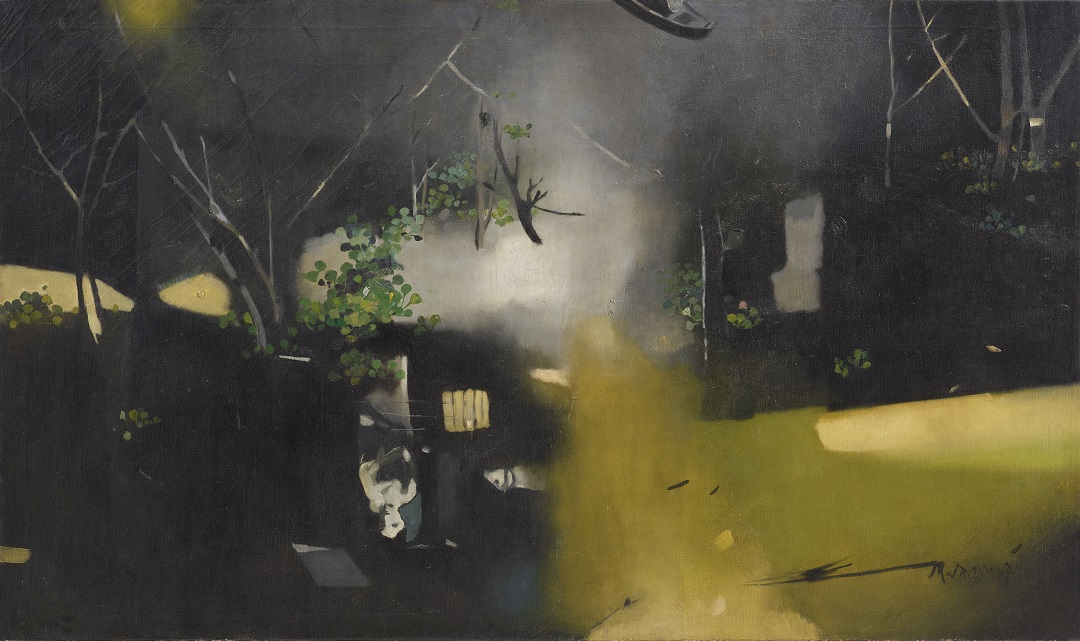
Avinash Chandra
Untitled (Houses in the forest)
Oil on canvas
\
'The exhibition is also a good place to catch glimpses of some of the landscape paintings by Indian artists from the 1920s—MK Parandekar’s paintings of Srinagar’s natural landscape will surely make you nostalgic. SL Haldankar’s artistic interpretation of the old fort at Panhala (1916) or NR Sardesai’s watercolour of the Jogeshwari Caves (of Mumbai, 1940) will ask you to see these popular places in a new light. Or you may want to compare DC Joglekar’s paintings of old Ambarnath Temple or the Naroshankar Temple of Nasik with their present condition.'
'New Found Lands: An Exhibition on Indian Landscapes through Paintings', Outlook Traveller, 4 May 2021.