


Search results for: 'Maya and Miguel Maya Santos Socks deviantart.com'
-
-
-
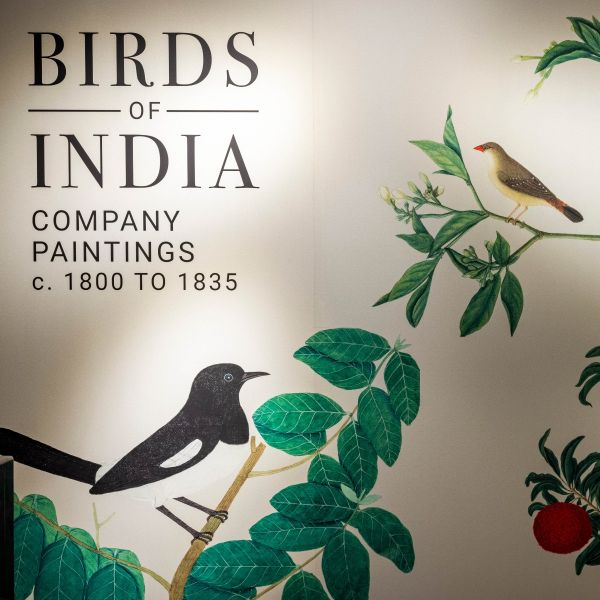 ExhibitionsBIRDS OF INDIAAs low as $1.00
Works of art made by Indian artists for Western patrons in the early colonial period are what we now call Company Painting. The artists, who might otherwise have worked for an Indian court, sought new markets among those employed in various capacities by the European trading companies, and especially the British East India Company. Some patrons supplied the artists with new materials such as European-made paper and transparent watercolour pigments, and expressed preferences regarding subject matter, leading to new departures in both style and substance in Indian art. One of the most delightful genres of Company Painting was natural history: images of India’s plants, animals, and birds. Company Painting Company Paintings British Era
Learn More -
-
-
 Collection OnlineTHE TAGORES$1.00
One of the most distinguished families in Bengal, the Tagores exercised unparalleled influence over the cultural landscape of the region. The Nobel Laureate, Rabindranath Tagore (1861 - 1941), and two of his nephews, Gaganendranath Tagore (1867-1938) and Abanindranath Tagore (1871 - 1951) were recognised as India’s National Art Treasure artists. Sunayani Devi (1875 -1962), their sister, is regarded as one of modern India’s first women painters known by name. Her lyrical paintings and embroideries often looked inward to an imagined world of fables and myths. At the turn of the twentieth century, we see Abanindranath emerging as the founder of the Bengal School as he envisioned a new Indian art that was free of colonial influence, rooted in pan-Asianism. Gaganendranath, on the other hand, was a prolific satirist and cartoonist, who imagined new forms and perspectives inspired by Cubism. Together they formed the influential Indian Society of Oriental Art in 1907, while Rabindranath’s school and university at Santiniketan would continue to shape modern art in Bengal for generations to come.
Learn More -
 ExhibitionsIndia’s French ConnectionAs low as $1.00
This historic exhibition based on the association twenty-seven Indian artists had with art institutions, museums and art movements in Paris throws light on France as a cradle of modernism and what Indian artists gained from this relationship. Akbar Padamsee Amrita Sher-Gil Anjolie Ela Menon Arun Bose Chintamoni Kar Himmat Shah Jehangir Sabavala Jogen Chowdhury K. K. Hebbar Kanwal Krishna Krishna Reddy Laxman Pai Laxman Shrestha Nalini Malani Nasreen Mohamedi Nirode Mazumdar P. Khemraj Paritosh Sen Prodosh Das Gupta Prokash Karmakar Rajendra Dhawan Ram Kumar Sailoz Mukherjea Sakti Burman Sunil Das Syed Haider Raza V. Nageshkar V. Viswanadhan Zarina Hashmi
Learn More -

-
-
-
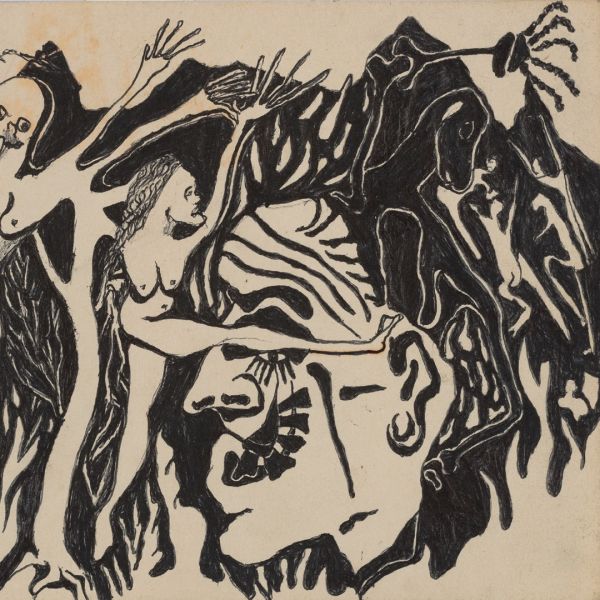 ExhibitionsALTAF: Early DrawingsAs low as $0.00
England shaped Altaf’s political consciousness as well as his persona. He engaged in the anti-apartheid demonstration at Trafalgar Square held against the imprisonment of Nelson Mandela; a peaceful protest at the American Embassy opposing the bombing in North Vietnam; the Aldermaston March against the nuclear bomb; the Campaign for Nuclear Disarmament; he became a member of the Youth Wing of the Communist Party of Great Britain (CPGB) and the Young Communist League (YCL). Any examination of the theoretical aspect of Altaf’s work must start with the knowledge that the work in question exemplified an element of ‘existentialist’ thought.
Learn More -
 ArtistsCompany Paintings$0.00
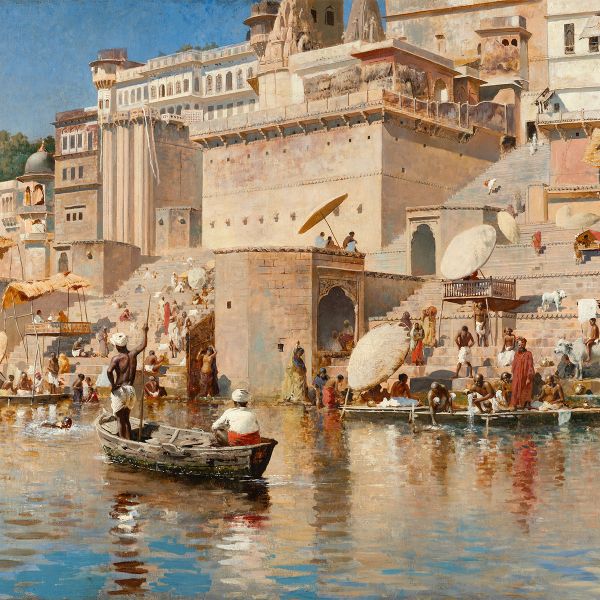
Ethnographic mapping and documentation of a vast country like India was an important part of the political and economic expansion of the East India Company from the middle of the seventeenth century onwards.
Learn More