


Search results for: 'Krishna Reddy viscosity print workshop 1'
-
 ExhibitionsMaster Maqbool: Works by M. F. HusainAs low as $1.00
He was the colossus of the Indian art world whose reign over twentieth-century modern art remains unparalleled. M. F. Husain (1913-2011) was the face of Indian modernism and owned it completely. Having started out as a painter of billboards in Bombay, he became its unchallenged monarch as a member of the influential Progressive Artists’ Group in 1947. He claimed the first National Award instituted by the Lalit Kala Akademi in 1955, and went on to become India’s most celebrated artist. In a practice that spanned over seventy years, Husain was playful, experimental, provocative, controversial—but never mediocre.
Learn More -
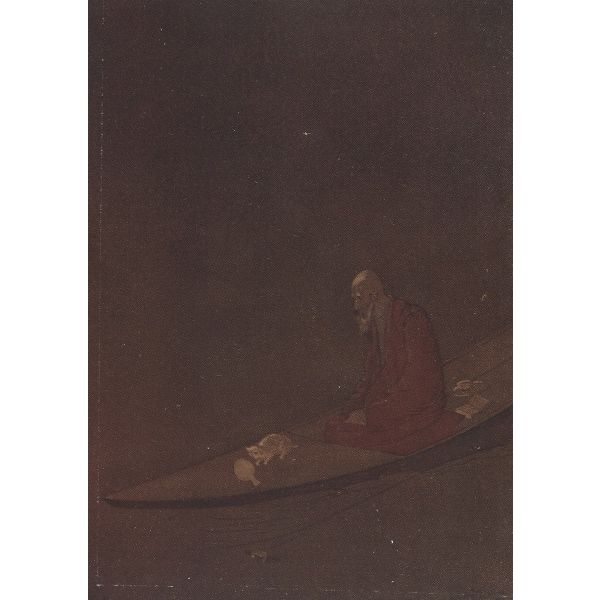 Collection Stories150 years of Abanindranath Tagore$1.00
At the turn of the twentieth century, Abanindranath Tagore asked himself if the emerging artists of modern India should continue to paint in the manner of their European colonizers; or was there a new path waiting to be forged? His answers led him to envision a pan-Asian cultural identity, spanning traditions from Persia to Japan, and culminating in a ‘new “Indian” art.’ Regarded as the founder of the Bengal School, Abanindranath left an unparalleled legacy both in terms of his own diverse body of work, and through his pupils, like Nandalal Bose, who shaped the contours of art across the subcontinent in the twentieth century.
Learn More -
-
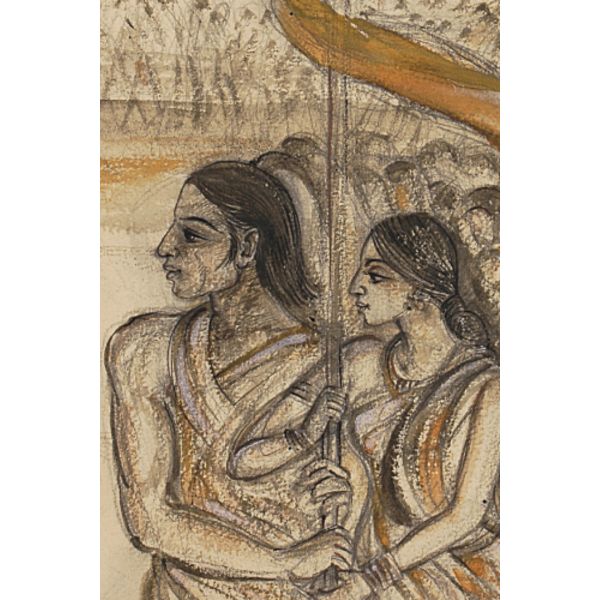
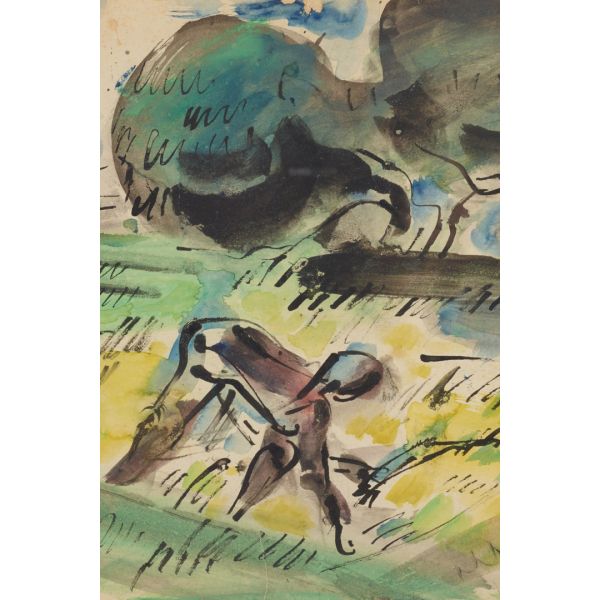
 ExhibitionsMadras ModernAs low as $1.00
The Madras Art Movement that emerged in the early 1960s was a late phenomenon of modernity in south India within the national context. It developed as a regional phenomenon that began to take shape from the mid-1950s onwards as a search for authenticity in modernism derived largely from the region’s cultural heritage. D. P. ROY CHOWDHURY A P SANTHANARAJ ACHUTHAN KUDALLUR AKKITHAM NARAYANAN ALPHONSO DOSS C DOUGLAS C J ANTHONY DOSS J. SULTAN ALI K C S PANIKER K M ADIMOOLAM K RAMANUJAM K SREENIVASULU K V HARIDASAN L MUNUSWAMY M SENATHIPATI M SURYAMOORTHY P GOPINATH P PERUMAL P S NANDHAN PANEER SELVAM R B BHASKARAN REDDEPPA NAIDU Rm. PALANIAPPAN S G VASUDEV S. DHANAPAL S. NANDAGOPAL V. VISWANADHAN VIDYASHANKAR STHAPATI
Learn More -
-
-
 ExhibitionsAltafAs low as $1.00
In the articulation of twentieth century art, where does one place Altaf Mohamedi? That question has probably troubled more curators than we realise. Altaf, who studied art in London before returning to Bombay (now Mumbai) was following in the footsteps of his elder sister and artist Nasreen Mohamedi, but that is where all similarities ended. Where Nasreen was an abstract, sparse artist who created a distinctive language using, for most part, rigid, inflexible lines that nevertheless sang on the paper over which they were made, Altaf’s work was intensely political and social.
Learn More -
 ExhibitionsG. R. Santosh: AwakeningAs low as $1.00
An unassuming trailblazer, Gulam Rasool Santosh is the most important artist from the movement known as neo-tantra in Indian art, synonymous with masters such as Biren De and Sohan Qadri. Self-taught, Santosh began his career painting landscapes in his native Kashmir before being spotted by S. H. Raza, which enabled him to study at the Maharaja Sayajirao University at Baroda under the famous artist N. S. Bendre. After a few years of painting figurative and abstract works in the mould of the other Indian Progressives, Santosh’s art changed dramatically towards tantra when he had a mystical experience in the Amarnath cave in 1964. From then on, until his death in 1997, G. R. Santosh dedicated his life to the study and practice of tantra, a yogi as much as an artist.
Learn More -
 ExhibitionsIconicAs low as $1.00
From 1797, when British artist Thomas Daniell painted his masterly landscape of Mahabalipuram, to 2003, the year Rameshwar Broota's painting pitching man against metal resulted in a powerful image, the Indian art world has seen a succession of artists and movements that have enriched its vocabulary in more ways than one. Thomas Daniell Sita Ram Early Bengal School Raja Ravi Varma Edwin Lord Weeks Marius Bauer Ustad Allah Bakhsh Studio of Bourne & Shepherd M. V. Dhurandhar Hemendranath Mazumdar M. A. R. Chughtai Nandalal Bose Jamini Roy Laxman Pai J. Swaminathan Francis Newton Souza J. Sultan Ali Rabin Mondal S. H. Raza K. K. Hebbar Akbar Padamsee Tyeb Mehta K. H. Ara S. K. Bakre Bireswar Sen Nirode Mazumdar Shanti Dave Gulam Rasool Santosh Madhvi Parekh Satish Gujral Bikash Bhattacharjee Maqbool Fida Husain Meera Mukherjee Rameshwar Broota
Learn More -
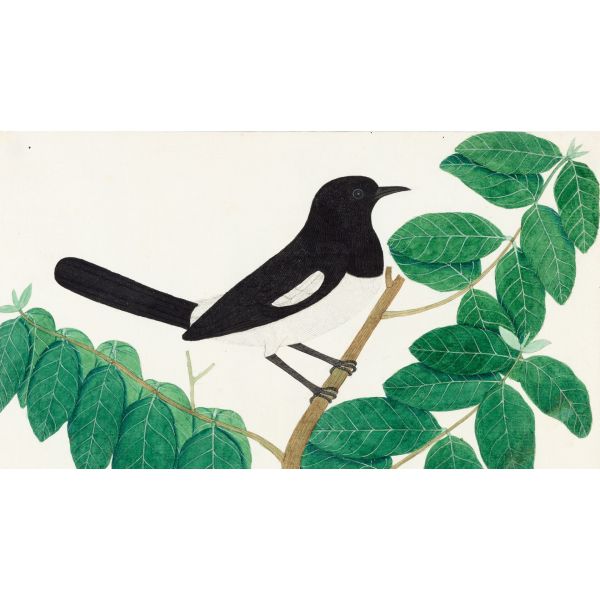 Institutional CollaborationsBirds of India: Company Paintings c. 1800 to 1835$1.00
In celebration of birds and the long relationship art has shared with the winged creatures, this exhibition brings together four folios to present portraits of Indian birds made in the early nineteenth century. While representations of birds date back to the Ajanta murals, naturalistic imagery reached its peak in Mughal art under Emperor Jahangir. In the late 18th century two connected developments emerged in Lucknow and Calcutta. While General Claude Martin provided imported European paper to the artists in Lucknow to prepare botanical studies and other natural history works, in Calcutta Mary, Lady Impey (wife of Chief Justice of the Supreme Court in Bengal, Elijah Impey) had a menagerie where she employed artists to portray variety of animals and birds. Dr. William Roxburgh, superintendent of Calcutta Botanical Garden from 1793, also added to the discourse of natural history by appointing local artists to make botanical studies of the specimens in his charge. The efforts of Martin, Impey, Roxburgh and their artists gave rise to a large body of Company Paintings dedicated to natural history.
Learn More -
 ExhibitionsPrimitivism and Modern Indian ArtAs low as $1.00
The idea of primitivism centres on the wish to identify with, or respond to, elements of a society that are deemed ‘primitive’. In artistic terms, it is about rejecting realism, simplifying technique and reducing the formal means of expression to a ‘primitive’ state. The term itself is borrowed from discussions of Western art, where high-profile examples include the images of Tahiti and its people made in the 1890s by Paul Gauguin, and responses to African sculpture by Pablo Picasso in 1906-09. The second thread of primitivism—the reduction of formal means—is best exemplified by the ‘cut-outs’ made by Henri Matisse in the 1940s.
Learn More -
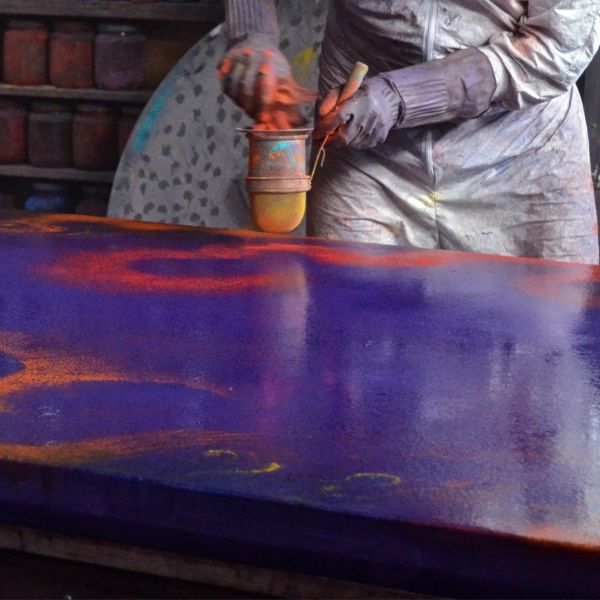 ExhibitionsNatvar Bhavsar: HomecomingAs low as $1.00
It is strange that Natvar Bhavsar, one of Indian art’s leading names, should never have been shown in India before. Having lived and worked in USA from 1962 onwards, it remains a mystery why his work has been seen in America but almost not at all in India. In spite of a few eminent collectors who have his work, Bhavsar has remained inexplicably ignored—an anomaly DAG is happy to correct with this seminal exhibition.
Learn More