

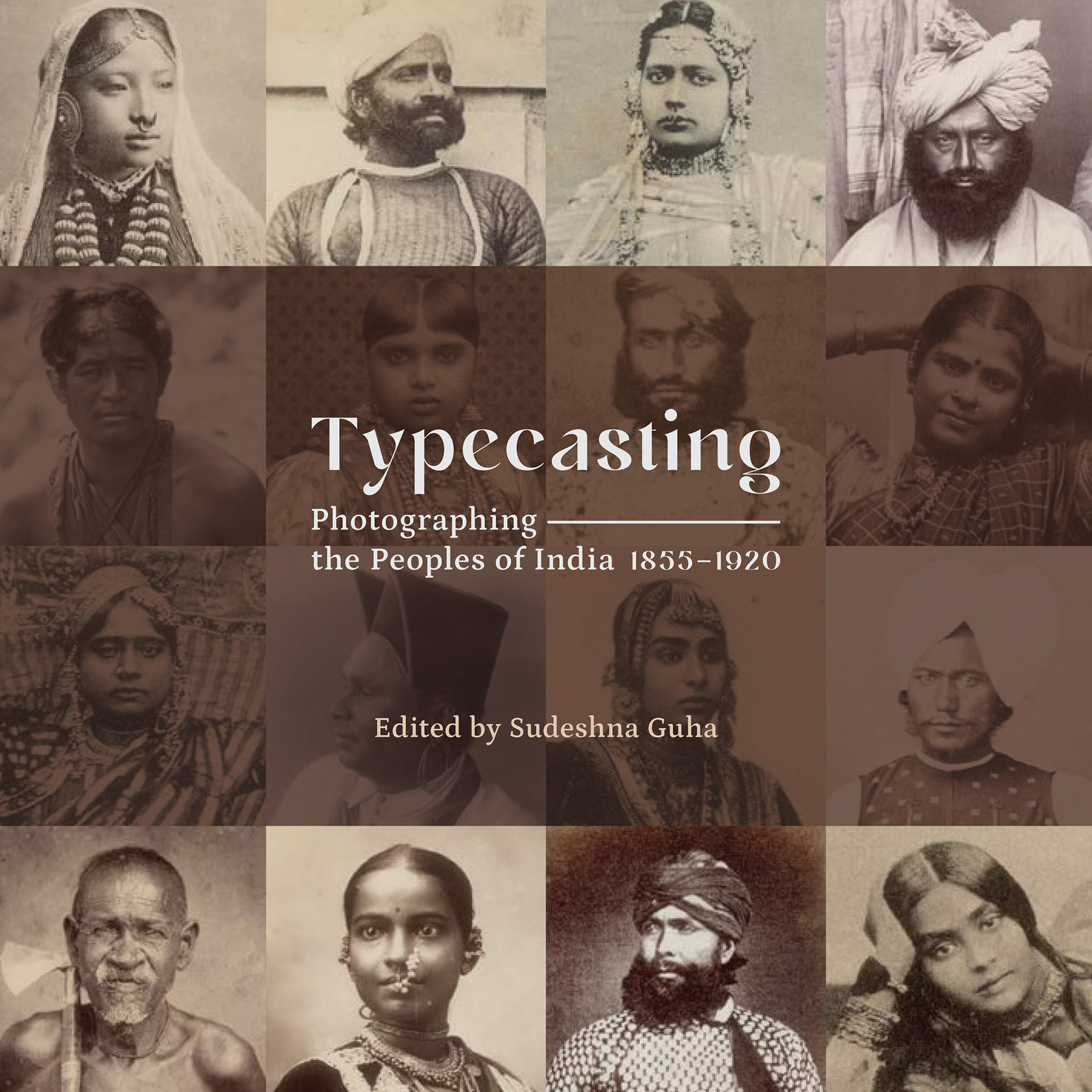
Typecasting: Photographing the Peoples of India, 1855–1920
Typecasting: Photographing the Peoples of India, 1855–1920
Typecasting: Photographing the Peoples of India, 1855–1920

|
Typecasting: Photographing the Peoples of India, 1855–1920 The Alipore Museum Kolkata, 22 August - 1 November 2026 An exhibition by DAG in collaboration with The Alipore Museum Edward Taurines (photographer), Combridge & Co., Madras (publisher) Hindu Nautch Girls Collotype, undivided back, early 20th century |




|
This exhibition showcases the ability of photography to challenge typologies. The photographs we see here reveal how unstable social categories can be despite photography often being used to support them. Over the last decade, DAG has been collecting early ethnographic photographs of India (along with other genres) and now possesses one of the largest collections in the country. The exhibition showcases a range of photographic material: prints, cabinet cards, cartes-de-visite, postcards, folios and albums; and also published books. It maps the diversity of people across a vast geography: from the northeastern Lepcha and Bhutia tribes to the Afridis in the northwest, and the Toda and Vedda in the south; and from talukdars and rich Parsee communities to dancing girls, coolies, barbers and snake charmers. It shows how the early ethnographic photography of India has defined our social and economic groups, but also highlights the propensity of a photograph to constantly accrue new meanings and identities. It points to the possibilities of the transcultural encounters that photography facilitates. |
|
Unidentified Photographer Meat Seller Silver gelatin print on paper, 1903 |
|
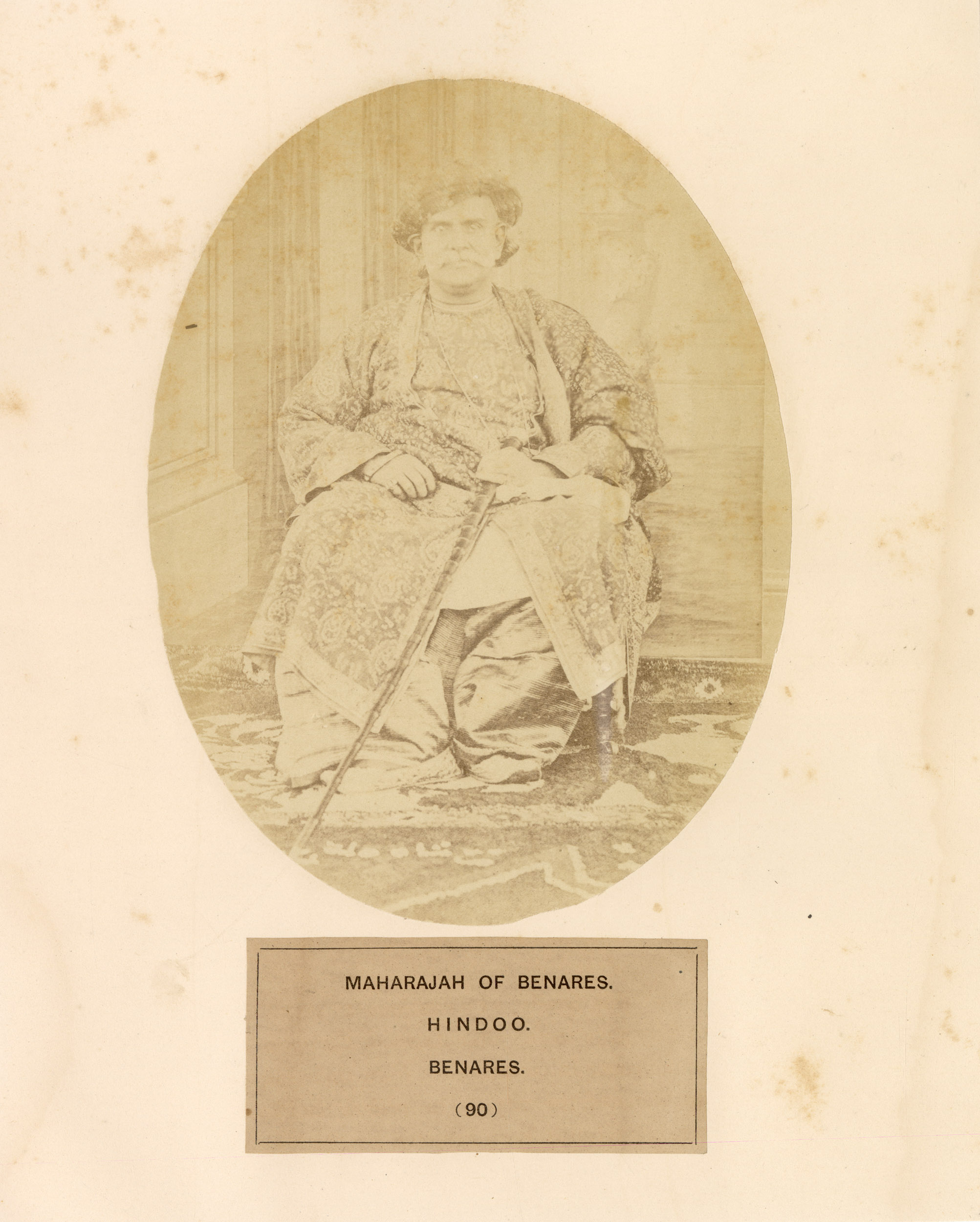
The People of India Published in eight volumes between 1868 and 1875, The People of India is a collection of around 480 photographs of the, supposedly, representative tribes, ‘races’ and trades and occupations of the Indian subcontinent. Arising from a project commissioned by the first viceroy, Lord Canning, as a memento of India, it quickly expanded into a comprehensive survey of practically the whole of British India: indeed, it was possibly the most ambitious photo-documentation project of the 19th century, and launched the genre of anthropological photography in the Indian subcontinent. The descriptive letterpress and accompanying notes identify and claim to highlight the distinctive characteristics of each group depicted, and the sequence of images begins in the Bengal Presidency–which curiously included the kingdoms of Sikkim, Bhutan and Nepal–progressing westwards across modern Uttar Pradesh to Punjab and Sind, before turning south, to cover Rajputana and the Central Provinces. Then down to Mysore, Travancore and Madras, and crossing the Bay of Bengal to Burma and Singapore. Perceptions of race, creed, occupation, evolution, culture and morality, all went into the profiling of a type, and the photographic events often document the unpredictability and contingency which photographing in India entailed for the Sahibs. |
|
Unidentified Photographer 211. Rajah of Kothee. Hindoo of Rajpoot Origin. Simla (Shimla) [1869, Volume Four] Silver albumen print mounted on paper with letterpress captions |
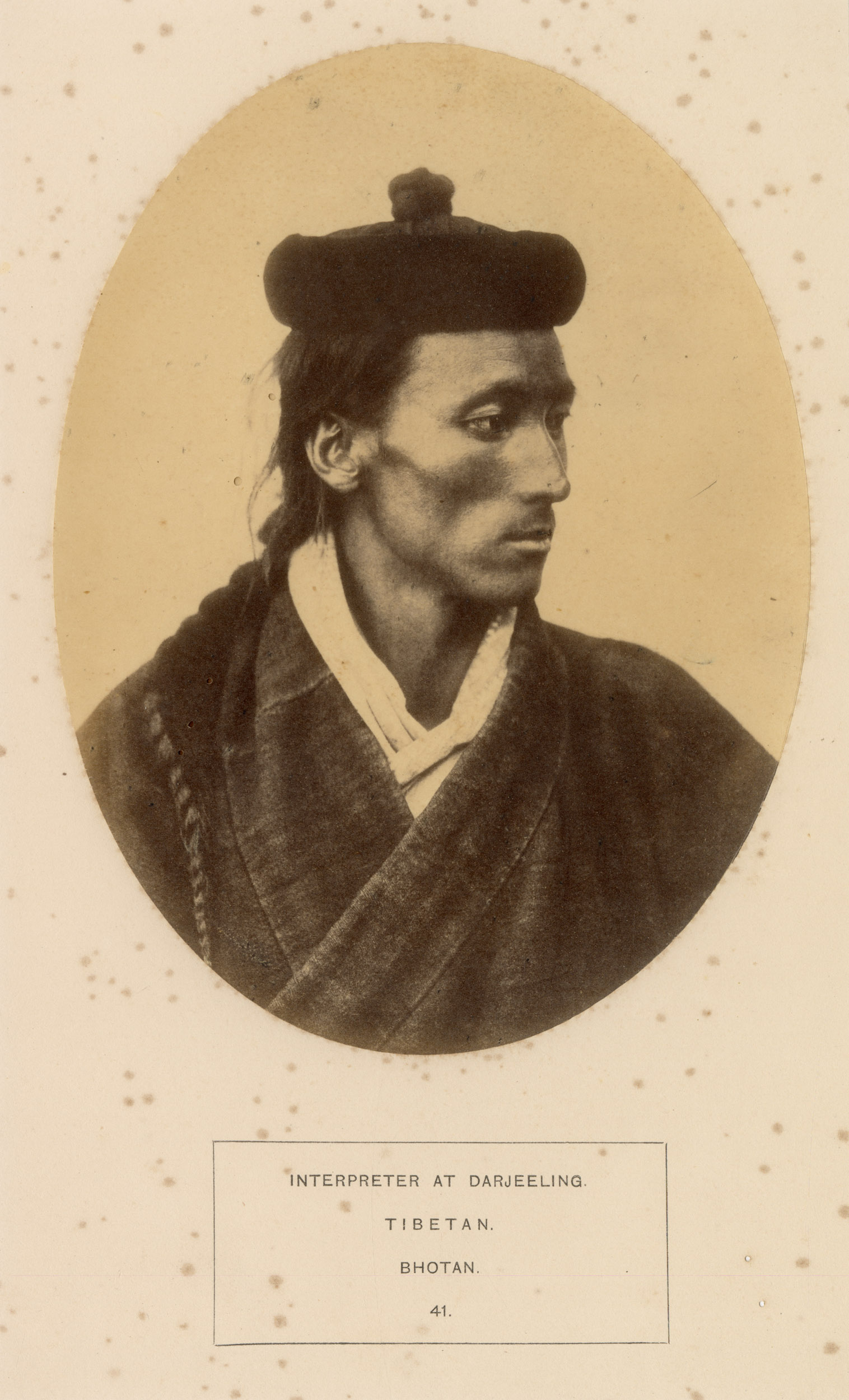
Benjamin Simpson
41. Interpreter at Darjeeling. Tibetan. Bhotan (Bhutan) [1868, Volume One]
Silver albumen print mounted on paper with letterpress captions, c. 1860 - 62
6.6 x 5.0 in. / 16.8 x 12.7 cm.

Charles Shepherd and Robertson
352. Lodhas. Low Caste Hindoo Tribe. Rajpootana (Rajasthan) [1874, Volume Seven]
Silver albumen print mounted on paper with letterpress captions, 1862
8.0 x 6.5 in. / 20.3 x 16.5 cm.

James Waterhouse
364. Bheels Satpoora Range. Aboriginal Tribe. Saugor (Sagar, Madhya Pradesh) [1874, Volume Seven]
Silver albumen print mounted on paper with letterpress captions, 28 May 1863
4.2 x 5.6 in. / 10.7 x 14.2 cm.
The project was seen by its British administrators as a contribution to gathering scientific facts and objective information about India. Its aim was to ease colonial anxieties about the absence of information and loss of control that arose in the wake of the Revolt of 1857. Modern research and understandings might redraw its categories, of tribe and community, but as an exercise in documentation it remains an invaluable record of individuals and material culture from the nineteenth century. |
Benjamin Simpson
48. Lepcha Female Aboriginal. Sikhim (Sikkim) [1868, Volume One]
Unidentified Photographer
90. Maharajah of Benares. Hindoo. Benares (Varanasi, Uttar Pradesh) [1868, Volume Two]
Unidentified Photographer
161. Brinjara and Wife. Itinerant Grain Merchants. Saharunpoor (Saharanpur, Uttar Pradesh) [1868, Volume Three]
|
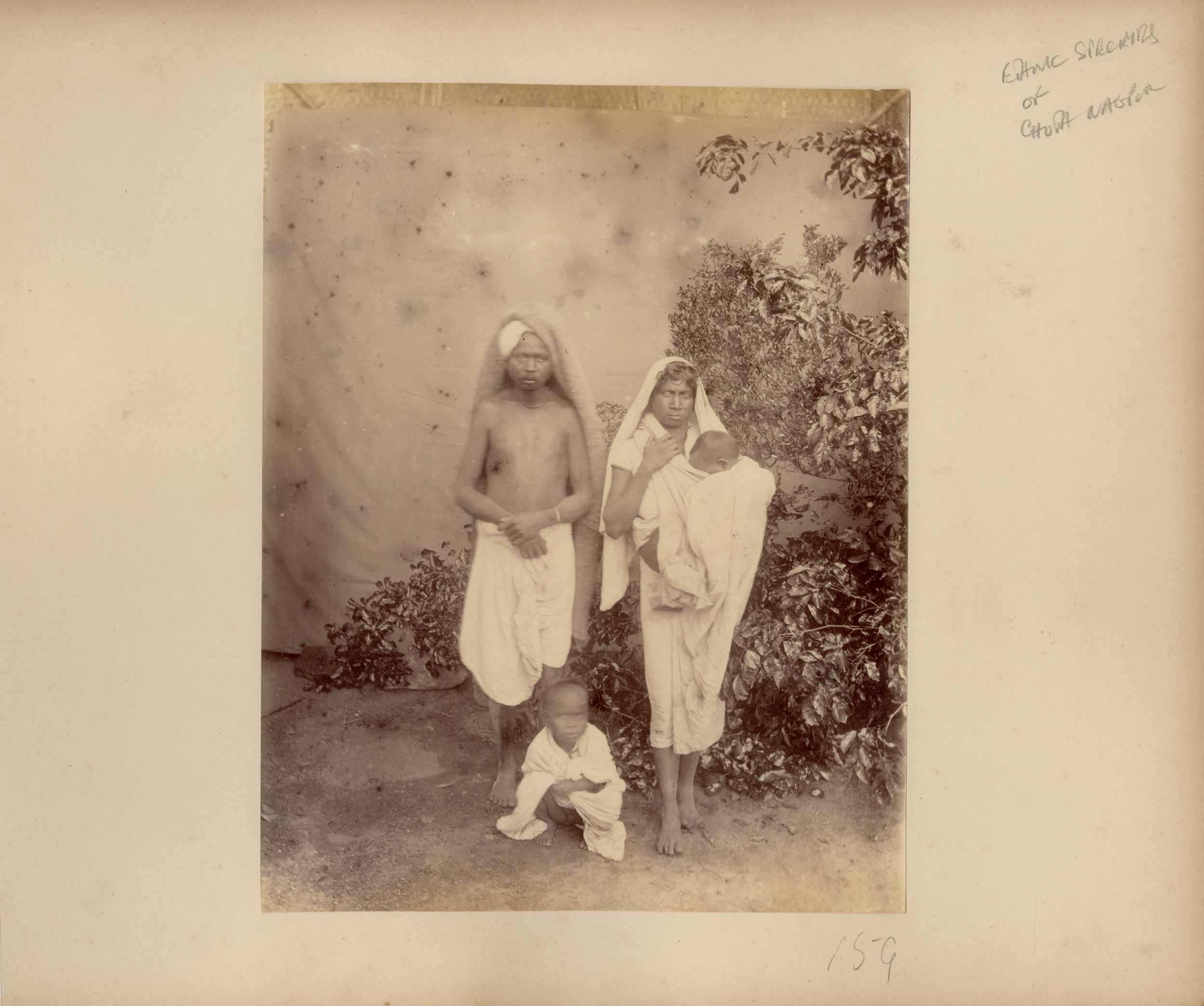
Tribe, Community and Anthropological Field Photography Categories of tribes and communities proliferated from the 1870s. The ‘tribal’ was, typified as representing ‘suspiciously democratic organisational structures’, and ‘exotic appearance and customs’. Notably, the ‘Frontier Tribes’––itself a category––was often trait listed with or without surveys as violent, and the ‘potentates’ were often photographed with guns for the eye to see. They were classified as the martial race, a spurious category which the British accorded to quell their ‘fierce’ resistance and win them over. The participation of the princely states in the 1891 Census extended the colonial precedents of typecasting in these domains. By then, community categories extended to caste groups, ethnographic enquiries followed either the ‘racist’ or ‘materialist’ mode, and standards for anthropometric surveys were devised. They inspired the multi-volume study of the Castes and Tribes of South India (1909), by Edgar Thurston (Superintendent of Madras Museum), notably with his Indian assistants, which remains the largest single product of the Ethnographic Survey of India. |
|
Attributed to William Johnson Parsees Silver albumen print from wet collodion glass negative mounted on card |
Willoughby Wallace Hooper
Untitled (Native Family from Chotanagpur)
Charles Shepherd
Natives from Near Khyber Pass
Samuel Bourne
Lepcha Woman, Darjeeling
|
Trade, Caste, Occupation The photographic records of trade and caste expectantly overlap, as many trades in India are traditionally caste-based. Nevertheless, many images reveal the photographer’s intention to depict tradespeople in the performance of their profession, and not just a representative of it. This creates a sense of living anthropology. We see a broad variety of people – shopkeepers, boatmen, tea-pickers, barbers, watercarriers, potters, cobblers, coolies, guards, domestic servant and cooks – all engaged in the occupations that supposedly defined them as individuals. Facile characterisations followed the category making of occupations, and a book on the Typical Pictures of Indian Natives (1906) complained that: “The Sinhalese very rarely work as coolies, either on tea estates or elsewhere, this work being almost exclusively carried out by Tamils from Southern India. They are generally sharper than Hindoos, and when carefully trained are capable of making very good workmen.” Like the images of the nautch girls, those of people at work, also circulated as postcards within colonial India. In that context, they amounted to a catalogue of common experiences. The sender of a postcard depicting snake-charmers, for example, is indicating that s/he has observed such people on the street and thus ‘knows’ this essential element of India. |
|
Unidentified Photographer Untitled (British Family with a Horsecart in front of their Bungalow) Silver albumen print on paper |
Attributed to William Johnson
Untitled
Skeen & Co.
Untitled (Ceylon Tea Picker)
Unidentified Photographer
Hill Coolies
|
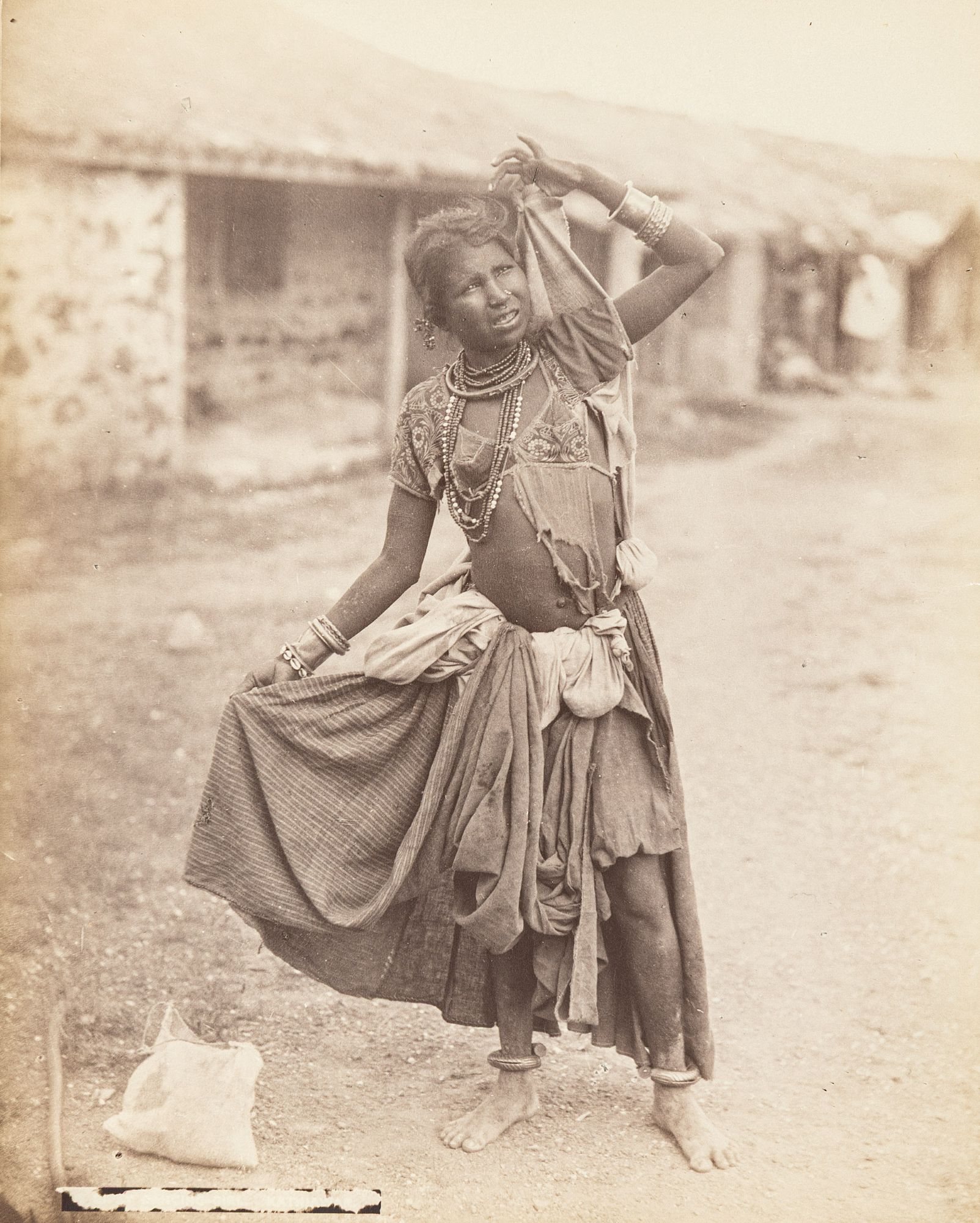
Beauties and Dancing Girls The photography of the women of India, albeit as ethnographic subjects, provided opportunities for a kind of voyeurism. While the captions of many images indicate the intent to illustrate a tribe or community, others record a ‘Hindu Woman’, or ‘Group of Kashmiri Female’ or ‘Tamil Lady’, & etc. A favoured genre was the Nautch (dancing) girls, whose poses and expressions carry a barely concealed erotic charge. However, Daroga Abbas Ali’s photographs of the Ḥasīnān-e Lakhnaʾū (or The Beauties of Lucknow, 1874), is a unique example of attempting something quite different. The ‘paris’ (fairies) in Indur Sabha allowed envisioning the legitimacy of the art of professional performers. And through an album full of them Abbas Ali evoked the presence of the ‘magical court’ of the resplendent Lucknow of the dispossessed and exiled Nawab Wajid Ali Shah, and thereby provided him ‘a cure’. |
|
Samuel Bourne A Group of Kashmir Females, Srinuggur [Srinagar] Silver albumen print from wet collodion glass negative mounted on card, c. 1864 |

Unidentified Publisher
Miss Jomti of Mussoorie
Coloured collotype, divided back, early 20th century
5.4 x 3.4 in. / 13.7 x 8.6 cm.

D. A. Ahuja No. #39, Rangoon
Miss Goharjan
Coloured halftone, divided back, early 20th century
5.4 x 3.4 in. / 13.7 x 8.6 cm.

Gobind Ram & Oodey Ram, Jaipur
No. 94 - Professional Dancing Girl
Collotype, divided back, early 20th century
5.4 x 3.4 in. / 13.7 x 8.6 cm.
The postcards of many reputed beauties and nautch girls often carried their names, such as ‘Miss Jomti of Mussourie’ and ‘Miss Goharjan’. The intentions in the minds of those sending them were no doubt diverse; but such named images also nurtured visions of performed Indian femininity which circulated in the public sphere of British India. |
William Johnson
Brahmin Girls
G.R. Lambert & Co.
Untitled (Indian Girl in Singapore)
Edward Taurines
A Gypsy Dancing-Girl, Kathiawar


|
'The process of type-making... entailed the conflation of disparate things, and notably, perceptions of race, creed, occupation, indigeneity, evolution, culture and morality. All went into the profiling of a type.' – Sudeshna Guha |
Presented by

